
Your cart is currently empty!
12-Year-Old’s DIY Air Filter Wins $11.5 Million to Protect Classrooms Across Connecticut

In a time when conversations about air quality and public health often take place in legislative chambers or research labs, one 12-year-old girl managed to cut through the noise with an idea that was as simple as it was transformative. Eniola Odetunde, a middle school student in Connecticut, took her curiosity and concern about classroom safety during the COVID-19 pandemic and transformed them into an invention that not only impressed her teachers but also caught the attention of state leaders. Her creation, a low-cost yet highly efficient virus-killing air filter, was first designed as a school project. What followed was a whirlwind of recognition, support, and eventually, a multimillion-dollar commitment to bring her vision to classrooms across the state. Her story highlights how creativity and compassion can become catalysts for large-scale social impact, showing us that sometimes the boldest ideas come from those with the least experience, but the greatest drive to make things better.
Contents
show
This story is more than a tale of a bright student excelling at science. It is a powerful reminder that innovation does not always come from corporate laboratories or billion-dollar research centers. Sometimes it comes from a curious mind tinkering with cardboard, filters, and a household fan. With the state of Connecticut investing $11.5 million to scale up her design and install the filters in schools, Eniola’s journey has transformed from a personal project into a statewide public health initiative. It is a story that weaves together science, education, resilience, and the belief that even the youngest among us can bring forth ideas that protect and inspire entire communities. Beyond the headline figures and the funding, this is about the broader implications of empowering children to act on their observations of the world—and the results can be transformative not only for their communities but for how society rethinks problem-solving in general.
At just 12 years old, this young Black innovator from Connecticut is changing the game — designing a cost-effective $60 air filter to keep classrooms safe. The future is bright when we invest in young minds like hers! 👏🏿 pic.twitter.com/wKE9zaz43i
— Ben Crump (@AttorneyCrump) February 22, 2025
From Science Fair Project to Statewide Innovation
Eniola’s journey began when the COVID-19 pandemic forced educators and families to confront a daunting question: how can children safely gather in classrooms when viruses spread so easily through the air? Inspired by this problem, Eniola began experimenting with filtration models that were affordable, effective, and adaptable to a school environment. According to the American Lung Association, she researched how viruses and pollutants linger in poorly ventilated spaces, and how filtration could break that cycle. She discovered the concept of the Corsi-Rosenthal Box, a do-it-yourself air filter assembled from everyday materials, and worked to refine it for consistent classroom use.
Her experiments revealed that the right combination of accessible materials—HVAC filters, a simple fan, and sturdy cardboard—could yield results that rival commercial air purifiers costing many times more. She presented her project in school, where teachers immediately recognized not only the scientific merit but the real-world application of her idea. What distinguished her filter was not just its effectiveness but its practicality. It was something anyone could replicate without needing specialized tools or training, which made it an ideal fit for resource-constrained school environments. Word of her work spread quickly among educators and public health advocates, who saw the potential for her design to help reduce risks of virus transmission and improve overall air quality in classrooms.
As her project gained attention, it also highlighted the often-overlooked role of indoor air quality in health and education. By addressing the invisible threats in the air, Eniola’s work demonstrated how science could meet urgent community needs in a tangible way. Her invention was not about theoretical gains or future applications; it was a solution ready to deploy immediately, crafted by a student who understood the urgency of protecting her peers. This kind of responsiveness is exactly what was needed during the pandemic, and it showed that even the youngest voices could contribute meaningfully to complex societal challenges.
Middle school student, Eniola Shokunbi, granted $11.5 million to produce her air filtration system for all Connecticut schools that remove 99% of viruses in the air.
— Crisp Nigeria (@crispnigeria) November 22, 2024
Nigerian Youths are Talented #NYAT 🇳🇬
Pasuma | #BaltasarEgonga | Abati | #Tomarket | Aishat | #morayoalbum pic.twitter.com/Y1rYrRv8u3
State Funding and the $11.5 Million Commitment
As her project gathered momentum, Eniola’s work caught the attention of state leaders who saw its potential beyond her school walls. NBC Connecticut reported that Governor Ned Lamont and members of the state legislature recognized the value of the filters and decided to back the idea with real resources. The result was an unprecedented commitment: $11.5 million to expand the use of these DIY-style filters across schools statewide. For a middle schooler’s project to be scaled up on such a level is rare, and it underscores just how urgent and relevant her idea was in the context of public health and education.
The investment goes far beyond symbolic support. By allocating funds toward implementation, Connecticut is actively working to make classrooms safer and healthier. This funding means thousands of classrooms will now have cleaner air, which reduces not only the spread of COVID-19 but also other respiratory illnesses such as influenza and RSV. State leaders emphasized that this move was not just about pandemic response but about setting higher standards for air quality in schools going forward. In effect, Eniola’s invention has pushed public health policy toward a new baseline of care, where clean air is treated as essential rather than optional.
The funding also signals a cultural shift in how innovation is valued. Too often, grassroots ideas are dismissed as impractical or insignificant compared to high-tech alternatives. By investing in Eniola’s project, policymakers are affirming that scalable, affordable solutions can be just as impactful as sophisticated technologies. This decision also reflects a growing recognition that health equity includes air quality, and that protecting children’s lungs is a long-term investment in both education and public well-being.
Why Air Quality in Schools Matters
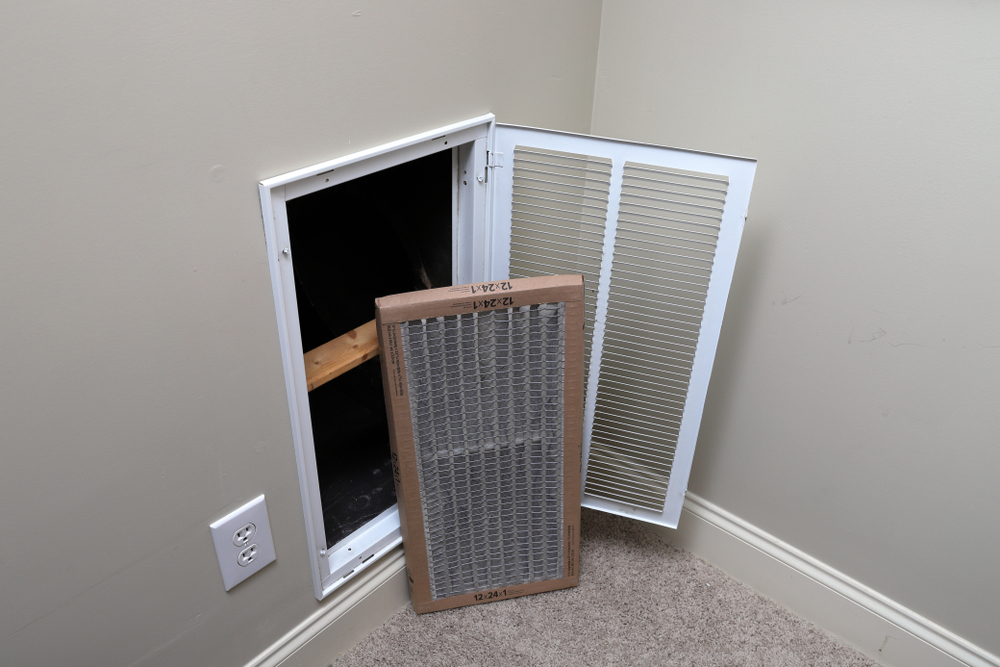
Indoor air quality has long been an overlooked factor in student health and performance. The Environmental Protection Agency has emphasized that poor ventilation contributes to a range of problems, from asthma flare-ups to decreased focus and productivity. Children, in particular, are vulnerable because their lungs are still developing and because they inhale more air relative to their body size compared to adults. The COVID-19 pandemic exposed the vulnerabilities of poorly ventilated buildings, bringing ventilation to the forefront of public health discussions.
Research has consistently shown that students learn better in environments with clean air. Poor air quality is linked to higher absenteeism, lower test scores, and greater instances of health complications that interfere with learning. For teachers, poor ventilation also creates risks, leading to more sick days and reduced classroom stability. By implementing a simple yet powerful filtration solution, schools are not only reducing immediate health threats but also creating conditions that support better learning outcomes and more consistent educational experiences.
The implications stretch beyond Connecticut. If a student-led project can catalyze this kind of change in one state, it raises questions about what could be achieved nationwide. Clean air in classrooms should not be a luxury—it should be a baseline expectation. Eniola’s invention is a timely reminder that children cannot thrive in environments that jeopardize their health, and addressing this issue is a direct investment in the country’s educational and economic future.
The Power of Low-Cost, Scalable Solutions
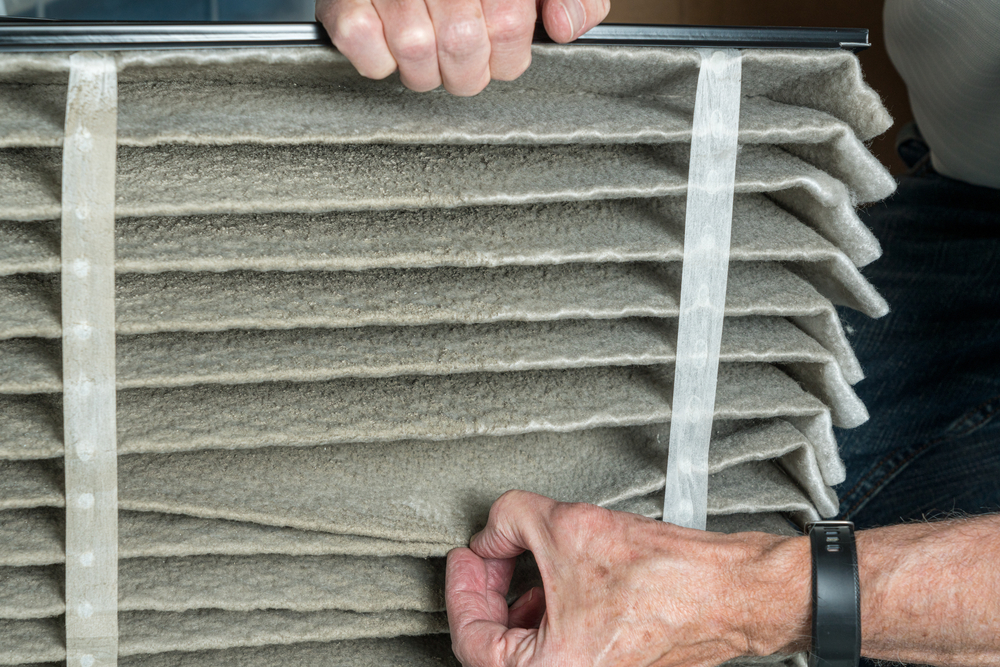
What makes the Corsi-Rosenthal model, and Eniola’s adaptation of it, especially compelling is the way it balances simplicity with effectiveness. Commercial air purifiers can be prohibitively expensive for schools, with costs running into hundreds or thousands of dollars per unit. In contrast, these DIY-style filters can be built for under $100 using widely available materials. This affordability ensures that schools in less affluent districts are not left behind in efforts to improve air quality, making it a more equitable solution.
Equally important is the scalability of the approach. Because the design relies on commonly available parts, it can be replicated quickly and adapted for various settings—classrooms, offices, homes, or community centers. Communities can build and maintain the filters themselves, giving them control over their health and safety. This democratization of science ensures that expertise and equipment are not barriers to protection, empowering people to take action in their own environments. By making knowledge accessible and practical, Eniola’s work has spread beyond her immediate community, sparking interest across the country.
The environmental sustainability of this solution is another notable aspect. Instead of investing in expensive machines that may break down or require specialized maintenance, the DIY filter design allows for periodic replacement of the inexpensive parts while keeping the rest intact. This reduces waste and makes the system not only cost-effective but also environmentally conscious. In an era when sustainability and resilience are crucial, Eniola’s model offers a blueprint for solutions that serve both people and the planet.
Lessons Beyond the Classroom
Eniola’s achievement is a lesson in the value of curiosity and persistence. At just 12 years old, she has shown that ideas can ripple outward in ways no one could predict, influencing state policy and shaping healthier futures for thousands of children. Her story underlines the importance of nurturing curiosity in young people, providing them with opportunities to explore STEM fields, and listening to their ideas with seriousness and respect.
Her journey also highlights the often-overlooked power of youth-led innovation. Young people are frequently dismissed as too inexperienced to contribute meaningfully to complex challenges, yet Eniola’s story demonstrates the opposite. When supported and encouraged, children can generate ideas that address pressing societal problems in ways adults may overlook. Her invention, born of a science fair project, now represents a movement toward safer, healthier classrooms.
Finally, her story challenges us to reconsider how we define expertise and authority. True innovation does not always follow a straight path through degrees and research labs; sometimes it emerges from lived experience and the fresh perspective of a curious mind. By backing her idea, Connecticut has sent a message that innovation is not limited by age or credentials. This lesson is as valuable as the filters themselves, reminding us that transformative ideas can come from anyone, anywhere.
Reflection: Breathing Easier in More Ways Than One
The $11.5 million investment in Eniola’s air filter design represents more than a practical response to a public health challenge. It reflects society’s willingness to place trust in youthful creativity and to embrace cost-effective, scalable solutions to complex problems. For the thousands of students who will breathe cleaner air in their classrooms, the benefits are tangible and immediate. But the broader message is just as powerful: innovation belongs to everyone, regardless of age or background.
Eniola’s story is a reminder that even in difficult times, progress often comes from unexpected places. It encourages us to keep an open mind about where solutions might arise, and to value the contributions of voices that are too often overlooked. In a world where challenges can feel overwhelming, the determination of a 12-year-old with cardboard, filters, and a vision of cleaner air reminds us that the future is not just waiting for us to act—it is waiting for us to imagine.