
Your cart is currently empty!
How a 16-Year-Old Turned an Everyday Earring Into a Powerful Safety Tool

In moments of danger, the difference between escape and harm often comes down to silence, speed, and the ability to act without drawing attention. For millions of women and children around the world, personal safety tools that rely on loud alarms, visible panic buttons, or pulling out a phone can make a terrifying situation even worse. Sometimes, making noise is not an option. Sometimes, being seen is the risk.
Contents
show
That harsh reality is what makes the story of a teenage inventor from South Africa resonate so deeply across social media today. At just 16 years old, she came up with a solution that reimagines what personal safety technology can look like. Not as a siren. Not as an app. But as something so ordinary that it blends seamlessly into daily life.
A simple earring.
Hidden inside it is a quiet lifeline capable of capturing images of an attacker, recording crucial data, and instantly sending alerts to police and trusted contacts. All without making a sound.
As her story resurfaces years later, it is going viral again not because it is flashy, but because it addresses a question that so many people have been asking for decades. How do you protect someone in the exact moment they are most vulnerable?
The Global Problem Safety Technology Has Struggled to Solve
Violence against women and children remains one of the most persistent human rights challenges worldwide. In South Africa, the crisis is especially severe, with rates of gender-based violence and femicide among the highest globally. News reports regularly document assaults, disappearances, and murders that leave communities grieving and searching for answers.
One of the most painful realities is that many attacks happen quickly and silently. Victims are often isolated, restrained, or threatened into compliance. In those moments, reaching for a phone can be impossible. Shouting for help can escalate violence. Even traditional wearable safety devices can be spotted and destroyed by an attacker.
For years, governments, police services, and advocacy groups have invested in awareness campaigns and reporting systems. While essential, these measures often focus on what happens after violence occurs rather than during it. That gap between danger and response is where countless lives are lost.
It is within this space that a teenage girl began to think differently.
A Young Mind Shaped by Harsh Realities
Growing up in South Africa, Bohlale Mphahlele was exposed early to news stories about rape, abduction, and human trafficking. Watching these reports with her father left a deep impression. The statistics were not abstract numbers. They represented real people whose lives were permanently altered or ended.
What troubled her most was not only the scale of the violence, but how powerless victims often seemed in the moment of attack. She noticed how many cases fell apart later due to lack of evidence. No witnesses. No proof. No way to identify the perpetrator.
Instead of accepting this as inevitable, she began asking questions. What if help could be summoned without alerting an attacker? What if evidence could be collected automatically? What if safety tools worked with the realities of fear and shock instead of against them?
These questions became the foundation of her invention.
From a School Idea to a Life-Saving Concept
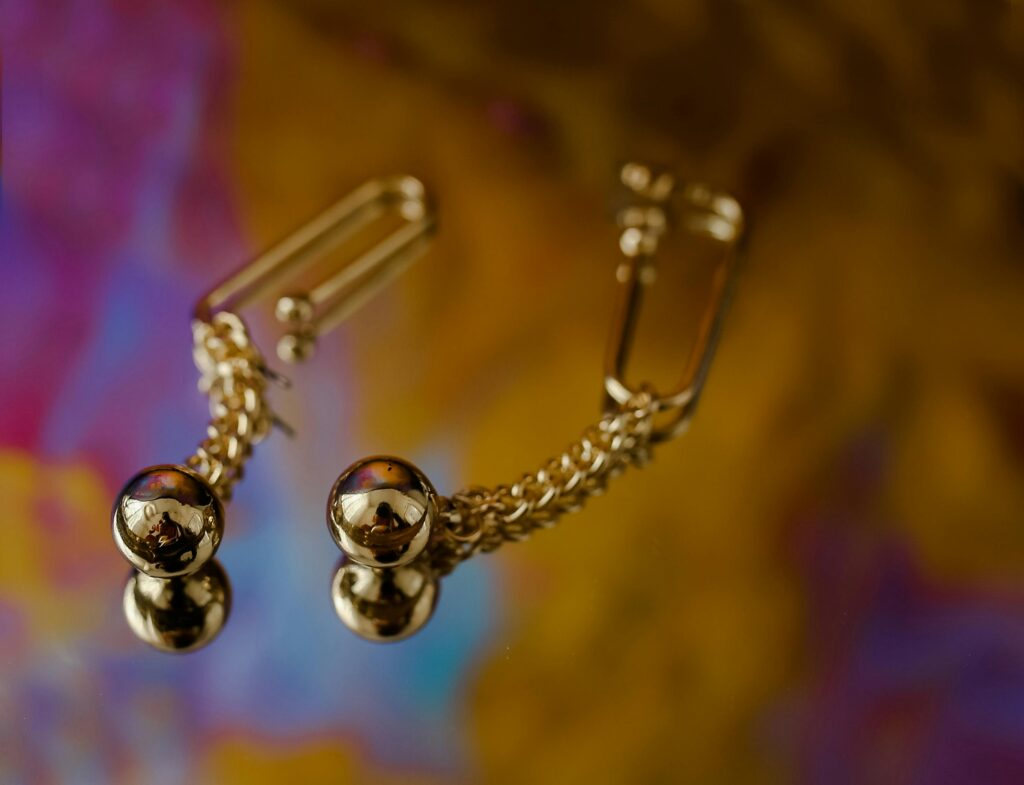
Bohlale first experimented with her idea while still in primary school. Like many young inventors, her early attempts were rough and filled with obstacles. Limited resources, lack of funding, and technical complexity all stood in her way.
By the time she reached Grade 11, her vision had become clearer. She focused on creating a wearable device that would be:
- Small enough to avoid detection
- Familiar enough to blend into everyday life
- Fast enough to act in seconds
- Simple enough to use under extreme stress
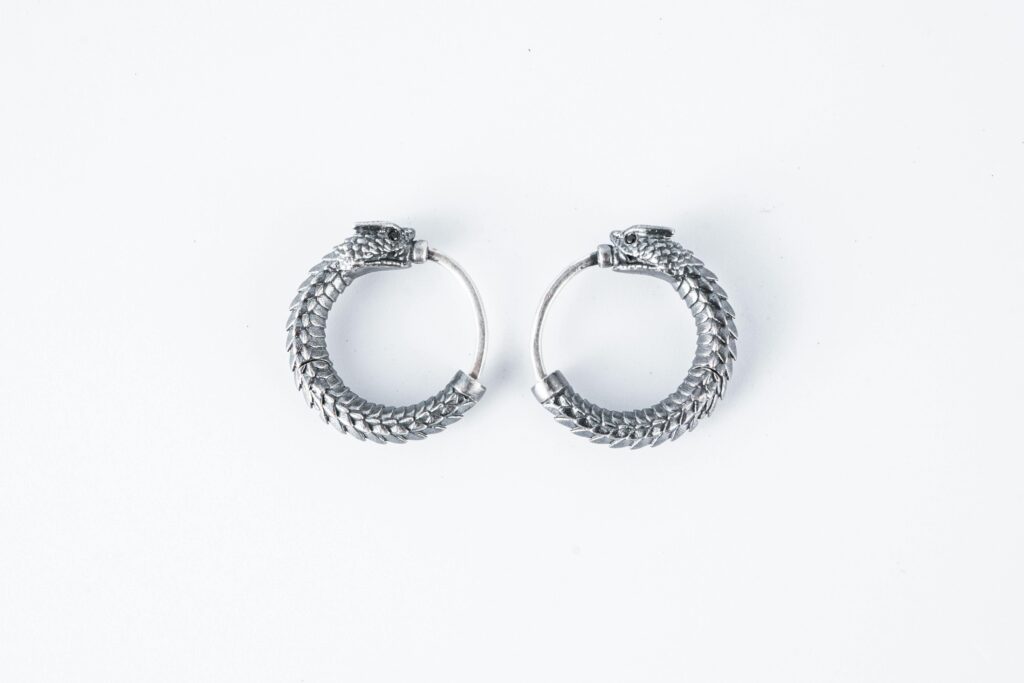
Jewellery stood out as the perfect disguise. Earrings are widely worn, rarely questioned, and unlikely to raise suspicion. By embedding smart technology inside an earpiece, she could turn an ordinary accessory into a powerful safety tool.
How the SMART Earring Works in Real Life

The Alerting Earpiece is designed to be activated through subtle touch or movement. With the press of a hidden button, the device immediately begins its response sequence.
First, it captures photos of the attacker using a concealed camera. These images are time-stamped and stored as evidence. Next, the earring transmits alerts to pre-selected emergency contacts and law enforcement agencies. At the same time, it shares the wearer’s live GPS location.
All of this happens silently.
There is no alarm. No flashing light. No obvious signal that help has been called. For someone in danger, this discretion can be the difference between escalation and survival.
The device also addresses one of the most devastating challenges in gender-based violence cases. Evidence. Automatically collected images, location data, and timestamps can strengthen investigations and support prosecutions that might otherwise collapse.
Why Silence Can Be More Powerful Than Sound
Traditional safety tools often assume that drawing attention will scare off an attacker or bring immediate help. In reality, many victims know that noise can make things worse. An attacker who realizes police have been alerted may panic, flee violently, or retaliate.
By prioritizing silence, the smart earring acknowledges how violence actually unfolds. It is designed for moments when victims cannot shout, run, or fight back. It works with fear rather than demanding courage.
This user-centered approach is what sets the invention apart. It is not built around ideal scenarios, but around real ones.
Recognition on a National Stage
The innovation quickly attracted attention within academic and scientific circles. Bohlale showcased her prototype at the Eskom Expo for Young Scientists, competing in the engineering and electronics category.
Judges praised the project for tackling one of South Africa’s most entrenched social problems with a practical and elegant solution. She was awarded a bronze medal, marking a major milestone in her journey.
Beyond the medal, the exposure brought interviews, radio appearances, and recognition from education leaders. For many, her work symbolized the power of youth-led innovation grounded in lived experience.
The Personal Cost of Chasing a Big Idea
Behind the headlines and praise was a teenager juggling immense pressure. Developing a hardware prototype while attending high school came with sacrifices. Long hours, missed social moments, and academic strain became part of daily life.
Funding was a constant challenge. Unlike software, hardware development requires physical components, testing, and refinement. Each setback meant starting again with limited resources.
Despite moments of disappointment, Bohlale remained focused on her goal. She understood that the problem she was trying to solve was bigger than her personal comfort.
Turning Innovation Into a Mission
Years after the invention first made headlines, Bohlale has continued to build on her vision. Now in her early twenties, she has taken steps to commercialize the Alerting Earpiece through her company, Mphahlele Alerts (Pty) Ltd.
This transition from student project to early-stage business marks a critical shift. The goal is no longer just to prove the concept, but to bring it into the hands of those who need it most.
She is also pursuing a degree in Information Technology, aligning her education with the technical demands of refining and scaling the product. At the same time, she mentors other young girls interested in science and technology, creating a ripple effect that extends beyond her own invention.
The Wider Landscape of Personal Safety Technology

Globally, the personal safety technology market is expanding rapidly. Wearables, location tracking, and emergency alert systems are increasingly common. Yet many products remain inaccessible to vulnerable populations due to cost, visibility, or complexity.
In South Africa, where mobile connectivity is high but physical security remains uneven, the need for discreet, affordable solutions is urgent. Products like the Alerting Earpiece sit at the intersection of safety, social impact, and technology.
Investors and NGOs are beginning to recognize the value of solutions that address real-world conditions rather than idealized scenarios. Disguised safety devices acknowledge the uncomfortable truth that visibility can be dangerous.
Addressing the Evidence Gap in Violence Cases
One of the most overlooked aspects of gender-based violence is what happens after an attack. Many cases fail due to insufficient evidence. Victims are often disbelieved or blamed. Without proof, justice becomes elusive.
By automatically collecting images and location data, the smart earring offers a way to document crimes in real time. This not only supports investigations, but may also act as a deterrent if widely adopted.
The potential impact goes beyond individual users. Stronger evidence can lead to higher conviction rates, which in turn can discourage future offenders.
Challenges That Still Lie Ahead
Despite its promise, the Alerting Earpiece faces significant hurdles. Hardware manufacturing is expensive. Regulatory approvals are complex. Data privacy and security must be carefully managed.
There is also the challenge of distribution. Ensuring the device reaches schoolgirls, night-shift workers, and those in abusive environments requires partnerships with schools, NGOs, and public institutions.
Bohlale has been open about these difficulties. She understands that building a sustainable business takes time, patience, and support.
Why This Story Keeps Resurfacing
Every few years, Bohlale’s story finds its way back into public conversation. Each time, it resonates anew. Perhaps because the problem it addresses has not gone away. Perhaps because it reminds people that solutions do not always come from governments or corporations.
Sometimes, they come from teenagers who refuse to accept the world as it is.
Her story challenges the narrative that young people are disengaged or powerless. It shows that empathy, when combined with creativity and determination, can lead to tangible change.

The Symbolism of an Ordinary Earring
There is something deeply powerful about the choice of an earring as the medium for this technology. Jewellery is personal. It is chosen, worn, and trusted. Transforming it into a protective tool sends a quiet message.
Safety does not have to be loud to be effective.
It can be woven into everyday life, unnoticed yet ready.
What This Means for the Future of Safety
As conversations around gender-based violence continue, innovations like the Alerting Earpiece offer a glimpse of what is possible when technology is guided by compassion. They remind us that solutions must be designed with the realities of fear, silence, and vulnerability in mind.
While no device can solve systemic violence on its own, tools that empower victims in critical moments are an essential part of the puzzle.
A Reminder of Where Change Can Begin
Bohlale Mphahlele did not set out to become a symbol. She set out to help. That intention is what gives her work lasting impact.
Her journey is a reminder that age does not define ability, and that innovation does not always start in labs or boardrooms. Sometimes, it begins with a young person watching the news, feeling uncomfortable, and deciding to act.
In a world searching for ways to make people safer, her silent earring speaks volumes.
Featured Image from Instagram @_bohlalemphahlele