
Your cart is currently empty!
Viewers Convinced 1941 Photo of Child Holding ‘iPad’ Is Evidence of Time Travel

Every so often, a dusty archival photograph resurfaces to break the internet, but rarely does one spark a debate quite as bizarre as the mystery of the “1941 iPad user.” A striking black-and-white image taken on Chicago’s South Side captures a line of beautifully dressed children waiting for a movie, yet one specific detail has sent social media spiraling into conspiracy theories: a young boy who appears to be gazing down at a modern tablet decades before the technology was conceived. While the visual anomaly suggests a glitch in the timeline, the true story behind the lens offers a fascinating glimpse into a pivotal moment in American history that is far more compelling than science fiction.
Contents
show
Did an iPad Just Show Up in a 1941 Photo?
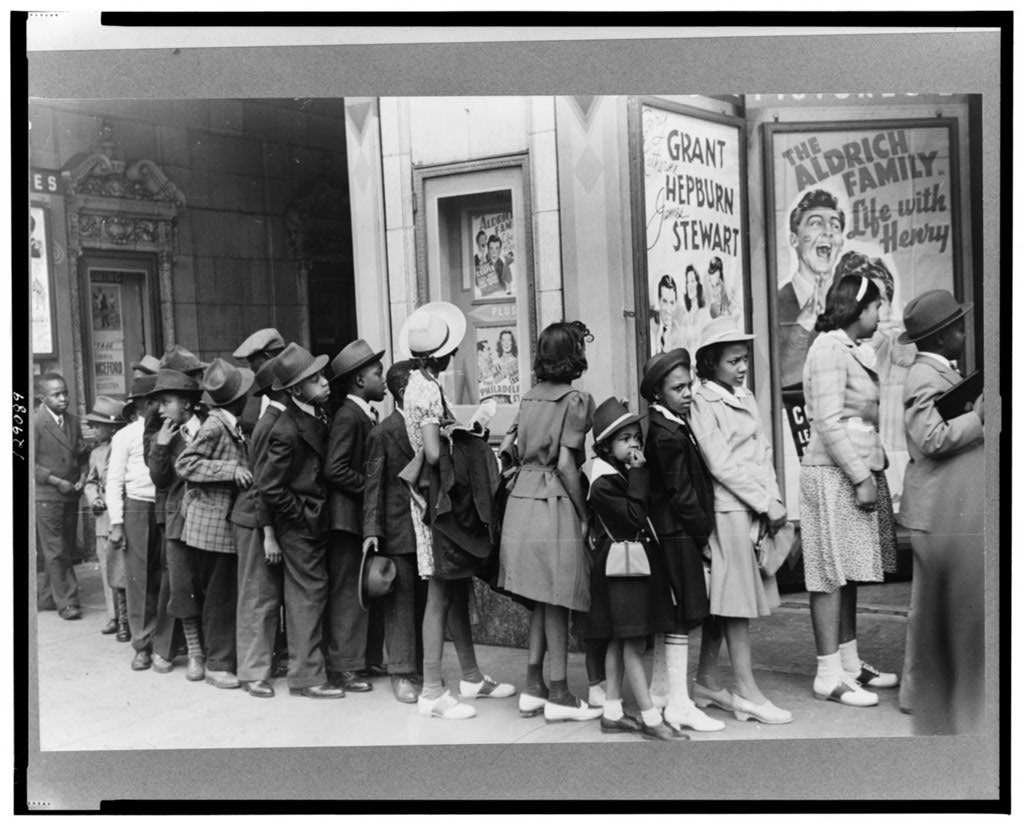
A vintage photograph taken more than 80 years ago is currently making waves online, but not just for its historical value. The image, snapped by photographer Edwin Rosskam in 1941, shows a group of children dressed in their finest clothes standing in line for a movie theater on the South Side of Chicago. While the scene is a beautiful look at the past, one specific detail has internet users scratching their heads.
If you zoom in on the boy standing at the far right of the line, he appears to be clutching a thin, rectangular object that looks suspiciously like an Apple iPad. Considering the first iPad was not released until 2010, this sighting has led to some wild and entertaining theories about time travel.
Social media users were quick to point out the oddity. On Reddit, one person asked, “How is the first kid in line holding an Apple iPad in 1941?” Another commenter joked that it was “Time for the theme from ‘The Twilight Zone.’”
The confusion is understandable at first glance. The way the boy holds the item with both hands and stares down at it mirrors the way children today look at tablets. This uncanny resemblance turned a standard historical archive into a viral topic, proving that even serious history can sometimes spark fun, modern conspiracies.
A Pattern of Viral “Time Travelers”
This recent viral sensation is far from the first time the internet has spotted a modern device in a historic setting. Online communities frequently obsess over vintage images that seem to contain anachronisms, turning ordinary archives into puzzles for conspiracy theorists.
One famous example involves a photo from 1943 taken on a beach in Cornwall. Eagle-eyed viewers pointed out a man who appeared to be checking a mobile phone while everyone else enjoyed the seaside. Upon closer inspection, skeptics clarified that the man was most likely rolling a cigarette, a common habit of the era. Similarly, a 1940s photograph from Reykjavik sparked debate over a man appearing to be on a cell phone call, and an ancient Greek tombstone even made headlines when people claimed a carved object resembled a laptop with USB ports.

Experts attribute these sightings to a psychological phenomenon known as pareidolia, where the brain forces a familiar pattern onto something random. In these cases, modern viewers are so accustomed to seeing smartphones and tablets that they project them onto books, cigarette cases, or other rectangular objects from the past. While quantum physics continues to explore the theoretical possibilities of non-linear time, there remains zero scientific evidence that humans can physically travel to the past. These viral moments are fun thought experiments, but they ultimately reveal more about our current digital obsession than any secret history of time travel.
Dressed for the Occasion: The Real History
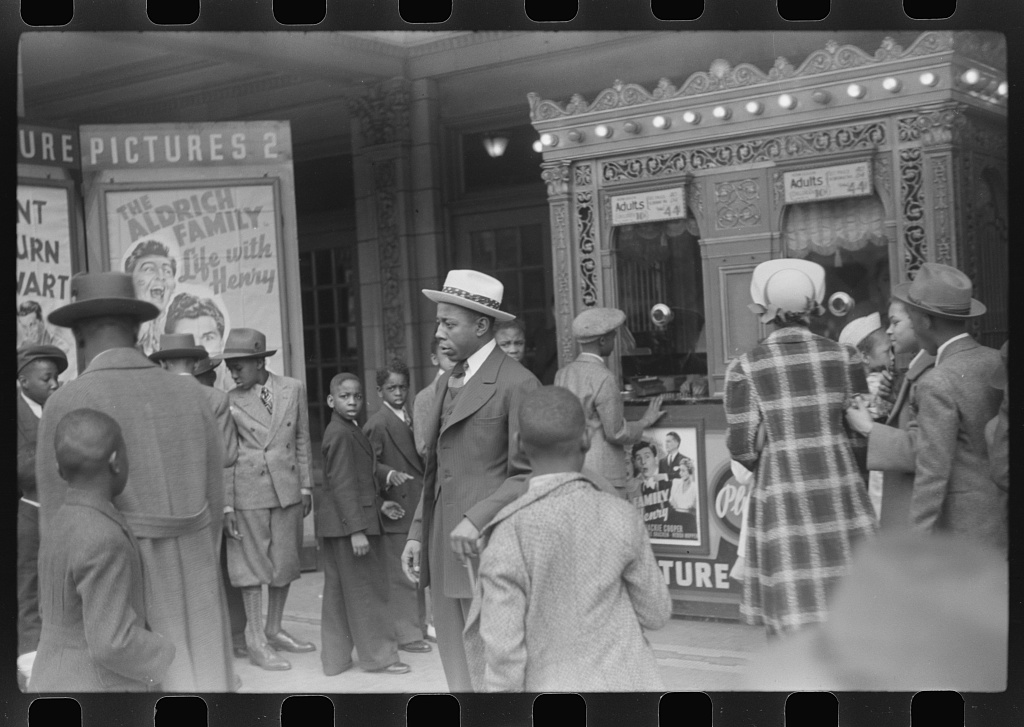
Looking past the digital illusion, the photograph reveals a stunning display of 1940s fashion. The children are dressed in what appears to be their “Sunday best,” likely for an Easter matinee. This attention to detail charmed many social media users, with one noting, “Look at them, they’re suited and booted looking mighty fine.” Another commenter reflected on the effort put into appearance back then, writing, “Part of me wishes we would all dress up like that for the little things.”
The image is actually part of a significant historical project. In April 1941, the Farm Security Administration dispatched photographers Edwin Rosskam and Russell Lee to Chicago. They were tasked with documenting daily life in the “Black Belt,” the name given to the African American community on the South Side.
Collaborating with famous author Richard Wright, Rosskam and Lee spent three weeks capturing thousands of images. Their work was later published in the book 12 Million Black Voices. The photographers did not just capture a line for a movie; they documented a vibrant community engaging in everything from roller skating to religious worship, preserving a specific moment in American culture long before the internet began dissecting it for clues.
Resilience Amidst Hardship
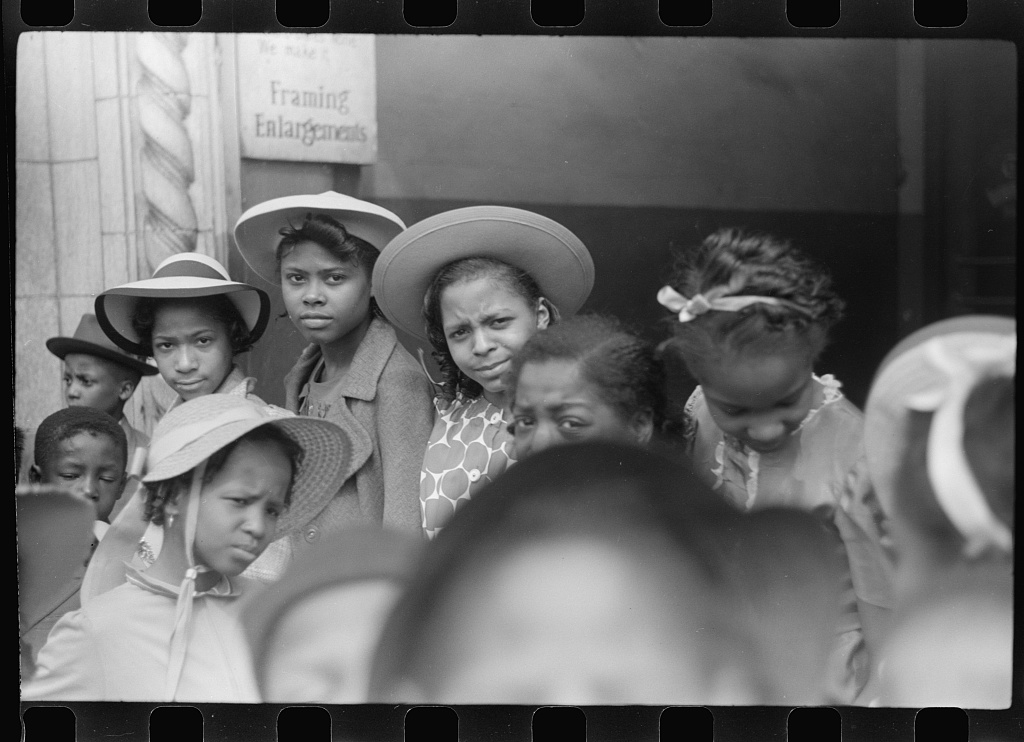

While the children in the photograph look dashing in their Easter suits, the reality of their surroundings was far more complex. The photo was taken in Chicago’s “Black Belt,” a narrow corridor on the South Side where African Americans were restricted to live due to segregation and discriminatory housing policies.
The Great Migration saw thousands leave the South for Chicago, hoping for better jobs and freedom. However, the available housing could not keep up with the population boom. Landlords took advantage of the demand by slicing apartments into tiny “kitchenettes,” often charging higher rents than what white residents paid for far better accommodations. These units were frequently hazardous; many lacked private bathrooms, central heating, or basic safety amenities.

According to the Chicago Public Library, families often had to use kerosene lamps which frequently overheated, leading to devastating fires. The overcrowding also resulted in poor sanitation and pest infestations. Author Ta-Nehisi Coates has pointed out that modern nostalgia for this era often overlooks these brutal conditions. The fact that these children and their families maintained such dignity and style while enduring “ramshackle and dangerous housing” makes the photograph even more poignant. It is a testament not just to fashion, but to resilience in the face of systemic inequality.
The True Story Is Better Than Fiction
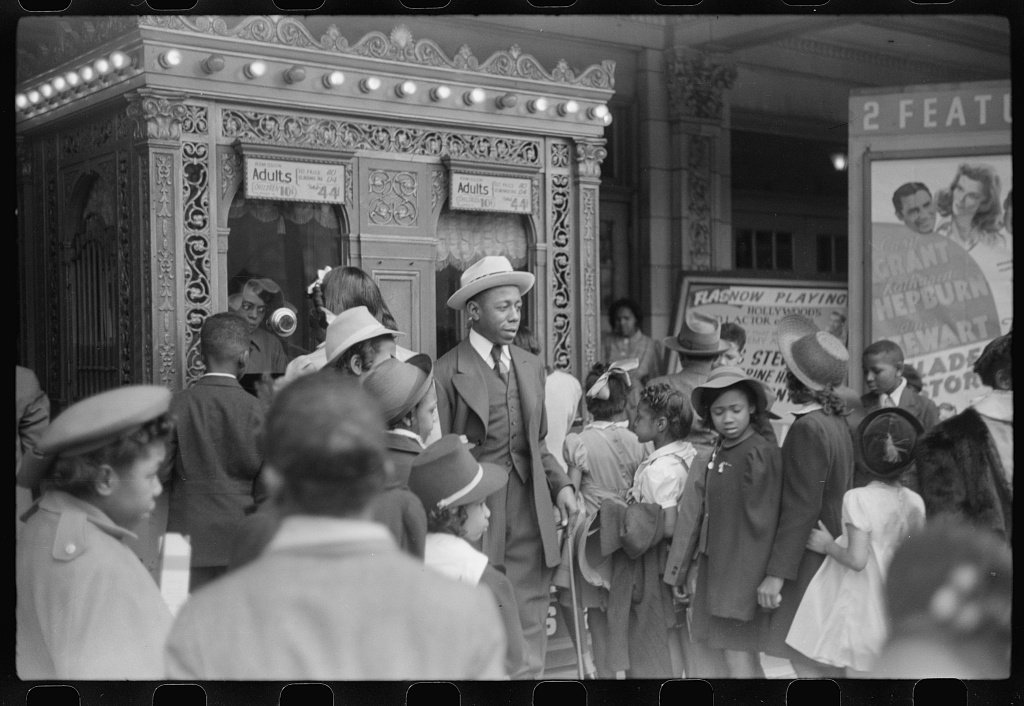
The internet loves a good mystery, and the idea of a time traveler casually checking a tablet in 1941 is undeniable fun. However, when we get caught up looking for sci-fi glitches in the matrix, we risk missing the profound human stories staring right back at us. The real wonder of Edwin Rosskam’s photograph isn’t a phantom iPad; it is the dignity, style, and community of the people captured in the frame.
These viral moments offer a unique opportunity. They act as a hook, pulling millions of eyes onto a piece of history that might otherwise sit gathering dust in an archive. But once our attention is grabbed, it is up to us to look deeper than the conspiracy theories. The “iPad” brought us to the photo, but the reality of the Great Migration, the artistry of the Farm Security Administration, and the resilience of Chicago’s South Side residents are what should keep us there.
So, the next time a “time travel” photo crosses your feed, enjoy the joke, but take a moment to investigate the context. Who are the people in the picture? What were their lives like? The truth of our shared history is often far more compelling and important than any fantasy we could invent. Let’s honor the past by seeing it clearly, not just as a backdrop for modern myths, but as a testament to those who paved the way.