
Your cart is currently empty!
6 Billion People Will See a Total Lunar Eclipse on September 7-8 — Here’s When the Peak Will Occur
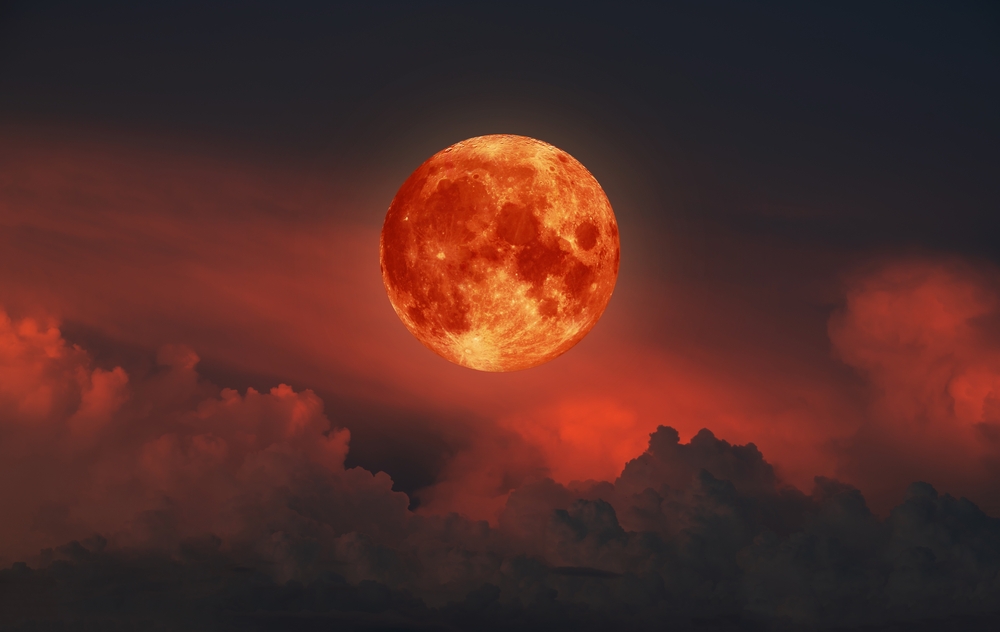
On the night of September 7–8, the world will witness one of the most widely visible celestial events of the decade: a total lunar eclipse. For more than five hours, the moon will pass through Earth’s shadow, culminating in an 82-minute phase of totality when the lunar surface will glow a vivid shade of red. Nearly six billion people, close to 77 percent of the global population, are expected to have front row seats to this rare spectacle, stretching across Asia, Australia, Africa, and much of Europe.
Contents
show
This is more than just another date on the astronomical calendar. Lunar eclipses are reminders of the intricate choreography of the sun, Earth, and moon, and they have long carried cultural and symbolic weight across civilizations. Unlike fleeting solar eclipses, which demand precise travel and specialized equipment, this event requires nothing more than a clear night sky and a willingness to look up. For billions, the September eclipse will be an unmissable chance to step away from daily life and share in a moment of wonder under a blood-red moon.
What Happens During a Lunar Eclipse
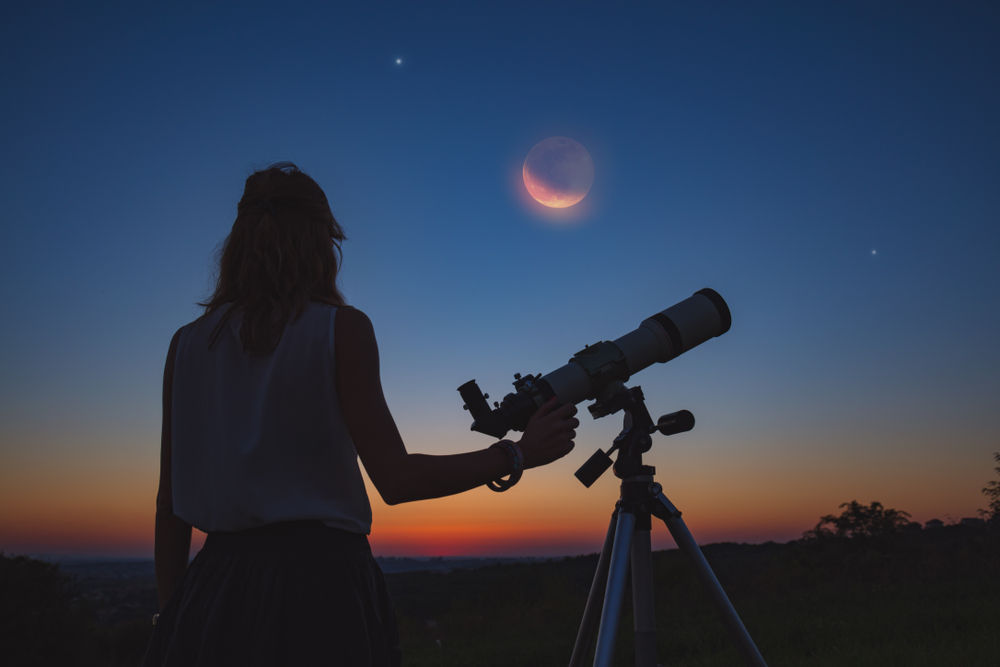
On the night of September 7–8, the full moon will slip into Earth’s shadow in a spectacle that astronomers and casual skywatchers alike will be paying close attention to. This will be the second and final total lunar eclipse of 2025, unfolding over more than five hours and culminating in an unusually long period of totality that lasts for 82 minutes. What makes this particular eclipse remarkable is not only its length but its reach. Thanks to the timing and positioning of the event, nearly six billion people—close to 77 percent of the world’s population—will be able to witness the moon’s silvery face dim, then transform into an otherworldly shade of red. That massive audience makes this one of the most widely visible celestial events of the decade.
A lunar eclipse happens when Earth moves directly between the sun and the moon, with the planet’s shadow gradually sweeping across the lunar surface. During this alignment, the darkest central portion of Earth’s shadow, called the umbra, completely covers the moon. Unlike a solar eclipse, which can only be seen from narrow regions on Earth, a lunar eclipse is visible to everyone on the nighttime side of the planet. This broad visibility has made lunar eclipses sources of awe and storytelling across cultures for centuries. Even today, they continue to hold a magnetic power because the process is slow, dramatic, and visible without any protective eyewear or special equipment.
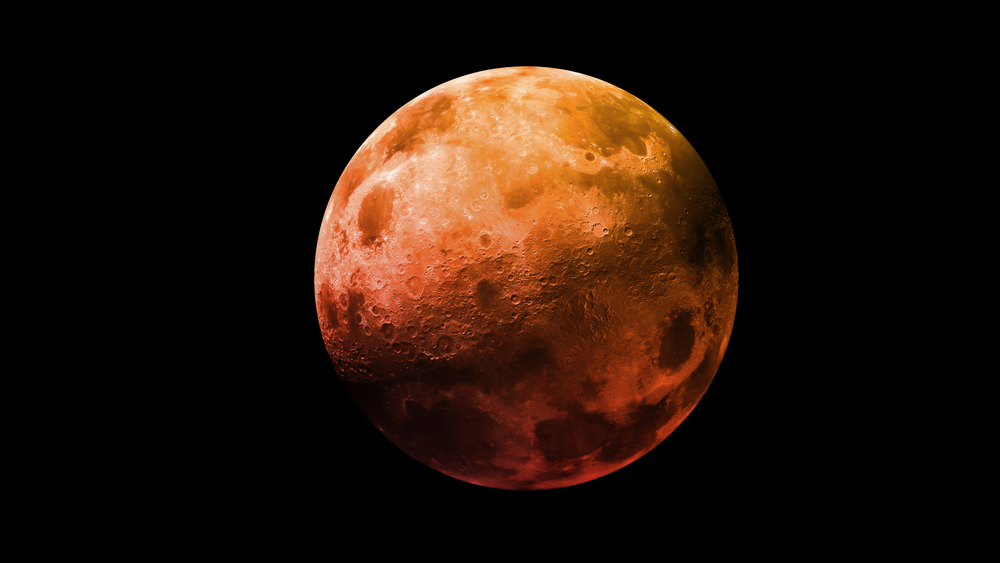
The most captivating aspect of a total lunar eclipse is the moon’s transformation in color. As Earth blocks direct sunlight, the only light that still reaches the lunar surface has passed through our atmosphere. In the process, shorter wavelengths of light, such as blue and violet, are scattered away, while longer wavelengths like red and orange are bent toward the moon. This filtering effect, called Rayleigh scattering, paints the lunar disk in deep shades of copper, crimson, or even burnt orange depending on the state of Earth’s atmosphere. If the skies are relatively clear of volcanic dust or heavy pollution, as they are now, astronomers predict the September eclipse will yield a bright, fiery orange-red moon that will stand out dramatically against the stars.
Although eclipses can happen up to three times in a year, they are far from common because of the moon’s tilted orbit. For most full moons, the moon passes slightly above or below Earth’s shadow, missing the alignment needed for an eclipse. Only when everything lines up precisely do we get to see Earth’s shadow projected across the lunar surface. That rarity, combined with the spectacle of the moon slowly fading into shades of red, explains why total lunar eclipses continue to be among the most eagerly anticipated astronomical events. The September 7–8 eclipse promises to be one of the longest and most widely seen of the decade, making it an especially memorable occasion for skywatchers worldwide.
Who Will See the Eclipse and When
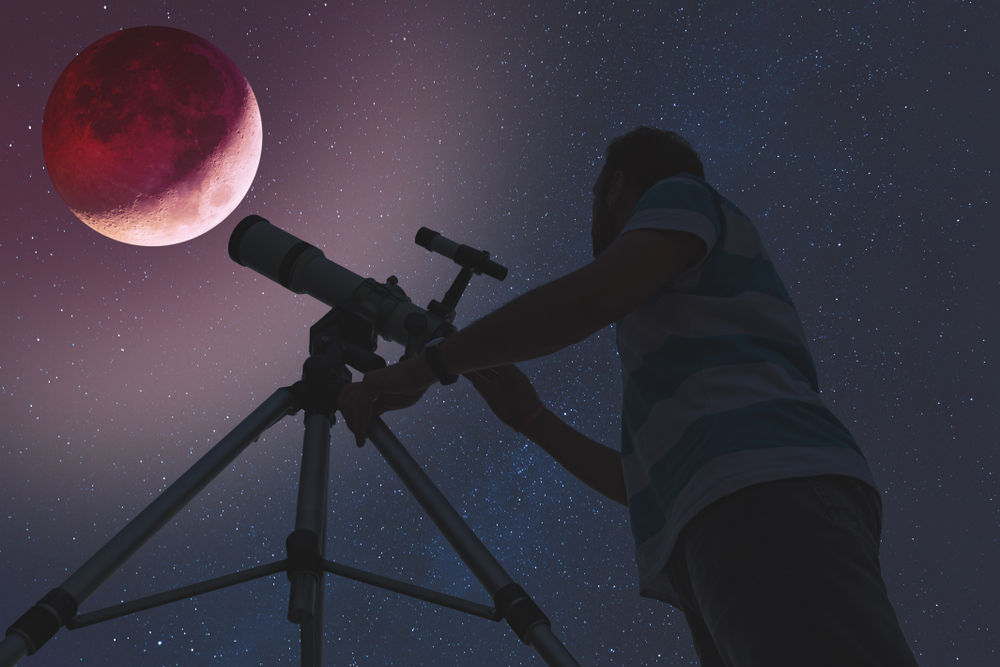
The September eclipse is especially generous in its visibility, though not everyone on Earth will be able to watch it unfold. Most of North and South America will miss this out, as the eclipse will occur during daylight hours across those continents. For skywatchers across Asia and Western Australia, however, the timing is ideal, with the entire event visible from start to finish during their night skies. This means billions of people in cities like Mumbai, Beijing, and Perth will have uninterrupted views of the moon as it enters Earth’s shadow and deepens in color. In Europe and Africa, observers will still catch a memorable show, although the moon will rise already in the midst of the eclipse for many locations, offering a dramatic scene as a partially shadowed moon climbs above the horizon. According to calculations by the astronomical website Time and Date, about 77 percent of the global population is positioned to view at least some part of this eclipse, making it one of the most widely accessible lunar events in recent history.
The event unfolds in carefully timed stages that span more than five hours. It begins with the penumbral phase at 15:28 Universal Time (UTC), when Earth’s outer shadow starts to faintly dim the lunar surface, followed by the partial eclipse at 16:27 UTC as the darker inner shadow takes a noticeable bite out of the moon. The highlight begins at 17:30 UTC when totality sets in, lasting until 18:52 UTC. The midpoint of the spectacle, the moment of greatest eclipse, will occur at 18:11 UTC, when the moon is most deeply immersed in Earth’s shadow. By the time the event wraps up at 20:55 UTC, the moon will have slowly emerged back into full brightness, closing one of the decade’s longest and most photogenic eclipses.
How to Watch and Photograph the Eclipse
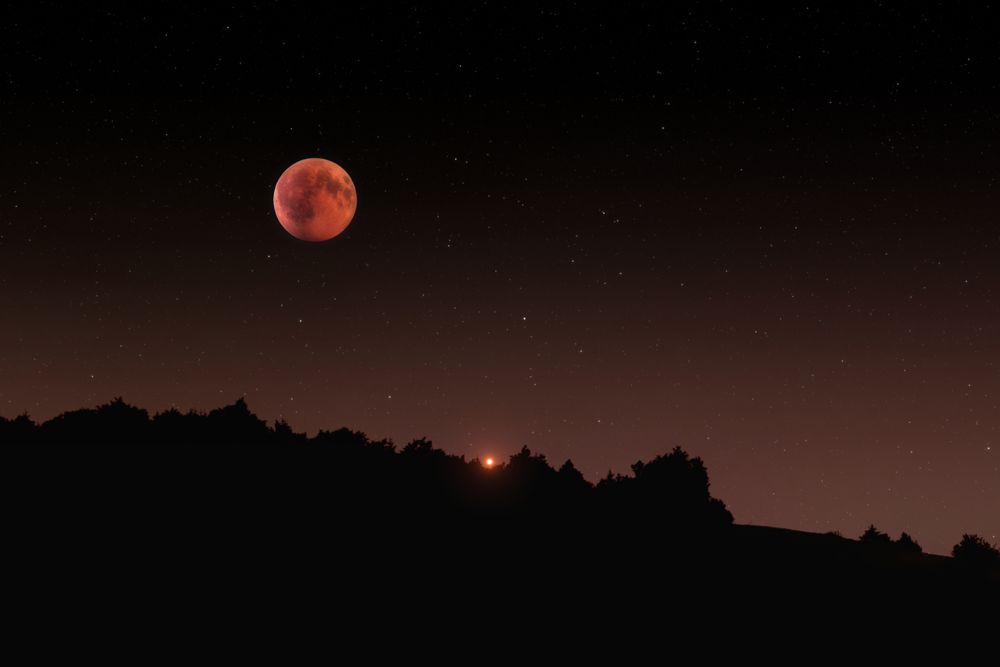
Unlike a solar eclipse, which requires protective eyewear to avoid damaging one’s eyes, a lunar eclipse is safe to view with the naked eye from beginning to end. That accessibility makes it a particularly communal celestial event, with families, schools, and astronomy clubs often gathering in parks, fields, or rooftops to watch together. To get the best experience, experts recommend finding a dark location away from bright city lights and ensuring a clear view of the horizon, especially for those in regions where the moon will rise or set during the eclipse. Even a casual glance skyward during totality will reveal the moon glowing in shades of red, but a pair of binoculars or a small telescope can enhance the view, bringing the lunar craters and mountains into sharp relief under their coppery glow.
Capturing the eclipse with a camera is easier than many expect. A smartphone placed on a tripod and set with a short exposure time can deliver striking images of the moon against the night sky. For photographers with more advanced equipment, longer exposures can highlight the starry background that emerges as the moon dims. The contrast between the red moon and a silhouetted landscape, whether a city skyline, mountains, or trees, often produces the most memorable images. For those unable to step outside or unlucky enough to face cloudy skies, several organizations will provide live streams, including the Virtual Telescope Project in Italy, which will share real-time footage online for viewers worldwide.
What Else to See in the Night Sky
While the lunar eclipse is the main attraction, it also serves as a gateway to appreciating other celestial sights. During the 82 minutes of totality, the moon’s darkened state allows more stars to appear in the sky, creating an unusually rich backdrop. Observers should also look for Saturn, shining with a steady yellow hue near the moon. The gas giant is bright enough to be seen with the naked eye, but even a modest backyard telescope will reveal its iconic rings, a breathtaking sight in its own right. Neptune will also be visible nearby, though much fainter and best observed through a telescope as a tiny blue-green dot—the most distant planet in our solar system making a subtle cameo beside the blood-red moon.
The eclipse also carries with it the natural rhythm of celestial mechanics. Two weeks after every lunar eclipse, a solar eclipse occurs when the moon shifts into position to block the sun. This September will be no exception: on the 21st, parts of New Zealand, Australia, and Antarctica will witness a partial solar eclipse, with some regions seeing as much as 80 percent of the sun’s disk obscured. Together, these paired events remind us of the intricate choreography of the Earth, moon, and sun, and how their alignments create predictable yet awe-inspiring spectacles for those paying attention.
Why This Eclipse Matters
Beyond its scientific explanations and viewing logistics, this lunar eclipse represents an opportunity for people across continents to share in a collective experience. Nearly six billion people will look up at the same time, watching the same copper-colored moon from vastly different cultural and geographical contexts. In an era where daily life is often fractured by digital overload and divided by borders, moments like this remind us of the universality of the night sky. The moon has been a constant companion for humanity across history, guiding calendars, inspiring myths, and anchoring poetry and a total eclipse briefly transforms that familiar presence into something extraordinary.
The September 7–8 event is also a reminder of how rare such opportunities can be. The next total lunar eclipse will not arrive until March 2026, visible from different regions of the globe. Those who pause for the eclipse find not just astronomy in motion, but a moment that binds us back to the universe. Whether you watch with binoculars, capture it with a camera, or simply step outside for a quiet look, the eclipse offers a chance to pause, reflect, and be part of something much larger than yourself.