
Your cart is currently empty!
Japan To Start Hunting Fin Whales, The Second-Largest Animal On Earth

In a decision that has ignited international debate and drawn widespread condemnation from conservation groups, Japan has announced plans to include fin whales—vulnerable marine giants—in its commercial whaling operations. Revealed on May 9, this policy shift poses a grave threat to the delicate recovery of a species once driven to the brink of extinction by relentless hunting.
Contents
show
Decades of international bans on commercial whaling had allowed fin whale populations to rebound, offering hope for their long-term survival. However, Japan’s decision to resume hunting these magnificent creatures within its exclusive economic zone risks unraveling years of conservation progress. As the world’s second-largest animal, the fin whale symbolizes the fragility of marine ecosystems and the importance of global cooperation in preserving biodiversity.
This article explores the historical, cultural, and environmental implications of Japan’s controversial whaling policy, shedding light on the broader consequences for marine conservation and the contentious legal and ethical questions it raises.
The Historical Roots of Whaling in Japan
Whaling has long been woven into the fabric of Japanese culture, tracing back to the 12th century when coastal communities relied on rudimentary techniques to hunt whales. These early practices, though small in scale, played an important role in sustaining local economies and fostering community traditions. However, the advent of industrial whaling in the 20th century brought transformative changes, significantly increasing the efficiency and intensity of whale hunts and placing greater pressure on whale populations.
In the aftermath of World War II, whale meat became a vital source of protein for a nation grappling with severe food shortages. During this period, the consumption of whale meat surged, cementing its place in Japanese culinary traditions. As Japan’s economy stabilized and diversified in subsequent decades, reliance on whale meat waned, yet the cultural significance of whaling endured.
International scrutiny of Japan’s whaling practices escalated after the 1982 moratorium on commercial whaling established by the International Whaling Commission (IWC). While many nations ceased whaling entirely, Japan continued its hunts under the pretext of scientific research, a move that provoked widespread criticism. This justification, rooted in claims of cultural heritage and research needs, has been a cornerstone of Japan’s defense against external pressure to abandon whaling altogether.
Japan’s recent decision to resume commercial whaling and expand its targets to include fin whales reflects an ongoing commitment to preserving this contentious practice. While viewed domestically as a defense of tradition, this decision highlights the growing tension between cultural heritage and the global push for marine conservation.
A Marvel of the Deep: The Fin Whale
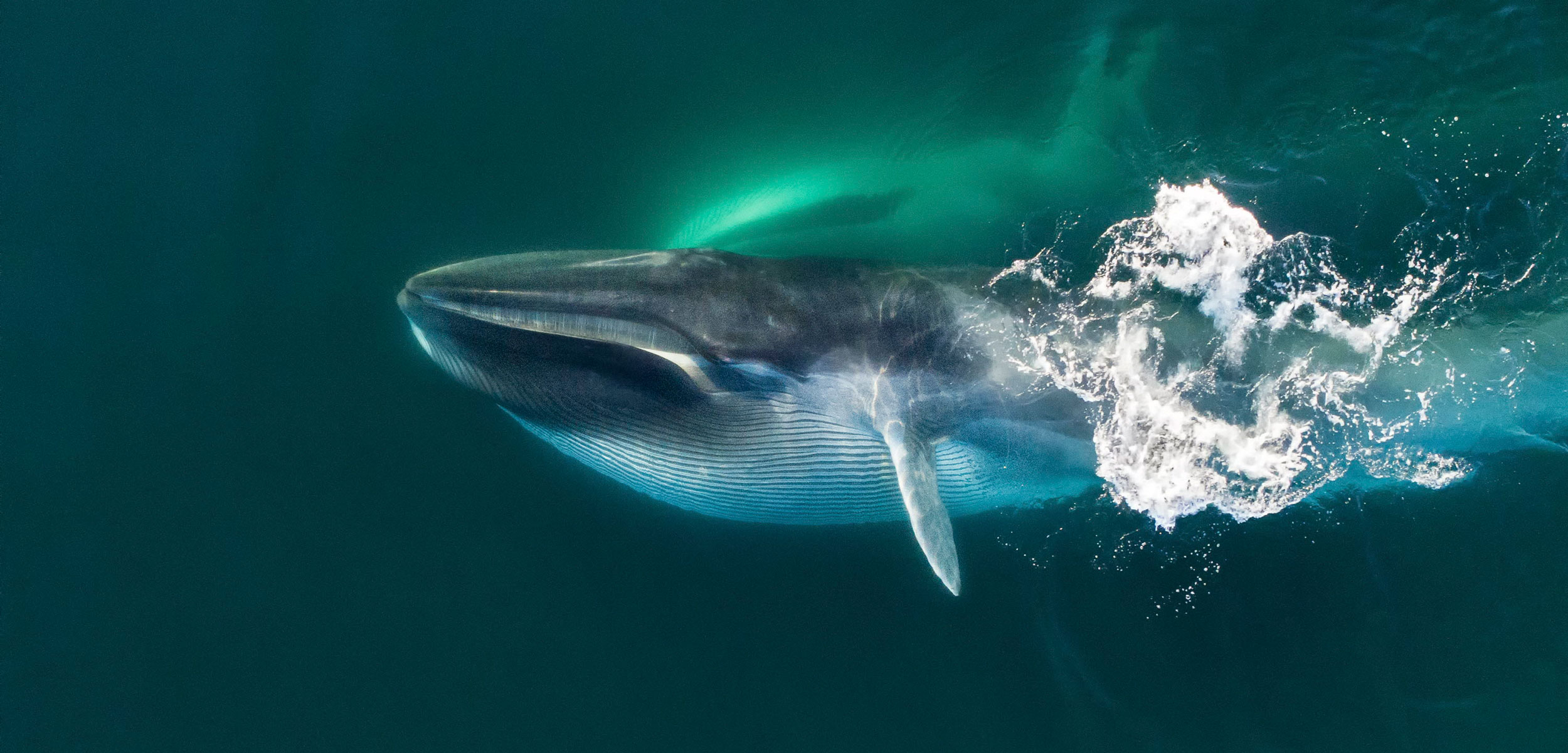
The fin whale (Balaenoptera physalus) stands as one of the ocean’s most extraordinary creatures, earning its title as the second-largest animal on Earth after the blue whale. These marine giants can reach astonishing lengths of up to 85 feet and tip the scales at nearly 80 tons. Despite their immense size, fin whales are known for their remarkable speed and agility, earning them the nickname “greyhounds of the sea.”
Fin whales inhabit a wide range of environments, from the frigid waters of the poles to the balmy seas of the tropics. Their streamlined bodies are adorned with a striking asymmetrical coloration on their lower jaws—white on one side and dark on the other. This unique feature aids in their feeding strategy, as they glide gracefully through the water, using their baleen plates to sieve out krill, small fish, and squid.
Once teetering on the edge of extinction due to relentless whaling, the fin whale’s story took a hopeful turn with the implementation of global bans on commercial hunting. Conservation efforts over decades led to their status improving from “endangered” to “vulnerable” in 2018. These resilient creatures, capable of living for nearly a century, symbolize the potential for recovery when international conservation measures are effectively enforced. However, Japan’s renewed whaling practices threaten to undo these hard-won gains, reigniting concerns for their future.
How Fin Whales Keep Our Oceans Thriving

Think of fin whales as the quiet caretakers of the ocean. These incredible creatures aren’t just massive; they’re also deeply connected to the health of marine life in ways you might not realize. Let’s dive into what makes them so important.
For starters, they’re major players in the food chain. By munching on krill, fish, and squid, fin whales help keep populations of these species in check. Without them, things could spiral out of balance—imagine one type of fish multiplying out of control while others struggle to survive. That’s where these gentle giants step in, keeping everything in harmony.
But there’s more to the story. Fin whales are like natural ocean fertilizers. When they feed and, well, do their business, they spread nutrients across the seas. This little act helps tiny organisms like phytoplankton thrive. And why should you care about plankton? Because they’re not just fish food; they’re a big deal in fighting climate change, soaking up tons of carbon dioxide from the atmosphere.
And here’s a fascinating twist: even after they’re gone, fin whales leave a lasting legacy. When their enormous bodies sink to the ocean floor, they create “whale falls”—essentially buffets for deep-sea creatures. These sites can support entire ecosystems for years, even decades.
It’s easy to take creatures like fin whales for granted when they’re out of sight, but their role in the ocean is nothing short of extraordinary. Protecting them isn’t just about saving a species; it’s about safeguarding the intricate web of life that keeps our oceans alive and thriving. What would the seas be like without them? It’s not a question we want to answer.
Japan’s Return to Whaling: A Step Backward?

Japan’s decision to target fin whales for commercial whaling has sparked outrage worldwide, with conservationists warning of the severe consequences for these rare marine giants. Announced on May 9, this policy marks a stark reversal from global efforts to protect endangered species and raises serious questions about Japan’s commitment to marine conservation.
This controversial move follows Japan’s withdrawal from the International Whaling Commission (IWC) in 2019. The IWC had imposed a moratorium on commercial whaling in 1982, effectively banning the practice to allow whale populations to recover from decades of overhunting. While Japan initially complied, it continued whaling under the pretext of “scientific research,” a loophole that drew international criticism. Now, by openly endorsing commercial whaling, Japan has abandoned even this pretense, isolating itself from the global consensus on marine protection.
The Japanese government defends its actions by citing cultural heritage and economic interests, despite the fact that domestic demand for whale meat has sharply declined. Critics, including environmental groups, argue that this rationale is outdated and unsustainable. Public funds are being funneled into a struggling industry, with investments in costly factory ships designed to process whales on an industrial scale—an approach that many see as both inhumane and economically unjustifiable.
The backlash extends beyond conservation concerns. Japan’s decision has drawn harsh criticism for undermining decades of international progress in protecting marine biodiversity. It also threatens the nation’s reputation as a leader in environmental stewardship, casting doubt on its willingness to cooperate on global conservation efforts.
As Japan resumes commercial whaling, fin whales face a renewed and intensified threat, potentially erasing the hard-won gains of conservation initiatives. The move reflects not just a policy shift, but a broader conflict between preserving cultural traditions and embracing modern environmental responsibilities.
The Global Fight to Protect Fin Whales
Japan’s decision to resume hunting fin whales has reignited global debates about the protection of vulnerable marine species. While the practice reflects cultural traditions, it undermines international efforts to conserve biodiversity and maintain healthy ocean ecosystems. Fin whales play a crucial role in regulating food chains and supporting the global carbon cycle, making their survival vital not just for marine life but for the health of our planet.
Conservationists argue that this issue goes beyond safeguarding a single species. The survival of fin whales is integral to preserving the balance of marine ecosystems, which sustain countless forms of life. Japan’s policy highlights the urgent need for stronger international collaboration to protect these gentle giants and ensure the long-term health of our oceans. The stakes are high, and the world’s response will determine whether we prioritize conservation or allow tradition to jeopardize our planet’s future.