
Your cart is currently empty!
Doctor Reveals Disturbing Reason Why You Should Not Go On a Cruise ‘Anytime Soon’

We live in a world that sells us comfort at every turn. All-inclusive vacations, endless buffets, ocean views from your private balcony — it sounds like the perfect escape. But what if that escape comes with invisible risks no one is talking about? What if, behind the glow of sunset cruises and dinner shows, there’s a system quietly failing to protect the very people it’s meant to serve?
Contents
show
This isn’t about fearmongering. It’s about facing reality with open eyes. Recently, a doctor’s viral warning about cruise ships pulled back the curtain on a deeply unsettling truth — that the safety nets we assume are in place might no longer be there. Not just on sea, but across many parts of society where health, accountability, and transparency are treated like optional extras.
So before we board that next “dream” experience, maybe it’s time to ask: what’s the real cost of comfort when no one’s watching the controls? This is about more than travel — it’s about awareness, responsibility, and the power of choosing not just where we go, but how awake we are when we get there.
The Hidden Health Hazards of Cruise Ships
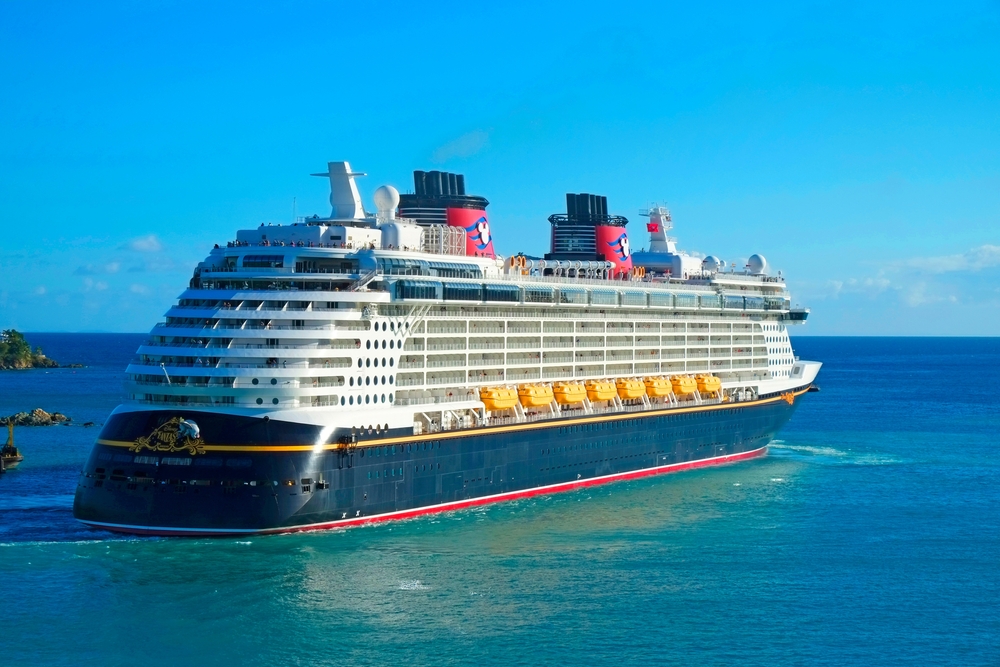
When most people imagine a cruise, they envision open seas, sun-drenched decks, and endless buffets. But beneath the surface of this dream vacation lies a reality many travelers overlook — one that might just make you think twice before booking that next voyage.
Dr. Rubin, a pediatrician known for sharing practical medical insights online, recently shed light on a troubling trend in the cruise industry. In a viral video, he revealed: “Here’s why you’re not gonna see me on a cruise ship anytime soon, and I encourage people to consider this before they book a cruise.” His concern isn’t about storms or sea-sickness — it’s about sanitation, or more specifically, the erosion of it.
Due to recent budget cuts at federal public health agencies, the CDC’s Vessel Sanitation Program — which is responsible for inspecting cruise ships at least twice a year — has experienced significant downsizing. “They trace outbreaks to help reduce the chances of more people getting sick,” Dr. Rubin explained. Without consistent inspections, ships may miss the early warning signs of infectious disease outbreaks.
This lack of oversight has real consequences. As Dr. Rubin pointed out, “We’ve already had 12 Norovirus outbreaks on cruise ships this year compared to eight last year.” That’s a 50% increase in just a year — and Norovirus is no small thing. According to the NHS, it’s a highly contagious virus that causes vomiting, diarrhea, fever, body aches, and headaches. It spreads rapidly, especially in confined environments like a cruise ship. A recent example underscores this risk. The Coral Princess, a ship traveling from Los Angeles to Fort Lauderdale, experienced a severe Norovirus outbreak affecting 69 passengers and 13 crew members. Public areas had to be disinfected, and those infected were isolated — but for many, the damage was already done.
Alarmingly, this wasn’t even the ship’s first Norovirus incident that year. Despite the public health risk, Dr. Rubin criticized the logic behind cutting these inspections: “The cruise ships pay for these health inspections, so it’s not like we’re actually saving any money from the taxpayers perspective. This makes absolutely no sense.”
Comments on his video echoed his concerns. One viewer wrote, “Cruises are giant floating petri dishes. Ain’t worth it.” Another said, “Norovirus on LAND is horrendous. In a tiny cabin, on a ship, with other passengers. Ugh!”
A System Cracking Beneath the Surface

The cruise industry markets itself as a floating paradise, but behind the curtain, it’s navigating a growing storm of systemic health vulnerabilities. The recent cuts to the CDC’s Vessel Sanitation Program aren’t just bureaucratic adjustments — they expose a much deeper issue. This program wasn’t a taxpayer burden; cruise lines funded it themselves, so eliminating it doesn’t save public money — it simply weakens the already fragile guardrails meant to keep passengers safe. With fewer inspections, lapses in hygiene and infection control become more likely, and when these cracks form in a system designed to operate in close quarters with thousands of people, consequences spread fast — sometimes literally. These are floating ecosystems where one missed protocol, one overlooked sanitation error, can spiral into a ship-wide outbreak. Norovirus is just the beginning.
Cruise ships operate in a delicate balance between hospitality and high-stakes public health management. Unlike a hotel, a cruise ship is a closed loop, isolated in the middle of the ocean with no nearby emergency rooms or backup health systems. When an outbreak hits, the ship essentially becomes a quarantined facility at sea, with limited medical staff and confined spaces that are perfect breeding grounds for contagions. Isolation becomes a logistical nightmare.
And while many cruise companies tout their “enhanced cleaning procedures,” the lack of independent inspection raises questions about who’s truly keeping them accountable. Without transparency, passengers are left relying on corporate assurances rather than verified safety standards. That’s not just a policy flaw — it’s a gamble with people’s health.
The issue also reflects a troubling trend: convenience and profit often win out over precaution. It’s easier — and cheaper — to cut health protocols when there’s no watchdog to report the failures. But public health doesn’t take breaks for budget cuts or corporate bottom lines. A floating city requires more, not less, vigilance. When we step onto a cruise ship, we’re trusting that an invisible infrastructure is doing its job — that someone, somewhere, is ensuring our safety. When that trust is broken, even unknowingly, the consequences ripple far beyond the deck. The system isn’t just failing passengers — it’s failing its purpose.
The Illusion of Escape
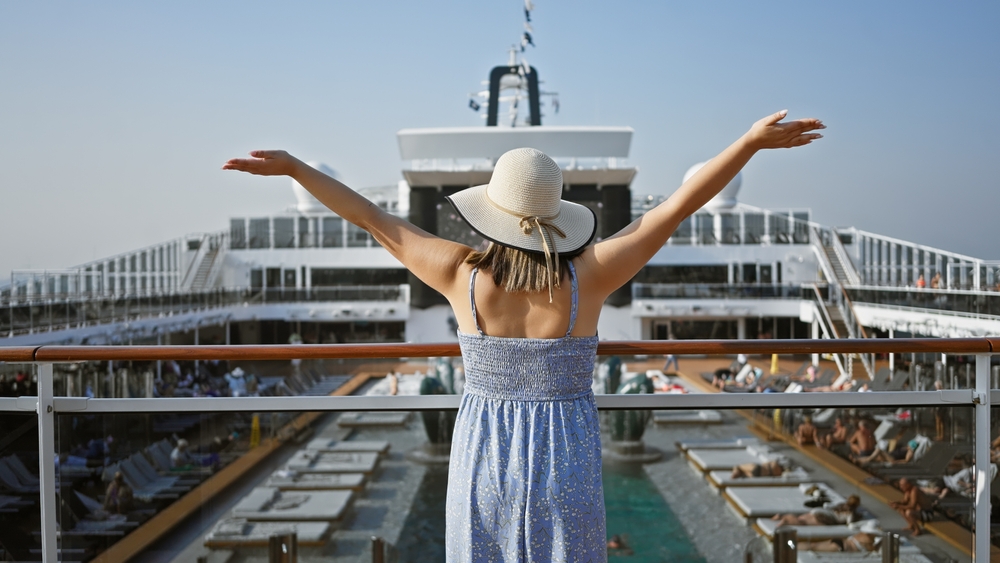
Part of the allure of cruises lies in the illusion of escape — to disconnect from the world, responsibilities, and worries back home. But that illusion can be dangerously deceptive when it masks the risks we unknowingly board along with our luggage. Many passengers step onto these ships seeking relaxation, unaware of the fragile health ecosystem they’re entering. Marketing pushes the idea of indulgence, unlimited buffets, shared pools, packed theaters — but these very features are what make cruise ships a perfect storm for disease transmission. Public surfaces are touched by thousands daily, and shared air systems circulate through rooms and hallways. In such an environment, even a single lapse in hygiene can cascade into a full-blown outbreak. Yet, because the setting feels controlled and luxurious, travelers drop their guard — and often, that’s when problems begin.
What makes this even more concerning is how slowly information spreads to the public compared to how quickly a virus spreads onboard. Cruise lines are not always quick to disclose outbreaks, fearing reputational damage. By the time reports reach the news or health agencies, dozens — sometimes hundreds — may already be infected. The Coral Princess outbreak is just one recent example, but it highlights a broader pattern where containment often lags behind transmission.
Transparency, when delayed, turns preventative action into damage control. This breakdown in communication leaves passengers vulnerable not only to illness, but to the consequences of decisions made without their informed consent. People deserve to know what kind of environment they’re walking into — not just the perks, but the risks too.
Cruises are sold as controlled, curated experiences, but real health threats don’t play by marketing rules. Without rigorous, routine inspections, the sense of safety passengers feel may be based more on perception than reality. That’s the dangerous part. When we believe we’re safe, we stop asking questions. We stop noticing the subtle signs: the rushed cleanup crew, the out-of-service restroom, the person coughing two rows down in the theater. These are the cues we overlook because we’re told we’re on vacation. But a vacation should never require turning off our awareness. If anything, the best kind of travel opens our eyes — not just to new places, but to what’s truly going on around us.
A Broader Public Health Wake-Up Call

What’s happening on cruise ships isn’t just a travel story — it’s a reflection of how we, as a society, respond to public health. When oversight systems are weakened, when transparency is sacrificed for image, and when convenience is chosen over precaution, we end up gambling with people’s well-being. The cruise industry isn’t operating in a vacuum; it’s part of a larger ecosystem where health risks, once considered isolated incidents, can ripple across borders and communities. A Norovirus outbreak doesn’t stay at sea. Passengers disembark, sometimes still contagious, interacting with airport staff, ride-share drivers, hotel workers, and family members. What begins as poor sanitation on a ship can quickly evolve into a public health concern on land.
Experts in epidemiology have long warned about how tightly interconnected modern travel and disease transmission are. According to the CDC, Norovirus causes between 19 to 21 million illnesses annually in the U.S. alone. While the majority of those happen on land, outbreaks aboard cruise ships draw significant attention because of how concentrated and explosive they can be.

And yet, because cruises represent only a fraction of total Norovirus cases, there’s a tendency to minimize their relevance. That’s a mistake. These ships are more than leisure vessels; they’re microcosms of how diseases behave in dense, closed systems — and how fragile our safeguards really are when they’re not consistently enforced.
The real warning isn’t just about cruise ships — it’s about what happens when we let profit-driven systems oversee public health without independent checks. It’s a cautionary tale for other industries, too — from air travel to nursing homes to food service. Health inspections, regulations, and monitoring programs may not be glamorous, but they are the invisible threads that hold public safety together. When those threads are cut, as with the Vessel Sanitation Program, the system doesn’t immediately collapse — but its failure becomes a matter of time. If we treat public health like an optional expense, we shouldn’t be surprised when preventable problems grow into unmanageable crises.
Think Before You Sail — And Beyond
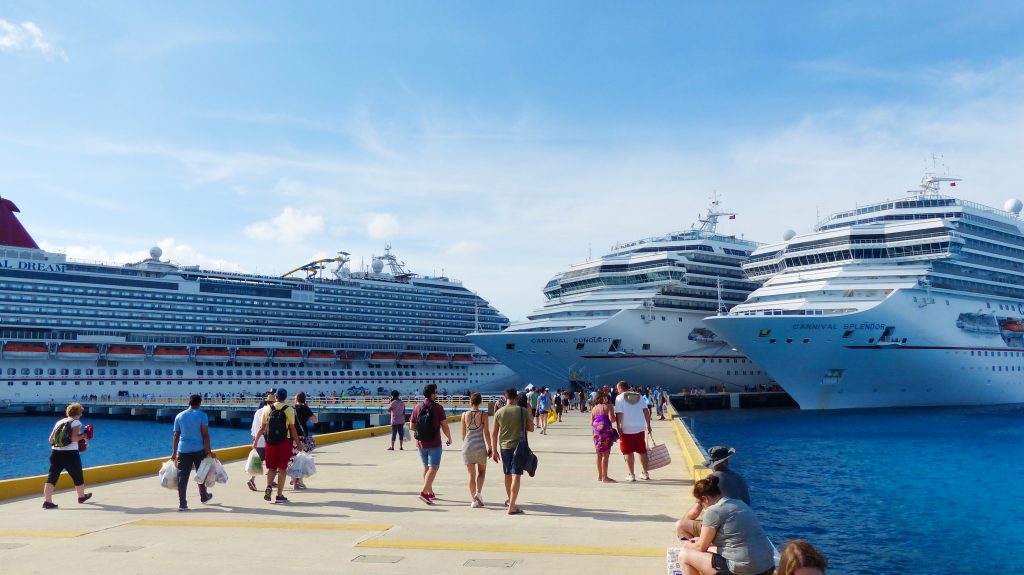
If there’s one thing this unfolding story teaches us, it’s this: awareness is everything. Not just when booking a cruise, but in how we navigate a world increasingly built on convenience and surface-level comfort. We can’t keep buying into the illusion that if something looks clean, sounds safe, or is wrapped in luxury, it must be trustworthy. That’s not skepticism — that’s wisdom. Before we put our health, time, and money into anything, we have to ask better questions: Who’s holding this system accountable? What happens when things go wrong? Who pays the price when oversight disappears? Because more often than not, it’s regular people — not corporations — who bear the consequences.
This isn’t just about skipping your next cruise. It’s about becoming more conscious of the systems we engage with, the standards we accept, and the blind spots we ignore. It’s about demanding transparency not just from the travel industry, but from every institution that affects public health and safety. We’re living in a time when information is more accessible than ever — yet many of us still walk into decisions unaware of the risks, simply because we’re told it’s all “under control.” That’s not enough. It never was. We deserve more than a curated experience — we deserve the truth behind it.
So, the next time you’re offered an escape — whether it’s a cruise, a deal, a promise — pause. Ask what lies beneath the offer. Be curious, not complacent. Because real freedom isn’t found in avoiding discomfort; it’s found in being informed enough to choose wisely. And that, more than any vacation, is what protects your peace.