
Your cart is currently empty!
Reason Eminem Has Filed a Lawsuit Against Mark Zuckerberg’s Meta for Over $100,000,000

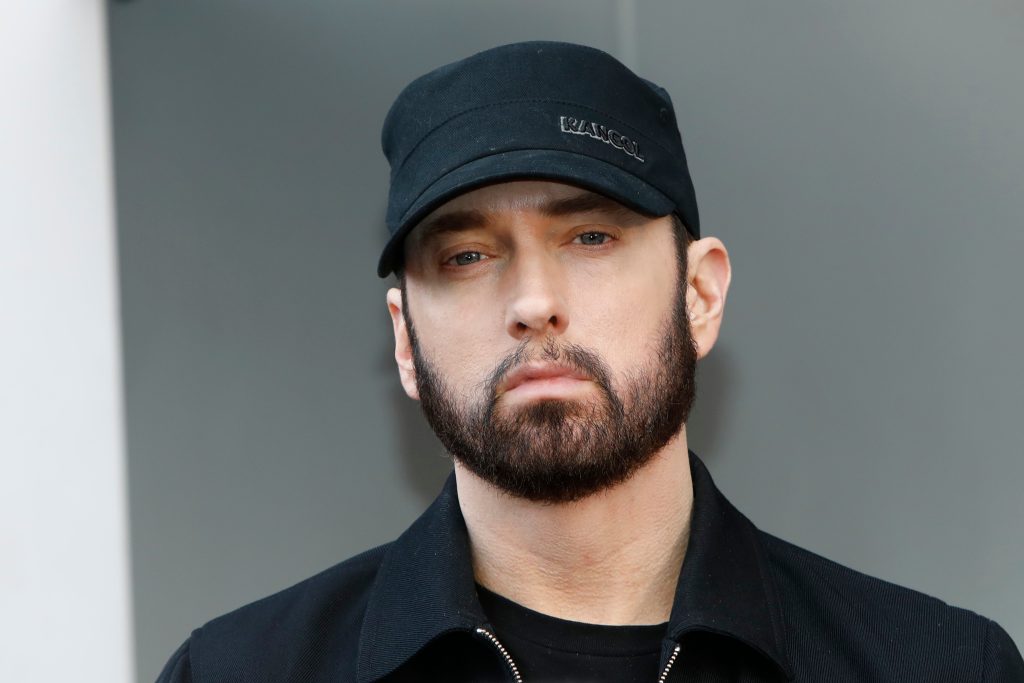
In a legal clash pitting one of hip-hop’s most valuable catalogs against a global tech empire, a blockbuster lawsuit has been filed against Mark Zuckerberg’s Meta Platforms for over $100 million. While the lawsuit centers on the iconic and culture-defining music of Eminem, the artist himself is not the one suing. Rather, the action is being brought by his longtime music publisher, Eight Mile Style, LLC, in a legal battle that goes far beyond a simple dispute over royalties. At its heart is a potent accusation: that Meta Platforms, the parent company of Facebook, Instagram, and WhatsApp, engaged in “knowing and willful” copyright infringement on a massive scale.
Contents
show
The lawsuit seeks staggering damages, but more importantly, it sets the stage for a high-stakes confrontation that could send shockwaves through the digital economy, potentially redefining the legal responsibilities of social media platforms when it comes to the music that fuels their user engagement.
Meta’s ‘Smoking Gun’ in Eminem Copyright Battle
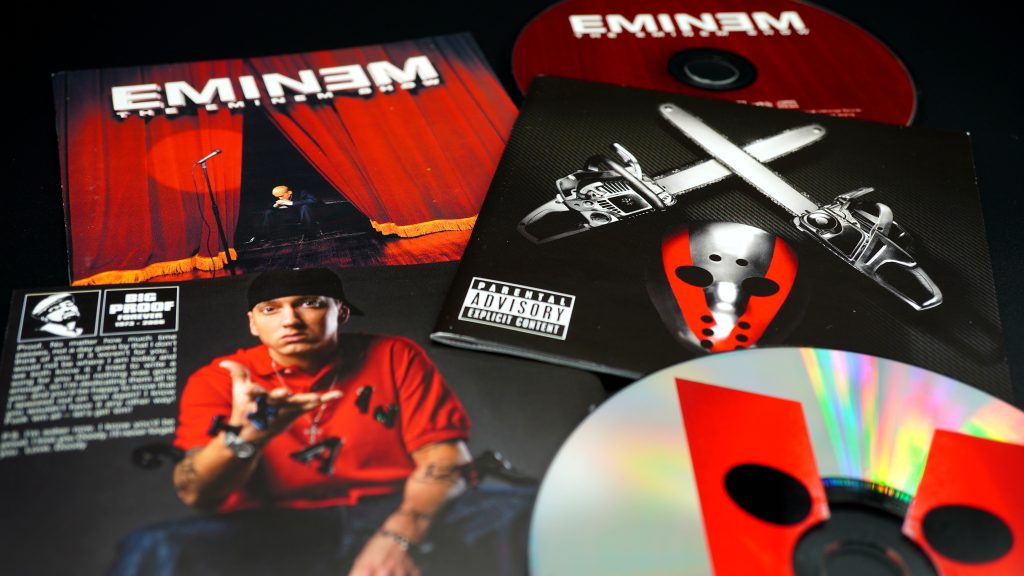
At the heart of the lawsuit is the claim that Meta made 243 of Eminem’s foundational compositions—works described in the legal complaint as “some of the most valuable in the world,” including the Academy Award-winning track “Lose Yourself”—available to its billions of users without a license. The complaint alleges that these songs were incorporated into Meta’s own “Music Libraries,” allowing users to easily add them as soundtracks to their content on features like Instagram Reels. According to Eight Mile Style, this amounts to the “unauthorized storage, reproduction and exploitation” of its intellectual property for Meta’s commercial gain.
However, the legal strategy goes deeper than a standard copyright claim. The crux of the argument, and the key to the nine-figure demand, rests on the assertion that Meta’s infringement was “knowing and willful.” This legal distinction is critical.
In a typical copyright case, damages are meant to be compensatory. But if a plaintiff can prove the infringement was willful—meaning the defendant knew it was violating the law and did so anyway—the court can award punitive statutory damages of up to $150,000 per infringed work.
To prove this, Eight Mile Style points to what it presents as a smoking gun: failed licensing negotiations that took place in 2020. The complaint details that Meta entered discussions with a digital royalty firm to secure licenses for its music library. However, the publisher asserts that it never granted that firm the authority to license its catalog and, more importantly, that “Meta knew that no license was granted.” The lawsuit contends that despite this explicit failure to secure permission, Meta proceeded to make the songs available on its platforms, a move the plaintiff argues is clear evidence of a willful disregard for its copyrights.
How Eminem’s Legal Team Built a $109 Million Case Against Meta
The headline-grabbing demand for $109,350,000 is not an arbitrary figure but the product of a specific and aggressive legal strategy. The calculation is based on the plaintiff’s request for the maximum possible statutory damages for willful infringement, multiplied across every song and every major platform. The math is as follows: $150,000 (maximum per work for willful infringement) x 243 musical compositions x 3 platforms (Facebook, Instagram, and WhatsApp). This “per-platform” multiplier is an ambitious legal posture that argues each platform constitutes a separate and distinct act of infringement, dramatically inflating the potential liability.
This approach represents a calculated choice to pursue “statutory damages” instead of “actual damages.” Rather than embarking on the complex and costly process of proving the exact financial harm suffered and the profits Meta gained, Eight Mile Style has opted for a path laid out by the Copyright Act.
This streamlines the legal battle, shifting the focus from contentious financial discovery to proving two core points: that infringement occurred, and that it was willful. If the court agrees, the path to a massive award is set by the statute itself, making it a potent legal weapon against a trillion-dollar corporation for whom the cost of litigation might otherwise be a rounding error.
Beyond the monetary demand, the lawsuit also seeks a permanent injunction. This is a court order that would prohibit Meta from any future unauthorized use of the 243 compositions. While the financial penalty is substantial, an injunction could prove even more disruptive to Meta’s business. It would legally compel the company to proactively and permanently remove the entire catalog from its music libraries and implement robust filtering to prevent users from re-uploading the content. The threat of this operational disruption serves as another powerful point of leverage for the publisher.
Meta’s Bid to Reframe the Infringement Narrative
In response to the nine-figure lawsuit, Meta has cultivated a counter-narrative designed to reframe the conflict from one of corporate theft to a simple business dispute gone awry. The company’s public relations and legal strategy aims directly at the core of the “willful” infringement claim. In a statement, a company spokesperson asserted that Meta “had been negotiating in good faith with Eight Mile Style, but rather than continue those discussions, Eight Mile Style chose to sue.” This statement is a strategic effort to portray the lawsuit not as a necessary enforcement action, but as a premature and aggressive tactic from a publisher who abandoned the negotiating table.
Should the case proceed to trial, Meta is expected to deploy a multi-layered legal defense. The central battleground will be the issue of willfulness. Its legal team will argue that any potential infringement was not a deliberate act, characterizing the complex world of global music licensing as a source of potential confusion.
The failed licensing talks will be presented not as a clear “no” that was ignored, but as one part of an ongoing, complex negotiation that had not yet reached its conclusion. Success on this point alone would be a major victory, as it would remove the possibility of the enhanced $150,000 per-work statutory damages.
Furthermore, Meta will almost certainly assert its protection under the Digital Millennium Copyright Act’s (DMCA) “safe harbor” provisions. This legal shield generally protects online service providers from liability for copyright infringement committed by their users. Meta will likely argue that it is a passive host for user-generated content and has policies in place to respond to takedown notices, attempting to distance itself from the role of a primary publisher. Finally, its lawyers will vigorously contest the plaintiff’s damages calculation, arguing that the infringement of a single song should be treated as one single act, regardless of whether it appeared on Facebook, Instagram, or WhatsApp—an argument that, if successful, could reduce the potential damages by two-thirds.
How a Spotify Court Loss Fueled a New Legal Strategy
To fully understand the legal chess match unfolding against Meta, one must look at a prior, high-stakes battle that Eight Mile Style lost. The publisher’s current strategy was not formed in a vacuum; it was forged in the fire of a painful legal defeat against another tech giant, Spotify. This history provides critical context, revealing a legal approach that has been tested, defeated, and meticulously refined.
In 2019, Eight Mile Style sued Spotify on similar grounds of copyright infringement. The case reached a stunning and paradoxical conclusion in August 2024. The judge delivered a split decision: first, he found that Spotify had, in fact, committed copyright infringement and did not have a valid license for the Eminem compositions. However, he then dismissed the entire lawsuit based on a legal doctrine known as “equitable estoppel.” The court concluded that Eight Mile Style had known about Spotify’s infringement for years but had taken no decisive action, instead continuing to accept royalty payments through an agent. The judge characterized this as a “strategic choice to manufacture infringement damages,” ruling it was unfair to allow the publisher to profit from a situation it could have corrected much earlier.
That loss provides the single most important lens through which to view the current Meta lawsuit. The legal strategy employed now appears to be a direct and calculated response to the defense that defeated them previously. The complaint against Meta meticulously documents a timeline of proactive enforcement: Eight Mile Style contacted Meta directly about the infringement, which led to failed negotiations before the lawsuit was filed. This sequence is designed to show the court that the publisher did not sit silently on its rights but first attempted to resolve the issue, thereby inoculating itself against any claim that it was unfairly delaying litigation.
Adding another layer to this history, the complaint also references a 2013 lawsuit against Meta’s predecessor, Facebook, over an advertisement that allegedly used music “substantially similar” to an Eminem track. By establishing this prior conflict, the publisher can argue that Meta is a repeat offender that was already on notice regarding its obligation to properly license this specific catalog, further bolstering the claim that the current, larger-scale infringement was not accidental but willful.
The Music Industry’s War on Unpaid Streaming

So, when you strip away all the legal jargon, what’s really going on here? This lawsuit isn’t just a one-off skirmish between a publisher and a tech giant. It’s a major battle in a much bigger war that music creators are waging to get paid what they feel they’re owed in the age of social media. This isn’t about one artist; it’s about setting a new precedent for how the digital world values the art that makes it so engaging.
And make no mistake, the signs are everywhere. You have the National Music Publishers’ Association going after X (formerly Twitter) for a cool $250 million, and another company, Epidemic Sound, has its own massive lawsuit against Meta. It’s not just the tech platforms in the crosshairs, either. Publishers are also coming for big brands like Crumbl Cookies and Chili’s, sending a clear message that a song trending on TikTok isn’t free marketing material.
At the end of the day, whether Eight Mile Style wins this case or settles out of court, the warning shot has been fired. For platforms like Meta, the freewheeling days of “ask for forgiveness, not permission” seem to be coming to an expensive end. It all boils down to a simple truth that’s easy to forget online: in the world of copyright, there’s really no such thing as a free trend. The case against Meta is shaping up to be the most expensive reminder of that lesson anyone has seen in a very long time.