
Your cart is currently empty!
Barack Obama Issues Disturbing Warning About the Future of the U.S. Under Trump

What happens when a former president, known for measured optimism and restraint, sounds the alarm about the survival of American democracy?
Contents
show
Barack Obama has long embodied the ideal of steady, institutional leadership rarely venturing into sharp political rebukes after leaving office. But in a recent speech that cut through the noise of partisan headlines, he broke his silence with a warning both sobering and urgent: the United States, he said, is “dangerously close” to becoming an autocracy.
The moment carried weight not just for what was said, but who was saying it and when. As falsehoods about past elections harden into accepted narratives for millions, and the guardrails of democratic governance strain under executive pressure, Obama’s remarks arrive like a constitutional fire alarm. Drawing comparisons to Hungary under Viktor Orbán, where democracy exists in name but not in function, he asked Americans to reckon with a question many have quietly wondered: Is the world’s oldest democracy sleepwalking toward something far more fragile?
This isn’t mere political theater. It’s a defining conversation about what democracy still means in America and what it could become if its defenders grow complacent.
Obama Breaks Silence on “Autocratic” Tactics
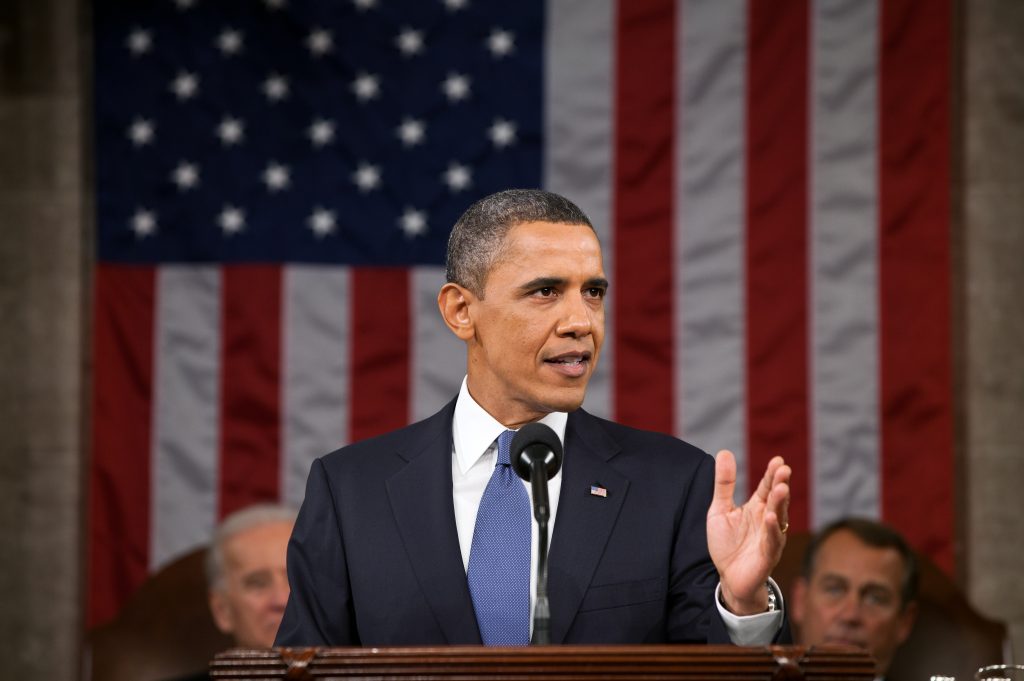
Standing on a public stage in Hartford, Connecticut, Barack Obama delivered one of the most forceful and sobering speeches of his post-presidency without ever needing to say Donald Trump’s name. His message, however, was unmistakably clear: the United States is nearing a political breaking point, and the behavior of those currently in power bears an uncomfortable resemblance to the tactics of authoritarian regimes.
Obama’s warning was not abstract. He expressed concern that key principles of American democracy truth, accountability, free institutions, and fair elections are being undermined, if not outright disregarded. “That’s the environment that autocrats are now operating in… You just have to raise enough questions, you just have to create a constant cloud of nonsense, that the truth gets buried. And people don’t know what to believe.” he said. “It is consistent with autocracies.” He pointed specifically to Hungary under Prime Minister Viktor Orbán as a contemporary cautionary tale a nation that holds elections but has steadily hollowed out democratic checks and balances.
While Obama did not reference Trump directly, the subtext was impossible to miss. He cited the continued falsehoods surrounding the 2020 election a narrative that has persisted despite an overwhelming lack of evidence and more than 60 court rulings upholding the results. “Joe Biden and Kamala Harris won. And there was no evidence of widespread fraud. They won. And the 2020 election, by the way, according to everybody who’s looked at it, was one of the most secure in our history.” Obama stated bluntly. What makes this dangerous, he argued, is not just the spread of lies, but the complicity of elected officials who know the truth yet choose to perpetuate a fiction for political gain.
These remarks mark one of the clearest lines Obama has drawn between democratic leadership and what he sees as the corrosion of civic norms under Trump and his allies. His shift in tone is also notable. For years, Obama largely stayed out of direct political critique believing that former presidents should speak with restraint. But that silence, he now implies, can no longer be justified. As institutions strain under the weight of disinformation and disregard for legal limits, he appears to believe that the risks of speaking out are far outweighed by the consequences of staying quiet.
The Theory of How Democracies Die Quietly

“Autocracy,” National Geographic explains, is government in which a single ruler exercises absolute power, leaving citizens with no meaningful say over laws or their enforcement. Political scientists now add a modern nuance autocratic legalism to describe systems that keep democratic façades (elections, courts, parliaments) while hollowing out their liberal core. It is this stealthy mutation, Barack Obama argues, that is edging the United States toward terrain more familiar in Viktor Orbán’s Hungary than in Jefferson’s America.
Freedom House, which has tracked global political rights and civil liberties since 1973, scored the United States at 94/100 a decade ago; by 2024 that figure had fallen to 83/100, an 11-point slide driven by rising disinformation, partisan assaults on voting access, and weakening checks on executive power. Hungary illustrates where such erosion can lead: once rated “Free,” it now languishes in the “Partly Free” category after Orbán’s decade-long campaign to dominate media, courts, and election Obama’s reference to Budapest was therefore less rhetorical flourish than data-driven alarm.

The theory of autocratic legalism shows that leaders need not suspend elections or abolish courts to consolidate power; they can simply rewrite rules, pack institutions with loyalists, and delegitimize unfriendly media until pluralism survives only in name. Scholars note that by the time citizens feel the loss when they personally need an impartial judge or an unfettered press it is often too late to reverse course. Obama’s speech casts this academic insight into tangible American realities: the persistence of election-fraud myths, threats to prosecute political rivals, and calls for expanded presidential immunity all belong to the same autocratic toolbox.
Freedom House’s unusual decision in 2021 to focus an entire U.S. report on ballot protections underscores how unprecedented the current democratic stress test has become. Obama’s fear, then, is less about a sudden coup than about gradual normalization citizens acclimating to rule-bending until the line between democracy and autocracy blurs. “We’re not there yet,” he cautioned, “but we are dangerously close.”
A Call for Common Ground and Civic Courage

While Barack Obama’s warnings about democratic erosion are undeniably grave, his message is not one of resignation. Rather, he offers a blueprint for resistance rooted not only in protest, but in principled leadership and engaged citizenship. Preserving democracy, he insists, is not the responsibility of elected officials alone, but of the broader society that empowers and sustains them.
Obama emphasized that the defense of democratic norms must transcend party lines. “There also has to be people in government in both parties who say, ‘No, you can’t do that,’” he asserted. This bipartisan appeal is rooted in an understanding that democracy is not inherently self-correcting; it depends on leaders willing to check power, honor institutional limits, and speak out against abuses—regardless of political cost.
He lamented the complicity of those who knowingly repeat falsehoods or stay silent as norms are dismantled. The refusal to challenge misinformation about the 2020 election, for example, is not just a partisan failure it’s a failure of civic duty. In his view, the long-term health of American democracy hinges on lawmakers choosing institutional integrity over short-term political loyalty.
The Power and Limits of Protest
Recent months have seen an uptick in civic mobilization, including thousands of “No King” rallies across the country. These protests, sparked by concerns over authoritarian tendencies and the militarization of public institutions, demonstrate that the public is not apathetic. Obama praised this activism as both necessary and energizing.
However, he cautioned that protests alone are insufficient without corresponding action inside the system. Civic engagement must be paired with policy reform, institutional accountability, and voter participation. “Delivering on change,” he said, “is a game of addition, not subtraction.” In other words, lasting impact requires building coalitions, not purging those with whom we partially disagree.
Building Bridges, Not Walls
A central theme in Obama’s remarks was the importance of finding common ground. In an era marked by polarization and political tribalism, he advocated for a return to shared humanity as the basis for civic cooperation. Quoting Abraham Lincoln, he invoked the idea of appealing to the “better angels of our nature,” urging Americans to see themselves in one another and rediscover mutual trust.
This isn’t simply a moral ideal Obama frames it as a strategic necessity. In a fragmented society, change does not come from purity tests or ideological absolutism, but from collaboration and empathy. “You have to find ways to make common ground with people who don’t agree with you on everything but agree with you on some things,” he said. It’s a call not for centrism, but for pragmatism guided by values.
The Responsibility of Citizens

Underlying all of Obama’s reflections is a call to civic responsibility. Democracy, he reminds us, is not maintained by any single officeholder or election; it survives through the vigilance, participation, and moral courage of its people. That includes voting, yes but also staying informed, demanding accountability, engaging with community issues, and resisting the urge to retreat into cynicism.
In this light, civil society nonprofits, faith organizations, educators, local leaders, and everyday citizens becomes a democratic safeguard. These networks form the connective tissue that holds communities together and creates resistance to top-down authoritarian impulses.
A Defining Test for American Democracy
Barack Obama’s warning is not simply about one man or one election. It is about the long arc of American self-governance and whether it can still bend toward justice when tested by polarization, power, and disinformation. His message in Hartford was not a partisan appeal, but a plea to recognize the slow drift toward autocracy for what it is: a systemic failure of accountability, truth, and civic courage.
The former president did what many current leaders have failed to do: speak plainly about the risks facing the nation while offering a path forward rooted in responsibility rather than fear. He reminded Americans that democracy is not invincible it is a compact that must be renewed by every generation. And that renewal begins not in Washington, but in communities, conversations, and the willingness to act.
Obama’s call to action is ultimately a call to remember who we are as a nation: not just a collection of voters or consumers, but citizens bound by a shared stake in the rule of law, in institutions that outlast any single leader, and in a society where each voice still has the right to be heard.
Whether that promise endures or becomes a relic of a more idealistic past now depends on what the nation chooses to do next.