
Your cart is currently empty!
An Underwater Volcano the Size of a City is Ready to Erupt
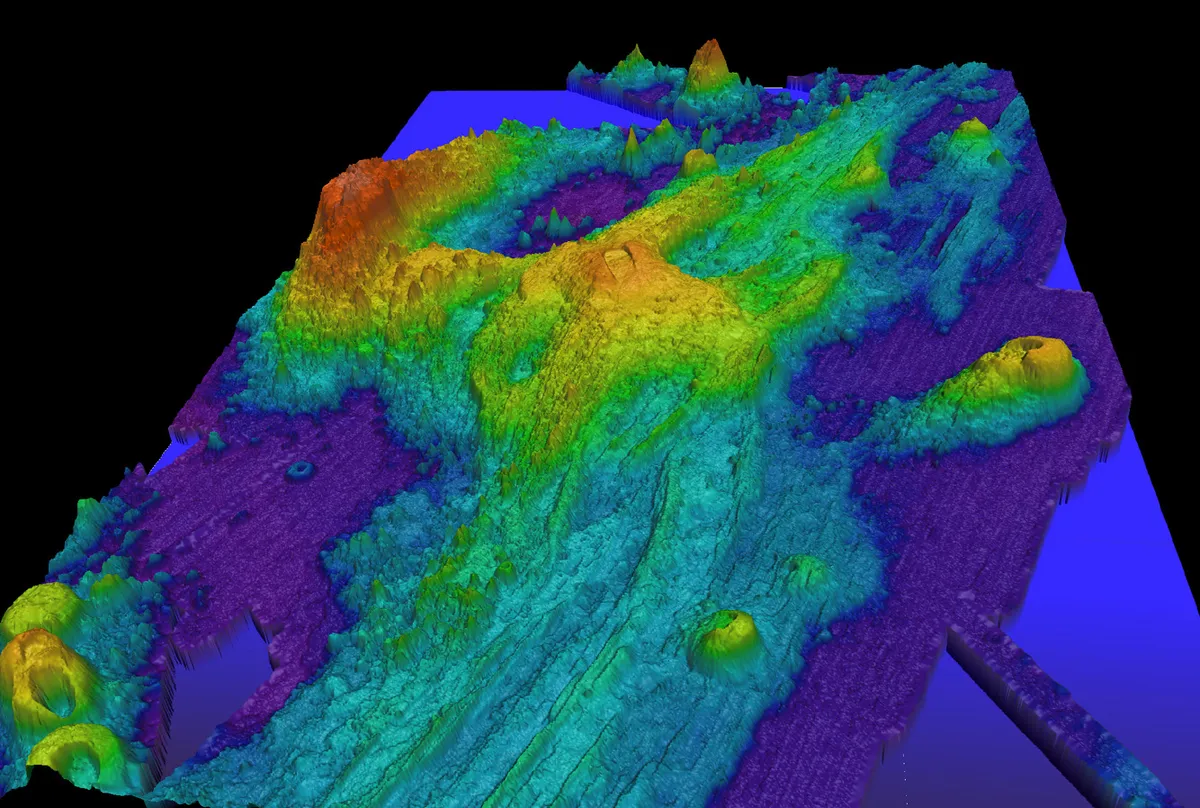
Beneath the rolling waves of the Pacific Ocean, far beyond the reach of sunlight or human sight, a colossal force is quietly gathering strength. It’s not the plot of a science fiction film it’s real. Roughly the size of a major city and nearly a mile beneath the surface, Axial Seamount, one of Earth’s most closely studied underwater volcanoes, is swelling once again. And scientists believe it’s about to erupt.
Contents
show
But don’t expect fiery skies or emergency broadcasts. You won’t feel a tremor underfoot. This eruption won’t threaten homes or ignite wild panic. In fact, most of the world won’t even notice when it happens. So why are some of the world’s top geologists, oceanographers, and planetary scientists riveted by its every move?
Because Axial is no ordinary volcano. It’s a living, breathing engine of the seafloor one that has not only helped shape our planet but also sustains entire ecosystems in total darkness. And now, with a sophisticated web of instruments tracking its every quiver, humanity is getting an unprecedented front-row seat to one of Earth’s most mysterious and mesmerizing processes.
What’s building beneath the waves isn’t just magma. It’s insight into how our planet forms, how life survives in the harshest places, and how pressure, even in silence, can lead to transformation.
The Silent Giant Beneath the Waves
Out of sight and often out of mind, Axial Seamount looms silently beneath nearly a mile of ocean water, approximately 300 miles off the Oregon coast. To the casual observer, it’s just another point on the map unseen, unheard, and unfelt. But to scientists monitoring the pulse of our planet, it is one of the most intriguing and closely watched volcanoes on Earth. About the size of a major metropolitan city, this submerged mountain is currently swelling with magma and showing signs of an impending eruption.
Unlike iconic land volcanoes like Mount St. Helens or Vesuvius, which erupt with fire, ash, and chaos, Axial operates in secrecy. It has no dramatic plumes or lava spewing into the air. Its eruptions don’t darken skies or prompt evacuations. In fact, if you were sailing directly above it, you likely wouldn’t know anything had happened at all. “If you were out there on a ship right over the seamount, you would never know anything was happening,” said Dr. Bill Chadwick, a volcanologist at Oregon State University.
And yet, this quiet mountain is anything but inactive. It is one of the most volcanically active sites in the Pacific Ocean, having erupted three times in just the past 25 years in 1998, 2011, and 2015. The next eruption could be just months away. What makes Axial Seamount especially fascinating isn’t just its frequency it’s the rhythm. Most volcanoes lie dormant for centuries before suddenly waking with catastrophic force. Axial, on the other hand, follows a more predictable, observable cycle. Scientists have likened it to a balloon slowly inflating until it hits a familiar breaking point, then deflating and beginning the cycle again.
Axial’s relatively “tame” behavior doesn’t make it any less important. In fact, its steady pace and accessibility through undersea monitoring systems have turned it into a natural laboratory for understanding volcanic processes. Its eruptions reshape the seafloor, fuel complex ecosystems, and release data that could help scientists better forecast more dangerous volcanic events elsewhere.
What Makes Axial Seamount Unique?
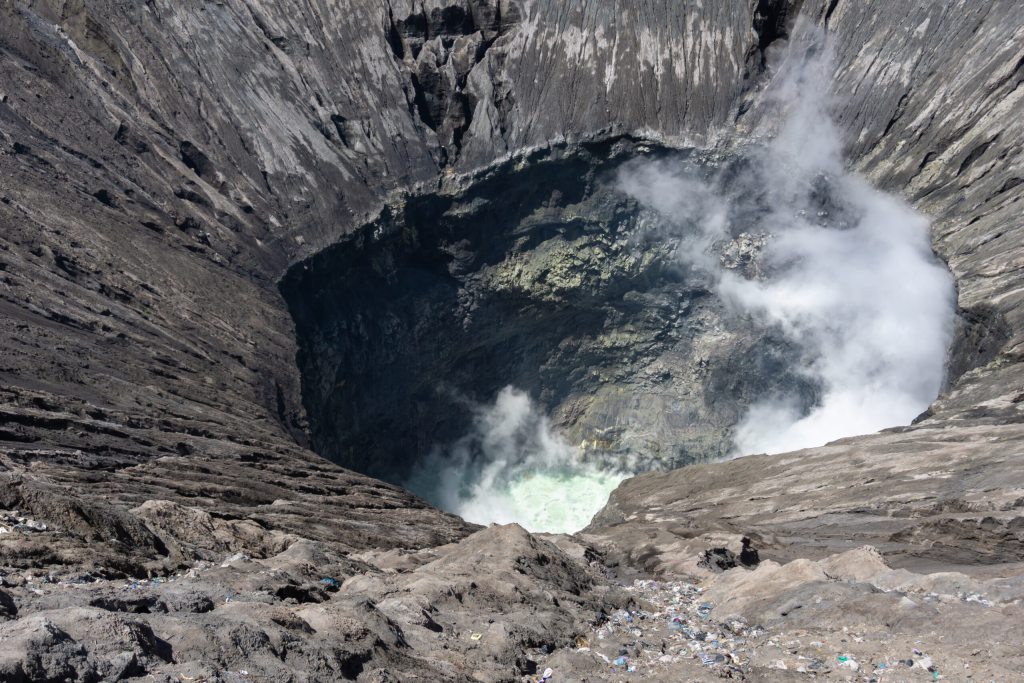
Let’s break that down. The Juan de Fuca Ridge, where Axial is located, is a boundary between two tectonic plates that are gradually pulling apart. This continuous rifting allows magma to rise from the mantle and create new oceanic crust, a slow but unrelenting process that has shaped the seafloor for millions of years. Now add a mantle hotspot into the equation: a fixed, vertical plume of superheated magma rising from deep within Earth. When these two elements converge, as they do at Axial, you get a persistent, well-fed volcano one that doesn’t wait centuries to erupt, but decades.
Marine geophysicist Dr. William Wilcock of the University of Washington calls this confluence “not very common,” and it’s the reason Axial has erupted multiple times in recent decades. Unlike explosive volcanoes that build pressure until they violently burst, Axial is a shield volcano, characterized by its broad, gentle slopes and low-viscosity lava. Its eruptions are less dramatic, with magma quietly oozing out across the seafloor, forming pillow-like structures as it cools rapidly in the cold ocean water.
But the volcano’s most remarkable feature may be how deeply and continuously it’s monitored. Thanks to the Regional Cabled Array, a network of more than 140 seafloor instruments and 660 miles of fiber-optic cable, scientists receive real-time data from Axial’s depths. They can track inflation (the rising of the seafloor due to magma buildup), record thousands of small earthquakes, analyze vent chemistry, and even livestream high-definition video from the caldera.
This rich, continuous stream of data has enabled scientists to identify a remarkably consistent pattern: before each eruption, the volcano inflates to nearly the same level. When that threshold is reached, pressure is released, magma flows, and the seafloor collapses slightly only to begin inflating once more. It’s like watching the Earth breathe.
How Scientists Know It’s About to Erupt
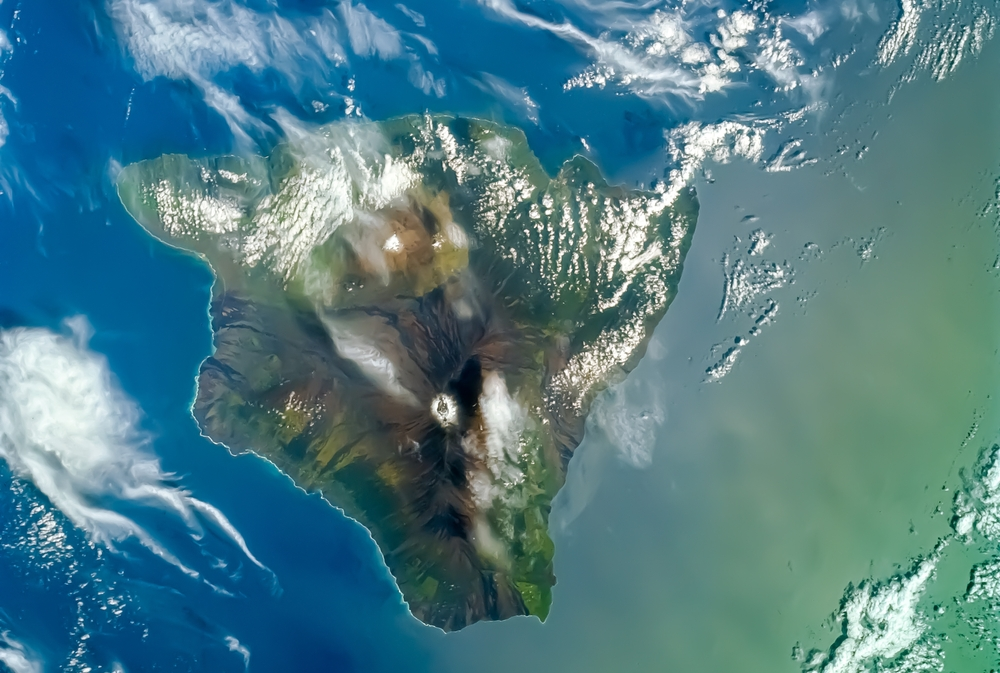
The first and most telling indicator is inflation. Over time, as magma accumulates beneath the volcano, it pushes upward against the crust, causing the seafloor to physically rise. This process, invisible from the surface but measurable with sub-millimeter precision, is like air filling a balloon. Before each of Axial’s three previous eruptions (1998, 2011, and 2015), the volcano swelled to a nearly identical level before finally venting. Today, it has once again reached about 95% of that pre-eruption inflation threshold, according to Dr. William Chadwick of Oregon State University.
To measure this subtle swelling, scientists rely on the Regional Cabled Array a vast network of 140+ sensors and 660 miles of fiber-optic cable snaking across the seafloor. These instruments transmit real-time data on everything from ground movement and pressure changes to fluid chemistry and vent temperature. It’s as if the Earth itself were wired with a heartbeat monitor.
Alongside inflation, seismic activity provides another crucial clue. As magma forces its way upward, it fractures rock, triggering swarms of tiny earthquakes. In 2015, just before Axial erupted, researchers logged about 10,000 microquakes in a single day. Right now, the rate is more modest between 200 and 1,000 per day but still well above background levels. While not yet as intense as past swarms, the persistent seismicity is enough to keep scientists alert.

What makes Axial even more fascinating and slightly surreal is that its activity seems to be influenced by the moon. Gravitational forces from lunar tides cause subtle pressure changes on the ocean floor. During low tide, when the weight of the water pressing down on the crust slightly lessens, earthquake activity often spikes. Marine geophysicist Dr. Maya Tolstoy of Columbia University explains that Axial is “under a state of critical stress now. Even tiny decreases in pressure could be enough to tip it over.”
These patterns are more than curiosities they represent one of the first instances where volcanologists have been able to successfully predict an eruption months in advance. In 2014, Chadwick and geophysicist Scott Nooner forecasted Axial’s next eruption within seven months of its actual occurrence in April 2015. That success set a precedent, showing that careful monitoring of inflation and seismicity could yield predictive power even for one of nature’s most volatile processes.
Still, no prediction is guaranteed. As volcanologist Valerio Acocella of Roma Tre University cautions, “There’s no crystal ball.” The signs point to eruption, but whether it happens tomorrow or in several months remains uncertain. What is certain, however, is that when Axial finally does erupt, scientists will be watching and listening closer than ever before.
Axial’s Ecosystem
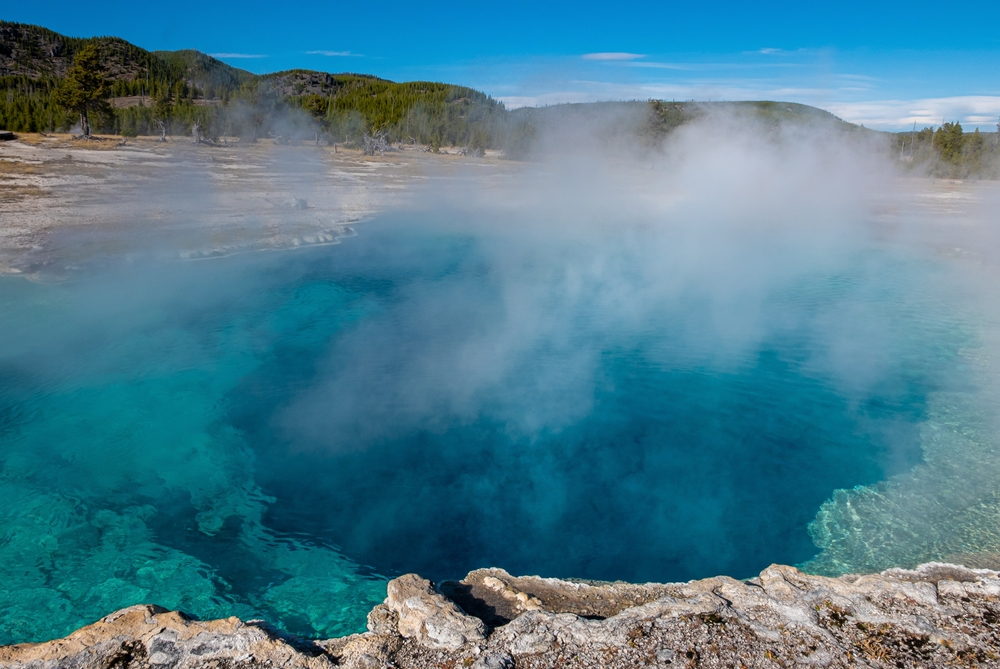
At the heart of this strange world are hydrothermal vents underwater geysers that spew mineral-rich water heated by magma deep below the seafloor. Temperatures at these vents can soar above 700°F (370°C), yet they serve as the foundation for vibrant biological communities. Here, life is driven not by photosynthesis, but by a process called chemosynthesis. Microbes feed on hydrogen sulfide, methane, and other volcanic gases, converting them into energy in the absence of sunlight. These microbes form the base of a food web that includes giant tubeworms, clams, crabs, eelpouts, and even octopuses.
As Deborah Kelley, director of the Regional Cabled Array, explains, “Most of the seafloor is relatively plain. But when you get to the vent fields, you realize that the volcano is an oasis of life.” These vent ecosystems are not just biologically rich they’re also incredibly resilient. During Axial’s 2011 eruption, for instance, entire vent communities were buried beneath lava. Just months later, researchers returned to find new life already recolonizing the area. Microbial mats had begun to spread again, and vent animals were reappearing adapting to a freshly changed world.
This cycle of destruction and rebirth isn’t just ecologically fascinating it’s scientifically important. Studying life around Axial gives researchers rare insight into how life might exist in extreme environments, such as beneath the icy crusts of moons like Jupiter’s Europa or Saturn’s Enceladus. It also offers clues about Earth’s own distant past, when sunlight may not yet have reached the primordial oceans, and life was first taking hold around similar vent systems.
But these systems are also fragile. Each eruption that creates new seafloor simultaneously disrupts carefully balanced ecosystems. The recovery is fast by geological standards but still represents a stark reminder of how interwoven geological and biological processes are on this planet.
Is It Dangerous? What You Should Know

Despite its growing pressure and inevitable eruption, Axial poses no threat to human life or coastal communities. Located roughly 300 miles off the Oregon coast and nearly a mile beneath the ocean surface, it is simply too remote and too deep to impact the land above. “You won’t see ash clouds above water or anything dramatic,” said marine geologist Deborah Kelley. “It’s like if you put a mile of seawater on top of Kilauea.”
Axial’s eruptions are quiet and contained, not explosive. That’s due to the type of volcano it is: a shield volcano, named for its broad, low-profile shape. Its lava is low in gas and relatively fluid, meaning it oozes rather than blasts. When Axial erupts, lava spreads gently across the ocean floor, rapidly cooling into pillow-shaped basalt formations. There are no towering plumes, no explosive shockwaves, and no dangerous debris clouds.
What about earthquakes or tsunamis? Again, the risks are minimal. While Axial does experience hundreds of small earthquakes daily as magma rises, these are generally microquakes far too weak to be felt on land. Importantly, Axial is not connected to the Cascadia Subduction Zone, the tectonic fault responsible for the much-feared “Big One” that could eventually rock the Pacific Northwest. The two systems are geologically separate, so Axial’s eruption won’t trigger Cascadia and vice versa.
Even marine life in the surrounding waters remains largely unaffected. While nearby species may feel the subtle rumble of shifting rock or slight changes in temperature, the impact on large ocean dwellers like whales, dolphins, and fish is negligible. The most affected creatures are those living directly on or near the hydrothermal vents ecosystems that, as we’ve seen, are remarkably quick to bounce back.
In fact, the most significant “danger” Axial presents is not physical at all it’s the risk of ignoring what it can teach us. By observing this seamount’s regular cycles and subtle signals, scientists can improve eruption forecasting techniques that might one day save lives elsewhere. In that sense, Axial isn’t a threat it’s a gift: a non-destructive, real-time model of Earth’s inner dynamics.
Listening to the Earth’s Deepest Signals
Axial Seamount may never make the evening news when it erupts. There will be no dramatic footage, no smoke on the horizon, no sirens. And yet, deep below the surface, it will change the landscape of the ocean floor, reshape ecosystems, and whisper truths about how our planet moves, breathes, and builds itself anew.
This is a volcano that doesn’t threaten it teaches. It shows us that eruptions aren’t always catastrophes. Sometimes, they’re cycles of release and regeneration. It reminds us that the planet’s most powerful transformations often happen out of sight, not in bursts of noise and color, but in the quiet, steady push of magma beneath the crust, in the silent inflation of rock, in the resilience of life clinging to vents in the dark.
Axial is not just a geological feature; it is a living symbol of nature’s complexity, a rare glimpse into the rhythms and patterns that govern Earth’s deep interior. By studying its signals, scientists are not only improving our understanding of volcanism they’re building a roadmap that may help forecast eruptions at more hazardous sites in the future.
But Axial also offers something more personal: a metaphor. That the most important changes whether in landscapes or in lives often begin where no one is looking. In pressure that builds quietly. In systems that reset and renew, rather than explode. In the understanding that what’s hidden beneath the surface may be the most powerful force of all.
As the seafloor swells and sensors hum, one thing is clear: the Earth is speaking. We just need to keep listening.