
Your cart is currently empty!
NASA claims the sun is ‘waking up’ and they have no idea why

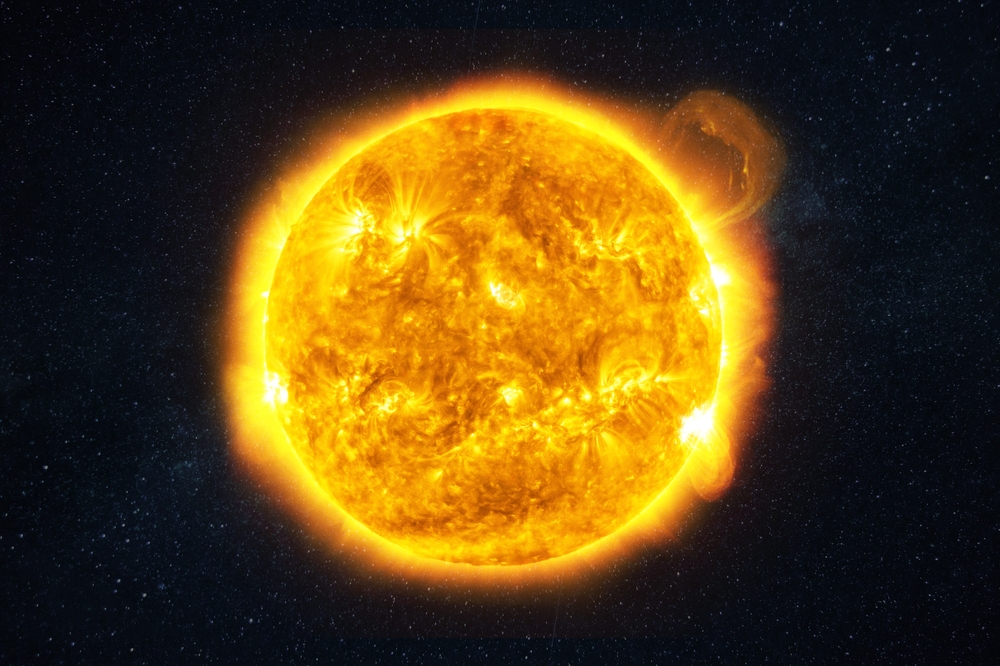
The Sun has always been the steadfast center of our solar system, its daily rhythms dictating everything from our sleep cycles to the growth of crops. Yet despite its central role in human existence, it still manages to surprise us. Recent findings from NASA suggest that the Sun is becoming more active after decades of relative calm—a phenomenon scientists are referring to as it “waking up.” What makes this resurgence especially puzzling is that it defies expectations. For years, solar activity was believed to be on a slow decline, possibly edging toward a long, subdued phase. Instead, multiple indicators show a sudden and unexplained rebound.
Contents
show
At first glance, this might sound like a niche concern for astrophysicists. But the Sun’s activity has far-reaching consequences, influencing everything from the health of satellites orbiting Earth to the electricity flowing into your home. Solar flares and eruptions can disrupt communication systems, damage power grids, and pose risks to astronauts. Beyond that, they produce stunning auroras visible far from the poles. The fact that scientists don’t fully understand why this is happening underscores a humbling truth: our knowledge of the Sun, despite centuries of observation, remains incomplete. And when the star we depend on for life behaves unpredictably, it’s not just a scientific puzzle—it’s a call for awareness and resilience.
The Unexpected Reversal in Solar Activity
For much of the late 20th century, the Sun’s activity seemed to follow a downward trajectory. Solar winds—those charged particles racing through space—were slowing down. Measurements of the Sun’s magnetic field also indicated it was weakening. To many researchers, this decline appeared to signal the onset of a quieter phase in the Sun’s history, one that could stretch for decades or even centuries. Historically, such phases have coincided with cooling trends on Earth, adding weight to the belief that the Sun was entering a new subdued era.
That narrative shifted dramatically around 2008. Instead of continuing to weaken, the Sun began showing unmistakable signs of renewed vigor. The speed of the solar wind increased, its density rose, and its temperature became hotter. Alongside these changes, the magnetic field embedded in the solar wind grew substantially stronger. This wasn’t just statistical noise; the data showed a sharp reversal that stunned many in the field of heliophysics. The anticipated quiet phase had given way to an unexpected burst of energy.
NASA scientists such as Jamie Jasinski and Marco Velli have publicly acknowledged that the Sun’s behavior in this period remains largely unexplained. While the Sun’s 11-year sunspot cycle is well documented, these broader, longer-term reversals are much harder to forecast. The result is that while scientists can predict when sunspot activity will rise or fall within a cycle, they cannot always anticipate fundamental shifts in the Sun’s baseline activity. This gap in understanding makes the Sun’s newfound “awakening” all the more compelling, but also worrisome.
The shift matters because it alters our assumptions about solar behavior. For years, scientists thought they had entered a prolonged minimum similar to the Maunder Minimum of the 17th century. Instead, the Sun has demonstrated that it is more dynamic and less predictable than models suggested. This isn’t just a quirk of astrophysics—it’s a reminder that even the systems we think we know best are capable of surprising us.

Why Scientists Were Caught Off Guard
The Sun has long been studied through the lens of its cycles. The 11-year sunspot cycle, characterized by alternating periods of solar maximum and minimum, is one of the most consistent patterns in astrophysics. There is also the Hale Cycle, which spans about 22 years and tracks the reversal of the Sun’s magnetic polarity. These cycles have helped scientists build useful models for predicting solar behavior, and for the most part, those models have served well. Yet these familiar cycles don’t account for the broader, multi-decade trends that can shift the Sun into unusual phases of activity.
In the years leading up to 2008, the decline in activity fit the expectation of a long-term downturn. Some experts even speculated that the Sun was heading into a prolonged quiet stretch, much like earlier historical phases that corresponded to cooler conditions on Earth. But when the data showed an uptick rather than a decline, those expectations were overturned. It revealed that our predictive models, while effective at shorter timescales, are insufficient when it comes to long-term solar dynamics.
Part of the challenge lies in the complexity of the Sun’s interior. Its magnetic dynamo—a process involving the movement of plasma deep within—drives much of its activity. This dynamo is not fully understood, and while simulations can approximate its effects, they cannot yet replicate its unpredictable behavior. Whether the current reversal is a short-lived fluctuation or the beginning of a longer, more active phase is an open question. Until we understand the dynamo better, surprises like this will remain possible.
This lack of clarity underscores just how much mystery remains about our own star. Despite sophisticated instruments like NASA’s Parker Solar Probe and the European Space Agency’s Solar Orbiter, the Sun resists simple explanations. For all our advances, we are still scratching the surface of understanding a force that dictates so much of life on Earth.
The Ripple Effects on Earth
When the Sun becomes more active, the consequences ripple through modern society in ways many people don’t realize. Satellites, for example, are particularly vulnerable. Increased solar wind activity can cause drag on satellites in low-Earth orbit, altering their paths and requiring adjustments to maintain stability. Electronics on satellites are also at risk from bursts of radiation, which can interfere with systems ranging from GPS to weather monitoring. Considering how much of daily life now depends on satellites, the implications are significant.
For astronauts, the dangers are even more pronounced. Outside Earth’s protective magnetic field, humans are exposed to the Sun’s radiation more directly. Solar storms can pose immediate health risks, making it crucial to time spacewalks and missions carefully. This is a particularly pressing concern as space agencies pursue longer missions to the Moon and Mars. Planning for safe travel means accounting for the unpredictability of the Sun.
On Earth itself, the most visible effect of heightened solar activity is the aurora borealis and its southern counterpart, the aurora australis. These natural light shows, while breathtaking, are the product of solar particles colliding with Earth’s atmosphere. They are beautiful reminders of the Sun’s power, but they also serve as signals of increased space weather that can disrupt infrastructure. Geomagnetic storms triggered by solar activity can induce currents in power grids, sometimes overwhelming systems. The famous 1989 storm that caused a major blackout in Quebec is a sobering example of what happens when these risks are underestimated.
The resurgence of the Sun’s activity also adds a subtle but important influence on Earth’s climate. While these effects are small compared to human-driven climate change, they can modulate patterns over time. This adds another layer of complexity for climate scientists already grappling with the challenges of modeling global warming. It is a reminder that planetary systems are interconnected, and that our technological civilization must prepare for both human-made and cosmic forces.
What Remains Unknown
Even as researchers document the Sun’s awakening, many questions remain unanswered. The biggest unknown is the cause of this reversal. The leading theory points to changes within the Sun’s magnetic field, but without a clear model, the details remain elusive. Understanding the interplay of magnetic forces within the Sun is one of the biggest challenges in modern astrophysics. Without that knowledge, predicting the Sun’s long-term behavior will continue to be difficult.
Another question is whether this renewed activity will persist. Are we witnessing the start of a more energetic era for the Sun, or is this simply a temporary surge before it settles back into quietude? The answer will shape how we prepare for future solar storms, both in terms of infrastructure and scientific investment. These uncertainties highlight the importance of continuous observation, something missions like the Parker Solar Probe are designed to address.
There is also the matter of how the Sun’s variability intersects with Earth’s climate. While scientists agree that greenhouse gases are the dominant force driving current global warming, solar activity can still introduce fluctuations. These effects are often subtle, but when combined with other variables, they can complicate predictions. Tracking these interactions will be important for refining climate models.
Finally, there is the question of preparedness. How ready are we to handle a major solar storm today? While progress has been made in monitoring space weather, vulnerabilities remain in power grids, satellites, and communication systems. Without investments in resilience, societies remain exposed to the risks posed by our star’s unpredictability.
How We Can Respond
The uncertainty around the Sun’s behavior highlights a broader lesson: resilience must be built into the systems we depend on. For space agencies, this means continuing to design satellites that can withstand radiation, and ensuring that missions are planned with flexibility to account for sudden solar storms. Space weather forecasting has improved, but its role will only grow more critical as our reliance on satellites expands.
For power grid operators, there is a pressing need to strengthen infrastructure. Upgrading transformers and building redundancies can make systems less vulnerable to geomagnetic disturbances. While these investments can be costly, they are far less expensive than recovering from a widespread blackout. Governments and utilities must weigh the costs of preparedness against the risks of inaction.
On an individual level, staying informed about solar activity may not seem urgent, but awareness can help. Space weather alerts are increasingly available through apps and agencies, and knowing when a solar storm is underway can explain disruptions in GPS or communication systems. For people in higher latitudes, it may even mean catching a glimpse of rare auroras that paint the sky with unexpected beauty.
Beyond the practical measures, there is also a philosophical dimension to this moment. The Sun’s awakening reminds us that life is unpredictable, shaped by forces far beyond our control. Just as we design resilient infrastructure, we can cultivate resilience in our personal lives—anticipating surprises, adapting to challenges, and appreciating the awe that comes with living under a dynamic, ever-changing star.
A Call for Curiosity and Resilience
The Sun’s reawakened energy is both a scientific puzzle and a practical concern. It challenges long-held assumptions about its cycles, while reminding us of the vulnerability of our technology and societies to forces beyond Earth. Yet it also offers moments of wonder, from dazzling auroras to the thrill of new discoveries.
In the face of this mystery, the best response is to stay curious and prepared. By investing in better monitoring systems, reinforcing critical infrastructure, and cultivating flexible mindsets, we can weather the surprises that the Sun may send our way. The star that gives us life is showing us once again that it is not a static presence, but a dynamic force full of complexity. Its awakening is not just about astrophysics—it is about humility, resilience, and the recognition that even the most familiar parts of our world still hold mysteries waiting to be understood.