
Your cart is currently empty!
Dolphins Recognize Friends By Tasting Their Piss, Scientists Find In Wild Experiment

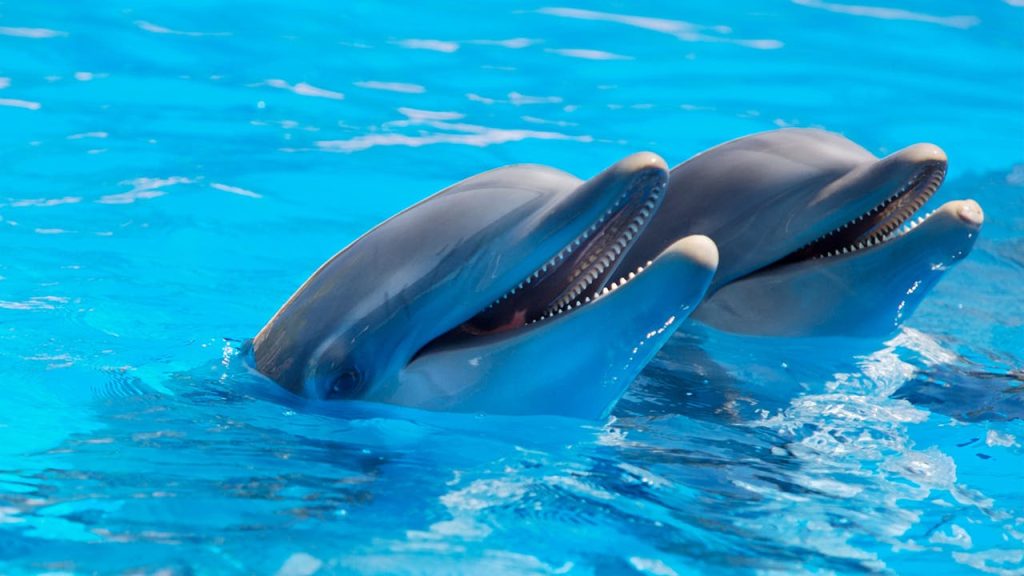
Science often surprises us by revealing that the natural world operates on principles we might never imagine. In the case of dolphins, a recent study has unveiled a form of recognition that is as bizarre as it is fascinating: these marine mammals can identify their friends not only through their unique whistles but also by tasting one another’s urine. At first glance, the discovery might sound more like an oddity fit for trivia night, yet beneath the surface lies a profound insight into how relationships are formed and maintained in the animal kingdom. It suggests that connection is not limited to the obvious senses, but can manifest in deeply unusual, even intimate ways.
Contents
show
Understanding this study requires setting aside our human biases about what counts as “normal” or “acceptable.” Dolphins live in an environment where vision is limited and sound carries farther than sight. Their social world is noisy, dynamic, and brimming with close relationships that must be maintained across shifting alliances and long distances. In such a setting, it makes sense that evolution would equip them with multiple tools for recognition. That dolphins have paired their well-documented use of signature whistles with the less-expected mechanism of taste demonstrates how flexible and resourceful life can be in finding ways to preserve bonds. And just as fascinating, it forces us to reflect on the nature of recognition and intimacy in our own species.

The Study: How Dolphins Came to Know Each Other with Taste
Researchers from the University of St. Andrews and Stephen F. Austin State University designed a series of experiments to investigate how dolphins distinguish between familiar and unfamiliar individuals. For years, scientists have known about signature whistles—unique sounds developed by each dolphin that function much like names. But in captivity, they noticed dolphins often swam with their mouths open through “urine plumes,” hinting at a behavior worth exploring. Since dolphins lack the brain structures for smell that many other mammals rely on, taste appeared to be the only sensory explanation.
To test this, scientists collected urine samples from dolphins living at Dolphin Quest facilities in Bermuda and Hawaii. These samples were presented using underwater poles, sometimes accompanied by recordings of signature whistles. The researchers tracked how long the dolphins “sampled” the water and how much attention they paid to matching versus mismatching combinations of urine and whistles. The results were striking: dolphins lingered longer when the urine came from familiar individuals, and when the whistle matched the urine, they lingered longest of all. This showed they weren’t just responding to one sense in isolation, but linking identity across sound and taste in a sophisticated way.
This is a remarkable discovery because it represents a kind of cross-modal recognition—using two different senses to confirm identity—that had not previously been documented in such a fashion in marine mammals. It reinforces the idea that dolphins carry rich mental representations of their peers, connecting not just a name but also the unique chemical signature of a friend. In human terms, it’s the equivalent of hearing someone’s voice and instantly recognizing the familiar scent of their home, only through a sensory channel we don’t typically think of.
Why It Matters: More Than Just Dolphin Trivia
At first blush, the study seems quirky enough to dismiss as a curiosity. But its implications stretch much further, offering lessons about how we perceive relationships, how animals maintain complex societies, and how science itself evolves with new discoveries. Dolphins are renowned for their intelligence, and this finding adds yet another layer to their social sophistication. What it suggests is that bonds are not merely maintained through proximity or sound, but through a much wider sensory web that creates resilience in their connections.
One significant implication lies in the idea of identity. Humans often assume that recognition revolves around visual or auditory cues: faces, voices, body language. Yet the dolphin study underscores the importance of multi-sensory recognition—where identity is not tied to one sense alone. In social species like dolphins, this makes friendships more robust, less likely to be disrupted by distance or noise. It also mirrors, in a metaphorical way, how our own relationships thrive when they are built on more than superficial markers.
Beyond that, the study is a gentle rebuke to human arrogance in assuming that our ways of perceiving the world are the default or the most advanced. The truth is that every species develops its own toolkit for navigating the complexity of life. Dolphins tasting urine may not fit neatly into our sense of what is “normal,” but in their world, it is a precise and reliable method for strengthening bonds. It broadens our perspective on communication and reminds us to approach other species with humility.
Finally, the discovery highlights the creativity of evolution. In environments where certain senses are limited—such as underwater vision—organisms adapt by amplifying others. Dolphins’ ability to integrate sound and taste into a cohesive picture of identity is a testament to that adaptability. For scientists, it’s a call to continue looking beyond the obvious, to seek out the strange behaviors that might initially seem insignificant but, on closer inspection, reveal the hidden logic of life.

What We Still Don’t Know — And What the Future Holds
As with all good research, this study raises as many questions as it answers. Chief among them is the chemical mechanism at work. What exactly in dolphin urine allows for recognition? Scientists speculate it could be lipids or proteins unique to each individual, but more investigation is needed. Uncovering these details could open doors not only in marine biology but also in our broader understanding of chemical communication across species.
Another unknown is the scope of the behavior. The dolphins in this study lived in semi-captive environments with human interaction. While their social behaviors remain largely intact, it is still worth asking whether wild dolphins, facing different pressures and environments, use taste in the same way. Observing this behavior in open seas, where dolphins form shifting alliances and must recognize friends across vast distances, would provide crucial confirmation.
There are also fascinating developmental questions. Do young dolphins learn to associate whistles with taste from an early age, or is it an ability that strengthens over time? Understanding how dolphins acquire and refine this skill could shed light on the social learning processes that are central to their communities. Finally, researchers are curious about the neurological side of this phenomenon. How do dolphins process chemical signals despite having lost many of the taste receptors common in other mammals? These mysteries ensure that the story of dolphin recognition is far from complete.
Lessons for Us: Recognition, Relationships, and Being Known
It might be tempting to dismiss dolphin urine-tasting as a biological oddity with little relevance to human life. But when framed as a metaphor, the study offers surprisingly poignant lessons about recognition and connection. Just as dolphins do not rely solely on sound to identify their companions, we too should be cautious about narrowing our sense of others to a single dimension. True friendship often involves recognizing the deeper, subtler cues—those small gestures, habits, and moments of authenticity that make a person unmistakable.
This discovery also suggests that lasting bonds are strengthened through integration. Dolphins confirm identity by linking two senses—taste and sound—just as humans may integrate what we hear, see, and feel in building trust. When we rely too heavily on one channel, whether it be appearances, words, or even digital communication, we risk missing the fuller picture of who someone is. To truly know another person requires openness to multiple forms of recognition.
Lastly, the dolphins remind us of the value of being consistent across contexts. Their friends are recognizable not only by their signature whistles but also by their chemical presence. In our own lives, being authentic—letting our values, words, and actions align—makes us recognizable in the same way. It allows us to be known not just for what we say but for who we are across situations. In a world often dominated by surface-level impressions, that kind of recognizability is invaluable.
Final Thoughts
The image of dolphins recognizing friends by tasting urine may raise eyebrows, but beneath its strangeness lies a profound message: recognition is complex, multi-sensory, and vital to the fabric of social life. This discovery pushes us to broaden our understanding of intelligence and communication, not only in dolphins but across all living beings. It is a reminder that nature often operates with more nuance and creativity than we assume.
For humans, the lesson is both scientific and personal. Relationships deepen when they are built on multiple layers of recognition, when we see beyond the surface and appreciate the full complexity of another being. In that sense, the dolphins are not just teaching us about marine biology—they are offering a mirror to reflect on our own ways of knowing, connecting, and being known.