
Your cart is currently empty!
Scientists Claim Black Hole Could Explode in the Next 10 Years—with 90% Certainty
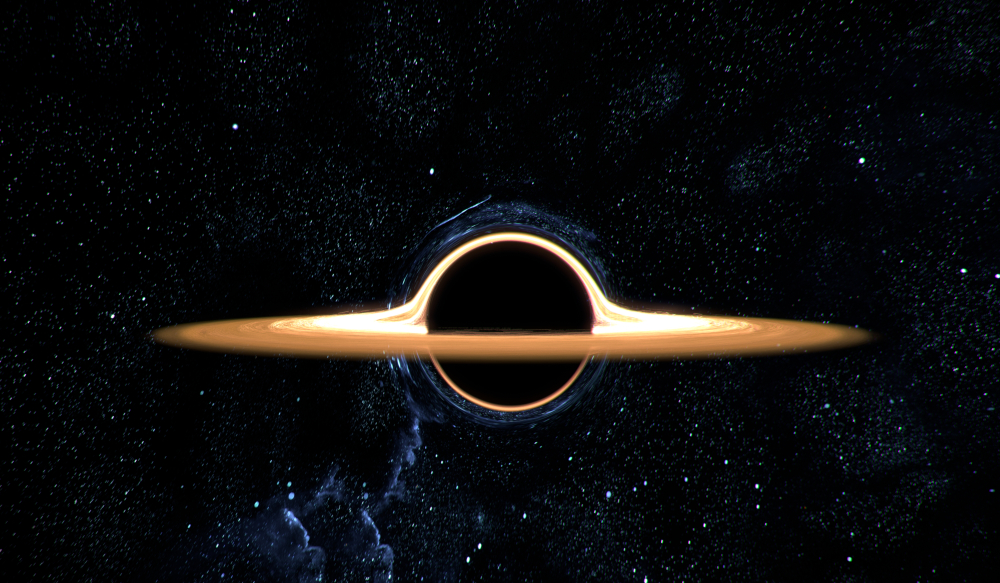
If you thought black holes were already mysterious enough, things just got even stranger. For the first time in history, scientists are predicting that within the next decade, there is a 90% chance we will witness an actual black hole explosion, a phenomenon once thought to be purely theoretical. It sounds like science fiction, but experts say the universe might soon give us front-row seats to one of the most powerful events in existence.
Contents
show
What makes this moment so remarkable is the mix of cutting-edge science and sheer cosmic drama. For decades, black holes have been treated as distant enigmas, devouring matter in silence. Now, we may be on the verge of seeing one meet its ultimate fate in a blinding release of energy. This is not just another deep-space headline; it is the potential confirmation of ideas first put forward by Stephen Hawking himself. Imagine the fireworks of billions of years of cosmic history compressed into a single explosive instant. That is what astronomers are preparing to capture.
If these predictions hold true, it could change our understanding of physics, gravity, and even the fate of the universe itself. Let us break down what this means, why researchers are so confident, and what might happen when a black hole finally “blows.”
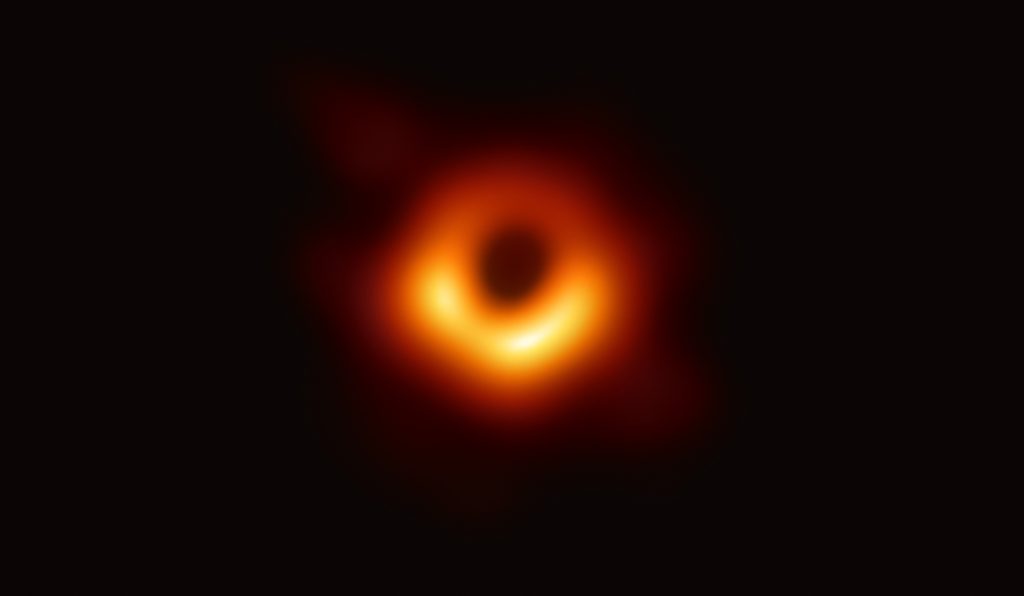
Credit: EHT Collaboration
What Exactly is a Black Hole Explosion?
Most of us think of black holes as inescapable regions of space where not even light can get out. But in the 1970s, physicist Stephen Hawking proposed that black holes are not eternal prisons. They can actually shrink and vanish over time through a process now known as Hawking radiation.
Hawking’s insight suggested that black holes are not completely black after all. Instead, they very slowly leak energy over unimaginably long timescales. For supermassive black holes, this process would take far longer than the current age of the universe. But for tiny, primordial black holes, thought to have formed shortly after the Big Bang, this gradual evaporation could now be reaching its final stage.
As a black hole loses mass, it does not just quietly fade away. Instead, when it reaches a critical tipping point, it is expected to unleash a final burst of energy, an explosion that could be brighter than every star in its galaxy combined. Some models even suggest this terminal flash could release high-energy particles that help us probe the nature of dark matter and test theories of quantum gravity.
This event, though predicted for decades, has never been directly observed. That is what makes the new research so electrifying. Not only could it prove Hawking right, it could also reveal answers to some of the most profound mysteries in modern science.

Credit: ESO, ESA/Hubble, M. Kornmesser/N. Bartmann
Why Scientists Believe It’s Likely Within 10 Years
According to recent studies published in Physical Review Letters, astronomers now say there is a 90% chance of detecting such an explosion by the mid-2030s. How can they be so sure?
One reason is cosmic demographics. The universe may be sprinkled with countless small, ancient black holes, remnants from the earliest moments after the Big Bang. These so-called primordial black holes would have been shrinking for billions of years, and many of them could now be reaching the final stage of evaporation. In other words, the timing lines up. If these black holes exist, some of them should be dying right about now.
Another factor is technology. A generation ago, even the brightest cosmic fireworks could have passed unnoticed. Today, observatories are far more sensitive. Facilities like the upcoming Vera Rubin Observatory and an array of upgraded gamma-ray detectors will give astronomers a better chance than ever to capture these rare, fleeting flashes. The improved global network of telescopes means that if an explosion occurs, multiple instruments can lock onto it within seconds.
Finally, there is the mathematics of probability. When scientists combine our knowledge of the universe’s age, the expected number of tiny black holes, and the physics of Hawking radiation, the odds point strongly in our favor. The more we learn, the clearer it becomes that we are entering a unique observational window, a moment in cosmic history where theory may finally collide with evidence.
In other words, the timing might finally be right, and humanity may soon witness something that has eluded astronomers for generations.
What Would a Black Hole Explosion Look Like
If a black hole really does explode, astronomers expect it to appear as a brilliant, short-lived flash of high-energy radiation that would outshine nearly everything else in the sky. The first signal would likely be a searing burst of gamma rays, some of the most energetic light in the universe, arriving in a sudden torrent. This would be followed by an afterglow, a fading sequence of signals that could be detected in X-ray, optical, and even radio wavelengths as the dying black hole releases its final breath of energy across the spectrum.
The scene has often been compared to a cosmic firework display, but one far beyond anything imaginable on Earth. Instruments would register a dazzling spike, astronomers would scramble to lock telescopes onto the source, and data would begin pouring in from every corner of the globe. And yet, despite the violence of the event, Earth would be completely safe. These explosions, while powerful, would only be hazardous if they occurred extremely close to us, and scientists say the odds of that are essentially zero.
In essence, a black hole’s death would be a once-in-a-lifetime show for science. A fleeting, spectacular event visible only through the sensitive eyes of modern observatories, and a reminder of just how dramatic the universe can be.
Why This Matters for Physics
Catching a black hole explosion would not just be a scientific curiosity; it would be revolutionary. The first and perhaps most profound consequence would be proving Stephen Hawking’s famous prediction right, or potentially wrong. Detecting the emission would finally confirm the existence of Hawking radiation, providing direct evidence for one of the most elegant yet elusive ideas in modern physics. Such confirmation would tie together decades of theoretical work and give scientists a new foundation for exploring the relationship between quantum mechanics and gravity.
Beyond that, the explosion could act as a cosmic laboratory. The extreme energy release would offer an unparalleled chance to study how particles and radiation behave in environments that push the laws of physics to their breaking point. This could help unravel questions about how information is stored or lost inside black holes, and whether the universe plays by rules we have yet to fully understand.
Another far-reaching implication would be the possibility of detecting multiple explosions across the sky. That would suggest the early universe may have been filled with tiny primordial black holes, long hypothesized but never confirmed. If true, these objects could even account for part of the mysterious dark matter that makes up most of the universe’s mass.

Credit: ESO, ESA/Hubble, M. Kornmesser
Countdown to Cosmic Fireworks
The idea of waiting ten years for a cosmic event might sound like a long shot, but in the grand scale of astronomy, that is practically tomorrow. Astronomers around the world are already preparing, fine-tuning observatories, and setting up automated alerts to make sure not a single flash goes unnoticed. Teams are coordinating across continents so that when the moment comes, the data will be captured from multiple perspectives, giving humanity the clearest view possible of a black hole’s final act.
For the rest of us, it is a reminder that the universe is full of surprises and that history in space science can unfold in real time, not just in textbooks. Somewhere out there, a black hole may already be in its final moments, ready to light up the cosmos in a way humanity has never seen before. When it does, the spectacle will not just belong to scientists. It will be a shared milestone for everyone on Earth, a testament to human curiosity and our ability to peer into the deepest mysteries of existence.