
Your cart is currently empty!
New Study Predicts Americans Will Move to This Tennessee City in Droves in 2026

A new predictive analysis has thrust a “scruffy” Southern city into the national spotlight, forecasting it to become the number one moving destination in the United States by 2026. This city isn’t a sprawling metropolis like New York or a tech hub like Austin. It’s Knoxville, Tennessee.
Contents
show
The forecast comes from the relocation data company moveBuddha, which projects Knoxville will have the nation’s highest in-to-out move-search ratio at 1.61—meaning for every 100 people looking to leave, 161 are planning a move in.
This prediction, however, reveals a deep and complex paradox. The very factors drawing Americans to this Eastern Tennessee hub have created a new set of challenges that may stop the “in droves” migration before it begins. A deeper look at the data reveals a story not of a simple gold rush, but of a city at a critical breaking point.
Why Great Jobs and an ‘Instant Raise’ Have People Looking

The surge of interest in Knoxville is not a random anomaly; it’s a perfectly rational response to a powerful combination of financial and economic incentives. For many high-wage professionals, the math is simple and compelling. The most significant “pull factor” is Tennessee’s welcoming tax structure. As one of only eight states in the entire nation with no individual income tax, it offers what amounts to an “instant raise” for anyone relocating from high-tax states like California, New York, or Illinois. This financial benefit is compounded by a relatively low property tax burden, making the state an attractive financial haven.
But tax breaks alone don’t create a migration boom. The incentive must be paired with opportunity, which Knoxville provides in a unique and stable way. Unlike the tourism- and hospitality-driven economy of its larger sibling, Nashville, Knoxville’s economy is firmly anchored by what local analysts call the “Twin Pillars”: public sector and academic stability.

The U.S. Department of Energy, through operations like the Oak Ridge National Laboratory and the Y-12 National Security Complex, is a massive employer. Alongside it stands the University of Tennessee, a top-three state employer. Together, these institutions create a robust, recession-proof ecosystem for high-human-capital jobs: engineers, researchers, PhDs, doctors, and other highly skilled professionals. This high-wage, stable job market, when combined with the zero-income-tax incentive, forms the logical, compelling economic calculation that explains exactly why so many people are online, researching a move to Knoxville.
Safe Streets and Mountain Views Create the Lifestyle Pull
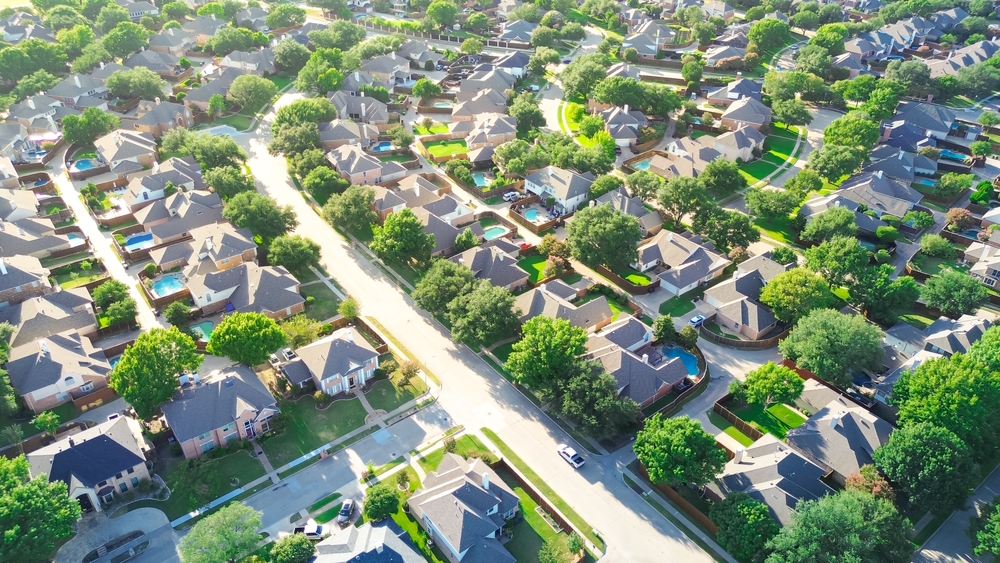
Financial incentives and steady jobs only tell half the story. A move is also an emotional and personal decision, and Knoxville’s appeal is powerfully bolstered by a distinct and improving quality of life. This local reality stands in sharp, positive contrast to the state’s broader reputation.
While Tennessee as a state often ranks poorly for quality of life (notably #50 in one 2025 CNBC study, citing high statewide crime rates driven by other areas), Knoxville’s local data shows the opposite trend. This is a crucial distinction for anyone researching a move. The Knoxville Police Department reported in early 2025 that preliminary 2024 data showed a significant citywide decline in priority crimes. This included a remarkable 45% drop in non-fatal shooting victims and a 22% decrease in car burglaries, suggesting a community where public safety is actively improving.

This trend of improving safety complements the city’s core identity: a gateway to the Great Smoky Mountains. The “Scruffy City” brand, once a point of local humor, is now a celebrated badge of honor. It represents a lifestyle built on world-class outdoor amenities, such as the 1,000-acre Urban Wilderness just minutes from downtown. This natural appeal is balanced by a vibrant, walkable downtown, a revitalized historic Market Square, and strong public school systems in both Knox County and the highly-ranked neighboring Maryville city district. For families and professionals alike, it offers a rare and coveted blend of urban culture and natural amenity that is increasingly hard to find in one place.
The Big Problem Is a Market at Its Breaking Point
Herein lies the central paradox of Knoxville’s story. The powerful wave of interest, combined with the actual migration that already occurred from 2020 to 2024, has pushed the local housing market to its absolute limit. In short, the very affordability that fueled the city’s appeal is vanishing, choked off by its own success.
This isn’t just a feeling; it’s a statistical fact. Multiple independent analyses from 2024 and 2025 have designated Knoxville as one of the most overvalued real estate markets in the entire United States. A July 2024 study from Florida Atlantic University, for instance, delivered a shocking verdict: it ranked Knoxville the 4th most overvalued market in the nation, finding that homes were selling at an average 37.33% premium above their long-term pricing trends.
This “overvaluation” red flag, once a predictive warning, is now being confirmed by a flood of 2025 on-the-ground data. The market isn’t just slowing; it is “cooling” rapidly as it hits an affordability wall.
- Prices are Stagnant: The days of runaway price hikes are over. Year-over-year home value growth has “sharply cooled” to just 0.9%, a virtual standstill.
- Inventory is Surging: As buyer demand cools, housing inventory has “surged by over a third” compared to 2024, giving the few remaining buyers more power.
- Rents are Decreasing: Perhaps the clearest sign of a market shift, rents are finally falling. After years of painful increases, multiple sources confirm a downward trend. Zillow data from October 2025 noted the average rent was a full $200 lower than the previous year, offering the first real relief for renters in some time.
Why ‘Looking’ Isn’t the Same as ‘Moving’

This dramatically cooling market helps explain a significant and growing discrepancy in the data. There is a gap between what people want to do (as measured by moveBuddha’s search data) and what they are actually doing.
The U-Haul Growth Index, which provides a clear view of real-world trends by tracking actual one-way truck rentals, provides a stark counter-narrative. This data shows that while people may be dreaming of Knoxville, they are moving elsewhere. In U-Haul’s 2024 “growth city” rankings, Knoxville managed to clock in at #7. But in the 2025 report, reflecting more recent moves, it “didn’t make the list” at all.
Furthermore, in U-Haul’s 2024 “Top 25 Growth Metros” report, regional competitors like Nashville and Charlotte were present; Knoxville was conspicuously absent. This data all points to a clear “interest vs. action” gap. The desire is real, but the follow-through is not. People are looking at Knoxville for all the right reasons, but when they see the high home prices, the affordability crisis becomes the primary barrier that forces them to move elsewhere—or not at all.
A City at a Crossroads
The true story of 2026 will likely not be a flood of new residents “in droves.” Instead, Knoxville faces a market stalemate.
The city will continue to see a steady “drip” of high-wage professionals from the “Twin Pillars” economy, who are willing and able to pay the premium prices. For them, a $400,000 home in Knoxville is still a value compared to an equivalent in California.
However, the local and regional middle class is now increasingly priced out, creating a “normalizing” market defined by high inventory and intense strain on affordability. Local leaders are aware of these growing pains and are actively trying to manage them through initiatives like “Advance Knox,” the county’s first-ever integrated land use and transportation plan.
For 2026, Knoxville remains a city in a tense paradox: simultaneously one of the most desirable and one of the most overvalued places in America.
Source:
- Share, J. (2025, November 5). moveBuddha’s Moving Forecast: The Most Popular Cities to Move to in 2026. moveBuddha. https://www.movebuddha.com/blog/moving-forecast-predictions/