
Your cart is currently empty!
China’s Nationwide AI Powered Surveillance Network Known As Skynet Tracks Citizens And Monitors Crime
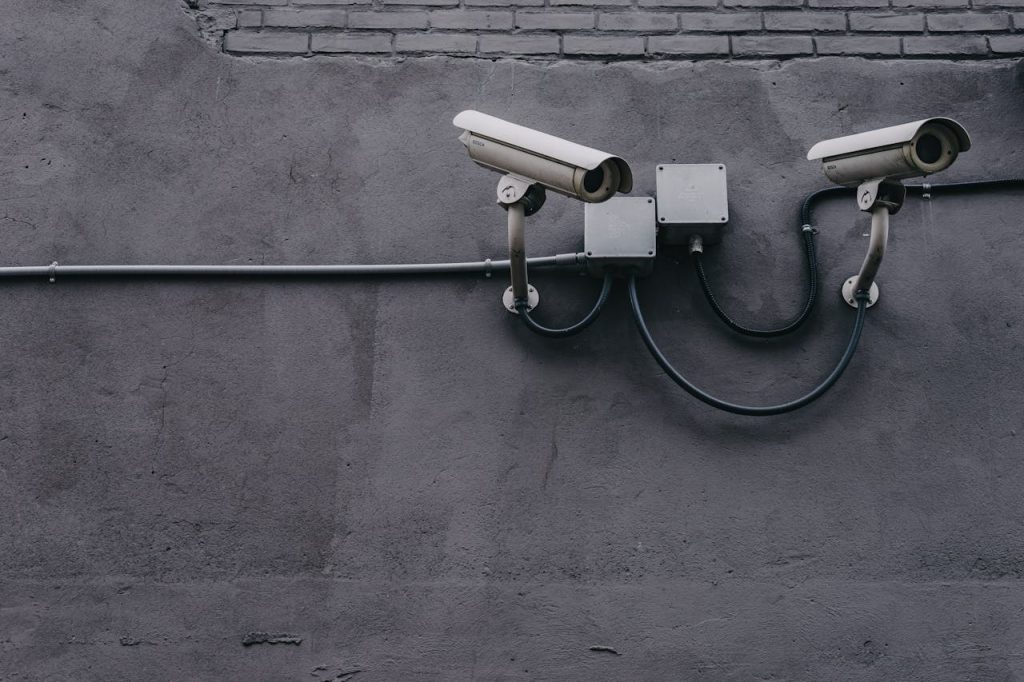
China has long been a place where technology leaps forward with astonishing speed. Yet some of the most profound innovations are not tucked behind consumer gadgets. They sit on street corners and building walls, blinking quietly in the background of daily life. For many citizens, these devices are woven into the routine of city living. For observers outside China, they raise urgent questions about privacy, power, and control.
Contents
show
The national video surveillance network known as Skynet began almost twenty years ago. It has since grown into a vast system that blends high volume video capture with artificial intelligence. What emerges is a layered apparatus that can identify people and vehicles almost instantly. This story explores how the system works, why it exists, and how it fits into the broader architecture of state power described by scholars such as Dr. Minxin Pei. It also considers the human side of surveillance and what the rise of such systems means for the rest of the world.
How Skynet Grew Into A Nationwide Watchtower
The earliest phase of Skynet took shape in the mid two thousands when China began expanding large scale video monitoring across cities. According to reporting referenced by CSO Online, Skynet covered all of Beijing by twenty fifteen. The system used high resolution cameras placed throughout public spaces. As the network matured, artificial intelligence became central to its function.
Facial recognition advanced quickly during the following decade, making it possible to match faces against the national identification database. In China, every citizen receives a photo identification card at sixteen. This creates a single reference point that AI can use to attach name, age, gender and visible traits such as clothing color. When a camera detects a face, the system can pull information in real time and display it for security officers.
Vehicles are tracked in a similar way. Cameras identify license plates, model types and colors. Combined with GPS data, the system can follow a car from one district to another. Authorities say this helps locate criminal suspects and fugitives. State media has presented Skynet as an efficient public safety tool. For many viewers outside the country, the real time overlays of personal details raise concern about the erosion of private space.
Beyond Cameras: A Web Of Organizations And People
Dr. Minxin Pei, a scholar of Chinese governance and author of The Sentinel State, describes China as having a unique surveillance structure that extends far beyond electronics. In an interview with The Diplomat, he explained that China uses what he calls distributed surveillance. This means many organizations share responsibility for observation and reporting. It includes security agencies along with universities, enterprises and neighborhood groups.
Pei notes that unlike other former one party states where a single secret police dominated, China keeps its formal security agencies small. About two million uniformed police serve a population of more than one billion. The domestic security agency, known as the First Bureau of the Ministry of Public Security, is estimated to have about one hundred thousand officers. The strength of the system comes not from size but from broad participation and careful coordination.
A specialized party committee connects these levels and ensures alignment. As a result, surveillance becomes an everyday process that draws on many hands and many forms of labor. Cameras are only one layer in a structure that includes human networks, institutional responsibilities and local monitoring groups.
Preventive Repression And The Logic Behind Skynet
Pei introduces another concept that helps explain the purpose behind Skynet. He calls it preventive repression. Traditional repression responds after a protest or resistance has already begun. It relies on force, arrests and crisis action. Preventive repression aims to stop collective action before it starts. It works by gathering intelligence, monitoring public mood and deterring activity that could challenge state authority.
In this framework, Skynet is more than a crime fighting tool. It functions as part of a proactive strategy to maintain stability. Real time awareness of movement and identity allows authorities to spot unusual activity or locate individuals of interest before situations escalate. While this lowers the cost of emergency responses, it also creates an environment where people may feel watched even when doing nothing wrong.
The balance between public security and personal autonomy is delicate. Supporters of the system point to crime reduction and faster emergency responses. Critics point to the chilling effect on expression and the potential for misuse. When a society carries the weight of constant observation, even simple behaviors can take on new meaning.

Related Systems: Sharp Eyes And The Spread Of Rural Monitoring
Skynet is not the only surveillance project in China. Another program known as Sharp Eyes began around twenty sixteen. Although it uses similar technology, Sharp Eyes was designed to bring video surveillance into rural regions. Dr. Pei explains that Sharp Eyes is operated by local political legal committees rather than the national Ministry of Public Security. This means that local governments, businesses and community groups often share responsibility for funding and implementing the system.
Sharp Eyes can vary in technological sophistication since resources differ across regions. Some parts of the program upgrade older cameras while others expand coverage into remote communities. Police still have full access, but the distributed nature means the system is less centralized than Skynet. Together, the two form a network that spans both dense cities and vast rural territories.
Everyday Impacts: From Jaywalking To Public Restrooms
As artificial intelligence grew more capable, various agencies began using it for specialized tasks. In the city of Shenzhen, authorities deployed facial recognition to identify jaywalkers. Images appeared on public screens to discourage repeat offenses. State media framed this as an effort to promote courtesy in shared spaces.
Another widely reported example emerged from a public park in Beijing where restroom paper dispensers were equipped with face scanning devices. Visitors received one measured strip of paper per scan and had to wait several minutes for another. While introduced to reduce waste, the practice became a symbol of how deeply surveillance could reach into daily routines.
Surveillance also stretches into private environments. According to Radio Free Asia reporting from earlier years, some city taxicabs once featured devices that transmitted audio to monitoring stations. These measures were described as safety precautions. Yet the practice, combined with later claims from NPR that cellphones had been used for eavesdropping, illustrates how quickly boundaries can blur.

The Social Credit Landscape And Public Trust
In twenty fifteen, China began rolling out a social credit system linked to national identification. The American Civil Liberties Union analyzed this system and described it as an example of algorithmic sorting that uses data from purchases, social networks and online behavior. Scores could be affected by personal choices and even by the actions of people in one social circle.
The stated intent was to encourage trustworthiness in commerce and public life. For critics, the system raised alarms about the potential for algorithmic judgments to influence rights and opportunities. Although the social credit system remains complex and varies across localities, it contributes to the broader landscape of monitoring and evaluation.
The connection between Skynet and social credit is not always direct, but both are built on the same foundation of data driven observation. Together they shape a society where digital footprints become part of evaluation and decision making.
Global Reach: How Other Governments Use Similar Tools
Chinese companies manufacture most of the hardware used within Skynet and Sharp Eyes. These products are exported widely because they are produced at scale and proven in real environments. Dr. Pei notes that other authoritarian governments can improve their surveillance capacity by importing Chinese equipment and services.
However, he emphasizes that the full effectiveness of Chinese surveillance arises not only from the technology but also from the organizational structure that surrounds it. Without the same political system and party oversight, other countries cannot replicate the environment that makes Skynet so powerful. This distinction is important when analyzing global trends.
Western leaders face difficult decisions about how to respond to the spread of such tools. Competing in the market for surveillance technologies raises concerns about human rights. Sanctions can slow purchase in the short term but have limited long term influence. Pei suggests that public awareness within each country is the strongest safeguard against abuses. Citizens who understand how these systems work are better positioned to demand protections for privacy and security.
What This Means For The Future Of Human Autonomy
The story of Skynet is not only about a government system. It is about the evolving relationship between people and the technology that surrounds them. When devices observe so much of daily life, a new kind of social environment emerges. It is one where people may change what they say or how they behave because they assume someone is watching.
At the same time, surveillance is not inherently harmful. Data can help solve crimes, find missing persons and improve emergency response. The challenge lies in maintaining transparency, accountability and safeguards against excessive control. When people understand how their information is used, they have a stronger foundation for trust.
Societies across the world are wrestling with similar questions. Cameras are common in many countries. Phones track movement. Online platforms gather data for advertising and recommendation systems. China offers a preview of what happens when all these tools are fused into a unified state managed network.