
Your cart is currently empty!
Mother’s Museum Discovery Sparks Global Debate on Grief Truth and the Boundaries of Humanity

Inside a quiet museum, the line between art and life suddenly blurred for one visitor. Among the preserved figures and anatomical displays, a mother believed she recognized something impossible. The stillness of the room seemed to collapse around her as familiarity struck like a memory she could not ignore. What she saw reignited questions about love, loss, and how far a person will go when grief refuses to rest.
Contents
show

What began as an ordinary exhibition visit would evolve into a story that unsettled experts and captivated the public. It is not merely a tale about mistaken identity or a tragic coincidence but a reflection on how we confront death and remembrance in a world that often treats them as distant curiosities. At its core lies a truth both universal and haunting: the search for closure can be as powerful as the love that compels it.
When Memory Defies Reason
In 2018, a mother walked into a Las Vegas exhibition expecting a routine visit and left believing she had seen her son again. The show, titled Real Bodies, featured preserved human figures arranged to reveal the anatomy beneath the skin. Among them stood one form that stopped her in her tracks. Kim Erick was certain the body on display belonged to her son, Chris Todd Erick, who had died six years earlier under circumstances that still haunted her.
“I knew it was him. It was so unbelievably painful to look at,” Kim told The Sun. “My words cannot describe how this shook me and my family to its core. I was actually looking at pictures of my son’s skinned, butchered body. It is gut-wrenching.”
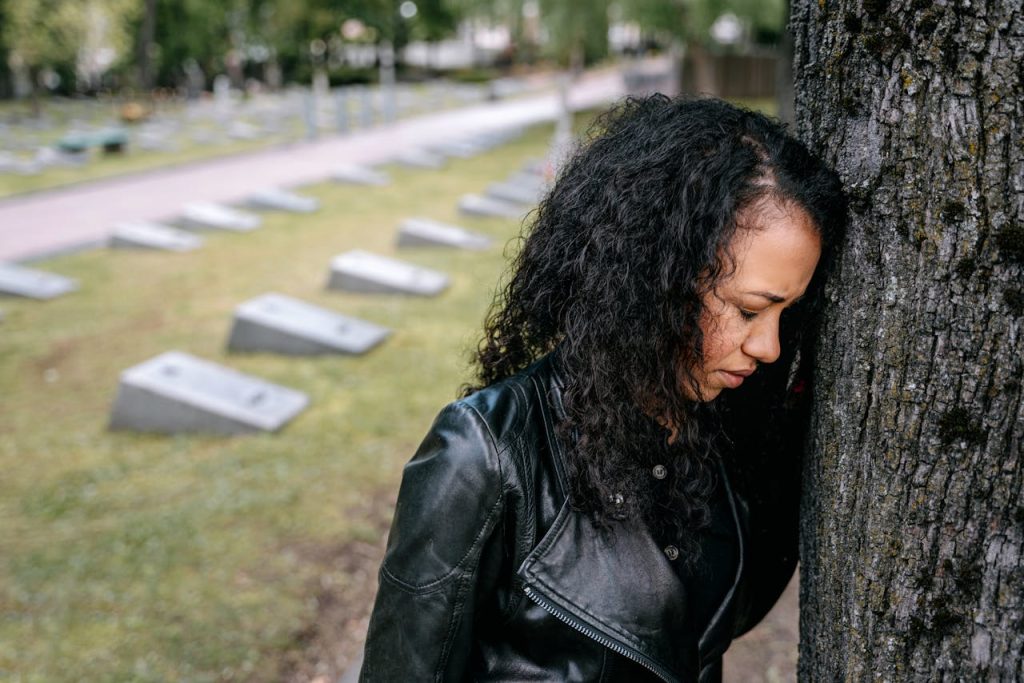
The claim drew swift denial from Imagine Exhibitions, Inc., the company behind Real Bodies. Representatives stated that the specimen in question had been part of the Las Vegas display since 2004, well before Chris’s death in 2012. Yet for Kim, the timeline did little to quiet her conviction. What she experienced was not a passing illusion but a collision between grief and reality, one that reopened wounds she thought had begun to heal.
Chris’s death had already carried its own layers of uncertainty. Initially ruled a suicide, it was later determined to be the result of cyanide toxicity, with investigators concluding there was “no sign of foul play.” Kim, however, could not accept that explanation. Her enduring search for clarity reflected a form of loss psychologists call “ambiguous,” a condition in which grief remains suspended between hope and despair. For those caught in this limbo, the absence of answers becomes as painful as the loss itself.

To Kim, the image of that figure in the museum was not only a shock but a manifestation of her mind’s relentless need to find resolution. When love and uncertainty intertwine, memory can blur the line between what is real and what the heart insists must be true.
The Question Beneath the Glass
What began as a conversation about one woman’s grief soon widened into a deeper public discussion about the intersection of art, science, and ethics. The Real Bodies exhibition, operated by Imagine Exhibitions, Inc., presents itself as an educational display designed to illuminate the complexity of the human form. Yet as visitors walk through its halls, many are struck by an unsettling thought: who were these people before they became part of the exhibit?
In response to questions about sourcing, Imagine Exhibitions told Lead Stories that “all specimens are ethically sourced and biologically unidentifiable,” emphasizing that each exhibit “meets the highest ethical and legal standards.” Despite that assurance, the debate has persisted for years. The uncertainty lies in what “ethically sourced” truly means when documentation cannot identify the individuals on display or confirm that consent was ever granted. Critics argue that such ambiguity leaves room for exploitation, particularly when human remains are presented as public art.
Across the world, the standards for these exhibitions differ. Some countries require strict documentation proving donor consent, while others have limited regulations that allow preserved bodies to be imported or exhibited with minimal oversight. This lack of consistency raises broader questions about respect, representation, and cultural sensitivity. Anthropologist Dr. Anita Hannig of Brandeis University has observed that modern society’s distance from death contributes to this discomfort. When confronted with real human bodies on display, she suggests, we are forced to face our own mortality and question whether education should ever come at the cost of dignity.

The exhibit, like grief itself, reveals a profound truth: fascination and reverence can coexist, but only when transparency honors the humanity behind the science.
The Search That Would Not Rest
Even after the Real Bodies claim was dismissed, Kim Erick’s pursuit of truth did not end. In early reports from Nevada, investigators had uncovered more than 300 piles of cremated human remains scattered near the town of Searchlight, an hour south of Las Vegas. When she learned of the discovery, Kim found herself gripped by a familiar question. Could her son be among them? “I’d like to see the 300 piles of human cremains tested for DNA to determine who these people were,” she told The Sun. Her request was not only for her own closure but also for the hundreds of unidentified souls whose stories had yet to be told.
What drives a person to continue searching long after the world has moved on? Psychologists describe this instinct as a continuing bond, a connection that keeps the memory of a loved one alive through action and remembrance. It is not denial but devotion which is a way of preserving meaning in a world reshaped by loss.
Cultures across the world echo this idea through tradition and ritual. In Japan, the Obon festival welcomes ancestral spirits home through light and prayer. In Mexico, Día de los Muertos transforms mourning into celebration, reminding families that love does not end with death. These practices speak to a universal truth that Kim’s journey embodies. Her search is not a refusal to let go but an act of love that bridges absence and presence. It is a reminder that peace does not always come from answers but from the courage to remember with tenderness.
The Responsibility of Telling Someone’s Grief
When personal tragedy meets public attention, the story no longer belongs solely to the person living it. The coverage of Kim Erick’s claims reveals an uncomfortable tension between journalism’s duty to inform and its obligation to protect the vulnerable. For reporters, covering grief demands restraint. It is not simply about what can be published but about what should be.
Media outlets like The Sun and Lead Stories gave Kim’s experience global visibility, ensuring that her questions about her son’s death were heard. Yet each article also magnified her pain, freezing one of her most private moments in a permanent digital record. Ethical journalism requires more than accuracy; it demands empathy. Reporters must weigh the value of awareness against the potential harm of exposure, recognizing that behind every headline is a human being still learning how to live with loss.
In an era when stories of sorrow can trend within minutes, responsible storytelling means holding space for both truth and compassion. It means allowing facts to stand on their own without exploiting emotion for impact. For audiences, it also calls for reflection. The way we consume such stories mirrors our collective respect for grief itself. To read with empathy is to honor not only the subject’s pain but also the shared humanity that connects us all.
The Psychology of Curiosity and the Macabre
Across cultures and centuries, people have been drawn to what lies on the edge of life. From ancient rituals honoring the dead to the modern fascination with true-crime documentaries and anatomical exhibits, the impulse to look closely at mortality remains deeply human. Psychologists describe this not as morbidity but as a form of existential curiosity. To look at death is to explore what it means to be alive.
Exhibitions like Real Bodies capture this tension. They offer education through art and science while challenging visitors to face the reality of human fragility. In carefully lit galleries, the body becomes both a teaching tool and a mirror, reflecting the viewer’s own impermanence. Experts suggest that such experiences allow people to process fear within a safe space, transforming discomfort into understanding.
Yet this curiosity carries ethical weight. When the human form is displayed without clear consent or context, fascination risks becoming exploitation. The line between appreciation and intrusion grows thin. In Kim Erick’s story, that boundary is not theoretical but painfully real. Her experience reminds us that behind every preserved figure is a life once lived, and every act of looking demands both wonder and respect.
What We See When We Choose to Look
Kim Erick’s story lingers because it confronts what most of us try to avoid. It is not only a mother’s search for answers but a mirror reflecting our own uneasy relationship with grief, mortality, and truth. Her encounter at the exhibition forced the world to consider what it means to see beyond the surface, to face both the fragility of life and the persistence of love.

This story endures because it asks a question that extends beyond one woman’s loss. How do we honor the dead while still seeking to understand them? The answer lies not in spectacle or certainty but in compassion. When we choose to look with empathy, we begin to understand that every story of death is also a lesson in humanity and every act of remembrance a quiet form of love.