
Your cart is currently empty!
An Ancient Fish With More DNA Than Humans Ever Imagined
For much of modern history, humans have placed themselves at the top of a mental hierarchy of life. Intelligence, language, technology, and culture have all reinforced the idea that we are the most complex organisms on the planet. Even at the microscopic level, many people assume that our DNA, the biological blueprint of life, must reflect that complexity.
Contents
show
Then scientists finished sequencing the genome of a strange, eel-like fish living quietly in South America.
The results were so surprising that they forced geneticists to rethink long-standing assumptions about evolution, efficiency, and what DNA actually represents. This ancient lungfish was found to carry a genome roughly thirty times larger than a human’s, making it the largest animal genome ever fully sequenced. Far from being a meaningless curiosity, the discovery opens a window into deep evolutionary time and raises profound questions about survival, adaptation, and resilience in a changing world.
The Discovery That Rewrote the Animal Genome Record
In August 2024, an international team of scientists published the complete genome of the South American lungfish, known scientifically as Lepidosiren paradoxa. The sequencing effort was the culmination of years of work and required cutting-edge technology capable of handling enormous volumes of repetitive DNA.
When the researchers analyzed the data, they arrived at a staggering figure. The lungfish genome contains approximately 91 billion DNA base pairs. For comparison, the human genome contains just under 3 billion. No other animal genome sequenced to date comes close to that size.
At first glance, this seemed to suggest an obvious conclusion. If DNA is the instruction manual for life, then surely more DNA would mean more complexity. But biology rarely follows such simple logic.
Despite its enormous genome, the lungfish possesses roughly the same number of protein-coding genes as humans, around 20,000. That number is also similar to many other vertebrates, including birds, reptiles, and amphibians. The discovery immediately challenged the intuitive idea that genome size directly reflects biological sophistication.
Understanding What DNA Actually Does

To understand why this finding matters, it helps to clarify what DNA is and how it works. DNA, or deoxyribonucleic acid, is a molecule found in nearly every cell of an organism. It contains the instructions that guide development, growth, maintenance, and reproduction.
DNA is built from four chemical bases, adenine, cytosine, guanine, and thymine. These bases form sequences that encode information, much like letters form words in a language. Specific segments of DNA called genes provide instructions for making proteins, which carry out most of the work inside cells.
The full collection of an organism’s DNA is called its genome. For many years, scientists assumed that a larger genome meant more genes and therefore greater complexity. Over time, however, it became clear that this assumption did not hold.
The lungfish genome is one of the most dramatic demonstrations of this reality. Most of its DNA does not code for proteins at all.
The C-Value Paradox and the Myth of Genetic Efficiency
The disconnect between genome size and organismal complexity is known as the C-value paradox. The term refers to the observation that the amount of DNA in a cell does not neatly correlate with how complex or advanced an organism appears to be.
Some plants, for example, have genomes far larger than those of mammals. Certain salamanders and amphibians also possess massive genomes despite relatively simple body plans. The lungfish now stands as one of the most extreme animal examples.
In the case of Lepidosiren paradoxa, roughly 90 percent of its genome consists of non-coding DNA. In humans, that figure is closer to 40 percent. This non-coding material was once dismissed as junk DNA, a label that implied it had little or no function.
Modern genetics has largely abandoned that simplistic view. While not all non-coding DNA has a clear purpose, much of it plays roles in regulation, structural organization, and long-term evolutionary flexibility.
Jumping Genes and Runaway Expansion
The primary contributors to the lungfish’s massive genome are transposable elements, often referred to as jumping genes. These are sequences of DNA that can copy themselves and insert those copies into new locations within the genome.
In most animals, jumping genes are kept under tight control. Specialized molecular systems detect and silence them because unchecked activity can disrupt important genes and destabilize the genome.
Lungfish appear to be missing several of these regulatory safeguards. As a result, transposable elements have been able to replicate freely over tens of millions of years. Scientists estimate that the lungfish genome has been expanding at a remarkable pace, adding the equivalent of an entire human genome roughly every ten million years.
Today, these jumping genes account for nearly ninety percent of the lungfish genome. Many of them are still active, continuing to shape the genetic landscape of the species.
The Physical Cost of Carrying So Much DNA

A genome of this size comes with significant biological costs. DNA must be copied every time a cell divides, and the more DNA there is, the more energy and time this process requires.
Lungfish cells are unusually large to accommodate their enormous chromosomes. In fact, almost every lungfish chromosome is comparable in size to the entire human genome. The nucleus that houses this DNA must also be larger, which influences cell size, tissue structure, and development.
These constraints help explain several features of lungfish biology. They grow slowly, reach sexual maturity late, and often live for decades. From a modern ecological perspective, this slow pace of life might seem like a disadvantage.
Yet lungfish have endured while countless other species have disappeared.
Living Fossils and a Window Into Deep Time
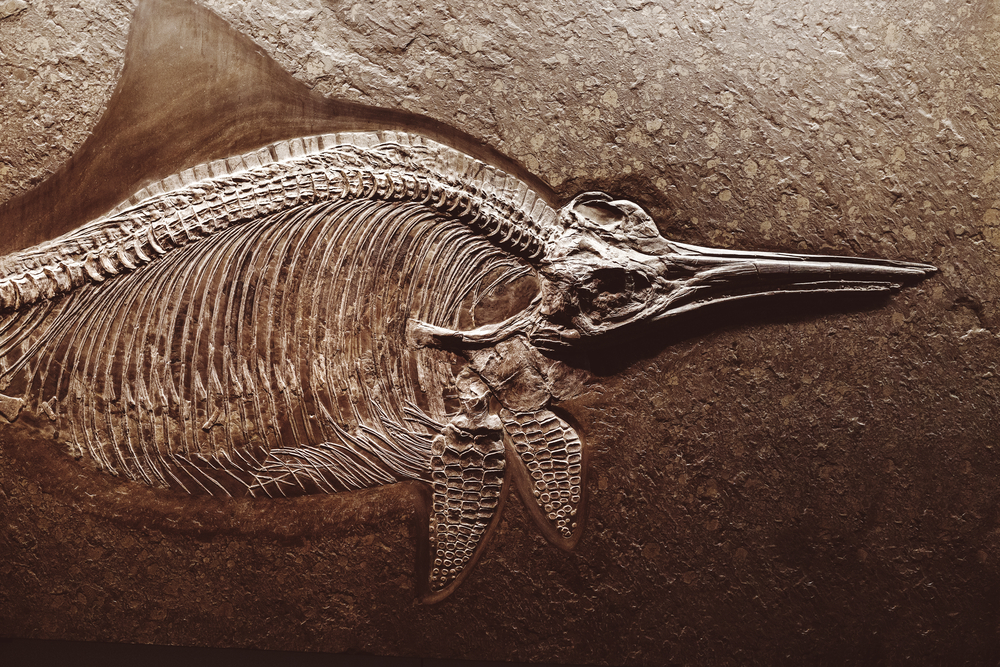
Lungfish are often described as living fossils because they closely resemble ancient species found in the fossil record. Fossil evidence shows that lungfish-like animals existed more than 400 million years ago during the Devonian period.
This era was one of the most transformative chapters in the history of life on Earth. It was a time when certain fish began exploring shallow, oxygen-poor waters and seasonal wetlands. Some of these pioneers evolved lungs and limb-like fins, traits that eventually enabled vertebrates to colonize land.
Lungfish sit remarkably close to this evolutionary crossroads. They retain functional lungs, limb-like skeletal structures in their fins, and the ability to survive in harsh environments where other fish cannot.
By studying their genome, scientists gain insight into what early vertebrate genomes may have looked like. Rather than being streamlined and efficient, those ancient genomes may have been expansive, experimental, and tolerant of redundancy.
The Evolutionary Value of Genetic Excess
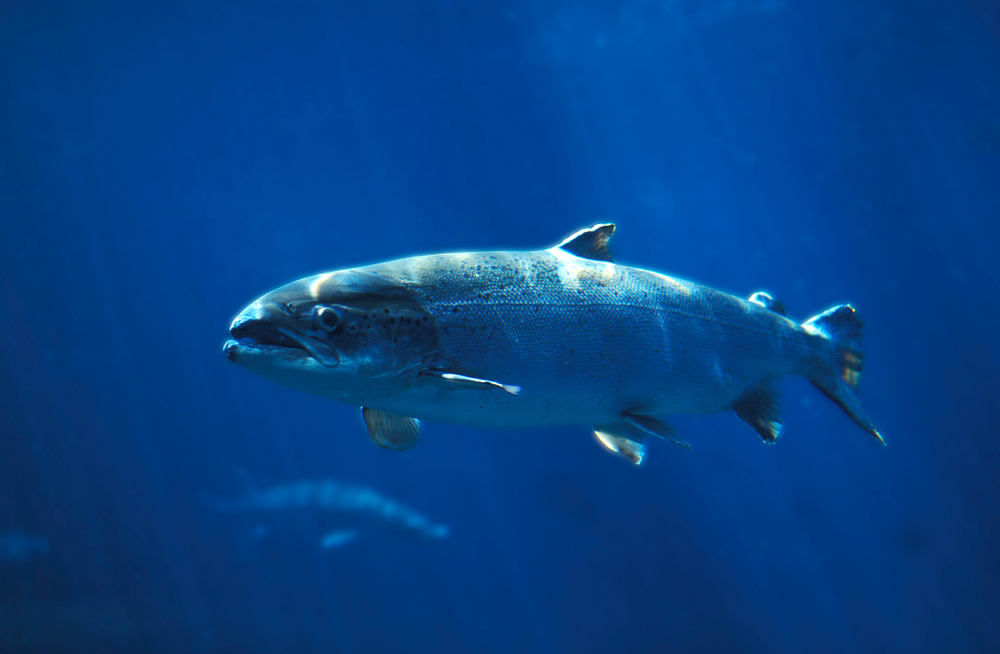
One of the most intriguing questions raised by the lungfish genome is why natural selection has not eliminated so much excess DNA. If carrying a massive genome is energetically expensive, why has evolution allowed it to persist?
One possible answer lies in flexibility. Transposable elements can influence how nearby genes are regulated. When they insert themselves near a gene, they may change when that gene turns on or off, how strongly it is expressed, or how it responds to environmental conditions.
Over very long timescales, fragments of these elements can even be repurposed into entirely new genes or regulatory sequences. What begins as genetic clutter can become raw material for evolutionary innovation.
In relatively stable or slowly changing environments, the cost of carrying extra DNA may be outweighed by the benefits of increased regulatory diversity.
Survival Through Instability and Extinction
Lungfish have survived multiple mass extinctions, continental drift, dramatic climate shifts, and repeated cycles of drought and flooding. Their biology reflects a strategy focused on endurance rather than speed.
Many lungfish species can survive periods of drought by entering a state of dormancy, burrowing into mud and breathing air through specialized structures. This ability allows them to persist in habitats that periodically become uninhabitable for other fish.
Their slow growth and long lifespan may also be advantageous in environments where conditions fluctuate unpredictably. Rather than relying on rapid reproduction, lungfish endure by waiting out hardship.
Implications for Modern Climate Change
Freshwater ecosystems are among the most threatened environments on Earth. Climate change, pollution, dam construction, and water extraction are altering rivers, wetlands, and lakes at unprecedented rates.
Rising temperatures reduce oxygen levels in water, placing stress on aquatic life. Droughts shrink habitats, while extreme floods disrupt breeding cycles. Many freshwater species are already declining as a result.
Lungfish possess traits that historically helped them survive environmental instability, including air breathing and tolerance of low oxygen conditions. However, the pace of modern, human-driven change may exceed even their remarkable resilience.
Studying lungfish genomes provides valuable insight into how organisms respond to long-term environmental pressure, and where the limits of that resilience may lie.
Rethinking the Idea of Junk DNA
The lungfish genome forces a reconsideration of the term junk DNA. While much non-coding DNA does not have an obvious function, its persistence across millions of years suggests it is not universally harmful.
In some cases, non-coding DNA may act as a buffer, absorbing mutations that would otherwise damage essential genes. In others, it may serve as a testing ground for new regulatory interactions.
Evolution is increasingly understood not as a process that relentlessly optimizes organisms, but as one that tolerates redundancy and imperfection when survival is not compromised.
Not the Final Word on Genome Size

Although the South American lungfish currently holds the record for the largest sequenced animal genome, it may not hold that title forever. Other lungfish species are suspected to have similarly large or even larger genomes that have yet to be fully sequenced.
Beyond animals, plants dominate the upper extremes of genome size. The New Caledonian fork fern, for example, possesses a genome far larger than that of the lungfish, underscoring how loosely genome size is tied to visible complexity.
As sequencing technologies continue to improve, scientists expect to uncover more genetic outliers that challenge established assumptions.
What the Lungfish Teaches Us About Complexity
There is something profoundly humbling about the fact that a slow-moving, ancient fish carries vastly more DNA than humans. It reminds us that biological success is not defined by intelligence, speed, or efficiency alone.
The lungfish does not build cities or invent technologies, yet it preserves an immense archive of evolutionary history at the molecular level. Its genome reflects hundreds of millions of years of survival through planetary change.
Rather than representing excess for its own sake, the lungfish genome tells a story of persistence, tolerance, and quiet resilience.
Endurance Over Optimization
In an age obsessed with efficiency, optimization, and rapid progress, the lungfish offers a counterintuitive lesson. Survival does not always belong to the fastest or the most streamlined organisms.
Sometimes, survival belongs to those who accumulate, endure, and adapt slowly over deep time. The lungfish genome stands as a living reminder that evolution values persistence as much as perfection.
As humanity faces its own era of rapid environmental change, the story written in the lungfish’s DNA invites reflection on what it truly means to endure.