
Your cart is currently empty!
NASA Satellites Reveal Earth’s Two Halves Are No Longer in Balance
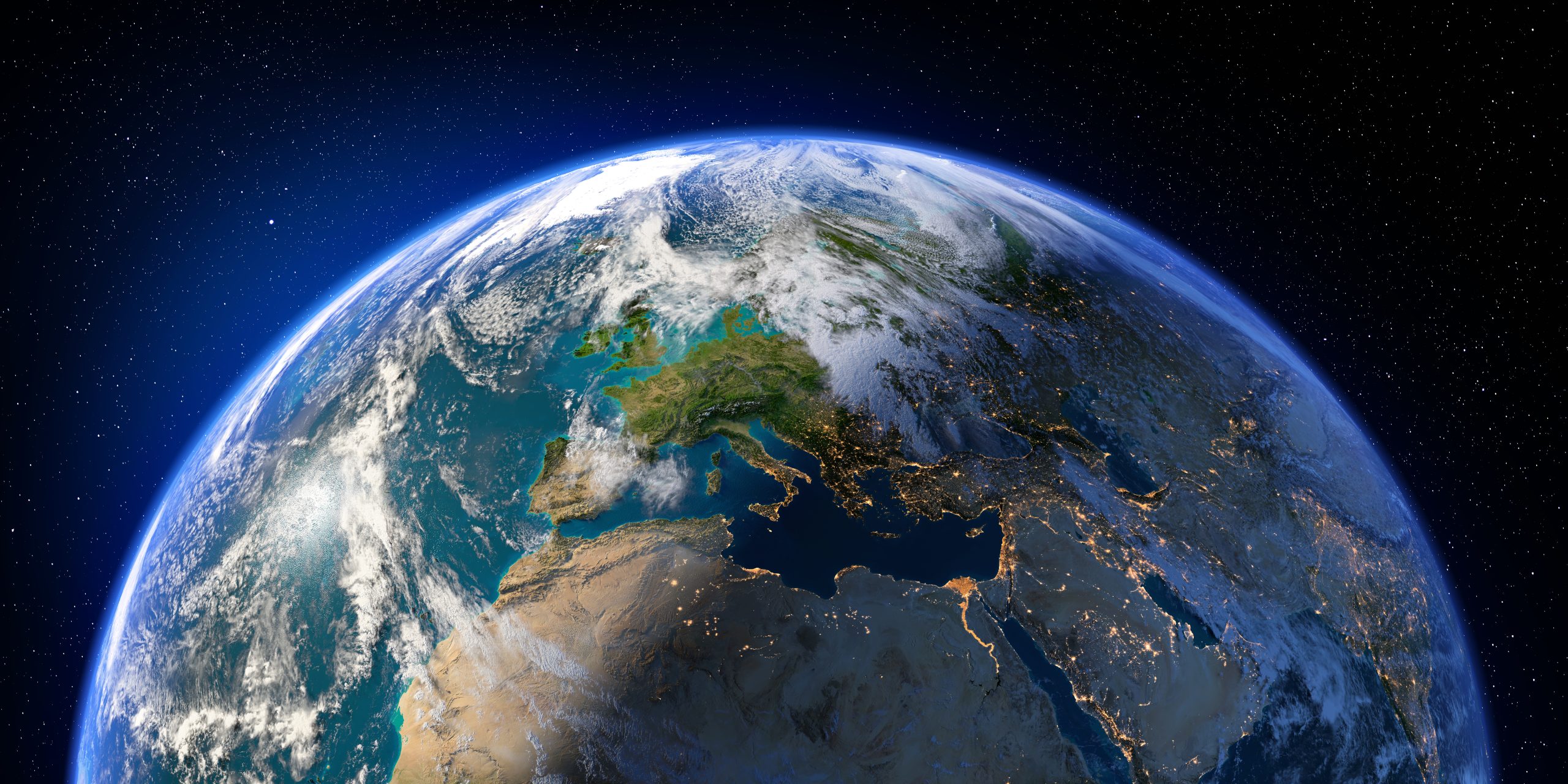
For decades, scientists have observed something peculiar about our planet. Look at Earth from space, and you would notice that both hemispheres reflect nearly identical amounts of sunlight into space. Northern regions and southern regions, despite their vastly different geography, maintained an almost perfect mirror image when it came to bouncing solar energy away.
Contents
show
Nobody could quite explain why. After all, northern latitudes contain more land, more cities, and more industrial pollution. Southern latitudes are dominated by dark, heat-absorbing oceans. Logic suggested the two halves should behave differently. Yet they didn’t. Year after year, satellite measurements confirmed that both hemispheres reflected the same amount of sunlight with almost eerie precision.
Scientists called it hemispheric symmetry, and many wondered if it represented some fundamental rule of how Earth regulates itself. Some even speculated that our planet possessed built-in mechanisms to maintain balance, like a cosmic thermostat that kept everything in check.
But something has changed. Twenty-four years of NASA satellite data now tell a different story, one that challenges long-held assumptions about how our planet works. Earth’s delicate balance appears to be breaking, and the consequences could reshape weather patterns, rainfall distribution, and summer temperatures for billions of people living north of the equator.
What NASA’s Satellites Found

A research team led by Norman Loeb, a climate scientist at NASA’s Langley Research Center, spent years analyzing observations from the Clouds and the Earth’s Radiant Energy System (CERES) mission. Since 2000, CERES instruments aboard multiple satellites have recorded how much sunlight Earth absorbs, how much it reflects, and how much infrared radiation escapes back into space.
Published in the Proceedings of the National Academy of Sciences, Loeb’s findings paint a troubling picture. Both hemispheres are growing darker, meaning they absorb more sunlight than before. But northern regions are darkening at a faster rate than southern ones.
Numbers tell part of the story. Northern latitudes now absorb about 0.34 watts more solar energy per square meter per decade than southern latitudes. Zhanqing Li, a climate scientist at the University of Maryland who was not involved in the study, put that figure into perspective.
“Any object in the universe has a way to maintain equilibrium by receiving energy and giving off energy. That’s the fundamental law governing everything in the universe,” Li said. “The Earth maintains equilibrium by exchanging energy between the Sun and the Earth’s emitted longwave radiation.”
A difference of 0.34 watts per square meter might sound trivial. Spread across half a planet, however, it represents an enormous amount of extra heat being trapped in northern regions. And the gap keeps widening.
During the first five years of satellite observations from 2001 to 2005, southern regions actually absorbed slightly more sunlight than northern ones. By the most recent five-year period from 2020 to 2024, that relationship had flipped entirely. Northern regions now absorb considerably more solar energy, and the imbalance continues to grow.
Why Northern Skies Are Growing Darker
Loeb and his colleagues wanted to understand what was driving the change. Using a technique called partial radiative perturbation analysis, they separated different factors that influence how much sunlight each hemisphere absorbs. Three culprits emerged. All of them are concentrated in northern latitudes.
First, melting snow and ice have exposed darker surfaces underneath. Ice and snow act like mirrors, bouncing sunlight back toward space. When they melt, they reveal land and ocean that absorb heat instead. Arctic sea ice has declined dramatically over the past two decades, and snow cover across northern continents has decreased as well. Each patch of exposed ground or open water adds to the darkening effect.
Second, cleaner air has removed natural mirrors from northern skies. For decades, industrial pollution from factories and power plants filled the atmosphere with tiny particles called aerosols. While harmful to human health, these particles scattered sunlight and helped form bright, reflective clouds. Stricter environmental regulations across Europe, North America, and China have reduced pollution levels considerably since 2000. Cleaner air means fewer reflective particles and more sunlight reaching Earth’s surface.
Third, warming northern regions now hold more water vapor in their atmosphere. Unlike aerosols, water vapor absorbs sunlight rather than reflecting it. As temperatures rise, the air can hold more moisture, creating a feedback loop that accelerates warming.
Loeb found these explanations consistent with observations. “It made a lot of sense,” he said. “The Northern Hemisphere’s surface is getting darker because snow and ice are melting. That exposes the land and ocean underneath. And pollution has gone down in places like China, the U.S., and Europe. It means there are fewer aerosols in the air to reflect sunlight. In the Southern Hemisphere, it’s the opposite.”
Southern Skies Tell a Different Story

While northern regions darken, southern latitudes have experienced temporary bursts of brightness. Natural events have periodically filled southern skies with reflective particles.
Australia’s devastating bushfires in 2019 and 2020 sent massive plumes of smoke and ash into the atmosphere. One year later, the Hunga Tonga volcanic eruption in the South Pacific injected enormous quantities of material into the stratosphere. Both events increased sunlight reflection across southern regions, at least temporarily.
But these natural injections of aerosols fade over time. Volcanic particles settle out of the atmosphere within a year or two. Smoke from wildfires disperses even faster. Southern regions lack the sustained industrial activity that once kept northern skies hazy with pollution.
Without ongoing sources of reflective particles, southern regions cannot match the temporary brightening effect of major volcanic eruptions or wildfires. Meanwhile, northern regions continue their steady march toward greater darkness as ice melts, snow retreats, and air quality improves.
Clouds May Not Save Us
Here is where the findings become most troubling. For years, climate scientists assumed clouds would step in to restore balance. Clouds rank among the most powerful regulators of Earth’s temperature. Bright, white cloud tops reflect enormous amounts of sunlight to space. If one hemisphere started absorbing too much heat, cloud patterns should shift to compensate.
Many climate models built this assumption into their calculations. Clouds would act as a planetary safety valve, redistributing reflectivity between hemispheres to maintain equilibrium.
But Loeb’s team found no evidence of clouds riding to the rescue. Over 24 years of satellite observations, cloud cover has not compensated for the growing hemispheric imbalance.
“We kind of questioned whether this was a fundamental property of the climate system,” Loeb explained. “If it were, the clouds should compensate. You should see more cloud reflection in the Northern Hemisphere relative to the Southern Hemisphere, but we weren’t seeing that.”
Cloud behavior did show some interesting patterns. Tropical clouds shifted in ways that reduced the hemispheric contrast, but clouds at higher latitudes did the opposite. Northern clouds reflected less sunlight relative to southern clouds in mid and high latitudes. These opposing trends largely canceled each other out, leaving the overall imbalance unaddressed.
Why clouds have failed to restore balance remains unclear. Loeb admitted that clouds still puzzle him. Understanding how aerosols interact with cloud formation presents one of the biggest challenges in climate science. Researchers cannot yet predict with confidence how cloud patterns will evolve as hemispheric differences grow.
What a Lopsided Planet Means for Weather and Climate

Earth’s radiation budget does more than determine global temperatures. It drives the circulation of oceans and atmosphere, which in turn control weather patterns and rainfall distribution around the world.
When one hemisphere absorbs more heat than the other, circulation patterns must adjust. Loeb’s team found evidence that such adjustments are already underway. Northern tropical regions are getting wetter while precipitation patterns shift across the globe.
Historical climate records and model simulations suggest that warming one hemisphere relative to the other pushes tropical rain bands toward the warmer side. If northern regions continue warming faster than southern ones, the Intertropical Convergence Zone, a band of heavy rainfall near the equator, could shift northward. Such a shift would alter monsoon patterns that billions of people depend on for water and agriculture.
Ocean circulation may also respond. Heat transport between hemispheres helps regulate regional climates across the planet. Changes to this transport could affect everything from hurricane intensity to fish populations to ice sheet stability.
Hotter Summers Ahead for Northern Regions

For the billions of people living north of the equator, the implications hit close to home. If northern latitudes continue absorbing more heat than the global average, summers could become more intense and prolonged.
Climate models already project rising temperatures across northern continents. But many of those models assumed clouds would help moderate hemispheric differences. If clouds cannot fulfill that role, warming in northern regions could outpace current projections.
Researchers suggest climate models may need recalibration to account for clouds’ diminished role in maintaining hemispheric symmetry. Better predictions require a better understanding of how clouds respond, or fail to respond, to changing conditions.
Questions Scientists Still Cannot Answer
Loeb’s study raises as many questions as it answers. Will clouds eventually restore balance if given enough time? Perhaps the mechanisms that maintain hemispheric symmetry operate on longer timescales than 24 years of satellite observations can capture. Or perhaps there are limits to how much compensation clouds can provide.
Climate models disagree considerably when predicting hemispheric differences. Some models show discrepancies of five watts per square meter or more in how much radiation each hemisphere should reflect. Such wide variation casts doubt on model reliability for answering questions about hemispheric balance.
What seems clear is that Earth’s radiation budget has entered uncharted territory. Northern regions absorbed less sunlight than southern ones when satellite observations began. Now they absorb more, and the gap grows each year.
Whether this trend will continue, plateau, or eventually reverse remains uncertain. Loeb expressed excitement about new climate models coming soon that might help answer these questions. But for now, scientists can only continue monitoring and hope that longer observational records will reveal whether Earth can restore its balance, or whether our planet has entered a new and less predictable state.
One thing appears certain. Both hemispheres are darkening, northern regions faster than southern ones. And clouds, long assumed to be nature’s great equalizers, have not stepped in to correct the imbalance. For a planet already warming at an unprecedented rate, losing its hemispheric symmetry adds another layer of uncertainty to an already uncertain future.