
Your cart is currently empty!
Fitness Experts Explain How Long a Plank Should Actually Last

The plank is often treated as one of the most basic exercises in fitness. It shows up in beginner routines, rehabilitation programs, and short online workouts because it seems easy to explain and quick to perform. As a result, simple timing rules have become popular, especially age based recommendations that suggest how long someone should be able to hold the position at different points in life.
Contents
show
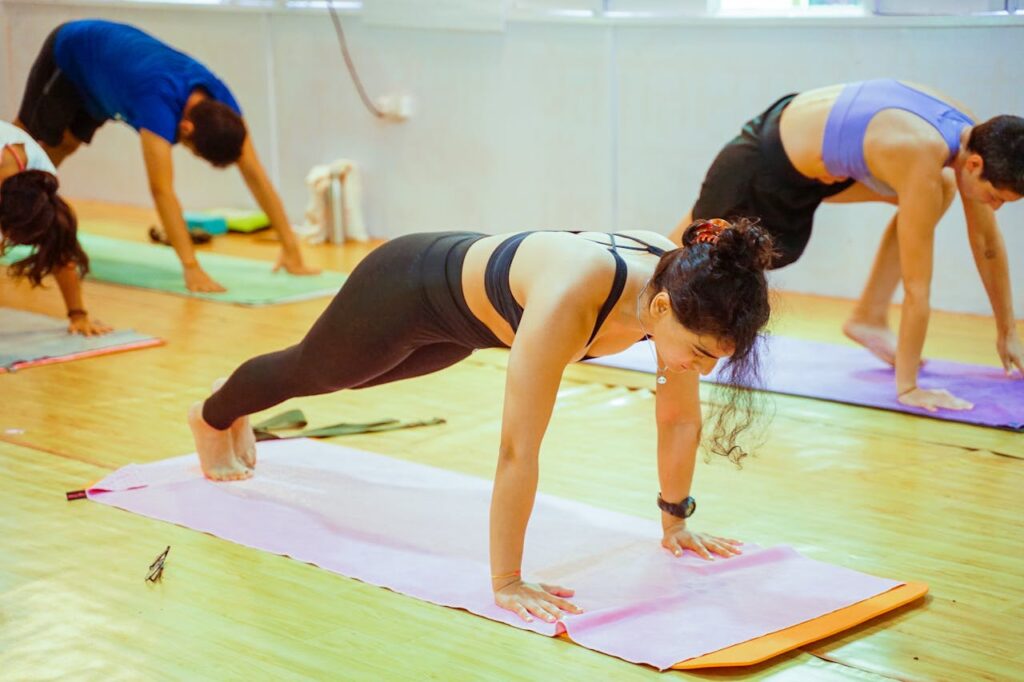
What those rules do not explain is what makes a plank effective in the first place. Research shows that the body’s response during a plank depends less on the clock and more on how muscles work together, how breathing changes under effort, and how well the spine stays supported. When these factors are considered, the plank stops being a test of endurance and becomes a tool for understanding how the body maintains stability and protects joints during everyday movement.
What the Body Is Learning During a Plank
It is easy to think of the plank as an exercise that targets a single area, usually the abdominal muscles. In reality, the body treats the plank as a coordination task. The goal is not to create movement but to prevent it. Muscles across the front, sides, and back of the torso engage at the same time to keep the spine steady while the arms and legs support body weight. This shared effort allows the body to hold a neutral position against gravity without collapsing or overextending.
Research on trunk stabilization helps explain why this matters. A review published in Healthcare found that plank variations activate a broad group of trunk muscles simultaneously rather than isolating one region. This kind of activation supports the spine by limiting unwanted motion and maintaining alignment. Instead of relying on a single muscle group to do the work, the body distributes the load across multiple areas, which improves stability and control.
This coordination is not limited to exercise. The same stabilizing patterns are used when standing for extended periods, lifting objects, or sitting upright without slouching. By practicing how to hold the spine steady under load, planks reinforce a skill the body relies on throughout the day. That is why they are commonly used in both athletic training and rehabilitation settings, where the focus is less on visible muscle effort and more on movement control and injury prevention.
What Studies Reveal About Consistent Plank Practice
Research on planks becomes most informative when it looks at how the body changes over time rather than how long a position can be held in a single attempt. One study involving recreationally active adults followed participants through a structured six-week program that used either a standard plank or a more dynamic variation known as the body saw plank. After the training period, both groups showed improvements in core endurance and dynamic stability. Importantly, neither approach clearly outperformed the other, suggesting that the act of training consistently mattered more than the specific plank style chosen.

This finding reflects a broader principle seen across exercise science. The body responds to regular, appropriately challenging movement by adapting in ways that improve control and balance. In the case of planks, a straightforward version performed consistently was enough to produce measurable benefits. This suggests that people do not need to chase more complex variations early on to see results, especially when the foundation of stability is still developing.
The study also highlights why results should be interpreted carefully. The participants were recreational athletes, the training period was relatively short, and the outcomes focused on endurance and stability rather than injury prevention or long term performance. Taken together, the evidence supports a practical takeaway. Following a structured plank routine over time can improve measurable aspects of stability in active individuals, and early progress does not depend on constantly changing or intensifying the exercise.
Why Planks Can Feel Harder on Some Days Than Others
Many people notice that planks feel surprisingly different from day to day, even when strength levels have not changed. This is not random. The body carries accumulated fatigue from daily activities such as prolonged sitting, standing, walking, and even mental stress. These factors influence how muscles support the spine long before someone gets down on the floor to exercise.

Research on fatigue and postural control shows that when stabilizing muscles are already taxed, the body relies more heavily on passive structures like ligaments and joint surfaces during static holds. In a plank, this means the position can feel harder even at shorter durations, not because strength has decreased, but because the system responsible for maintaining stability is already working near its limit. This explains why a plank held comfortably one day may feel demanding the next under identical conditions.
Understanding this helps reframe how progress is judged. Difficulty during a plank is not always a sign of weakness or regression. It is often feedback about overall load and recovery. Paying attention to how the body responds on a given day allows the exercise to be adjusted appropriately, supporting consistency and joint health rather than forcing effort that the body is not prepared to manage.
When More Time Stops Helping the Body
Holding a plank longer is often assumed to mean better results, but the body does not respond that simply. As a plank continues and fatigue builds, the muscles that support the spine begin to lose coordination. Even when the position looks stable from the outside, small changes in posture start to occur. The nervous system becomes less effective at keeping muscles working together, and support gradually shifts away from active muscle control toward joints and connective tissue that are not designed to carry sustained load.
This matters because the purpose of a plank is to train spinal stability, not to test how long discomfort can be tolerated. Once alignment begins to slip, the exercise no longer reinforces the patterns it is meant to strengthen. Instead, it becomes a prolonged static hold with fewer benefits and a greater chance of strain, particularly in the lower back, where small losses of control can have larger effects.

Clinical research on core stability reflects this distinction. Reviews examining trunk control and low back function show that core exercises are most effective when alignment and muscle engagement remain consistent throughout the movement or hold. Maintaining quality patterns reduces mechanical stress on the spine and supports long term joint health. In practice, this means that a shorter plank performed with steady posture and controlled breathing often provides more value than a longer hold where form gradually breaks down. Longer is only helpful when control is maintained from start to finish.
Finding a Time Range That Actually Works
When people ask how long they should hold a plank, they are usually looking for a clear rule. Research does not offer a single ideal number, but it does provide a useful way to think about time. Duration works best as a guide for maintaining control, not as a performance goal. A plank is effective while the trunk remains stable under load, with the spine supported and muscles working together. Once alignment or coordination starts to slip, holding the position longer adds little benefit.
Because of this, most research informed guidance settles into moderate time ranges rather than extremes. These ranges allow the stabilizing muscles of the trunk to stay engaged without forcing the body into compensatory patterns. For beginners, this often means holding a plank for about twenty to thirty seconds per set, which is enough time to establish control without overwhelming the system. As strength and coordination improve, many people work comfortably within a range of thirty to sixty seconds. More advanced practice typically stays close to sixty seconds, with progress coming from changes in difficulty rather than extending time further.
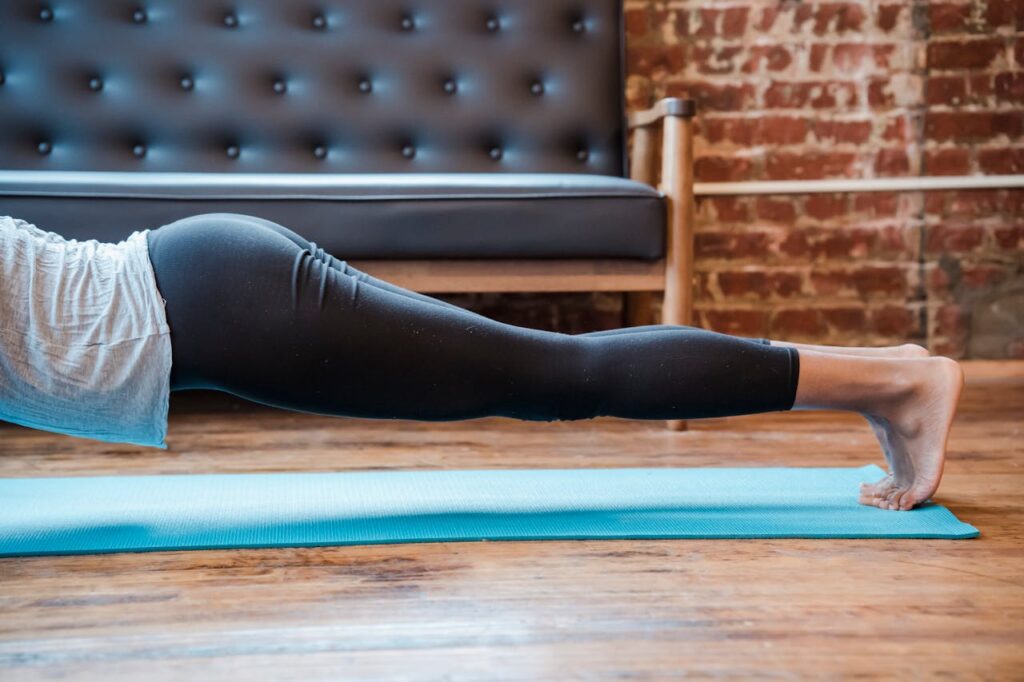
Age-based recommendations seen in popular media often mirror these same ranges, but age itself is not what determines effectiveness. What matters is whether the position can be held with steady alignment and controlled muscle engagement from start to finish. Someone older with good movement control may tolerate longer holds, while someone younger may benefit more from shorter, cleaner efforts. In practical terms, plank duration works best when treated as a ceiling rather than a number to chase, supporting repeatable, high quality holds that align with how strength and stability actually develop.
What the Plank Is Really Telling You
The plank remains one of the most common exercises not because it is easy, but because it reveals how the body manages stability under pressure. It shows whether muscles are working together to support the spine or whether fatigue and habit are quietly shifting the load elsewhere. When approached with attention, the plank becomes a source of information rather than a simple task to complete.

Research makes it clear that useful strength is built through control, consistency, and appropriate effort. Longer holds are not automatically better, and difficulty on a given day does not always signal weakness. What matters most is whether the body can maintain alignment and coordination within a manageable range.
Used this way, the plank supports more than core strength. It encourages a better understanding of how the body responds to daily demands, helping people train in a way that protects joints and supports long term movement health.