
Your cart is currently empty!
An AI Generated Family Image Sparked a Larger Conversation About Assumptions and Identity

A single AI-generated image recently sparked a wave of online conversation after a couple asked an image generator to portray them as a family. The system produced a result that did not reflect their relationship, instead inserting a male figure who was not part of their lives. The image spread quickly, not because of its visual novelty, but because of what it quietly exposed.
Contents
show

At first glance, the moment looked like a technical glitch. But for many observers, it felt more like a mirror. The AI did not invent a new idea of family; it repeated an old one. And in doing so, it raised a deeper question: when technology reflects assumptions we no longer consciously hold, what does that say about the stories humanity has yet to fully rewrite?
This is less a story about artificial intelligence getting something wrong and more an invitation to examine what it reveals about us.
AI Bias as a Human Inheritance
Calling bias an AI problem can quietly misplace responsibility. What we label as algorithmic bias is often the residue of human decisions made long before a model generates an image. Choices about what gets collected, what gets excluded, how categories are defined, who labels the data, and what performance targets are rewarded determine the contours of what a system can recognize as normal. These upstream decisions are rarely neutral. They reflect historical visibility, market incentives, institutional priorities, and the practical constraints of building datasets at scale.
This is why biased outputs can appear even when no one involved believes they are endorsing a stereotype. An image model does not reason about fairness. It optimizes toward patterns that most reliably reduce error according to the metrics it is trained on. If the training material overrepresents certain family configurations, professions, bodies, and domestic scenes, the model will learn those configurations as the safest, most likely completion for ambiguous prompts. It is not creating prejudice. It is following the path of least resistance carved by the record it inherited.
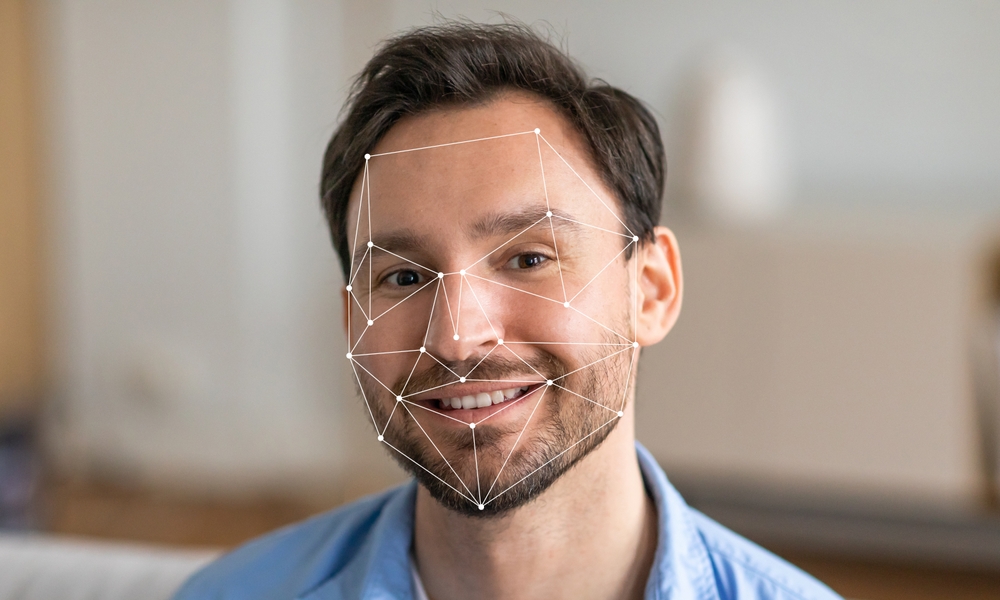
Research has repeatedly demonstrated how these inheritances can become measurable disparities. In a study, researchers evaluated commercial facial analysis systems and reported substantial differences in error rates across gender and skin type subgroups, tracing those gaps back to representational imbalances and evaluation practices. The study is frequently cited because it makes a broader point legible: when whole groups are underrepresented in data, systems can fail in patterned ways that look like technical mistakes but operate like social exclusions.
Bias also persists because data is not only historical but recursive. Model outputs shape what people produce, publish, and reuse, which then becomes future training material. When synthetic or model influenced imagery floods the cultural stream, defaults can harden into norms faster than society can notice. That feedback loop turns yesterday’s assumptions into tomorrow’s evidence, giving old templates a new veneer of computational authority.
Seen through this lens, AI bias becomes a diagnostic tool. It highlights where societies have not yet reconciled ideals with practices, or inclusion with visibility, or language with lived experience. The task is not merely to correct a system’s outputs. It is to take seriously what those outputs reveal about the parts of the human story we have not yet fully updated.
The Family Archetype in Collective Consciousness
For centuries, the concept of family has been represented through remarkably consistent imagery: a mother, a father, and children arranged within a stable, recognizable structure. This archetype has been reinforced through advertising, entertainment, religion, and law.
While countless families have always existed outside this narrow template, cultural visibility has lagged behind lived reality. Even as societies grow more diverse in how they form households and relationships, the images most frequently circulated still tend to center familiar configurations.

AI systems, trained on this visual and textual history, often reach for the most statistically dominant representation. What emerges is not a reflection of contemporary diversity, but of accumulated repetition. The machine is not imagining. It is remembering.
The viral image resonated because it revealed how deeply these archetypes are embedded, even as many people have consciously moved beyond them in their personal lives.
Lived Identity Versus Inherited Templates
One of the most striking tensions highlighted by this moment is the gap between lived identity and inherited templates. Many individuals today build families based on love, choice, circumstance, and authenticity rather than tradition alone. Yet the symbolic language available to represent those choices often lags behind.
Inherited templates are powerful because they are learned early and repeated often. They shape expectations long before individuals are aware they are being shaped. Lived identity, by contrast, emerges through experience, reflection, and sometimes resistance.
When AI fails to recognize a family as it truly exists, it exposes the friction between who people are and the stories society has historically told about who they are supposed to be. The discomfort people feel in response is not about technology. It is about recognition.
Technology as a Cultural Mirror
AI feels like a mirror because it collapses culture into a set of fast, legible outputs. When a system offers a confident image, it can make an assumption look like a fact. That is not simply a question of what the model knows. It is a question of how certainty is presented, how quickly a result arrives, and how little friction exists between suggestion and acceptance. Interfaces that reward speed and smoothness can turn patterns into authority, especially when the output resembles familiar media language.
The mirror effect also sits in what these systems can and cannot explain. When an output surprises us, it exposes the gap between human meaning and machine correlation. We expect reasons and intention. The model offers statistical continuity. That mismatch reveals something about how often people rely on surface signals of coherence in everyday life. If a fluent sentence or a polished image can persuade us for a moment, the technology is not only reflecting data. It is reflecting the human habit of treating confidence as credibility.

This is why AI can become a cultural stress test. It puts pressure on categories we treat as stable, then shows how porous they are under computational compression. It can reveal where language is imprecise, where social norms are assumed rather than defined, and where institutions have outsourced clarity to convention. The result is not just an output that misses nuance. It is a prompt to ask what counts as evidence, who gets to define what is normal, and how easily collective assumptions travel when they are packaged as neutral automation.
One open access study that speaks directly to this broader dynamic is On the Opportunities and Risks of Foundation Models by Rishi Bommasani and a large interdisciplinary team of researchers. The paper examines how large scale AI systems shape social meaning and institutional behavior, and how their outputs can carry an aura of neutrality that masks embedded assumptions. The study emphasizes the importance of documentation, accountability, and governance in shaping how these systems are built and interpreted. In the context of a viral AI image, the takeaway is not that machines are becoming human. It is that the way we present and adopt machine outputs can reveal where human judgment needs stronger habits, clearer standards, and a more disciplined relationship with what we choose to believe.
Redefining Family, Belonging, and Identity
Rather than viewing moments like this as failures, they can be understood as invitations. They ask us to consciously redefine what we mean by family, belonging, and identity and to make those definitions visible.
Redefinition does not happen automatically through innovation. It happens through storytelling, representation, and intentional inclusion. When new realities are consistently documented, shared, and normalized, they become part of the cultural record that future systems will learn from.
In this way, every story told accurately and respectfully contributes to a broader recalibration. The work is not simply to correct AI outputs, but to ensure that human experiences are fully represented in the narratives we pass forward.
Progress Beyond Better Tools
The viral image underscores a crucial insight: progress is not measured solely by the sophistication of our tools. It is also measured by the depth of our awareness.
Better technology can amplify change, but it cannot substitute for introspection. If humanity continues to rely on inherited templates without questioning them, even the most advanced systems will reproduce those limitations at scale.
True progress requires better stories, stories that reflect reality as it is lived, not just as it has been traditionally portrayed. It requires a willingness to examine assumptions, expand definitions, and recognize diversity not as an exception, but as a foundation.
A Reflective Call to Action
This moment, sparked by a single image, offers a quiet but powerful call to action. It asks individuals, creators, and institutions alike to consider what they are reinforcing through repetition and what they are leaving unseen.
Technology will continue to evolve rapidly. The question is whether human consciousness will evolve alongside it.

By telling fuller stories, honoring lived experiences, and questioning inherited defaults, society does more than improve its tools. It reshapes the data of the future. And in doing so, it moves one step closer to a world where reflection leads not to discomfort, but to recognition.
In that sense, the image did exactly what it needed to do, not by showing a family incorrectly, but by revealing how much there still is to redefine.