
Your cart is currently empty!
An Amateur Botanist Just Photographed a Tree Kangaroo No One Had Seen for 90 Years

In 1928, a legendary evolutionary biologist trekked into the remote mountains of what is now West Papua, Indonesia. He spotted an unusual animal high in the forest canopy, one he had never encountered before. He raised his rifle, took aim, and fired. That single shot would provide science with its only specimen of a mysterious creature for the next nine decades.
Contents
show
What happened to that species after 1928 remained unknown. No photographs existed. No samples were collected. No confirmed sightings were reported. Scientists began to assume the worst. An animal that had barely introduced itself to the world seemed to have vanished from it entirely.
But in July 2018, an unlikely explorer emerged from those same mountains with news that would send ripples through the scientific community. He was not a trained field biologist or a funded researcher. He was an amateur botanist from England who had ventured into the jungle in search of flowers. What he found instead would rewrite the story of one of Earth’s most elusive mammals.
A Marsupial Unlike Any Other
Tree kangaroos occupy a peculiar branch of the marsupial family tree. Close relatives of the ground-dwelling kangaroos and wallabies that have become symbols of Australia, these creatures took an evolutionary path that led them upward into the forest canopy rather than across open plains.
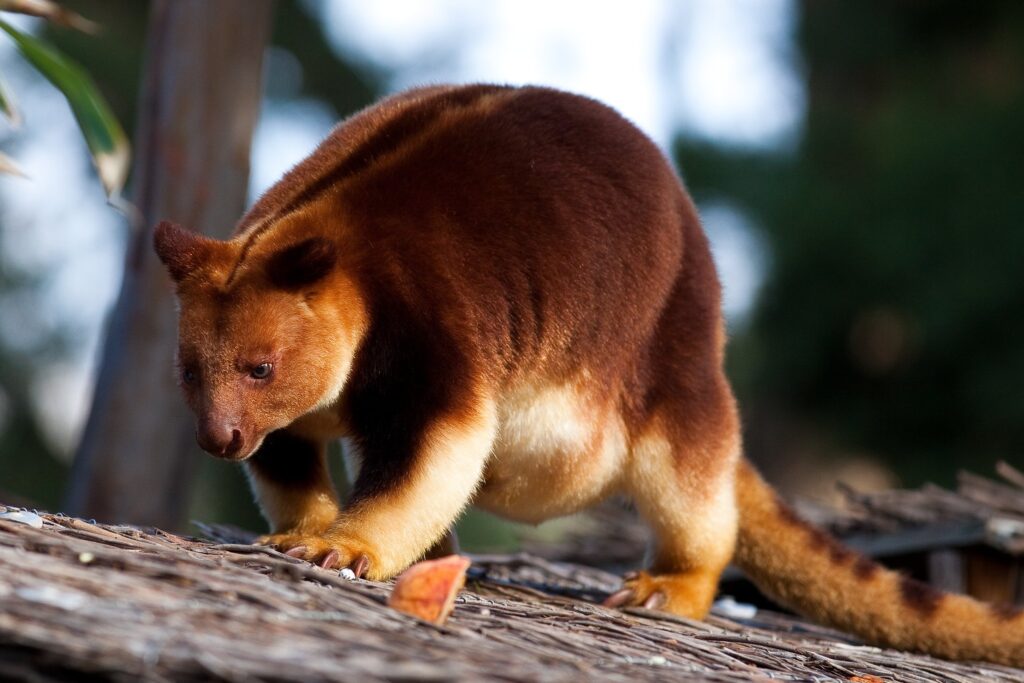
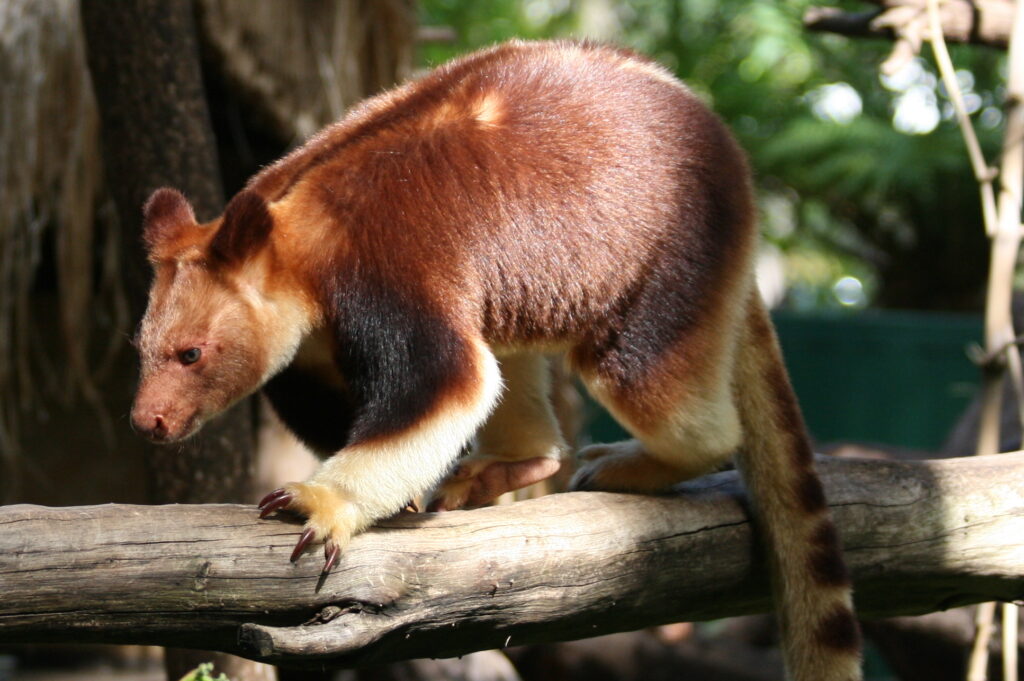
Picture an animal that looks like someone combined a kangaroo with a bear and a monkey. Muscular forearms allow them to pull themselves up tree trunks, while long claws grip bark and branches with surprising strength. Despite weighing up to 35 pounds, they move through the treetops using an odd mix of climbing and hopping that seems improbable for an animal of their size.
Seventeen species and subspecies of tree kangaroo exist in the world. Two live in the far north of Australia, while the rest make their homes on the vast island of New Guinea. Among this group, one species stood apart for all the wrong reasons. Mark Eldridge, a marsupial biologist at the Australian Museum in Sydney, put it simply when describing the Wondiwoi tree kangaroo. “It is one of the most poorly known mammals in the world.”
One Specimen, One Pelt, Then Nothing
Ernst Mayr was already on his way to becoming one of the twentieth century’s most respected evolutionary biologists when he traveled to the Wondiwoi Peninsula in 1928. High in those remote mountains, he encountered a tree kangaroo species that appeared in no scientific records. Following the practice of the era, he collected a specimen by shooting it and sent the pelt to the Natural History Museum in London.
Scientists formally described the species in 1933 and named it Dendrolagus mayri in honor of its discoverer. And then, for 90 years, virtually nothing else happened. Local populations rarely reported even hints of the animal’s continued existence. Without photographs, DNA samples, or verified sightings, the Wondiwoi tree kangaroo drifted into the category of species presumed lost to extinction.
A single pelt in a London museum became the only physical evidence that this creature had ever existed at all.
An Englishman Hunting Flowers
Michael Smith does not fit the profile of someone who would make a major zoological discovery. At 47 years old, he works for a medical communications company in Farnham, England. His university training was in biology, but his career took him far from fieldwork. What remained was a passion he pursued during vacations, trekking through remote regions of Pakistan, Kurdistan, and Indonesia in search of rare orchids, rhododendrons, and tulips.
During a 2017 expedition to West Papua’s mountains looking for rhododendrons, Smith heard local stories about a mysterious tree kangaroo that supposedly lived in the highlands. Most scientists had written off the species as extinct. Smith wondered if they might be wrong.
He assembled a small team for an expedition the following summer. Four Papuan porters would carry supplies. A local hunter would serve as guide through terrain that few outsiders had ever attempted to cross. Norman Terok, a student at the University of Papua in Manokwari who shared Smith’s enthusiasm for natural history, rounded out the group.
On July 23, 2018, they set out into the jungle. None of them knew whether they would find anything at all.
Cutting Through the Bamboo Wall
Local hunters in the Wondiwoi region rarely venture above 1,300 meters in elevation. A very good reason explains their reluctance. Above that altitude, the forest transforms into nearly impenetrable thickets of bamboo that resist any attempt at passage. Cutting a path through requires hours of exhausting work for every small gain in distance.
Smith’s team pressed upward anyway. If the Wondiwoi tree kangaroo still existed, it almost certainly lived in the higher elevations where humans seldom ventured. Reaching between 1,500 and 1,700 meters became their goal, pushing through bamboo so dense it blocked out much of the sky above.
Days passed without any sign of their quarry. Doubt crept in as the physical demands of the trek wore on the team. But then small hints began to appear. Characteristic scratch marks showed up on tree trunks, the kind left by climbing animals with strong claws. Dung appeared on the forest floor, suggesting something large lived in the canopy overhead.
And there was a smell. Smith described it as a foxy scent, the kind of odor left behind when animals mark their territory. Something was living in these trees. Something that matched what they were looking for.
Thirty Meters Up, On the Final Day
A week into the expedition, with time running short and no visual confirmation of their target, Smith’s team began their descent. Whatever lived in those trees had proven too elusive to photograph. Success seemed to be slipping away. And then the hunter looked up.
Thirty meters above the forest floor, partially hidden behind leaves and branches, a kangaroo peered down at them. After 90 years of silence, a Wondiwoi tree kangaroo was staring directly at a human being holding a camera.
Smith scrambled to capture the moment. “After a lot of scrambling around trying to get my lens to focus on the animal peeking out from behind the leaves, I got a few half-decent shots.”
Those shots, imperfect as they were, became the first photographs ever taken of a living Wondiwoi tree kangaroo. An animal that existed only as a dusty pelt in a London museum suddenly had a face.
Experts Weigh In
Before going public with his discovery, Smith reached out to the world’s leading authorities on tree kangaroos. Roger Martin of James Cook University in Queensland, Australia, examined the photographs. So did Tim Flannery of the University of Melbourne, who had described four New Guinea tree kangaroo species in the 1990s and authored a book on the subject.
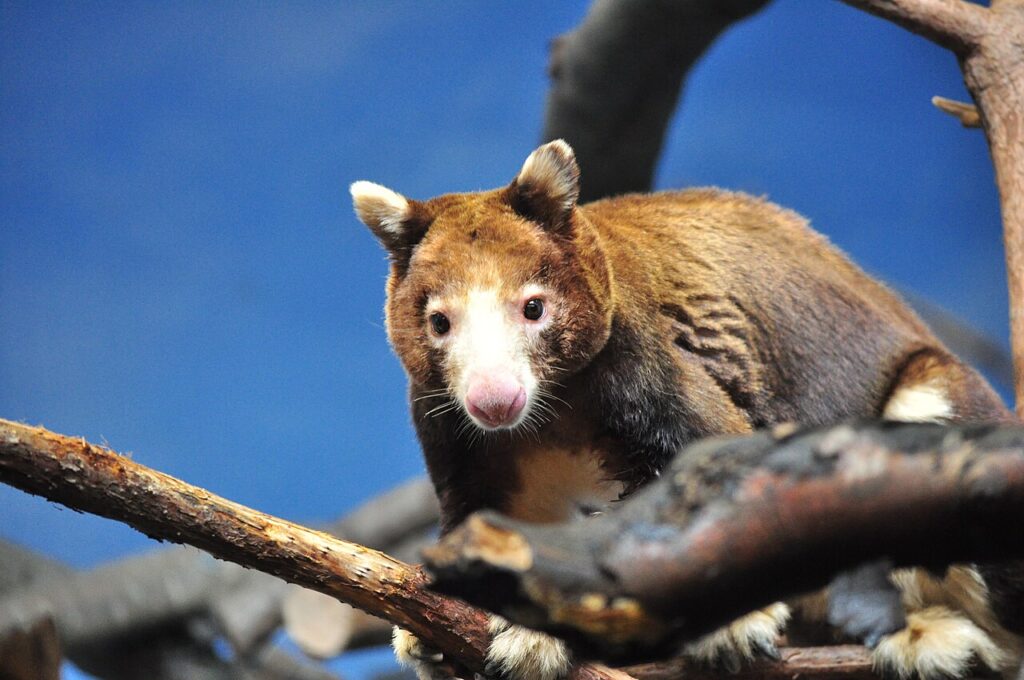
Flannery called the find a great breakthrough. He noted that the images clearly showed the distinctive coat color that matched the 1928 specimen. Geography supported the identification as well. Suitable high-altitude habitat for related kangaroo species lies hundreds of miles away from the Wondiwoi Mountains, making it extremely unlikely that Smith had photographed a different species.
What surprised the experts was how many signs of the animal Smith’s team had encountered. Scratch marks and dung appeared throughout the higher elevations, suggesting the Wondiwoi tree kangaroo might be remarkably common within its extremely limited range. Flannery estimated the species might occupy just 40 to 80 square miles of territory, thriving in a tiny pocket of forest that humans had never bothered to enter.
Hidden in Plain Sight
Why did an entire species remain undetected for nearly a century? Roger Martin had a theory that combined geography with human nature. He pointed to the bamboo forest as the key factor, noting that its difficulty kept both scientists and local hunters away from the animal’s habitat. Martin offered a characteristically dry assessment of Smith’s accomplishment. “Only an intrepid Pom in pursuit of rhododendrons would have persevered.”
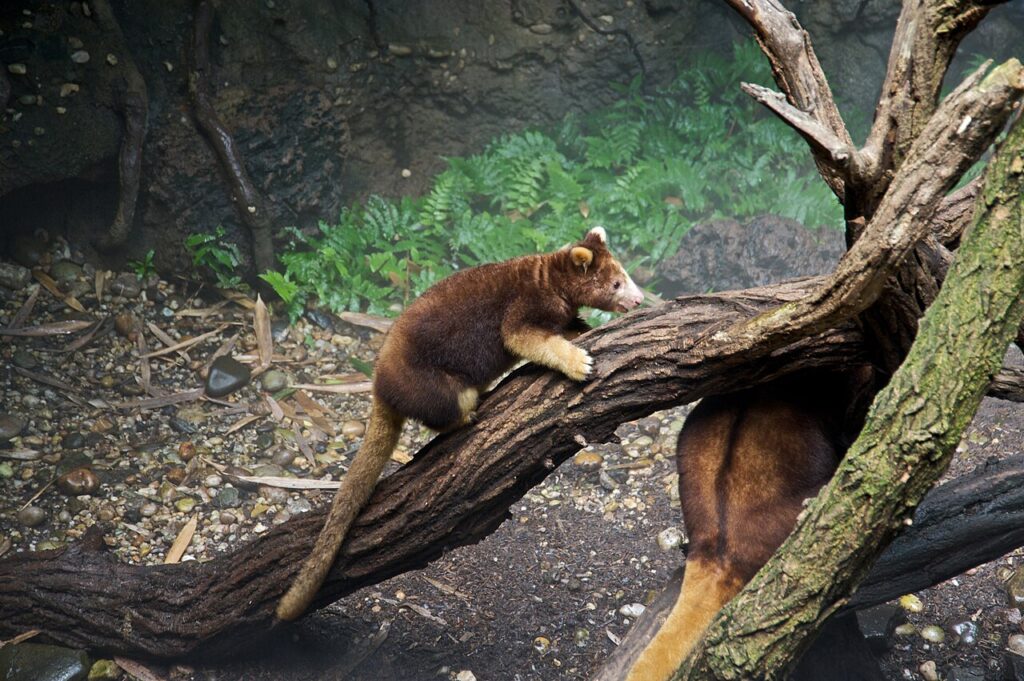
Tree kangaroos possess another trait that aids their invisibility. Despite their considerable size, they spend most of their lives high in the forest canopy, often remaining completely hidden from anyone looking up from the ground. An animal could live its entire life 30 meters above a well-traveled path without ever being spotted.
Isolation had protected the Wondiwoi tree kangaroo from the threats that decimated other species. While logging, palm oil plantations, mining, and overhunting drove many New Guinea tree kangaroos toward extinction, this particular population sat in a fortress of bamboo that no one wanted to breach.
Conservation Hopes and Concerns
Smith’s discovery arrived as welcome news for a scientific community accustomed to documenting loss rather than recovery. Martin captured the sentiment shared by many of his colleagues. “It’s exciting to have a positive story for a change. It makes the point that if we provide habitat for animals and otherwise leave them alone, then they will get on just fine.”
But threats loom over even this remote sanctuary. A proposal for a gold mine within the national park that encompasses the Wondiwoi Mountains has raised alarms among conservationists. Smith hopes his photographs will strengthen arguments for greater protection of the area and its wildlife.
Scientists have already begun planning return expeditions. Collecting dung or a small piece of ear tissue would allow researchers to extract DNA and compare it definitively with genetic material from the 1928 pelt. Such confirmation would cement the rediscovery and open doors for further study of a species about which virtually nothing is known.
Eldridge sees the find as both an ending and a beginning. Knowing the animal still exists creates an opportunity to learn about its behavior, its diet, its social structure, and its needs. That knowledge could prove essential for ensuring its survival in a world where habitat disappears at an alarming rate.
Discovery Is Still Possible
Smith has already identified his next target. A species of ringtail possum in the Arfak mountains is known only from a specimen collected in 1884. He wants to determine whether it still exists somewhere in those forests, waiting to be found by someone willing to look.
His philosophy challenges assumptions that have settled over the scientific community like dust. Many researchers operate under the belief that the age of biological discovery has passed, that cameras and satellites and generations of field work have catalogued everything worth finding. Smith disagrees.
“All this just shows that you can find interesting things if you simply go and look,” he told reporters after returning from West Papua. “The general belief that there’s nothing more of interest to discover is quite mistaken.”
Somewhere in the Wondiwoi Mountains, in a patch of forest measuring perhaps 80 square miles, tree kangaroos continue their lives in the canopy. They climb and hop through branches as they have for thousands of years, unaware that their existence was ever in doubt. For 90 years, they remained hidden, not because they had vanished, but because no one had made the effort to find them.
Sometimes the most remarkable discoveries wait for someone stubborn enough to push through the bamboo.
Image Source: Karen, Flickr