
Your cart is currently empty!
How Bad Bunny’s Cream-White Super Bowl Outfit Told a Story Beyond Fashion
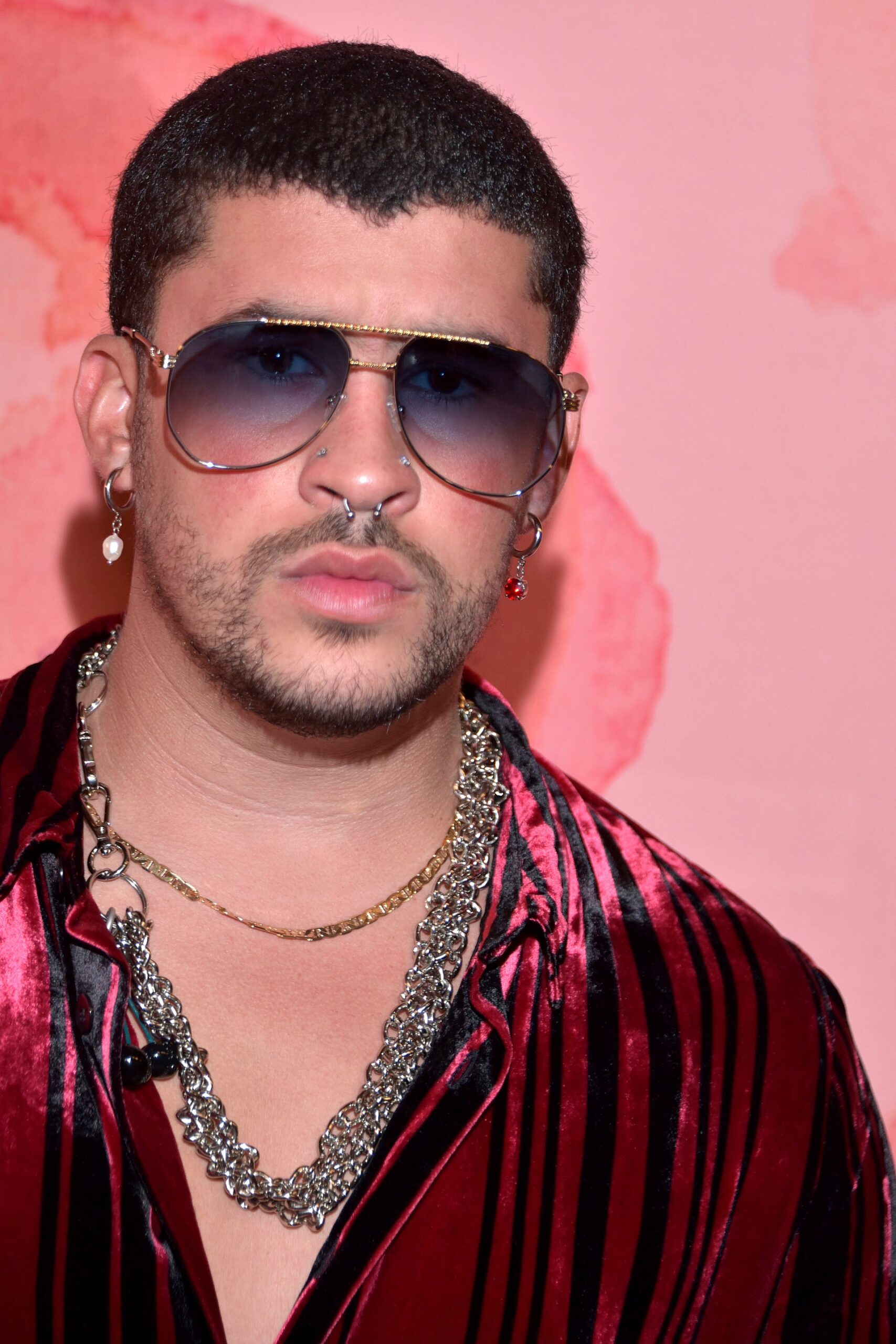
When Bad Bunny materialized on the green turf of Levi’s Stadium on Sunday night, millions of viewers noticed the color first. From his sneakers to his gloves, every piece of his outfit carried the same soft, cream-white hue, a deliberate absence of allegiance to either team on the field. But what many did not yet realize, as his opening notes of “Tití Me Preguntó” filled the California air, was that almost every detail of his wardrobe had been selected to tell a much deeper story. A number on his jersey, a name across his back, and the very brand stitching his seams together all carried meaning that would ripple across social media long after the final whistle.
Contents
show
At 31 years old, Benito Antonio Martínez Ocasio became the first performer in Super Bowl history to sing an entire halftime set in Spanish. Over 13 electrifying minutes, he turned professional football’s grandest spectacle into something that resembled a late-summer block party, one where the guest list stretched from Lady Gaga to Cardi B and Pedro Pascal. Yet even before a single celebrity walked onto the field, his outfit had already started doing its own work.
A Deliberate Swerve from High Fashion
Just one week before the Super Bowl, Bad Bunny had walked the Grammy red carpet in a va va voom suit from Schiaparelli, the storied French fashion house, complete with corset-lacing crawling up the spine. He has appeared in campaigns for Jacquemus, sat front row at Calvin Klein, and performed at Vogue World. So when his Super Bowl wardrobe credit appeared, it caught more than a few fashion watchers off guard. Zara. Not Balenciaga. Not Louis Vuitton. Zara.
For an artist with that kind of access to the upper reaches of couture, choosing a fast-fashion retailer where similar suits sell for around $250 was not an oversight. It was a statement. Zara was founded in Spain in 1975 before expanding across the globe, making it a fitting partner for a Puerto Rican artist performing entirely in Spanish on American soil. Sunday marked the first time Zara had ever dressed a performer on such a large scale. Beyond Bad Bunny himself, the brand also provided wardrobe for his backup dancers, his band, and his full orchestra.
In a statement released after the performance, a Zara spokesperson kept things simple. “It was an amazing show. Benito put on a memorable performance. What a great outfit.”
Every Layer, Down to the Earring
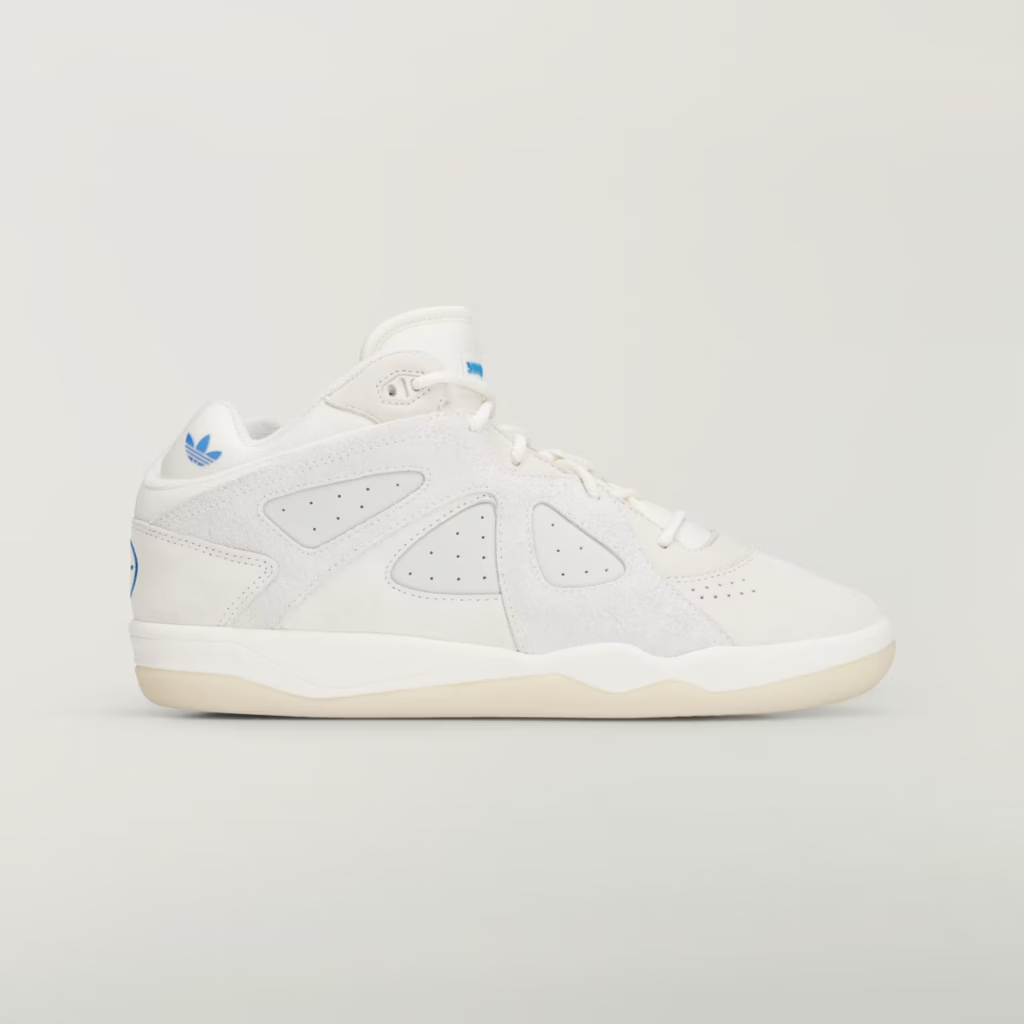
Storm Pablo and Marvin Douglas Linares, Bad Bunny’s frequent stylists, assembled the look with precision. His opening outfit consisted of a collared shirt and tie beneath a sport-inspired, cropped jersey, cut to sit a few fingers above the waistline in what has become his signature proportion. Pleated chinos, matching cream gloves, and sneakers completed the base layer.
On his wrist sat a Royal Oak timepiece from Audemars Piguet, a luxurious 37mm piece with an 18-karat yellow gold case and a malachite stone dial, valued at roughly $75,000. His left ear carried a desert diamond stud in a warm honey shade, its oblong shape echoing the silhouette of a football. Designer Marvin Douglas said of his approach, “I wanted him to have something personal and unique that would always symbolize this milestone performance.”
His sneakers were his own “BadBo 1.0” model, a collaboration with Adidas that dropped the same day as the game. Midway through his set, he layered on a double-breasted blazer in the same cream shade and slipped on a pair of sunglasses, shifting the visual register from football player to bandleader without changing the palette.
Dancers swirled around him in kaleidoscopic street clothes, also from Zara, providing a burst of color against his monochrome calm. Where they were kinetic and vivid, he remained steady in white, a visual anchor at the center of controlled chaos.
Cracking Open the “64” Mystery
Of all the details on Bad Bunny’s jersey, two attracted the most attention. Across the back, the name “Ocasio” ran in bold lettering, drawn from the last portion of his full legal name. Below it sat the number 64, which sent fans racing to the internet in search of an explanation before the halftime show had even ended.
Theories came fast. Some pointed to 1964 as the birth year of his mother, Lysaurie Ocasio. Others connected it to his 2020 album El Último Tour del Mundo, which became the first Spanish-language album in 64 years to reach the top of Billboard’s all-genre 200 chart. A darker reading linked the number to the original government death toll reported after Hurricane Maria devastated Puerto Rico in 2017, a figure that was later revised upward to 1,427 after widespread public pressure and independent research.
After his performance ended, Complex Magazine reported that the number was, in fact, a tribute to Bad Bunny’s late uncle, who had worn 64 as a football player. Whether the other associations were intentional or coincidental, the number had done what great symbols do. It invited interpretation, sparked conversation, and kept people thinking well past the final play of the game.
Quiet Defiance on the Biggest Stage
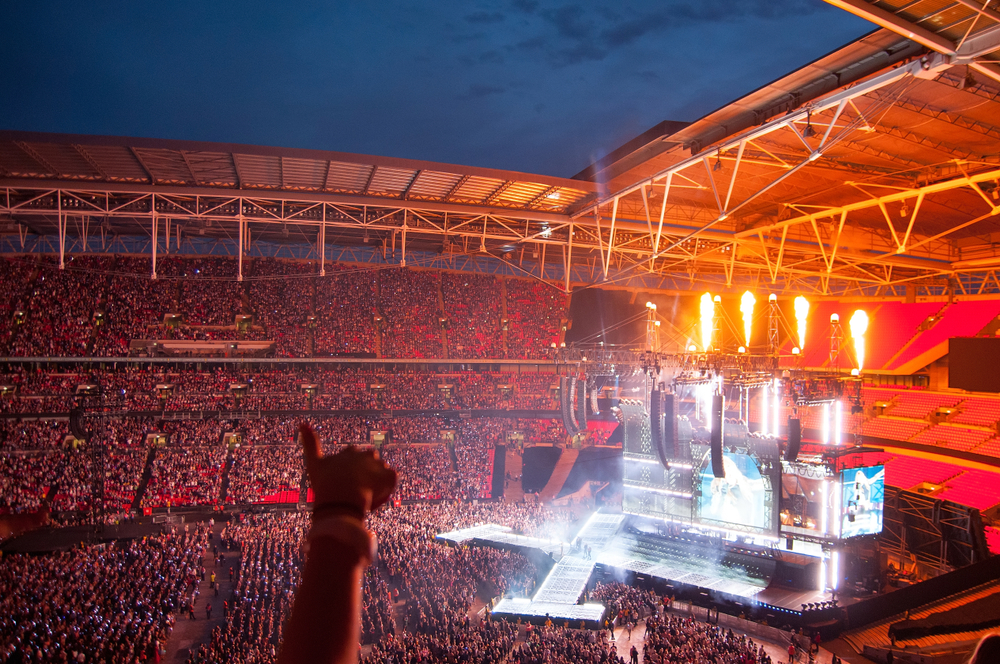
Bad Bunny’s visual choices on Sunday night did not exist in a vacuum. In the weeks leading up to the Super Bowl, a strain of criticism had framed his all-Spanish performance as something un-American. Some commentators questioned why the halftime show at the country’s most-watched sporting event would feature a set list without a single English-language song.
Such criticism had grown sharper after the 2026 Grammys, held just days earlier. At that ceremony, Bad Bunny won Best Música Urbana Album for DeBÍ TiRAR MáS FOToS and earned a standing ovation from the crowd. But it was his acceptance speech, not his music, that generated headlines. Standing at the podium, he addressed Immigration and Customs Enforcement head-on. “Before I say thanks to God, I’m going to say ICE out. We’re not savage, we’re not animals, we’re not aliens. We are humans, and we are Americans.”
Against that backdrop, his cream-white Super Bowl outfit carried a second layer of meaning. Where critics expected provocation, he offered poise. Where some anticipated spectacle, he delivered restraint. His outfit projected a calm authority, and by the time he marched off the field during the finale, trailed by his troupe of dancers, a screen behind him glowed with the words “The only thing more powerful than hate is love.” In his hand, he carried a football bearing the phrase “Together, we are America.”
How He Got Here

Sunday’s performance capped a sequence of events that had been building for months. In September 2025, Apple Music announced Bad Bunny as the Super Bowl LX halftime headliner. At the time, he had been declining to tour in the mainland United States as a form of protest against the Trump administration’s immigration crackdown through ICE.
His response to public backlash arrived with characteristic humor. Hosting Saturday Night Live in October 2025, he addressed the mixed reactions with a grin. “You might not know this, but I’m doing the Super Bowl halftime show and I’m very happy. I think everyone is happy about it — even Fox News.”
Between SNL and Sunday’s game, the Grammy wins added another chapter. His album-of-the-year victory made him the first Latino artist in the ceremony’s 68-year history to claim that prize. By the time he took the stage at Levi’s Stadium, his cultural footprint had grown so large that the event had earned an unofficial name online well before kickoff. Fans and media were calling it the Bad Bunny Bowl.
A Block Party for the Record Books
His set list drew from across his catalog, with performances of “Tití Me Preguntó,” “Yo Perreo Sola,” “Safaera,” “Baile Inolvidable,” and “Nuevayol.” Each song carried the audience further into a celebration that felt less like a halftime intermission and more like a concert in its own right.
Guest appearances punctuated the energy. Lady Gaga joined him for a solo rendition of her Grammy-winning Bruno Mars duet “Die With a Smile.” Ricky Martin added a jolt of Latin pop history. Cardi B and Pedro Pascal brought their own star power to the field. And in a quieter but meaningful appearance, Toñita, owner of Caribbean Social Club in New York, represented the community-level figures who have long sustained Latin culture in American cities.
Bad Bunny returned to the Super Bowl stage six years after his brief cameo during Shakira and Jennifer Lopez’s headlining performance in 2020. On Sunday, the stage belonged entirely to him.
Larger Than a Single Night
During Apple Music’s pre-game press conference on February 5, Bad Bunny spoke about what headlining meant beyond his own career. “I’m really excited to be doing the Super Bowl. I know that people all around the world who love my music are also happy. Especially all of the Latinos and Latinas in the world here in the United States who have worked to open doors. It’s more than a win for myself, it’s a win for all of us. Our footprints and our contribution in this country, no one will ever be able to take that away or erase it.”
On a night when every camera in America pointed at one stage, Bad Bunny chose cream over flash, Zara over couture, and his family name over any alias. Each decision reinforced a performance built not on spectacle alone but on personal and cultural meaning, delivered with the kind of quiet confidence that no amount of backlash could diminish. As confetti settled over Levi’s Stadium and the second half kicked off, his message lingered. Love, unity, and belonging are not partisan ideas. And sometimes, a jersey number can say more than a speech ever could.
Image Source: Wikimedia Commons https://upload.wikimedia.org/wikipedia/commons/thumb/d/d0/Bad_Bunny_2019_by_Glenn_Francis.jpg/1920px-Bad_Bunny_2019_by_Glenn_Francis.jpg