
Your cart is currently empty!
Woman Finds Smiling Fossil on Holy Island
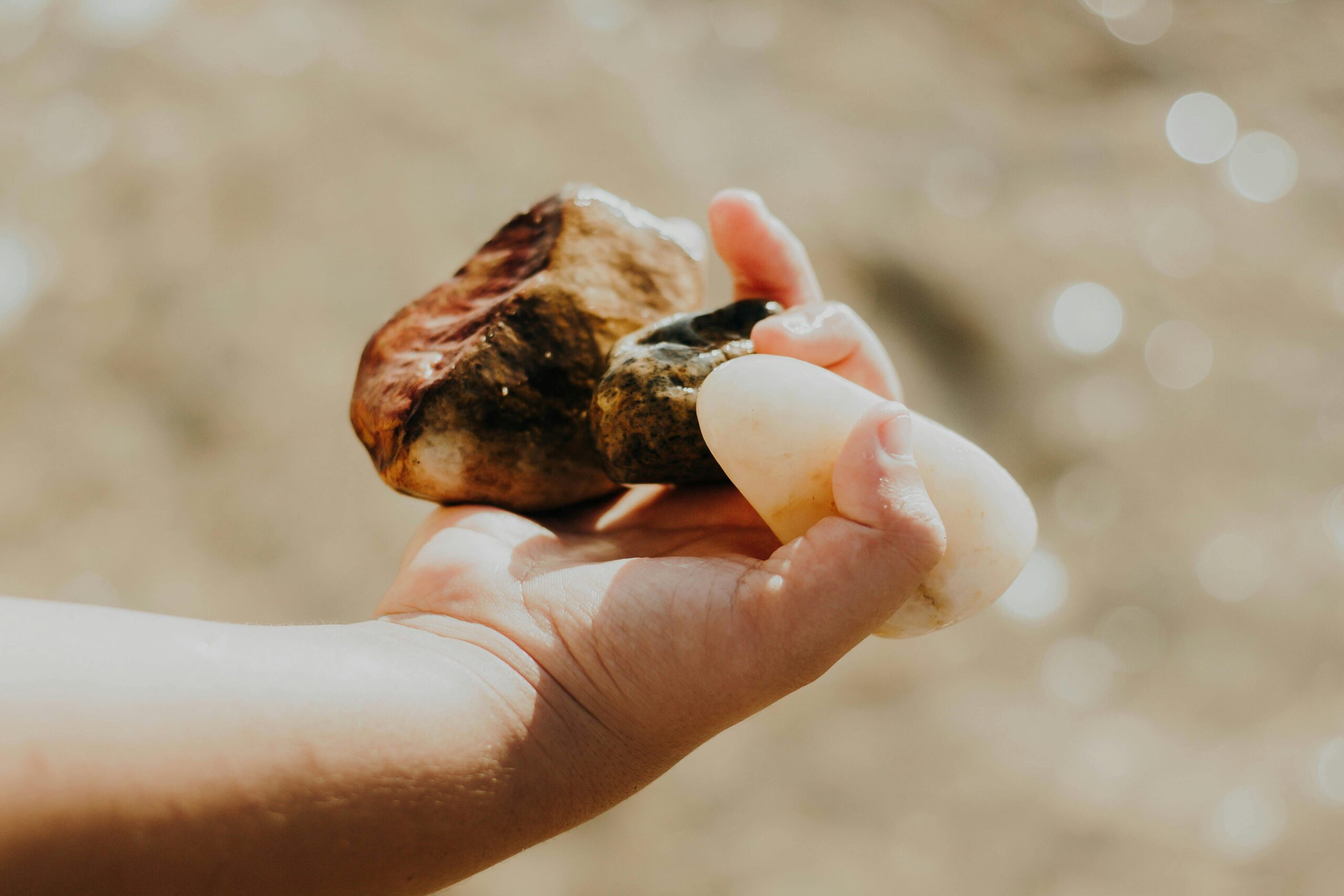
It was supposed to be a quiet Boxing Day walk along the windswept shores of Holy Island. The tide was low, the Northumberland air crisp and sharp, and the beach scattered with pebbles polished smooth by centuries of sea and salt. For 64 year old Christine Clark, fossil hunting had become a cherished tradition during her annual holiday to the island with her husband Gerard. But on this particular afternoon, something unusual stared back at her from the sand.
Contents
show
Nestled among ordinary stones was what appeared to be a tiny rock with a grin. Not just any grin, but one that looked uncannily like a set of human teeth.
“It looked like someone’s fake teeth,” she later said. “It was smiling at me.”
What began as a curious holiday discovery quickly spiraled into a viral sensation. Thousands of social media users weighed in. Experts were called. And what first appeared to be something straight out of a horror film turned out to be a remarkable piece of ancient marine life dating back hundreds of millions of years.
A Chance Discovery on a Tidal Island
Holy Island, also known as Lindisfarne, is no ordinary stretch of coastline. Home to just around 150 residents, the island is cut off from the mainland twice a day by rising tides. Visitors must time their journeys carefully, crossing a causeway that disappears beneath the North Sea when the water returns.
For Christine and Gerard, trips to the island are a yearly ritual. They are particularly fond of searching for what locals affectionately call Cuddy’s beads. These small, circular fossils are commonly found scattered along the beaches of Northumberland and have fascinated visitors for centuries.
On this Boxing Day walk, Christine was scanning the pebbled shoreline for those familiar bead like shapes when something very different caught her eye. Among the grey and brown stones sat a curved formation that appeared to be a row of white teeth embedded in rock.
The shape was so distinct that she could not ignore it. Unlike the usual disc shaped fossils she had collected before, this one had a clear arc and evenly spaced ridges. It looked deliberate, almost artificial.
She picked it up, turned it in her hand, and laughed.
“I saw this fossil smiling at me. It’s the first set of teeth I have found,” she joked.
At the time, it was simply an amusing discovery. But curiosity soon pushed her to seek answers.

Social Media Turns a Pebble into a Phenomenon
After returning home, Christine posted photos of the mysterious rock to a Facebook fossil identification page. She hoped someone might recognize the formation or confirm whether it was truly something ancient.
The response was immediate and overwhelming.
Within hours, the post began gathering thousands of likes and comments. Users from across the country and beyond shared their reactions. Some found it charming. Others described it as unsettling. A few even called it nightmare fuel. But nearly everyone agreed on one thing. The fossil did look as though it was smiling.
Online fossil enthusiasts quickly suggested that the formation was likely part of a crinoid, an ancient marine invertebrate. Their theories soon attracted the attention of professional paleontologists.
The BBC later had the fossil formally examined by the British Geological Survey, which confirmed that Christine’s find was indeed a larger fragment of a crinoid stem.
What appeared at first glance to be a row of teeth was something far older and more complex.
Understanding Crinoids: The Sea Lilies of Deep Time
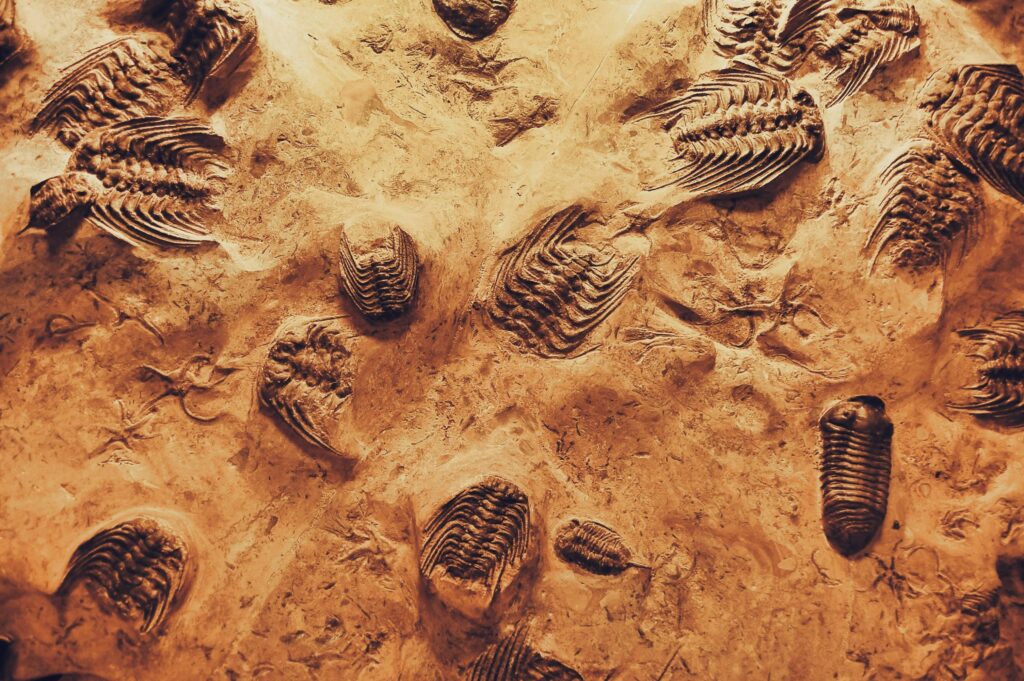
Crinoids are marine animals that first appeared during the Cambrian period more than 500 million years ago. They belong to the phylum Echinodermata, the same group that includes sea urchins and sea cucumbers. Though they resemble plants at first glance, crinoids are fully fledged animals.
Often nicknamed sea lilies because of their flower like appearance, crinoids attach themselves to the sea floor using a flexible stem. At the top of this stem sits the body, surrounded by branching arms used to filter food particles from the water.
Dr Jan Hennissen, a senior paleontologist at the British Geological Survey, explained that the stem is composed of small disc shaped segments known as ossicles. When multiple ossicles remain connected together, they form what scientists call a columnal.
What Christine discovered was not a complete organism, which is rare to find, but a section of this stem. Over millions of years, the stem had split lengthwise and curved into a shape that remarkably resembled a mouth.
The black center of the fossil was simply the surrounding rock, while the pale ridges were the ossicles. The alignment was accidental but visually striking.
According to Dr Hennissen, the fossil likely originated from the Alston Formation, a dark limestone rock formation estimated to be around 350 million years old.
To hold such an object in one’s hand is to hold a fragment of deep geological time, a relic from an era when life in the oceans was radically different from today.
The Legend of Cuddy’s Beads

The beaches of Holy Island have long been known for their abundance of crinoid fossils. The small disc shaped segments of their stems are particularly common and are often found scattered like tiny coins among the pebbles.
Locals refer to these fossils as St Cuthbert’s beads, a name rooted in centuries old legend.
In the seventh century, St Cuthbert arrived on the island as a monk. He later became one of the most venerated figures in early English Christianity. After his death, he was buried on Holy Island, and stories of miracles surrounding his shrine spread throughout the region.
Dr Frances McIntosh, collections curator in the North East at English Heritage, has explained that by the 1300s, people were discovering these small fossil discs along the shoreline. At the time, they had no understanding of prehistoric marine life. Instead, they believed the beads were formed by St Cuthbert himself as part of a spiritual process.
Collecting the beads became an act of devotion. People thought that by gathering them, they could draw closer to the saint and strengthen their spirituality.
The nickname Cuddy’s beads emerged as a local variation of Cuthbert’s name, and the tradition of searching for them has endured for generations.
Christine and Gerard’s annual fossil hunts are part of this long history. Though modern science has replaced medieval mysticism, the sense of wonder remains remarkably similar.
Why the Fossil Looked So Convincing
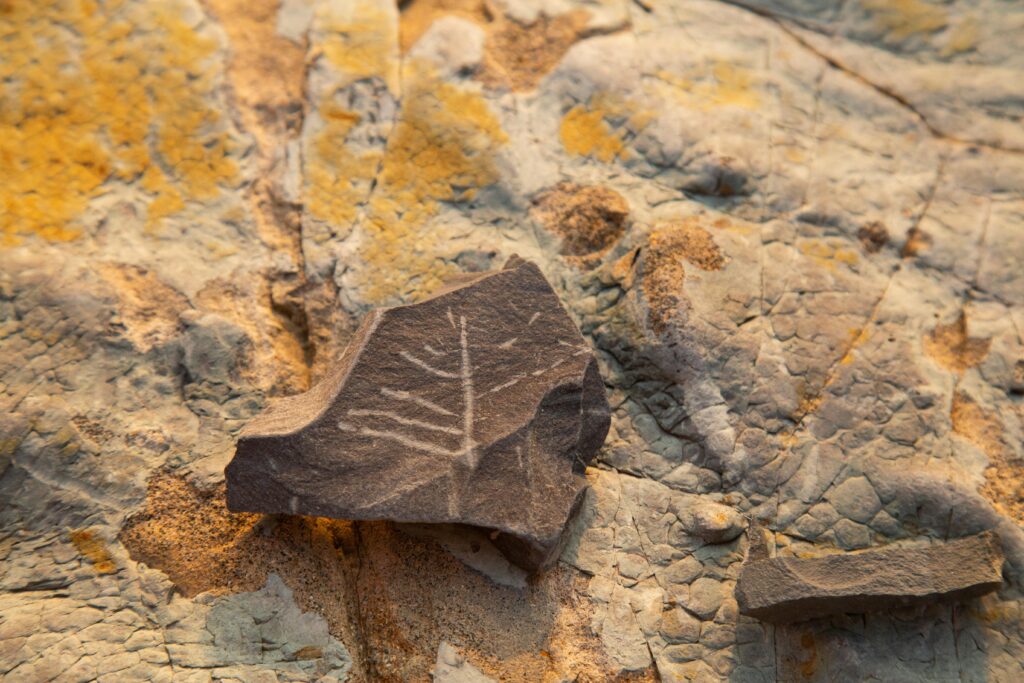
One reason Christine’s discovery captured so much attention is that the human brain is wired to recognize faces and familiar patterns. This phenomenon, known as pareidolia, causes us to see shapes or expressions in clouds, tree bark, or even pieces of toast.
In this case, the curved columnal of the crinoid stem mimicked the arc of a smile. The evenly spaced ossicles resembled teeth, and the dark hollow beneath created the illusion of an open mouth.
Dr Hennissen noted that crinoid fossils are often easy to distinguish from surrounding rock because their biological structure contrasts sharply with the sediment around them. The lines of the ossicles are strict and clearly defined, unlike the irregular texture of mudstone or limestone.
Still, finding a section that so perfectly imitates a human grin is unusual.
It is rare to uncover a complete crinoid fossil. More commonly, beachcombers find the individual discs that once made up the stem. Discovering a larger connected fragment is less frequent, and finding one that has split and curved in such a distinctive way is rarer still.
The combination of geological processes and sheer chance created a formation that feels almost intentional.
From Ancient Ocean Floor to Viral Sensation

The journey of Christine’s fossil spans hundreds of millions of years.
First, the crinoid lived attached to the floor of a prehistoric sea, filtering nutrients from waters that covered what is now northern England. When it died, its skeletal structure settled into sediment. Over vast stretches of time, layers of sediment compressed into limestone, preserving fragments of its stem.
Tectonic shifts, erosion, and the relentless movement of waves eventually brought that limestone to the surface. The rock fractured, and one particular fragment broke free. The sea polished it smooth. The tide carried it to shore.
And on a winter afternoon, Christine happened to notice it.
The viral reaction to her find reflects more than just amusement. It reveals a collective fascination with deep time and the strange beauty hidden in everyday places.
In an era dominated by fast paced news cycles and digital noise, a simple fossil can still capture widespread attention. Perhaps it offers a reminder that the world holds mysteries far older and grander than our daily concerns.
Offers to Buy and the Value of Wonder
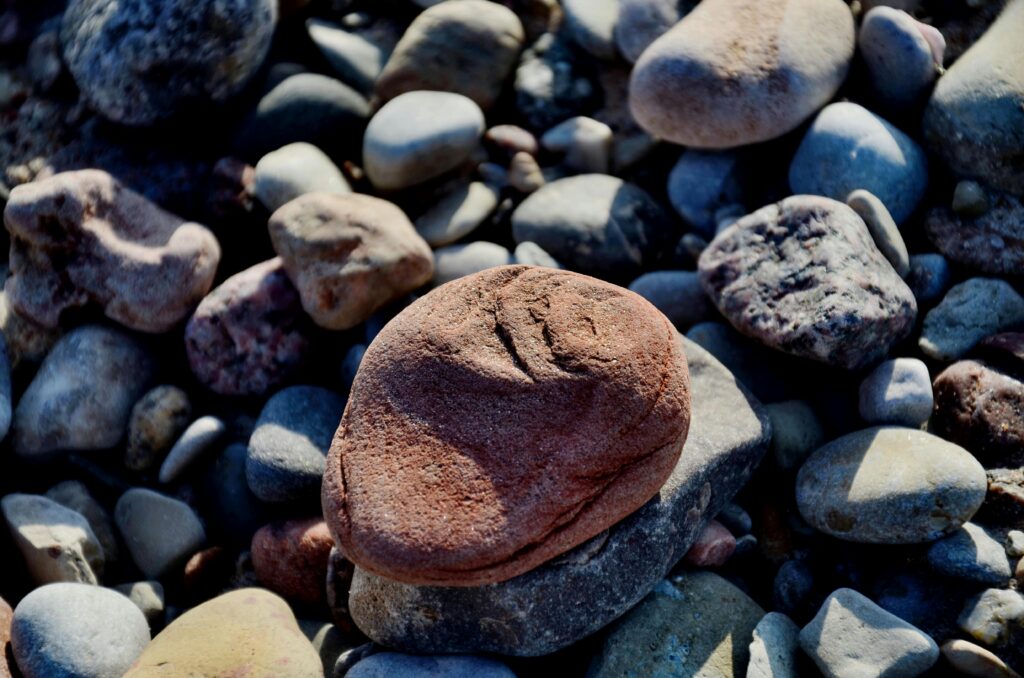
Since sharing her discovery online, Christine has reportedly received offers from people interested in purchasing the fossil. Such attention might tempt some collectors to sell.
For now, she intends to keep it.
“It brings a lot of amusement to many people,” she said.
There is something fitting about that decision. While fossils can carry monetary value, their deeper worth often lies in the stories they tell and the curiosity they spark.
For amateur fossil hunters, finds like this are not about profit. They are about connection to history, to nature, and to the quiet thrill of discovery.
Holy Island continues to attract visitors drawn by its spiritual heritage, dramatic tides, and fossil rich beaches. Each year, countless walkers scan the shoreline for Cuddy’s beads. Most will find only small discs. A few may stumble upon something more unusual.
But even the most ordinary fossil carries extraordinary significance. Each is a fragment of life from a vanished world.
The Enduring Appeal of Fossil Hunting
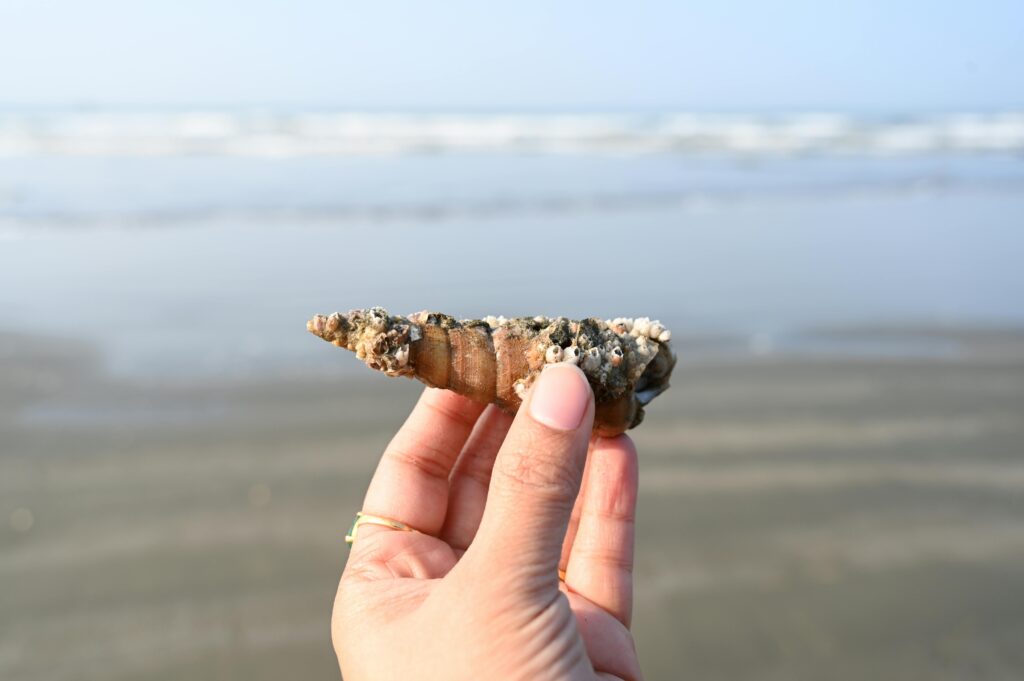
Fossil hunting remains one of the most accessible ways for ordinary people to engage with natural history. Unlike museum exhibits behind glass, beach finds can be touched, turned over, and examined up close.
Experts often encourage responsible collecting practices. This includes checking local guidelines, avoiding protected sites, and reporting significant finds to appropriate authorities. Institutions such as the British Geological Survey and museum identification units offer services where members of the public can send photographs for expert evaluation.
For many families, fossil hunting is about more than science. It is about shared experience. It invites patience, observation, and a willingness to look closely at the world.
Christine’s smiling fossil illustrates how even a casual holiday walk can become an unforgettable moment.
A Smile Across 350 Million Years
In the end, the story of the smiling fossil is both simple and profound.
A woman noticed something unusual. She shared it with others. Experts confirmed its ancient origins. And for a brief moment, a fragment of deep geological history captured the imagination of thousands.
The fossil is not truly smiling, of course. It has no awareness, no intent. Yet the illusion feels meaningful. It bridges the gap between human perception and prehistoric life.
Perhaps that is why the image resonated so widely. In a curved piece of limestone shaped by time and tide, people saw something familiar. Something almost friendly.
Holy Island has long been associated with faith, legend, and spiritual reflection. Now it has also become the backdrop for a reminder of Earth’s vast history.
From medieval pilgrims collecting beads believed to be gifts from a saint, to modern holidaymakers identifying marine invertebrates through online communities, the impulse is the same. We search for meaning in what we find.
Christine Clark’s fossil may look like a grin, but what it truly represents is something deeper. It is a testament to chance, curiosity, and the enduring human desire to understand the past.
On a quiet beach shaped by tides and time, a 350 million year old fragment of life surfaced just long enough to make the world smile back.