
Your cart is currently empty!
Record Number of Americans Apply for UK Citizenship Amid Political Uncertainty

The number of Americans applying for British citizenship has climbed to the highest level ever recorded, marking a striking shift in transatlantic migration patterns during the first year of President Donald Trump’s second term in the White House. According to Home Office data published this week, 8,790 US nationals applied for citizenship through naturalization or registration in 2025, a figure that represents a 42 percent increase on the previous record set just one year earlier. The final quarter alone saw 2,490 applications, the largest quarterly total on record, underscoring how sharply interest accelerated as political debates intensified both in Washington and London.
Contents
show
While migration flows are shaped by personal circumstances, career opportunities, and family ties, immigration lawyers say the political climate is playing a visible role in the surge. Professionals with established careers, young families seeking long term stability, and Americans with ancestral ties to Britain are all among those exploring permanent status. For many, citizenship is not simply symbolic. It represents security, mobility, and certainty at a time when policies in both countries are in flux and future rules feel increasingly difficult to predict.
A Record Breaking Surge in Applications
Home Office figures show that 8,790 Americans sought British citizenship in the year ending December 2025, surpassing the previous high of 6,192 recorded in 2024. The increase did not happen gradually over several years but instead rose steeply following the 2024 US presidential election. Analysts tracking the numbers observed that inquiries at immigration law firms began climbing almost immediately after the election result, before formal applications followed.
Nick Rollason, head of immigration at law firm Kingsley Napley, said the spike reflects a broader strategic calculation among internationally mobile professionals. He explained, “There continues to be a rise in interest from the US for those seeking global mobility options, and citizenship is a key part of that.” His comments suggest that for many applicants, a British passport is not about abandoning the United States but about expanding their options in an uncertain world.
The final quarter of 2025 stands out in particular. With 2,490 applications submitted in just three months, it became the busiest quarter on record for US nationals. That surge contributed to an overall total of 90,555 citizenship applications across all nationalities in the same period, the highest quarterly figure since records began in 2004.

Political Tensions on Both Sides of the Atlantic
Immigration lawyers and policy observers have pointed to the increasingly polarized atmosphere in the United States as one factor influencing decisions. Since returning to office, President Trump has pursued an assertive policy agenda focused on reshaping trade, federal institutions, and immigration enforcement. Supporters view these changes as necessary reforms, while critics argue that the speed and scope of policy shifts have created instability in key sectors of American life.
Reflecting on conversations with clients, Rollason noted that the “political climate in the US appears to be a significant motivator for those seeking a more stable and predictable environment abroad.” Although official data does not record individual motivations, law firms report that many applicants mention concerns about long term political uncertainty, regulatory volatility, and the broader tone of public discourse.
At the same time, Britain itself is experiencing heated debate over migration policy. The rise in US applications is happening against a backdrop of competing political visions about who should be allowed to settle permanently and under what conditions. This dual pressure from both countries has created a sense of urgency among those already eligible to apply.
How Americans Qualify for British Citizenship
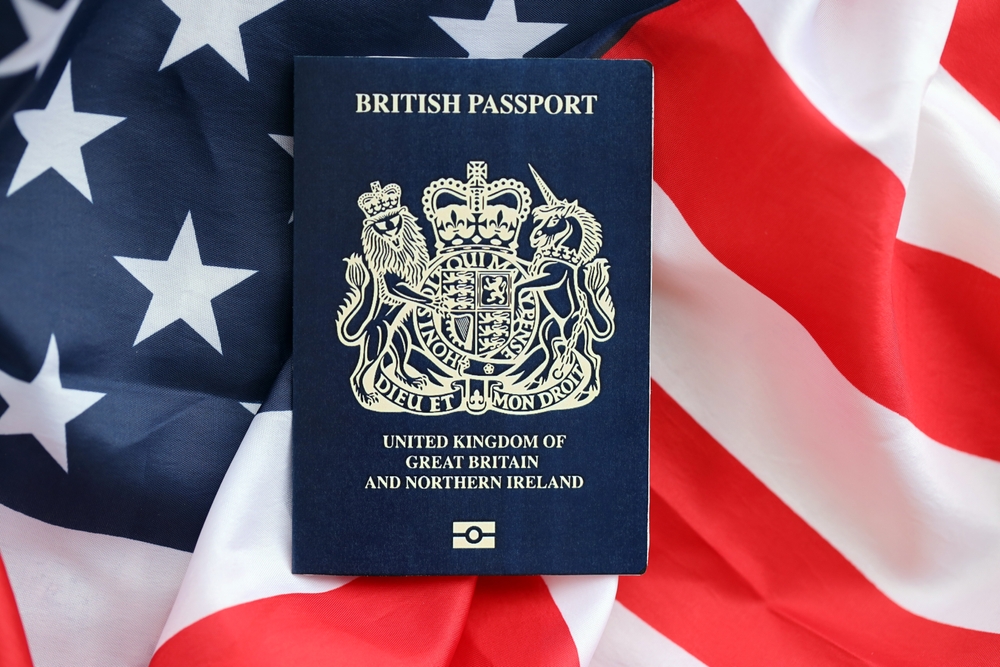
Americans typically pursue citizenship through naturalization, which requires at least five years of lawful residence in the UK and at least one year holding Indefinite Leave to Remain. Applicants must also pass the Life in the UK test and demonstrate English language proficiency. Others qualify through marriage to a British citizen, which can shorten the residency timeline. These routes have long been available, but recent political developments appear to have prompted more people to act sooner rather than later.
Registration offers another pathway, particularly for children born abroad to British citizens or children born in the UK whose parents later secure citizenship or settled status. A legal change introduced in 2022 has also made it easier for Americans with a British grandmother to claim citizenship, expanding eligibility for thousands of people who previously could not apply.
Lawyers say that this ancestry based reform has had a measurable impact on application volumes. For dual nationals and those with family ties to Britain, the process often feels less like relocation and more like formalizing a connection that already exists. In that sense, the current surge reflects both political reaction and long standing cultural links between the two countries.
A Wider Rush to Secure Status in Britain
The rise in American applications forms part of a broader jump in citizenship requests across multiple nationalities. Total applications reached 90,555 in the fourth quarter of 2025, a 44 percent increase compared with the previous quarter. Indian applications rose by 55 percent, Pakistani applications by 28 percent, and Italian applications by 84 percent over the same period. The number of people sitting citizenship tests also climbed 48 percent in the final quarter, reaching 59,472.
Despite this surge in applications, the Home Office reported that grants of settlement and citizenship actually fell during 2025, down 10 percent and 13 percent respectively compared with the previous year. This gap between applications and approvals may reflect processing backlogs, but it also highlights how many migrants are attempting to secure permanent status amid uncertainty.
One reason for the urgency is the political debate unfolding in the UK. At the Labour Party conference, Home Secretary Shabana Mahmood outlined proposals that would double the default period migrants must live in Britain before qualifying for permanent settlement, alongside stricter requirements related to language and financial contributions. Meanwhile, Reform UK has proposed more sweeping changes, including revisiting the status of people who already hold Indefinite Leave to Remain.
Citizenship as Insurance Against Uncertainty
Immigration lawyers say these proposals have influenced behaviour among long term residents who previously felt secure. Rollason told the Financial Times that concerns over both Labour’s settlement proposals and Reform’s possible attacks on ILR were “pushing people who qualify to apply now,” including individuals who had held ILR for years without considering naturalization. For many, the application is less about immediate change and more about safeguarding their future.
Kelvin Tanner, a partner at Charles Russell Speechlys, described the trend as part of a broader pattern of risk management among internationally mobile professionals. He said his firm had seen increased interest in applying for settlement and British citizenship “as a hedge against continually changing immigration policy and both UK and global political uncertainty.” In practical terms, that hedge can mean the difference between temporary residency and the full rights that accompany citizenship.
Although overall immigration to the UK fell in 2025, with 809,407 non visit visas issued, down 15 percent from the previous year, the appetite for permanent status appears to be intensifying. Fewer newcomers may be arriving, but those already present are taking steps to anchor their status more firmly.

What the Numbers Reveal About a Changing World
Citizenship statistics rarely capture headlines, yet this record breaking year speaks to deeper currents shaping global mobility. Americans applying for British passports are not necessarily abandoning their homeland. Many are expanding their options, ensuring that their families have flexibility in where they can live, work, and travel. In an interconnected world, dual citizenship is increasingly viewed as a practical asset rather than a political statement.
For Britain, the surge presents both opportunity and challenge. Policymakers have emphasized attracting high earners and individuals with strong educational backgrounds, categories that many US applicants fit. At the same time, public debate around migration remains intense, with parties competing to demonstrate firmness on border control and settlement rules.

Ultimately, the rise in applications highlights a simple reality. When political and economic conditions feel unstable, people look for certainty wherever they can find it. Whether motivated by ancestry, career prospects, or concerns about shifting policies, more Americans than ever are choosing to formalize their ties to the United Kingdom. The long term trajectory of this trend will depend on how both nations navigate the pressures of politics, economics, and identity in the years ahead.