
Your cart is currently empty!
Iranian Leader Warns Trump to Watch Himself as Tensions Escalate With United States
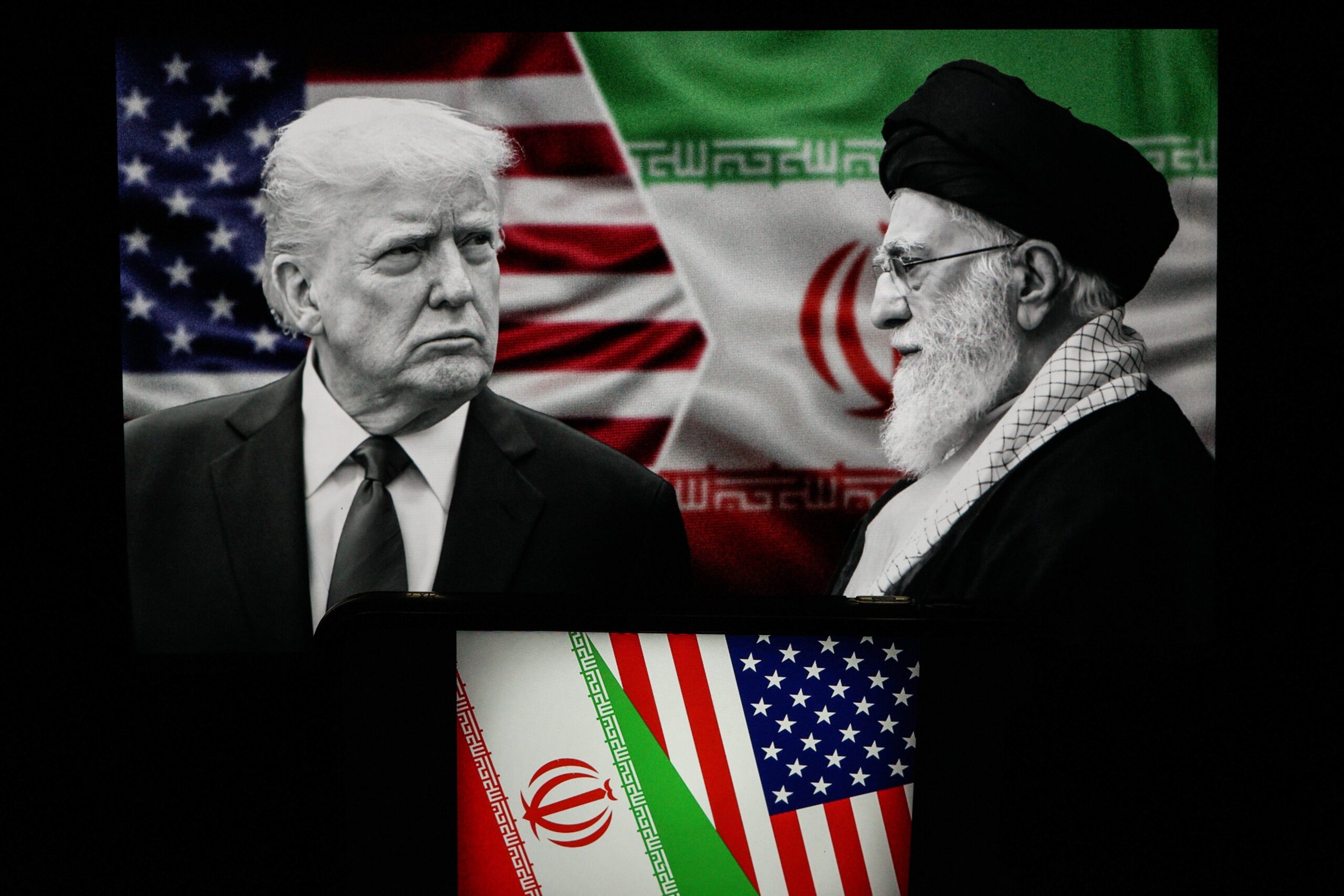
Rhetoric between world powers can escalate quickly during periods of military conflict, and recent statements exchanged between the United States and Iran illustrate just how tense the situation has become. Over the past several days, a series of threats, counter threats, and military developments have drawn international attention to the deepening crisis in the Middle East. At the center of the latest exchange are US President Donald Trump and Ali Larijani, a senior Iranian security official who issued a stark warning that the American leader should “watch out for yourself” after Trump threatened devastating retaliation against Iran.
Contents
show
The verbal clash did not occur in isolation. It comes during an ongoing military confrontation involving Iran, the United States, and Israel, following air strikes that have dramatically reshaped the region’s strategic landscape. The assassination of Iran’s Supreme Leader and the subsequent wave of military operations have intensified fears of a prolonged conflict with global implications. Oil markets, diplomatic relations, and regional stability now hang in the balance.
As leaders on both sides trade increasingly severe language, analysts and observers are trying to understand what the latest statements reveal about the direction of the conflict. While political rhetoric is often dramatic during wartime, the tone of the current exchange has raised questions about how close the region might be to further escalation.
A Stark Warning From Tehran
Ali Larijani, the secretary of Iran’s Supreme National Security Council, delivered one of the most direct warnings yet aimed at the American president. In a post shared on the social media platform X, Larijani responded to comments made by Donald Trump about the possibility of further US military action.
Larijani wrote that Iran does not fear what he described as “paper threats” from Washington. He warned that even leaders far more powerful than Trump had failed to defeat the Iranian nation in the past. His message concluded with a striking line directed personally at the US president: “Watch out for yourself lest you be eliminated.”
The statement immediately drew international attention because of its blunt tone. Diplomatic language between rival states is often carefully measured, but Larijani’s remarks reflected the intensity of the moment.
According to reports cited by multiple outlets, Larijani also invoked the spirit of Ashura, a significant concept in Shia Islam that symbolizes resistance against oppression and unwavering faith in the face of adversity. In Iran, Ashura commemorates the martyrdom of Husayn ibn Ali, the grandson of the Prophet Muhammad, who was killed in the Battle of Karbala in 680 CE.
The symbolism carries deep historical meaning in Iranian political rhetoric. By referencing Ashura, Larijani was emphasizing resilience and the idea that the Iranian nation would not be intimidated by external pressure or military threats.
The warning came after several days of mounting tension between the two countries, particularly following US and Israeli air strikes inside Iran that targeted both military facilities and leadership figures.
Donald Trump’s “Death, Fire and Fury” warning
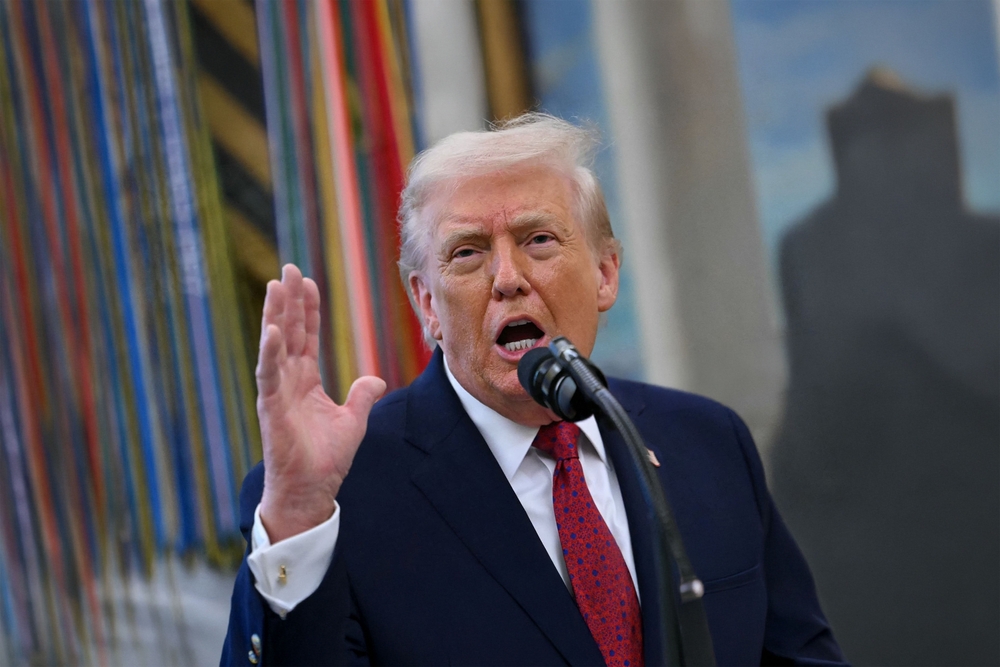
The Iranian response was triggered by comments made by President Donald Trump on his social media platform Truth Social. In his message, Trump warned that the United States would respond forcefully if Iran attempted to disrupt oil shipments through the Strait of Hormuz.
The Strait of Hormuz is one of the most strategically important waterways in the world. Roughly one fifth of the global oil supply passes through the narrow channel connecting the Persian Gulf to the Gulf of Oman. Any disruption to shipping there has the potential to send shockwaves through global energy markets.
Trump stated that if Iran interfered with oil flows through the strait, the United States would strike back “twenty times harder” than previous attacks.
He went even further in describing the potential consequences. In his post, Trump wrote that American forces could target infrastructure and strategic assets in ways that would make it “virtually impossible” for Iran to rebuild as a nation.
The message concluded with a dramatic warning that “death, fire and fury” would rain down on Iran if the confrontation escalated. At the same time, Trump added that he hoped such an outcome could be avoided.
While the language was severe, it was consistent with Trump’s broader approach to projecting strength during international disputes. Throughout his political career, he has often used strong rhetoric to signal that the United States would respond decisively to perceived threats.
Defense Secretary Pete Hegseth later echoed the president’s warning during a press conference. He reiterated that the United States would retaliate heavily if Iran attempted to halt the flow of oil through the Strait of Hormuz. Military leaders also suggested that escorting commercial ships through the strait could be considered as one option to ensure the continued movement of energy supplies.
The Assassination That Reshaped the Conflict

The current confrontation cannot be understood without examining the events that triggered it. According to multiple reports, the crisis escalated dramatically after Iran’s Supreme Leader Ayatollah Ali Khamenei was assassinated on February 28.
The killing occurred during the early phase of a coordinated military operation involving the United States and Israel. Air strikes targeted several locations across Iran, hitting both military installations and leadership compounds.
The strikes reportedly eliminated several senior commanders along with other key figures within Iran’s security structure. Civilian casualties were also reported, adding to the intensity of the national response inside Iran.
For Iranian leadership, the assassination of the country’s highest authority represented a major turning point. The Supreme Leader holds enormous political and religious influence within Iran’s system of government. His death created both a power vacuum and a powerful rallying point for national resistance.

Iran quickly responded with waves of missile and drone attacks aimed at US and Israeli positions throughout the region. These retaliatory strikes marked the beginning of a broader military exchange that has now continued for days.
Reports indicate that by early March, thousands of targets had been struck during the conflict. US Central Command stated that more than 5,000 targets had been hit during the opening phase of the operation.
The rapid escalation raised concerns among international observers that the confrontation could spiral into a wider regional war involving multiple actors across the Middle East.
The Strategic Importance of the Strait of Hormuz

One of the central issues driving the confrontation is control of the Strait of Hormuz. The narrow waterway has long been considered one of the most critical choke points in global trade.
Approximately 20 percent of the world’s oil supply travels through the strait each day. Tankers carrying crude oil from major producers in the Persian Gulf pass through the channel on their way to markets in Asia, Europe, and beyond.
Because of this role, any threat to shipping in the area quickly becomes a global concern.
Iran has historically used the possibility of closing or disrupting the strait as a form of strategic leverage during confrontations with Western powers. Even the suggestion of interference can cause energy prices to surge.
Recent developments have demonstrated how sensitive the market can be to political signals. Oil prices initially jumped after reports of the escalating conflict and concerns about potential disruptions. However, prices later fell after Trump suggested that the war might end soon.
The volatility reflects how closely global markets are watching events in the region.
Military planners are also paying close attention to the situation. During a recent press briefing, the chairman of the Joint Chiefs of Staff, General Dan Caine, said that the United States is considering a range of options to ensure safe passage through the strait. These could include escort missions for commercial vessels if tensions continue to rise.
Such measures have been used in the past during periods of heightened confrontation in the Gulf. However, implementing them would require careful coordination and could carry its own risks of accidental escalation.
A War of Rhetoric and Perception

Beyond the military dimension, the conflict is also unfolding as a battle of messaging. Leaders on both sides are attempting to project strength while also shaping the narrative for domestic and international audiences.
For Iran, public statements like Larijani’s serve multiple purposes. They demonstrate defiance in the face of external pressure and reinforce a narrative of national resistance. References to historical and religious symbolism, such as Ashura, connect modern events to deeper cultural themes that resonate strongly with many Iranians.
For the United States, strong rhetoric from the president is often intended to deter further action by adversaries. By warning of overwhelming retaliation, American leaders aim to signal that any escalation will carry severe consequences.
At the same time, political messaging can sometimes complicate diplomatic efforts. When statements become increasingly dramatic, it can be more difficult for leaders to step back without appearing weak to their supporters.
Observers note that much of the language currently being used reflects wartime communication strategies rather than immediate operational decisions. In other words, harsh statements do not necessarily mean that specific actions will follow immediately.
Nevertheless, the tone of the exchange highlights how strained relations between the two countries have become.
Global Reactions and Economic Ripple Effects

The rising tension between Iran and the United States has prompted reactions from governments and markets around the world.
Energy markets were among the first to respond. Oil prices spiked as traders reacted to the possibility that shipping routes could be disrupted. The Strait of Hormuz is particularly important for countries in Asia that depend heavily on imported oil from the Persian Gulf.
China, India, Japan, and South Korea all rely on energy supplies that pass through the strait. Even temporary disruptions could have significant economic consequences for these economies.
Financial markets have also been watching developments closely. Geopolitical instability often leads investors to shift toward safer assets, while industries tied to energy production can experience sudden swings.
Diplomatic responses have varied. Some governments have called for restraint and emphasized the need for dialogue. Others have expressed support for efforts to protect shipping routes and maintain stability in the region.
International organizations are also monitoring the situation carefully, particularly given the humanitarian implications of continued military operations.
The Uncertain Road Ahead
As the conflict enters its second week, the future direction of the crisis remains uncertain. Military operations continue, and both sides have signaled that they are prepared for further confrontation if necessary.
President Trump has suggested that the war could end soon, while also emphasizing that the United States has already achieved significant results through its military campaign. At the same time, Iranian officials have vowed to continue resisting what they describe as foreign aggression.
Diplomatic channels may still play a role in determining how events unfold. Trump indicated in a recent interview that he believes Iranian leaders may want to negotiate, though no formal talks have been confirmed.
For now, the region remains on edge. Each new statement from political leaders is closely scrutinized by analysts, governments, and markets trying to anticipate the next move.
A Crisis Still Unfolding
The exchange between Ali Larijani and Donald Trump reflects the broader tensions that have defined relations between Iran and the United States for decades. In times of crisis, rhetoric often becomes sharper, and leaders use dramatic language to signal resolve.
Yet behind the statements lies a complex geopolitical situation shaped by military operations, strategic waterways, economic pressures, and historical grievances. The assassination of Iran’s Supreme Leader and the subsequent military strikes have pushed the region into one of its most volatile moments in recent years.
Whether the confrontation escalates further or eventually moves toward negotiation will depend on decisions made in the coming days. For now, the words exchanged between Washington and Tehran serve as a reminder of how quickly political tensions can transform into global concerns with far reaching consequences.
As the world watches events unfold, the hope among many observers is that diplomacy and restraint will ultimately prevail over further escalation.