
Your cart is currently empty!
Operation Epic Fury: How Laser Weapons, Space Satellites, and Hacked Cameras Changed the Iran War
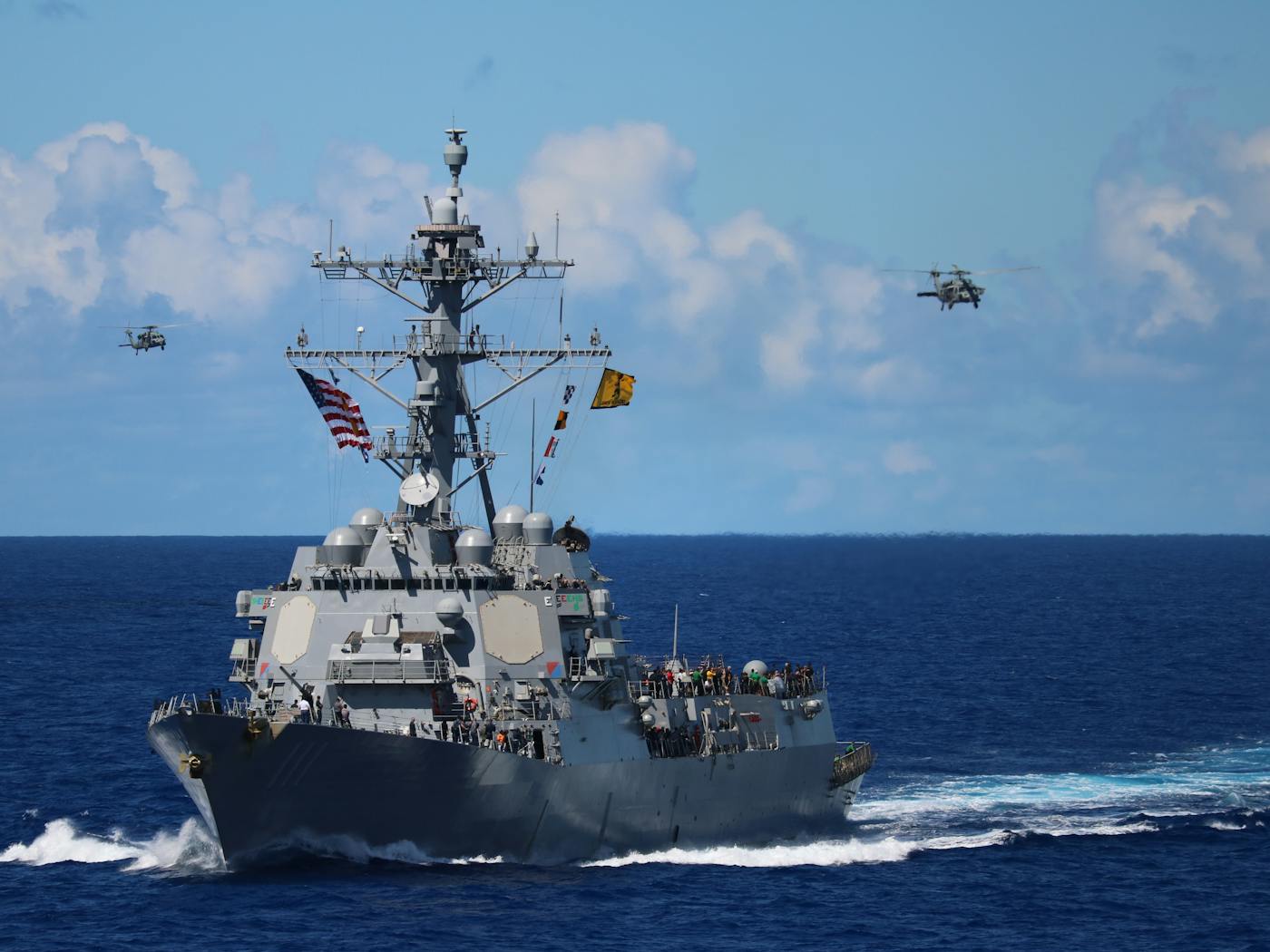
Somewhere off the coast of Iran, mounted on the deck of a US Navy destroyer, a weapon that most people had only seen in test footage was being used in a live conflict for the first time. Footage released by US Central Command on social media showed it clearly enough for military analysts to identify it, though neither the Navy nor any official spokesperson confirmed what it was doing there or what it had already done. That combination of visible hardware and official silence said something important about where this war sat on the timeline of military history.
Contents
show
Operation Epic Fury began on February 28, 2026, when US and Israeli forces launched coordinated strikes against Iran following the collapse of nuclear negotiations. Iranian Supreme Leader Ayatollah Ali Khamenei was killed as a result of the operation. Iran responded with waves of missiles and drones aimed at Israeli territory and US military bases across neighbouring countries in the Gulf. What unfolded in the days that followed was unlike any conflict the region had seen before, not because of its scale alone, but because of the technology being used to fight it.
Among the military hardware visible in footage from the early days of the operation was what analysts and military watchers identified as the HELIOS system, which stands for High-Energy Laser with Integrated Optical Dazzler and Surveillance. Named after the Greek god of the Sun, HELIOS is mounted on US Navy destroyers and designed to intercept drones and missiles using a concentrated beam of energy directed by a steerable head. Military observers who studied the released footage described its ability to focus an intense, tightly focused beam capable of burning through a drone’s structure or disabling its onboard electronics before it can reach its target.
Neither the US Navy nor the Israeli military officially confirmed that laser weapons were being used in active combat operations during Epic Fury. What the Navy did confirm was that in early February 2026, weeks before the conflict began, HELIOS had successfully destroyed multiple drones in a weapons test. The gap between that confirmation and the footage circulating on social media was left for observers to interpret on their own.
Along the Israel-Lebanon border, a separate but related picture was emerging. Videos showed rockets launching into the sky, only to explode seconds later at altitude without reaching their targets. Military analysts attributed this widely, though again unofficially, to Israel’s Iron Beam system, an advanced laser designed to disable rockets and defend territory. Two laser systems, from two allied militaries, operating in the same conflict without either government saying a word about it on the record.
What Space Force Was Doing While the Missiles Flew
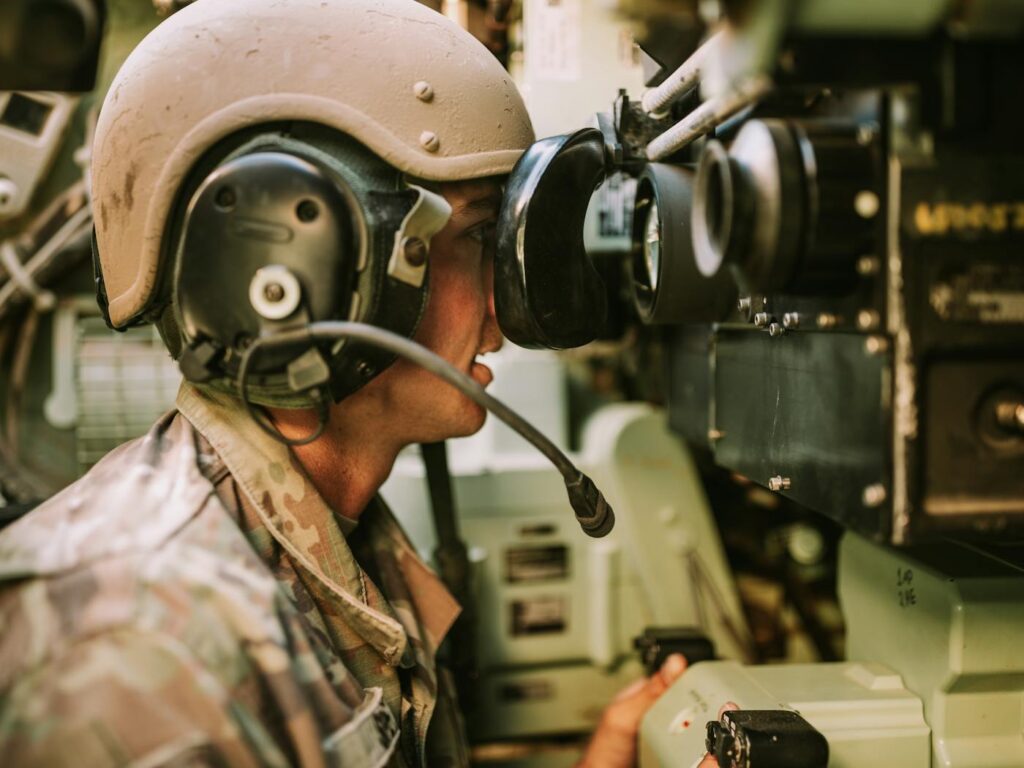
Understanding how this conflict was fought requires looking up, well past the destroyers and the strike aircraft and the ground-based launch sites, to the satellites that made the whole operation possible. US Space Force, established in 2019 and often treated as the most abstract of the military branches, turned out to be the operational foundation on which everything else rested.
Satellites equipped with infrared sensors detect the heat generated by a rocket within seconds of launch. From that initial detection, the system calculates the missile’s origin, identifies the location of the launcher, and feeds that information simultaneously to interception systems and to ground forces who need to take cover. Brent David Ziarnick, a former professor in the Space Force program at Johns Hopkins University and a retired US Air Force officer, explained the chain of events to the New York Post. “They can spot the missiles and pinpoint where the launchers are. The missiles can be intercepted and destroyed [often with Patriot missiles]. Field forces get notified that an attack is coming, so they can go to shelters or bunkers.”
According to reporting by ABC News, hundreds of Iranian missiles were tracked and destroyed using this satellite-based detection network during the first days of the conflict. The speed at which the system operates, from launch detection to interception, is what allows missile defence to function at all against a barrage of incoming weapons.
Radar Domes and the People Inside Them
🚨 BREAKING: The US Navy released a clip of the USS Preble firing a HELIOS laser weapon
Laser weapons are getting their first real workout in Operation Epic Fury
And it’s why the US and Israel have kept boots off the ground while taking out 1,700 targets with minimal losses.🔥 pic.twitter.com/0Fb10M9ECu
— vanhoa (@vanhoa2272) March 5, 2026
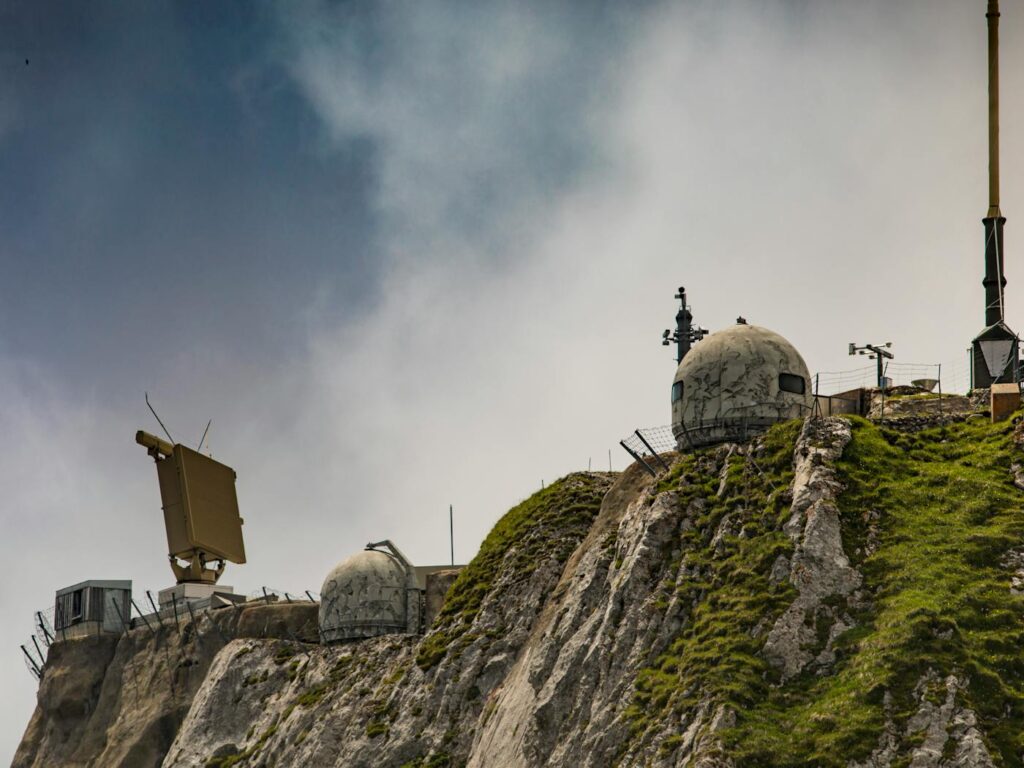
Even though Space Force’s sensors operate in orbit, the bulk of its active work in any given conflict happens on the ground, inside facilities called Radomes, structures that resemble oversized golf balls and contain the radar equipment needed to receive and process satellite data in real time. Personnel inside these facilities analyse incoming information, calculate missile trajectories, determine where those missiles are headed, and coordinate responses with interception teams.
Sam Eckhome, host of the technology programme Access Granted, described how the layers of the system fit together. “Together, the three layers form one of the most advanced early warning networks in the world,” he said, referring to the combination of satellites, radar systems, and ground-based Radomes working in concert. What makes the architecture effective is not any single component but the speed at which information moves between all three, turning a missile launch on one side of the world into an interception order on the other side within seconds.
Cyber Command Turned Iran’s Weapons Into Bricks
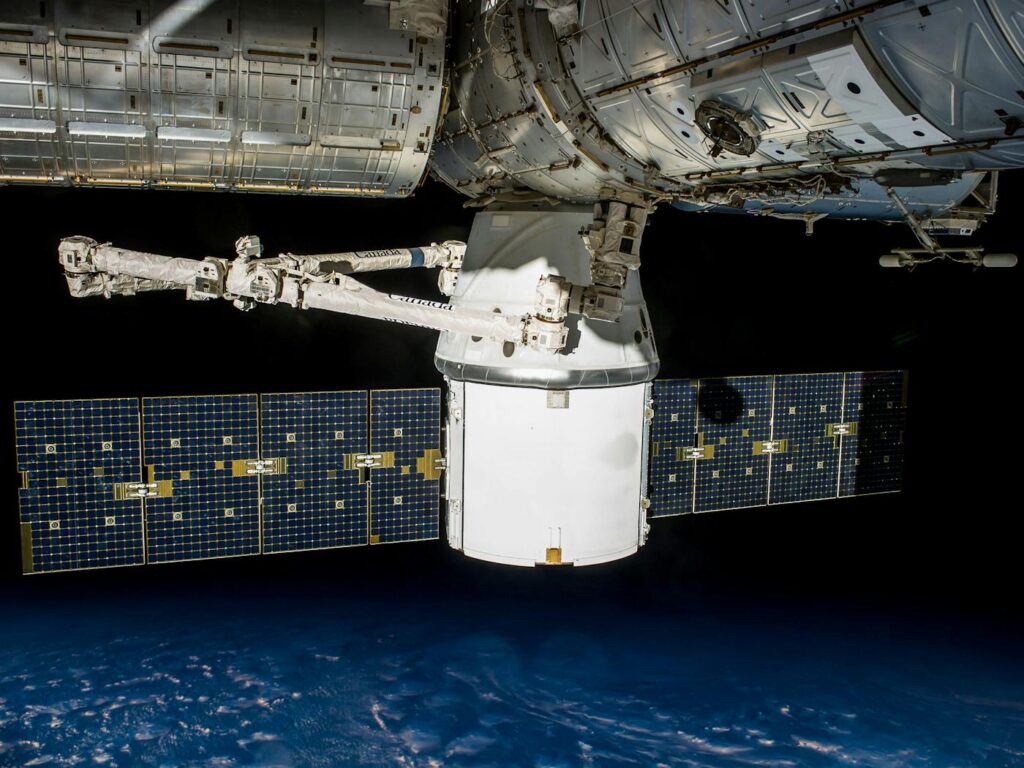
Running alongside Space Force but operating in an entirely different domain was US Cyber Command, which went to work on the software and communications systems that Iranian forces needed to operate their weapons. Before a single conventional strike was launched, Cyber Command had already moved. Joint Chiefs of Staff Chairman General Dan Caine confirmed at a press conference that before any shots were fired, Cyber Command hit communications and sensor networks across Iran to disrupt, disorient, and confuse the enemy.
Ziarnick described the coordination between the two branches in practical terms. Space Force locates where Iranian radar systems are operating, and Cyber Command then works to infiltrate the software controlling those systems, either jamming them, shutting them down entirely, or taking them over. Once the software is compromised, the hardware becomes non-functional. “The software goes,” Ziarnick said, “and the computer turns into a brick.”
Iran responded to the attack by cutting off domestic internet access across the country, presumably to prevent civilians in different regions from communicating and organising. US forces, however, were believed to be targeting whatever internal, closed-circuit communications network the regime was using to coordinate its own response.
What Mossad Had Been Doing for Years
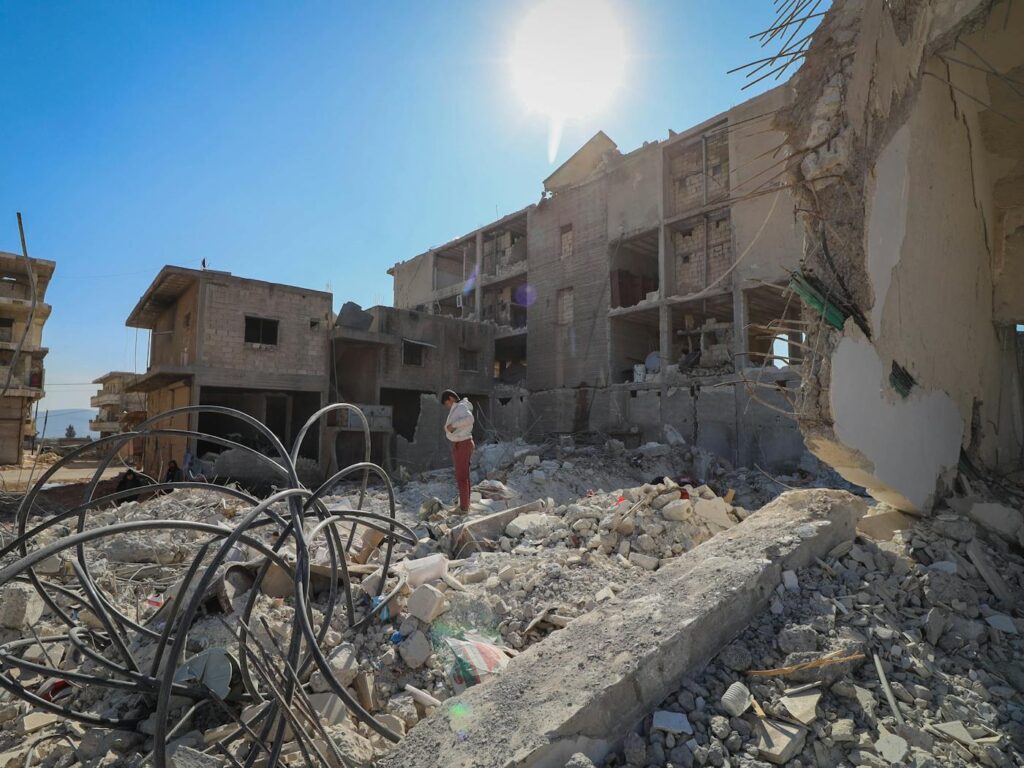
One of the more extraordinary details to emerge from the early reporting on Epic Fury had nothing to do with lasers or satellites. Israeli intelligence agency Mossad reportedly spent years before the operation hacking nearly every traffic camera in Tehran, using the footage to build a detailed picture of Ayatollah Khamenei’s movements, security arrangements, and the people responsible for protecting him. Through that camera network, operatives identified his security guards, tracked their vehicles, learned their addresses, and mapped the full shape of his protection detail. That intelligence work, conducted quietly over the years, contributed directly to the mission that killed him.
1,700 Targets in 72 Hours
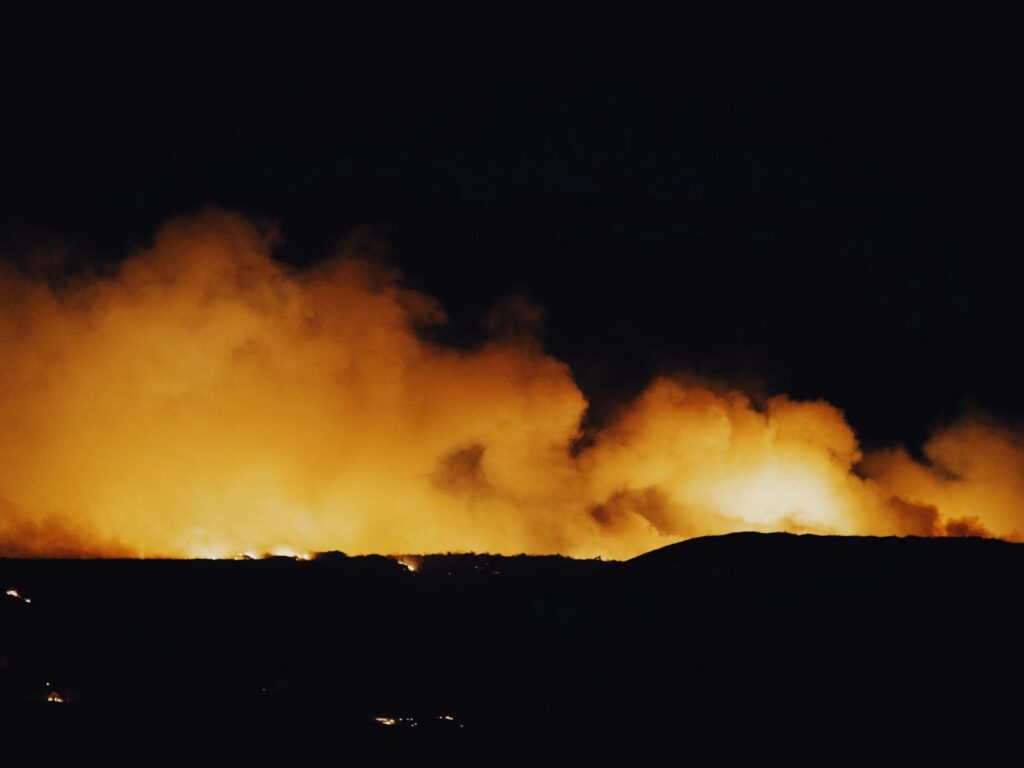
During the first 72 hours of Operation Epic Fury, US forces struck approximately 1,700 targets across Iran. More than 200 Iranian ballistic missile launchers were destroyed, representing roughly half of Iran’s total inventory, with dozens more rendered inoperable. Hundreds of missiles were intercepted and destroyed before reaching their intended targets.
Against that backdrop, US forces recorded six casualties in four days of active fighting, a figure that military analysts pointed to as a direct consequence of the warning and interception systems keeping personnel informed and protected. Former Space Force colonel Bree Fram, who has since entered the race for a congressional seat in Virginia, offered the clearest summary of what that number represents. “The fact that this isn’t a mass formation of troops with rifles on the ground speaks to the fact that this force is built with extreme technology and the brain power to operate it,” she told the New York Post. “Those combine to make us the most capable force on Earth and keep Americans safe from harm as they do the most difficult, inherently risky things that we ask them to do.”
The Cost That the Technology Did Not Prevent
Whatever the military assessment of Operation Epic Fury’s early progress, the conflict’s human cost has been considerable and contested. Human Rights Activists News Agency reported more than 1,000 civilians killed in the first five days of the bombing campaign, including 181 children under the age of 10. A strike on a school in Minab in southern Iran killed 168 children and teachers, and while responsibility has not been officially confirmed, The Guardian reported that US military investigators believe current evidence points to a US strike. Pentagon chief Pete Hegseth confirmed the US was investigating.
In Lebanon, Israeli strikes on Beirut killed 217 people according to Lebanese health officials. International condemnation has been consistent, with Spain’s Prime Minister Pedro Sanchez delivering a speech calling explicitly for peace and adherence to international law, framing the question not as one of supporting Iran but of supporting legality itself.
What This Conflict Has Already Changed
Laser weapons, infrared satellite tracking, military-grade malware, and radar-jamming software are no longer things being tested in controlled environments or debated in defence procurement meetings. They were used together, in a live conflict, against a state adversary, in ways that are still being assessed and in several cases still being officially denied.
Whether HELIOS was firing in combat or whether Iron Beam brought down those rockets over Lebanon may never be formally confirmed. But the footage exists, the analysts have weighed in, and the gap between what was shown and what was said tells its own story about how far military technology has moved and how quietly that movement happened.
Ayatollah Khamenei, Cyber Command, Directed Energy Weapons, Electronic Warfare, HELIOS Laser Weapon, Infrared Satellite Tracking, Iran Missile Strike, Iran War 2026, Iron Beam Israel, Middle East conflict 2026, Military Innovation, Mossad Intelligence, Operation Epic Fury, Patriot Missile Defense, Pete Hegseth, Radar Jamming, US Iran conflict, US Military Technology, US Navy Destroyer, US Space Force