
Your cart is currently empty!
The American Expat Dream Is Getting Harder to Live. These 5 Countries Are Making That Clear.

For most of the past half-century, carrying a US passport abroad came with an unspoken set of advantages. Americans could settle in most countries with relative ease, find work, build lives, and generally expect to be received as desirable additions to wherever they landed. That era has not ended overnight, but it is ending, and the shift is happening in ways that are easy to miss precisely because none of it is being announced.
Contents
show
No country has put up a sign saying Americans are no longer welcome. What is happening instead is quieter and, for that reason, harder to prepare for. Visa applications that would have sailed through a few years ago are being denied. Renewals that seemed routine are coming back rejected with no explanation attached. The rules are changing, the bars are being raised, and Americans who have built lives abroad are finding out about the new reality only after it has already caught them.
Five countries in particular have shifted their posture toward American residents and workers in ways that anyone considering a move overseas needs to understand.
1. The UAE: High Earners Only Need Apply

Dubai and Abu Dhabi spent years cultivating a reputation as places where ambitious Americans could build careers free of income tax, surrounded by modern infrastructure and professional opportunity. That reputation brought a significant expat population, and for a long time, it was largely deserved.
In 2025, the financial calculus changed. The UAE tightened its residency policies with an unmistakable focus on applicants who clear high-skilled or high-investment thresholds. If a person works in technology, medicine, or finance, or owns a substantial business, their position is relatively secure. If they fall outside those categories, renewal time has become an anxious and uncertain process.
Freelancers and small business owners have been among the most affected, finding their visa extensions quietly declined with no official warning and no appeals mechanism. A notice to leave arrives, and that is effectively the end of it. A 9% corporate profit tax introduced in recent years has also chipped away at the financial advantages that made the UAE attractive in the first place, meaning the trade-off that once justified the move has become less compelling even for those who do manage to stay.
The UAE has not published a policy excluding Americans. It does not need to. The message is communicated through outcomes, and the outcome is increasingly the same: unless a person represents significant economic value by the standards the government has set, their continued presence is not being prioritised.
2. Russia: A Country Where Your Status Can Disappear in 72 Hours
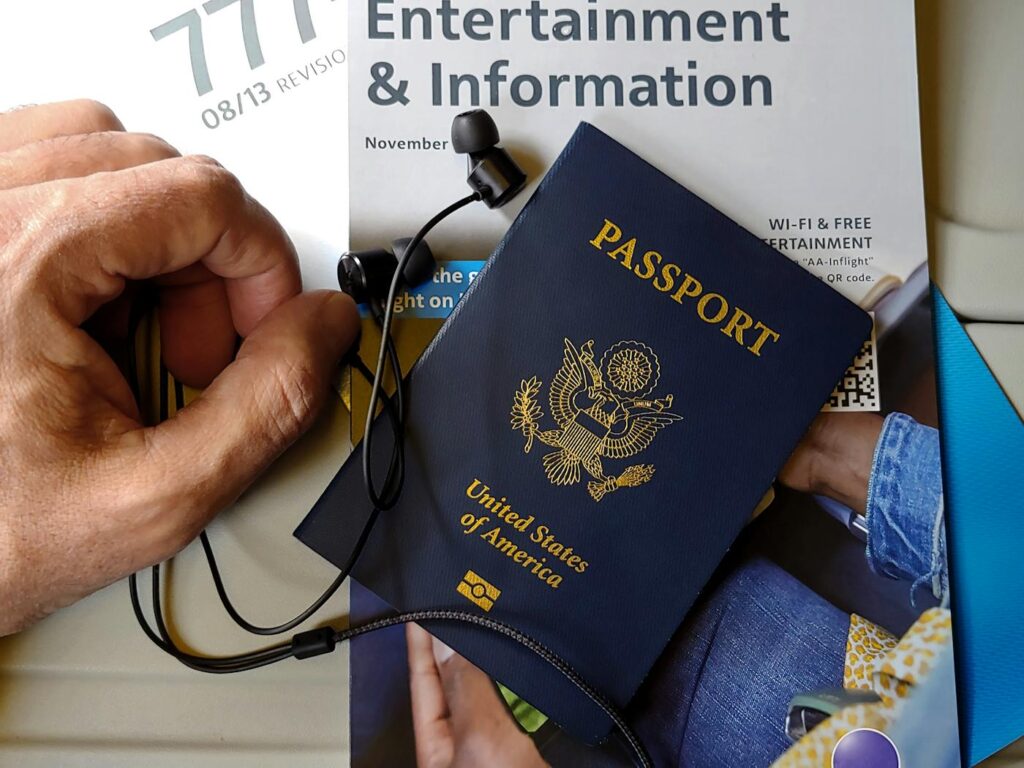
Russia presents a different kind of problem from the other countries on this list, one less about economic gatekeeping and more about geopolitical positioning. Since relations between Washington and Moscow deteriorated further over Ukraine and trade, Americans living in Russia have found themselves under a form of quiet surveillance that can produce sudden and drastic results.
Visa denials are arriving for Americans across a wide range of professions: students, journalists, teachers, entrepreneurs, and others who had no obvious reason to expect any change in their status. The denials come without hearings, without explanations, and without any realistic avenue for appeal. For those who receive notices to leave, the timeline given is typically 72 hours. The Russian government has not published a formal policy excluding Americans, but the practical effect of the current environment is that staying has become unviable for most.
American businesses have been closing under the combined pressure of sanctions and government policy. Russia is actively building closer partnerships with China and Iran while distancing itself from Western influence in ways that have direct consequences for Western residents. Americans are no longer regarded as potential collaborators or neutral private citizens in that environment. The category in which they tend to be placed is something closer to a security concern, and that framing shapes what happens to their applications.
3. Japan: The Bureaucratic Freeze Nobody Warned You About

Japan has occupied a specific place in the American expat imagination for decades: orderly, safe, culturally rich, and stable in ways that felt like a genuine alternative to the noise of life back home. That image has not entirely collapsed, but the reality underneath it has changed considerably.
New labor and long-term visa rules introduced in 2025 now require applicants to demonstrate what officials describe as “independent added value,” a standard vague enough to be applied inconsistently and strict enough to produce sharply higher denial rates. Americans working in teaching, creative industries, and media have been hit hardest, as those professions struggle to clear a bar that was designed with a different kind of worker in mind.
What makes the situation particularly difficult is that the shift arrived without warning for many of the people it affected. Some Americans who had lived and worked in Japan legally for years, paying taxes and meeting every requirement asked of them, received sudden visa denials with no explanation attached and minimal time to respond. There is no meaningful appeals process. In most cases, a person is simply told to leave, often within days, with no formal hearing and no avenue for challenge.
Public sentiment has added another layer to the shift, with criticism appearing on Japanese social media directed at foreigners, and Americans in particular, perceived as unwilling to integrate or as expecting treatment calibrated to Western norms rather than Japanese ones. Japan is not hostile in any dramatic sense, but the easy welcome it once extended has become considerably more conditional.
4. China: Where Uncertainty Has Become the Permanent Condition

China has never been a straightforward environment for Americans, but the situation in 2025 represents a meaningful deterioration from what came before. Visa renewals are being denied without explanation, frequently with only a few days of notice given before a person must leave, and the concept of appealing a decision is largely theoretical rather than practical.
Americans working in media, technology, and finance face the greatest exposure, given how sensitive those sectors are in the context of the current relationship between Washington and Beijing. The professional opportunities that once drew American workers to Chinese cities have contracted as companies pull back operations in response to tariff escalations and regulatory unpredictability. What remains for many Americans who stayed is a legal situation that can shift from stable to urgent without warning.
Public sentiment within China has moved in a direction that makes daily life more uncomfortable for American residents. Anti-American language has become more common on domestic platforms, and phrases that frame American workers as cultural threats or market disruptors have entered wider circulation. The cumulative effect for Americans living there is a persistent uncertainty that does not always produce immediate consequences but shapes every interaction with the bureaucratic systems that determine whether they can stay.
5. Canada: The Easiest Alternative Just Got Much Less Easy
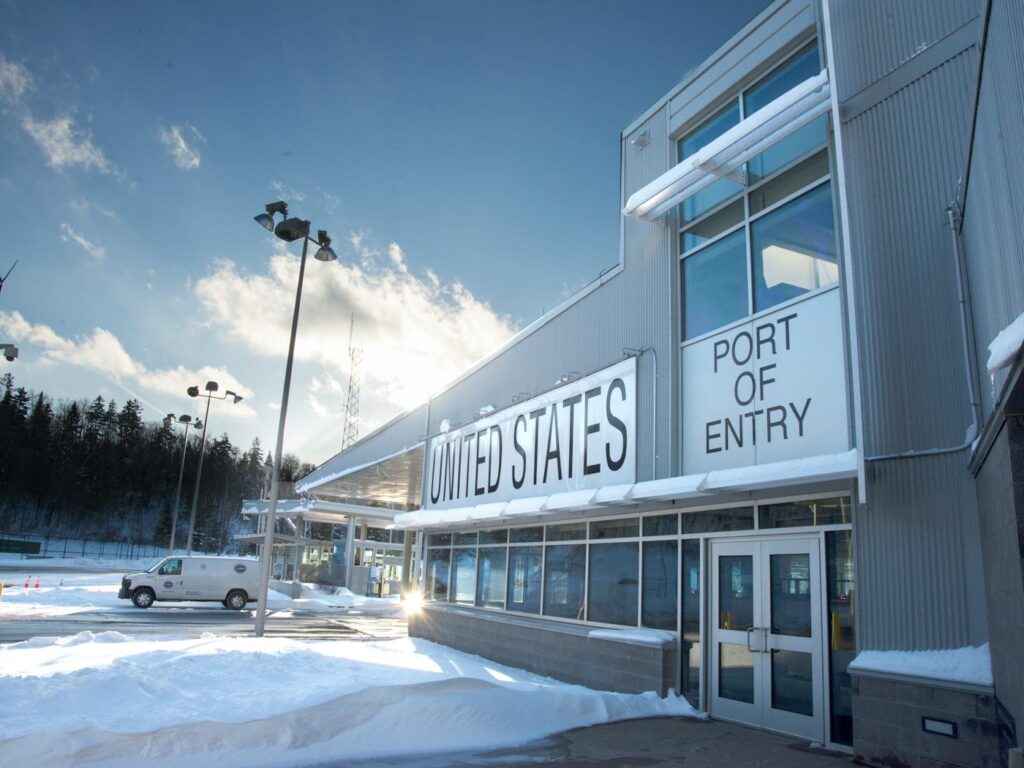
For Americans who have thought seriously about leaving, Canada has always occupied a special place on the list. A shared language, physical proximity, cultural familiarity, and a reputation for political stability and openness made it the obvious first option. The assumption that Canada would always be accessible has shaped countless contingency plans over the years.
That assumption is no longer reliable. In 2025, Canada cut its permanent residency target by 90,000 people and reduced temporary permits for both workers and international students. The cuts were not aimed specifically at Americans, but Americans are caught in the same tightening system as everyone else, and the competition for available spots has intensified significantly.
Work permits for lower-wage positions in regions with high unemployment are being denied. The Express Entry system, which is the primary route to permanent residency for skilled workers, has become intensely competitive in ways it was not just a few years ago. A ban on foreign home ownership in urban areas, extended until at least 2027, rules out property purchase for most Americans looking to put down roots rather than rent indefinitely.
Deportations in Canada are running at their highest level in a decade, and while Americans are not the primary focus, some have been removed for visa violations or unauthorised work. The post-pandemic strain on housing and healthcare has made many Canadians considerably less enthusiastic about new arrivals of any origin, and the cultural goodwill that Americans once relied on to smooth their path northward is no longer something to take for granted.
A US Passport Still Opens Doors. Just Not as Many as It Used To.

Taken together, these five cases describe something more than a collection of individual policy shifts. They reflect a broader recalibration of the position that American residents occupy in countries where political relationships with the United States have changed, where domestic pressures have made foreign arrivals less welcome, or where economic priorities have moved on from the conditions that originally brought Americans in.
None of it has been announced formally, which is exactly what makes it difficult to plan around. Americans considering living or working in any of these countries should treat the assumptions they formed even two or three years ago as potentially outdated, seek current immigration legal advice before making concrete plans, and pay close attention to what is actually happening to applicants rather than what the official rules appear to say. The welcome mat has not been formally removed. In practice, for a growing number of Americans in a growing number of places, it may as well have been.
American Abroad, American Expats, Canada Immigration, China Visa, Expat Life, Expat News, Expat Warning, Foreign Residency, Global Immigration, Immigration Policy 2025, Japan Visa, Living Abroad, Moving Abroad, Russia Americans, UAE Residency, US Passport, Visa Denial, visa restrictions, Work Visa Abroad