
Your cart is currently empty!
Astronomers Uncover What Could Be a New Category of Planet
Gazing up at the stars, it is natural to imagine distant worlds as quiet, rocky landscapes or deep, frozen oceans. But the universe is far more creative than that. Using the James Webb Space Telescope, astronomers have recently uncovered a bizarre celestial body 35 light-years away that breaks every established rule of planetary science.
Contents
show
This extreme world is not just an entirely new category of planet. It also carries a highly distinct, undeniably pungent signature that would make any human immediately reach for a nose plug.
JWST Discovers a Sulfur-Heavy World
Space exploration often brings up images of barren rocks or swirling gas giants. But a recent discovery by the James Webb Space Telescope shows just how unpredictable the universe can be. Astronomers have spotted a planet 35 light-years away that does not look like anything seen before.
This new world is roughly 1.6 times the size of Earth. What makes it stand out is its atmosphere, which is heavy with hydrogen sulfide. For anyone on Earth, that specific chemical is best known for smelling exactly like rotten eggs.
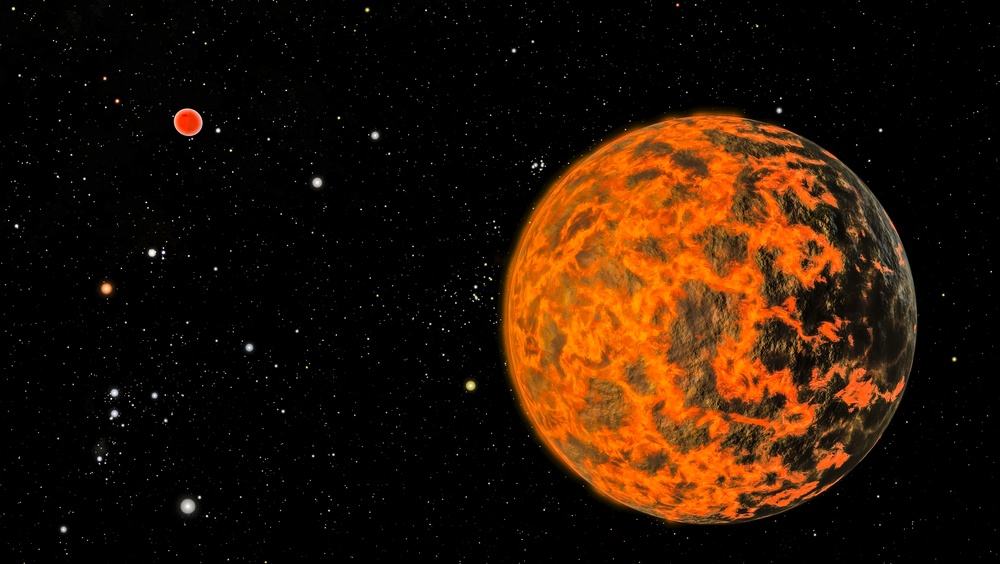
In the past, scientists divided planets of this size into two neat boxes. They were either rocky planets with light atmospheres or water worlds covered completely in deep oceans and ice. This newly found planet breaks those rules, creating an entirely different category. Instead of water or solid rock, researchers believe its surface is a permanent, glowing ocean of molten magma.
That intense heat traps large amounts of sulfur, releasing it into the sky to create a toxic, foul-smelling environment. A world smelling of rotten eggs is certainly unappealing. However, finding hydrogen sulfide is a massive step forward for astronomy. It offers solid clues about how planets form from the dust and gas left behind by young stars.
Dr. Harrison Nicholls of the University of Oxford, the lead researcher on the study, pointed out why this matters. “This discovery suggests that the categories astronomers currently use to describe small planets may be too simple,” Nicholls noted. Finding a sulfur-rich planet shows that space holds far more variety than previously thought.
A World of Endless Lava
The planet, officially named L 98-59 d, orbits a faint red star in the constellation Volans. While Earth has a hard crust hiding a hot interior, this distant world operates completely differently. Researchers studying the telescope data found that it lacks any solid surface. Instead, it is covered entirely by a deep, bubbling ocean of liquid rock.
This lava ocean is incredibly vast. It makes up seventy to ninety percent of the entire planet, reaching thousands of kilometers down toward a relatively small metallic core. Scientists describe the consistency of this molten rock as thick and mushy, comparing it to heavy syrup or molasses rather than a fast flowing liquid.
Because the planet sits close to its host star, the thick atmosphere traps an enormous amount of heat. Surface temperatures soar to roughly 1,900 degrees Celsius. At this intense heat, the rocks simply cannot cool down enough to form a solid outer shell. This creates a permanent molten state that has existed for nearly five billion years.
This endless sea of magma acts as a massive chemical reservoir. The thick, churning liquid stores the heavy sulfur deep inside and slowly vents it into the sky over billions of years. It is a harsh and extreme environment that easily dashes any hopes of finding alien life, but it paints a fascinating picture of how planets behave under extreme conditions.
Rewinding a Five-Billion-Year History
To understand how a planet becomes a glowing orb of liquid rock, researchers had to look at its past. Using advanced computer simulations, scientists reconstructed nearly five billion years of history for L 98-59 d, mapping out its dramatic transformation from birth to the present day.
According to the models, this world likely started out much larger. It probably resembled a sub-Neptune, a type of planet packed with heavy amounts of volatile gases. Over time, however, the nearby host star battered the young planet with harsh X-ray radiation.
Usually, that kind of intense radiation would strip away a planet’s entire atmosphere, leaving behind a dead, airless rock. But L 98-59 d had a unique defense system in the form of its deep magma ocean. The molten rock acted as a massive storage tank. It held onto the sulfur and helped the planet keep a thick, hydrogen-rich atmosphere. As the planet slowly shrank over billions of years, the bubbling lava prevented the sky from completely blowing away into space.
Dr. Richard Chatterjee of the University of Leeds and the University of Oxford worked on uncovering this timeline. “Our computer models simulate various planetary processes, effectively enabling us to turn back the clock and understand how this unusual rocky exoplanet, L 98-59 d, evolved,” Chatterjee explained.
Seeing this evolution shows that planets are not static objects. They constantly change, shaped by the violent tug of war between their own internal heat and the radiation from their stars.
How to Smell a Planet From Space
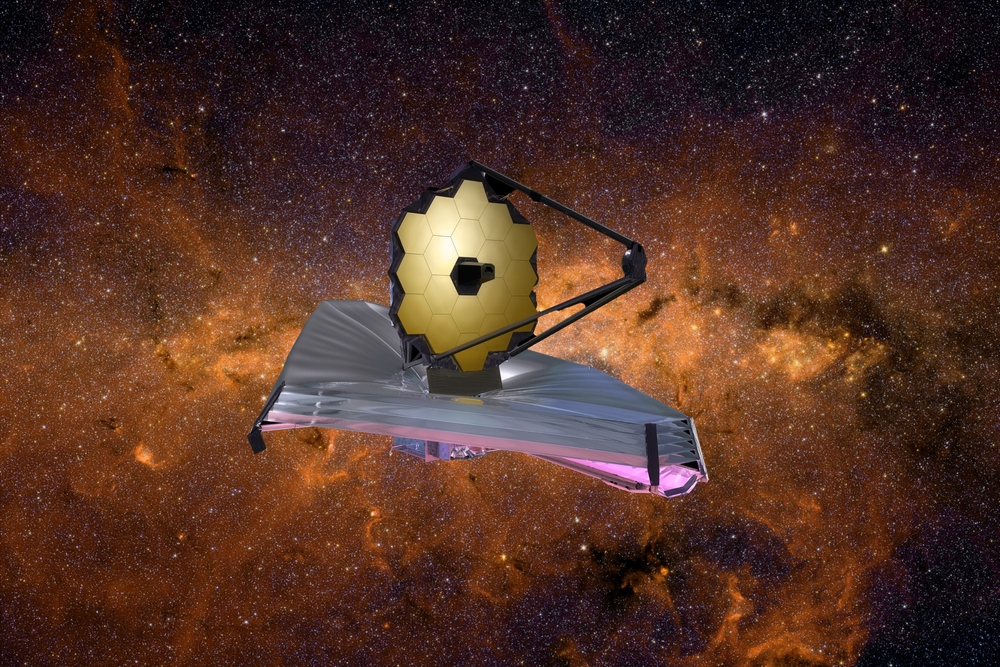
How do astronomers know what a planet smells like when it is thirty five light-years away? The answer lies in the powerful instruments aboard the James Webb Space Telescope. Instead of taking a physical air sample, scientists rely entirely on the behavior of light. When L 98-59 d passes in front of its small red star, the starlight filters through the planet’s thick atmosphere before making the long journey to Earth.
Researchers use a method called transmission spectroscopy to break this captured light down into a rainbow of basic colors. Different chemical compounds absorb specific colors of light. By analyzing which parts of the rainbow are missing, astronomers can determine exactly which molecules are floating in the alien sky. In this case, the missing light segments clearly pointed to massive amounts of hydrogen sulfide.
The data showed that this foul smelling gas makes up roughly ten percent of the entire atmosphere. To put that into perspective, the human nose is incredibly sensitive to this specific chemical. Professor Raymond Pierrehumbert, a planetary scientist who co-authored the study, explained just how intense the odor would be. “Your nose can smell hydrogen sulfide at concentrations of something like one part per billion, so this would be overwhelmingly stinky,” Pierrehumbert stated. “But you would not survive long enough in this hot atmosphere to notice.”
This advanced telescope technology allows scientists to gather incredibly detailed chemical profiles of distant worlds. Spotting hydrogen sulfide from such a massive distance proves that astronomers now have the tools to uncover completely hidden planetary features.
The Search Is Just Beginning
Finding a world that smells like rotten eggs might sound like a cosmic joke, but it actually changes how experts look at the night sky. For a long time, researchers thought planets of this specific size only came in two basic varieties: solid rock or deep water. The glowing lava ocean of L 98-59 d proves those old rules are simply too limited.
The James Webb Space Telescope is showing that Earth’s local neighborhood is not the standard template for the rest of space. Out there, the conditions can be wild, extreme, and completely unexpected.
This molten planet is a great reminder of why space exploration matters. Funding and launching advanced telescopes takes years of effort, but the payoff is real. Every time a new lens points at the stars, it reveals something that humans could never have imagined. While nobody will be visiting L 98-59 d anytime soon, finding it proves that the search for new worlds is still full of surprises. The universe has a lot more to show, and the next big discovery is just waiting to be found.