
Your cart is currently empty!
How a 5,000-Year-Old Counting Trick Still Controls Every Clock on Earth
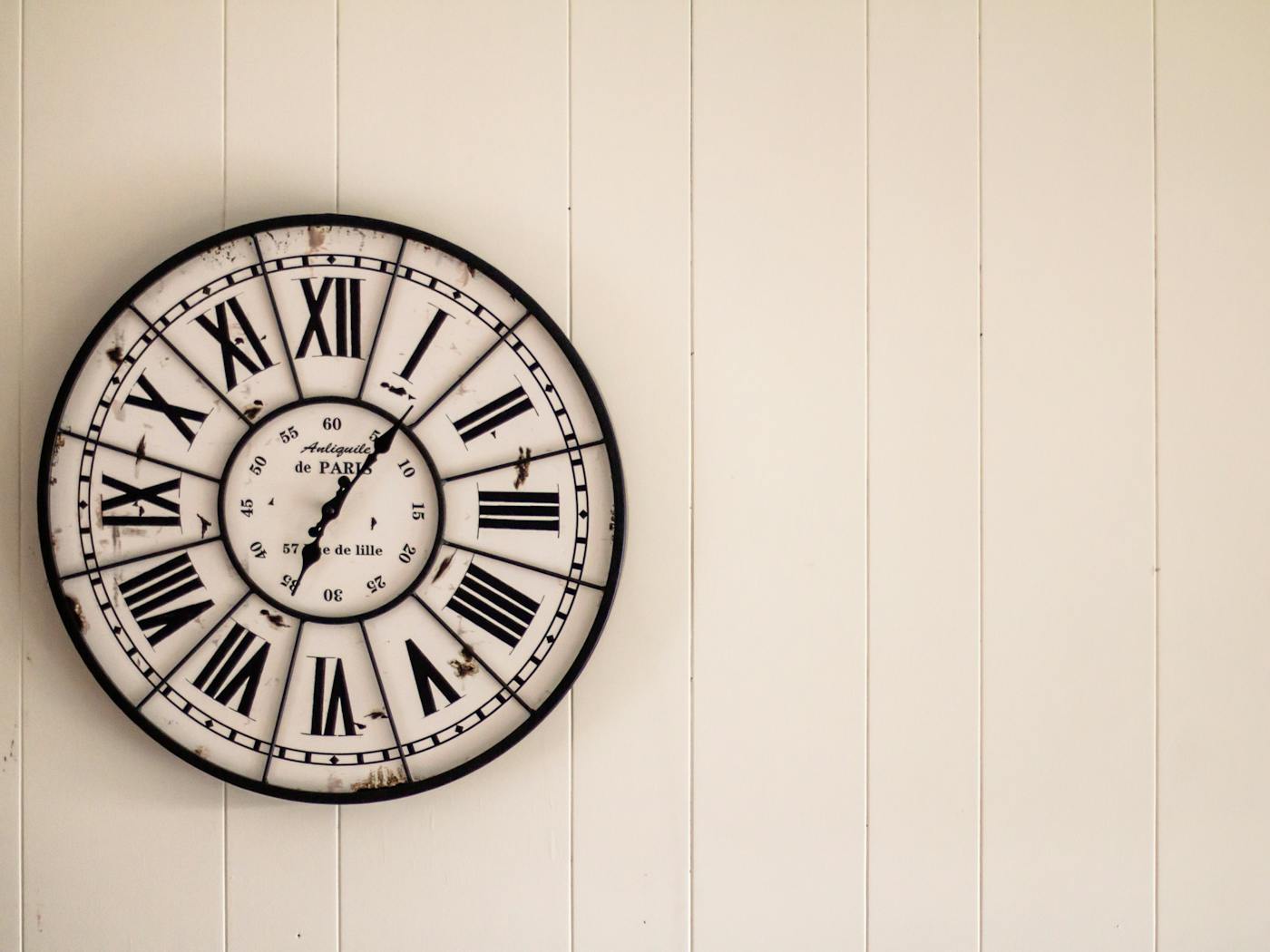
In October 1793, revolutionary France decided to fix something most people had never questioned. A new government decree sliced every day into 10 hours, each made up of 100 minutes, each minute holding 100 seconds. Town halls mounted freshly built decimal clocks. Officials recorded business under the new system. For a brief window, France lived on redesigned time.
Contents
show
It did not last. Converting old clocks turned out to be expensive and complicated. Neighbours across Europe still ran on the traditional system, leaving France isolated in its own temporal experiment. Rural communities resented a 10-day work week that stole their rest days. Within 17 months, decimal time was dead. A 1795 speech by politician Claude-Antoine Prieur sealed its fate, arguing that the new time offered almost nobody a real advantage and made France’s other metric reforms look foolish by association.
Here is what makes that failure so interesting. France managed to decimalise distance and currency during the same revolutionary period, and both stuck. Metres and francs endured. Yet time resisted. Something about 24 hours, 60 minutes, and 60 seconds proved too embedded to uproot. Understanding why means tracing a thread back roughly 5,000 years, to a civilisation most people have never heard of and a counting decision that still governs every clock on Earth.
Counting on Your Fingers, Sumerian Style
Between roughly 5300 and 1940BC, a people known as the Sumerians built some of humanity’s first cities across Mesopotamia, in what is now modern-day Iraq. Among their many contributions, including irrigation and the plough, they developed the earliest known writing system. And embedded within that writing system was a way of counting built not around 10, but around 60.
Why 60? One popular theory asks you to look at your own hand. Each finger, excluding the thumb, has three visible joints. Count every joint on one hand, and you reach 12. Now use each finger on your opposite hand to tally groups of 12. Five groups of 12 give you 60. Whether the Sumerians actually counted this way remains speculative, but the number itself became central to their mathematics.
Growing cities demanded record-keeping on a scale no previous society had attempted. Sumerians pressed numerical notations into small clay tablets, often no bigger than a modern smartphone, tracking harvests, taxes, and land divisions. Pictorial symbols soon followed, developing into the famous cuneiform script. Scholars only began deciphering these tablets in the mid-19th Century, and what they found was a people who experimented with many number systems. But one dominated their mathematics and, by extension, their astronomy. It ran on a base of 60, a so-called sexagesimal system.
Sexagesimal notation worked much like our decimal place-value system, just with a higher threshold. Where we roll over from 9 to 10 by shifting one place to the left, the Sumerians rolled over at 59. Some scholars believe this system may even predate the Sumerians themselves, though firm evidence remains scarce.
Why 60 Beats 10 at Everyday Math

What made 60 so durable was its practical elegance. You can divide 60 evenly by 1, 2, 3, 4, 5, 6, 10, 12, 15, 20, 30, and 60 without producing a single fraction. Compare that with 10, which divides cleanly only by 1, 2, 5, and 10. For a civilisation splitting harvests among families, measuring fields, or calculating what each household owed in taxes, a number with that many clean divisors saved enormous effort.
Erica Meszaros, who completed a doctorate in the history of the exact sciences and antiquity at Brown University, put it simply. “If you’re developing numbers for very practical purposes, like accounting, taxes or measuring fields and dividing fields for your sons’ inheritance, having an easy way to do these mathematical operations can be really helpful.”
A system born out of agricultural bookkeeping would, over centuries, become the invisible scaffolding behind how human beings measure time. But that leap did not happen in Sumeria. It required two more ancient civilisations, each adding its own layer.
Egypt Gave Us Hours

Far to the west, ancient Egypt became the first known civilisation to carve a day into hours. Religious texts dating to around 2500BC contain the earliest references, and by roughly 2100BC, diagonal star clocks appeared on the inner lids of noble Egyptian coffins, tracking 12 hours of night.
Why 12? Egyptians observed a zodiac cycle of 12 constellations, though that system may have arrived after the first hourly references. Another possibility circles back to finger-joint counting, reaching 12 on a single hand. Some experts tie the choice to how Egypt’s 10-day week intersected with the visibility patterns of certain stars. No single explanation has won consensus.
Sundials and water clocks appeared in Egypt around 1500BC, yet most were tied to temples and rituals rather than daily scheduling. Rita Gautschy, an archaeoastronomer at the University of Basel, believes many were religious offerings rather than practical instruments. For centuries, the smallest useful time unit in ordinary Egyptian life was the work shift, essentially morning or afternoon. Only by the Roman period of Egypt, from 30BC onward, did hours become a standard measure for daily activity, with half-hours following soon after.
Egypt gave the world the 12-hour division. But breaking those hours into smaller, countable pieces required the mathematical machinery that Sumeria had already built and that another Mesopotamian civilisation would soon inherit.
Babylonians Sliced Hours into Smaller Pieces
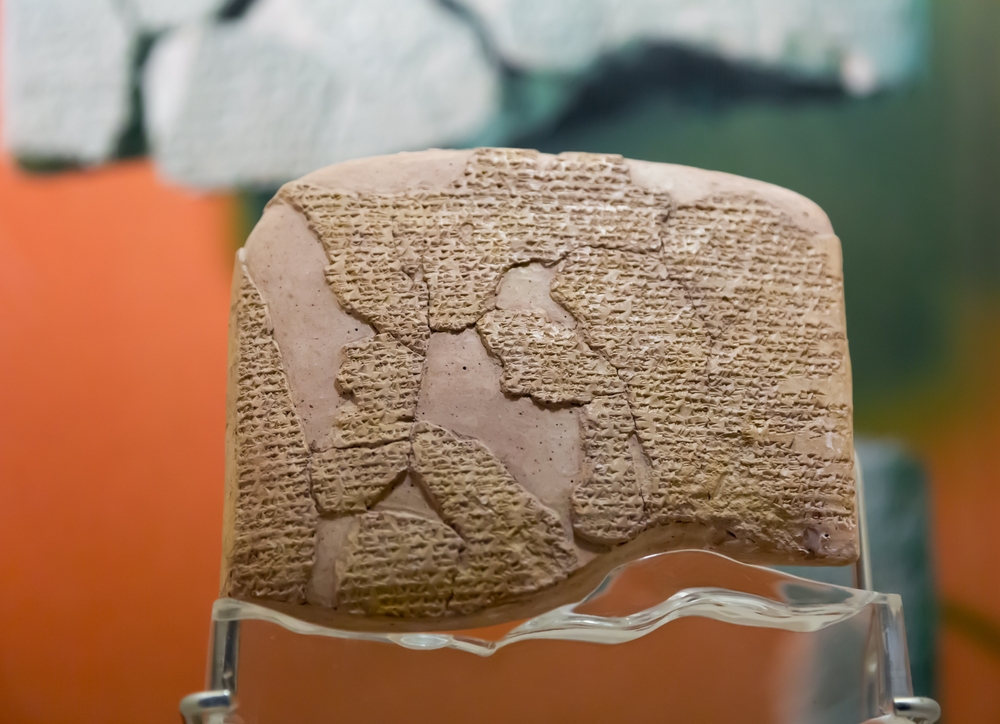
Between roughly 2000 and 540BC, the Babylonians rose to power across Mesopotamia, absorbing both cuneiform script and the sexagesimal number system from their Sumerian predecessors. By about 1000BC, Babylonian astronomers had constructed a calendar based on how long it took the sun to return to the same position in the sky, a cycle just over 360 days. For a people already counting in groups of 60, that number fit beautifully, producing 12 months of 30 days each, neatly aligned with lunar cycles.
For daily life, the Babylonians divided both daytime and nighttime into 12 seasonal hours, just as the Egyptians had. Because these hours stretched and shrank with the seasons, they were never subdivided for practical use. Many ancient cultures adopted similar seasonal hours, a convention that persisted in parts of Europe until the 15th Century and in Japan until the 19th.
But Babylonian astronomers needed finer measurements for tracking planets and stars, so they built a parallel system reserved for calculation. A full day contained 12 “beru,” each equivalent to about two modern hours. Each beru is split into 30 smaller units called “ush,” each roughly four of our present-day minutes. Each ush is then divided by 60 into “ninda,” each worth about four modern seconds. Every subdivision followed the sexagesimal logic that the Sumerians had established centuries earlier.
An important distinction separates what the Babylonians were doing from how we experience time today. Martin Willis Monroe, a specialist in cuneiform cultures at the University of New Brunswick, notes that the Babylonians were not thinking about it as subdividing time. They’re thinking about it as subdividing numbers that measure distance in the sky or the velocity of planets. Minutes and seconds, in other words, began as tools for charting the heavens, not for catching a train.
Greeks Borrowed Everything and Passed It On
From around 330BC, Alexandria became a crossroads for Egyptian, Mesopotamian, and Greek knowledge. Greek astronomers discovered the Babylonian system and saw no reason to rebuild it from scratch. Keeping the same sexagesimal divisions, let them add their own observations to an existing body of data stretching back centuries.
Meszaros explained why continuity mattered so much. It’s a system that worked well enough for the Babylonians that the people who came after them took it wholesale in order to take the astronomical data and traditions as well.
Sand clocks appeared in Greek courts to ensure speakers received equal time, but sexagesimal units remained tools for astronomers, not for ordinary scheduling. Still, the concepts of hours, minutes, and seconds that emerged from this Hellenistic blending of traditions survived the fall of every empire that had created them. Passed through medieval Islamic scholars and European monasteries, they arrived in the modern world largely intact.
Clocks Had to Catch Up to the Math
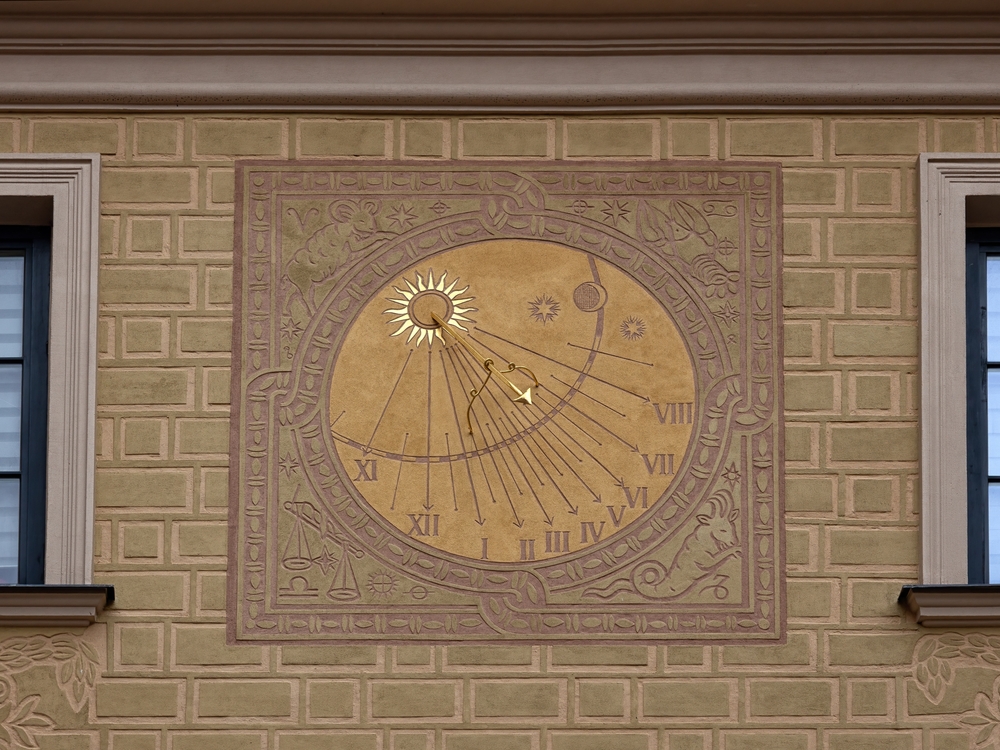
For most of recorded history, the precision implied by minutes and seconds had no practical meaning. Early mechanical clocks, built in the 12th Century, could barely keep accurate to an hour. By the 16th Century, even the best pendulum clocks drifted 10 to 15 minutes per day. Only in the 18th Century did the H4 marine watch, a breakthrough in precision engineering, begin keeping time without losing minutes for weeks on end. According to Finn Burridge, a science communicator at Royal Museums Greenwich, that invention brought minutes and seconds into common society for the first time.
Accuracy accelerated from there. Quartz clocks in the 1920s lost only about one second in three years. Atomic clocks, arriving in the 1950s, used the behaviour of caesium-133 atoms to measure time with such precision that they would not lose a single second in billions of years. Modern global networks of atomic clocks now synchronise GPS satellites, internet infrastructure, and medical imaging equipment.
Once scientists needed to measure intervals smaller than a second, they finally switched to metric subdivisions, counting in milliseconds and microseconds. But above that threshold, the ancient sexagesimal architecture held firm. Hours contain 60 minutes. Minutes contain 60 seconds. No serious effort to change that has ever succeeded.
An Accident of History We Cannot Seem to Shake
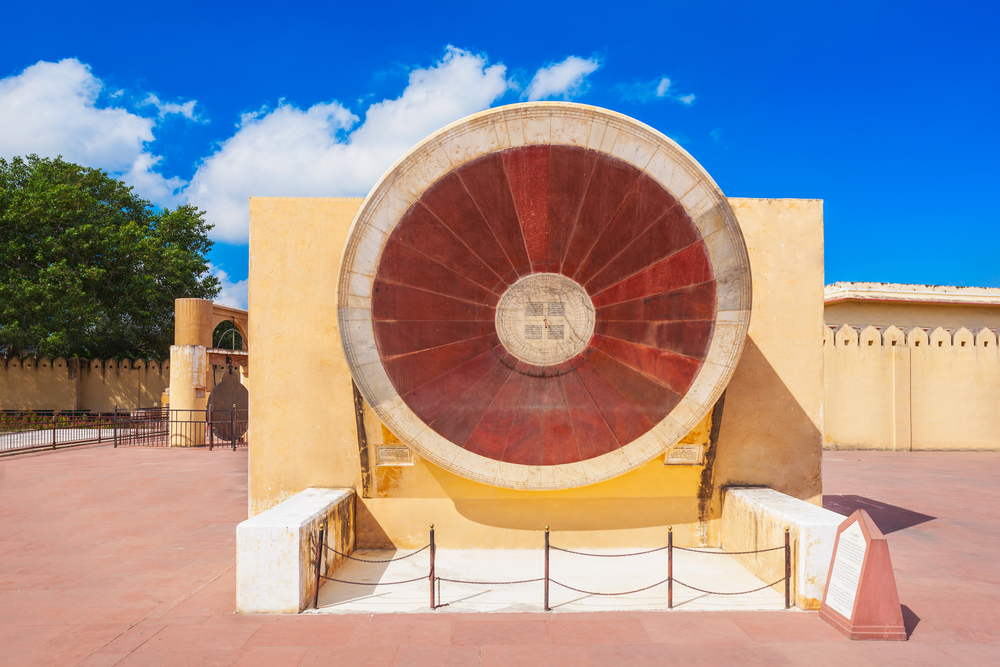
Return, then, to revolutionary France. A government powerful enough to remake its entire calendar, redefine distance, and redesign currency still could not pry 60 minutes out of an hour. Decimal clocks gathered dust. Citizens ignored the new seconds. Within a year and a half, the experiment collapsed.
What the French revolutionaries ran up against was not logic but momentum. Our 24/60/60 system is not a law of physics. It is a human construction, assembled across millennia through a chain of practical choices, cultural inheritance, and mathematical convenience. Sumerians needed a flexible base for dividing grain and land. Egyptians watched stars and carved the night into 12 segments. Babylonians applied sexagesimal mathematics to map the heavens. Greeks absorbed it all and handed it forward. And by the time mechanical clocks grew precise enough to make seconds matter in daily life, the system was already thousands of years old.
Five millennia of use have woven 60 into science, technology, language, and habit so deeply that replacing it would create far more disruption than benefit. What began as a Sumerian shortcut for splitting a farmer’s harvest became, through accident and persistence, an invisible architecture underlying modern civilisation. Every glance at a clock face is a small act of communion with people who pressed numbers into wet clay under a Mesopotamian sun, never imagining that their counting system would outlive not just their cities, but their entire world.