
Your cart is currently empty!
Astronomers Captured a Star’s Final Moment and It Was Not What Anyone Expected
For decades, the death of a star has been imagined as something almost symmetrical, a brilliant, spherical burst radiating outward evenly into the void. It is the kind of image often shown in textbooks and documentaries, balanced, predictable, and strangely orderly for such a violent event.
Contents
show
But in April 2024, something quietly extraordinary happened. Astronomers captured the earliest moments of a supernova with unprecedented clarity, and what they saw challenged long-held assumptions.
Instead of a perfect sphere, the explosion appeared stretched, uneven, and directional. More like an olive than a glowing ball of light.
This single observation is now prompting scientists to rethink how stars die, and what those deaths reveal about the nature of our universe.
Capturing a Rare Moment in Real Time
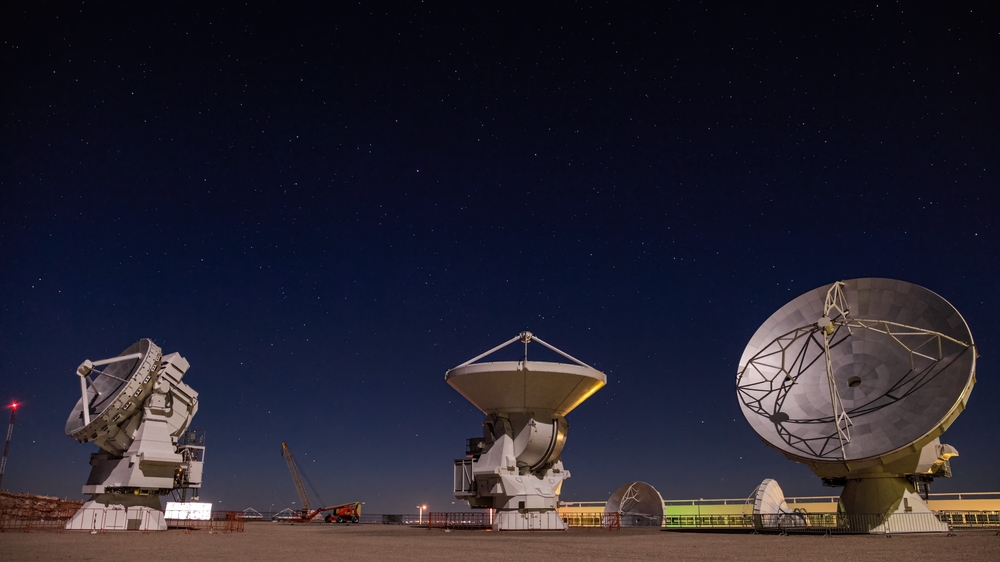
What made this observation especially valuable was not just how early it occurred, but how precisely it was recorded. The research team relied on coordinated alert systems that flag sudden changes in brightness across distant galaxies, allowing telescopes to respond almost immediately. This rapid response depends on a global network of automated sky surveys and data pipelines that continuously scan the night sky, identifying transient events within hours rather than days. By the time the Very Large Telescope was directed toward SN 2024ggi, the event was still in a phase where its original signal remained largely uncontaminated.
The data collection itself required careful calibration and timing. Spectropolarimetry, the method used in this study, is highly sensitive to subtle changes in light and requires stable atmospheric conditions and precise instrument alignment. Even small delays or environmental interference can affect the reliability of the measurements. By capturing multiple observations in quick succession, researchers were able to confirm consistency in the signal and reduce uncertainty, strengthening confidence in the results.
This level of precision highlights how advances in observational technology and international coordination are reshaping astronomy. Events that once would have been detected too late for detailed analysis can now be studied almost as they unfold. According to the study published in Science Advances, this approach is opening new opportunities to examine transient cosmic phenomena with a level of detail that was not previously possible.
A Shape That Challenges Expectations
What makes this observation particularly compelling is how the shape was inferred from the behavior of light itself. Rather than directly imaging the explosion, scientists examined subtle patterns in polarization, which reveal how light waves align after interacting with expanding material. These patterns act as indirect tracers of structure, allowing researchers to reconstruct the geometry of the explosion even at vast distances where fine visual detail cannot be resolved.
The data showed a consistent directional bias in how light was polarized, indicating that the material was not spreading uniformly. Instead, the signal suggested a preferred orientation, pointing to a deeper asymmetry embedded in the explosion from its earliest observable phase. This kind of directional imprint is difficult to attribute to external influences, reinforcing the conclusion that the shape originates from processes within the star itself.
Findings discussed in coverage further emphasize that such clean polarization signals are rarely captured so early, making this dataset unusually reliable for interpreting intrinsic structure. By isolating these signatures before they are altered over time, researchers gain a more faithful representation of the explosion’s initial configuration.
Why the Shape of an Explosion Matters
Beyond composition and brightness, geometry plays a central role in how scientists interpret supernova physics. Asymmetry can influence how energy is transferred through the star during collapse, affecting the efficiency of the explosion itself. In some models, directional flows help revive the stalled shockwave that ultimately drives the blast outward. If that process is uneven, it can change how much mass is ejected versus how much falls back, shaping the properties of the compact object left behind.
This also has implications for observable consequences long after the initial event. Asymmetric explosions are linked to phenomena such as high-velocity neutron stars, often called pulsar kicks, where the remnant is propelled through space at significant speeds. The geometry of the explosion can also affect how light curves evolve over time, which astronomers use to classify and compare supernovae across different environments.
NASA’s overview of stellar evolution notes that core collapse supernovae involve complex interactions between gravity, radiation, and particle physics that are still being actively studied. Understanding how asymmetry fits into these processes helps refine models that connect theoretical predictions with real observations, improving the accuracy of how scientists interpret distant cosmic events.
Rethinking How Massive Stars End Their Lives
This observation also prompts a closer examination of how theoretical models are constructed and validated. Much of what scientists understand about stellar death comes from simulations that attempt to recreate conditions deep within a collapsing star. These models rely on complex equations that account for gravity, nuclear reactions, and particle behavior, but they are often constrained by computational limits. Subtle asymmetries like those observed in SN 2024ggi suggest that some physical processes may be underrepresented or simplified in existing simulations.

One area of growing interest is the role of multidimensional modeling. Earlier approaches often relied on one-dimensional or simplified two-dimensional frameworks, which can miss directional variations in energy flow. More advanced three-dimensional simulations are beginning to reveal how instabilities evolve over time, but they require significant computational power and remain an active area of research. Observational evidence like this provides critical benchmarks that help scientists refine these models and test their accuracy.
By integrating real-world data with increasingly sophisticated simulations, researchers can move closer to a more complete understanding of stellar evolution. Rather than replacing existing theories, findings like this help sharpen them, ensuring that future models better reflect the true complexity of how massive stars reach their final stages.
A Broader Perspective on Discovery
Beyond its technical significance, this discovery highlights how scientific understanding evolves through moments of direct observation that challenge long-standing frameworks. In astronomy, many ideas are built on indirect evidence, simulations, and patterns observed over time. When a rare event is captured with clarity, it can act as a corrective lens, refining interpretations that may have remained untested for years. This process is not about overturning knowledge, but about improving its precision.

It also underscores the importance of timing and persistence in scientific work. Breakthroughs like this are rarely the result of a single observation alone, but of decades of incremental progress in instrumentation, data analysis, and international collaboration. Each advancement builds the conditions necessary for the next, until a moment arrives where theory and observation can finally meet with greater accuracy.
Seen in this context, the observation of SN 2024ggi is part of a broader pattern in science where clarity emerges gradually, often through rare opportunities that reward preparation. It reflects a discipline that is constantly adjusting, not because it is uncertain, but because it is responsive to evidence as it becomes more complete.
When the Universe Refuses Simplicity
What this moment ultimately reveals is not just how stars end, but how easily human expectations can shape scientific interpretation. Symmetry has long offered a sense of order in understanding cosmic events, a way to simplify something inherently complex. Yet observations like this remind us that nature does not always conform to our need for neat explanations. Instead, it often operates through irregularity, imbalance, and nuance.
There is a quiet significance in that realization. The same forces that produce complexity in distant stars are part of the broader systems that shape galaxies, planets, and the conditions for life itself. When scientists uncover these details, they are not just refining models, but expanding the boundaries of what is considered possible.
In that sense, this discovery is less about correcting a misconception and more about deepening perspective. It invites a shift from expecting order to recognizing complexity as a fundamental feature of the universe. And in doing so, it offers a more honest and perhaps more meaningful understanding of how transformation truly unfolds.