
Your cart is currently empty!
Kentucky Farmers Reportedly Refuse $26M Buyout From AI Giant Over Family Farmland
A northern Kentucky family is making headlines after reportedly refusing a staggering $26 million offer from an unnamed Fortune 100 artificial intelligence company that wanted to buy part of their farmland for a data center, and the reason the story has spread so quickly is because it hits a nerve far beyond one county line. In a moment where AI is often discussed through stock prices, billion-dollar investments, futuristic products, and corporate expansion, this story brings the conversation down to something much more real and much more human: land, food, family, and the idea that not everything can or should be bought. On paper, the offer sounds like the kind of life-changing deal most people would at least seriously consider, especially in a rural area where land values are nowhere close to that number. But for Ida Huddleston and her daughter Delsia Bare, the question was never just how much money was being offered. It was whether they were willing to let generations of family history and productive farmland become part of the physical machinery powering the next tech boom.
Contents
show
That is what has made this story resonate so strongly with people online. It is not simply about a family saying no to a rich buyer. It is about a family that appears to see its land as something with meaning that stretches far beyond market value, and in doing so, it has accidentally stepped into one of the biggest cultural tensions of this moment. Across America, more rural land is being eyed for the infrastructure needed to support artificial intelligence, cloud computing, and the massive digital systems that quietly power modern life. At the same time, many people are becoming increasingly uneasy about what gets lost when everything is reframed as a development opportunity. This Kentucky family’s decision has become a symbol of that discomfort because it forces people to confront a very simple but very uncomfortable question: when the future comes knocking with millions in hand, what exactly are we willing to give up to make room for it?
The $26 million offer that reportedly meant nothing
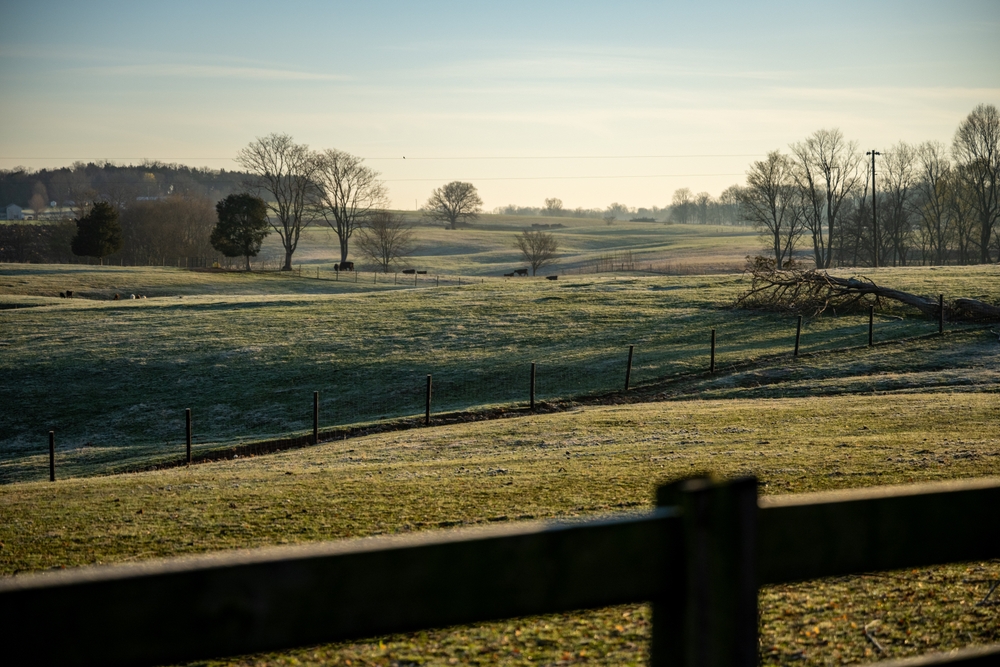
According to the reports, Huddleston and her family own around 1,200 acres of farmland outside Maysville, Kentucky, and in April they were reportedly approached by representatives connected to an unnamed Fortune 100 artificial intelligence company that wanted to buy roughly half of the property. The goal, according to the reports, was to build a data center, which immediately transforms this from a local land sale into something much larger and more symbolic. Local reporting stated that farmland in Mason County is valued at about $6,000 per acre, meaning the reported offer was not merely competitive or attractive but dramatically above what the land would normally be expected to bring on the market. In practical terms, this was not a modest proposal or a routine negotiation. It was the sort of offer designed to make saying no feel irrational.
That is exactly why the family’s reaction has drawn so much attention. Most people understand emotional attachment to family property in theory, but it becomes much harder for outsiders to grasp when the number attached to the decision is this large. For many readers, the first reaction is almost automatic: how could anyone walk away from that kind of money? It is enough to create generational wealth, enough to alter retirement plans, enough to make future hardships less frightening. Yet the family’s reported response makes clear that they never seem to have viewed the situation through that lens in the first place. The offer may have been enormous, but it did not appear to change what they believed the land was for or what role it should continue to play.
Delsia Bare’s words are a big reason the story has stayed with people. She reportedly said, “Stay and hold and feed a nation,” and also added, “$26 million doesn’t mean anything.” Those quotes are so powerful because they reject the entire premise that the biggest number should always win. In a culture where people are constantly told to monetize everything, maximize every asset, and treat every major decision as a financial optimization problem, that kind of response feels almost shocking. Whether readers agree with the family or not, those words carry a force that explains why the story has gone viral. They turn the issue from a land sale into a statement of values.
Why the family sees the farm as far more than land
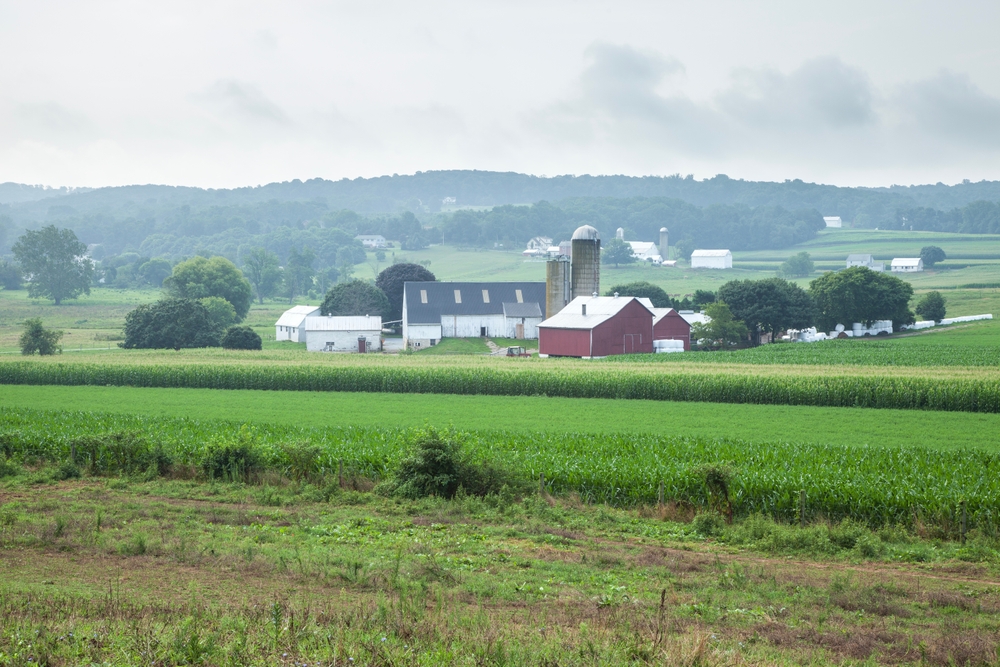
What gives this story real emotional depth is the way Bare described what the land represents to her family, because her explanation makes it clear that this is not simply about ownership or nostalgia. She reportedly told local media, “My grandfather and great-grandfather and a whole bunch of family have all lived here for years, paid taxes on it, fed a nation off of it.” That quote does a lot of work in a single sentence. It frames the farm not as idle acreage waiting to be repurposed, but as a place that has already served a purpose through labor, sacrifice, and continuity. It also highlights something that often gets lost in modern conversations about development, which is that farmland is not empty just because it is open. It is often full of history, function, and memory.
She also reportedly said the family “Even raised wheat through the Depression and kept bread lines up in the United States of America when people didn’t have anything else.” That line is one of the strongest in the entire story because it places the farm inside a much larger American narrative of hardship and survival. Whether people interpret the statement as literal family pride, generational memory, or symbolic storytelling, the point is unmistakable. To the family, this land is not valuable because of what a tech company could build on it. It is valuable because of what they believe it has already done for people. That completely changes the emotional equation. A place tied to feeding people during hard times is not easily reduced to a commercial transaction, no matter how many millions are on the table.
That is a big part of why the story has connected with readers who may have no personal link to farming at all. You do not have to come from a rural background to understand the feeling of not wanting to be the person who sells off something your family spent generations building. For some people, that might be a house, a small business, or a patch of family land. For this family, it is a working farm that they seem to see as both inheritance and responsibility. Once that perspective is understood, the rejection of the offer stops looking impulsive or emotional in a simplistic way and starts looking like the logical outcome of a completely different value system.
Why AI companies are suddenly looking at farmland
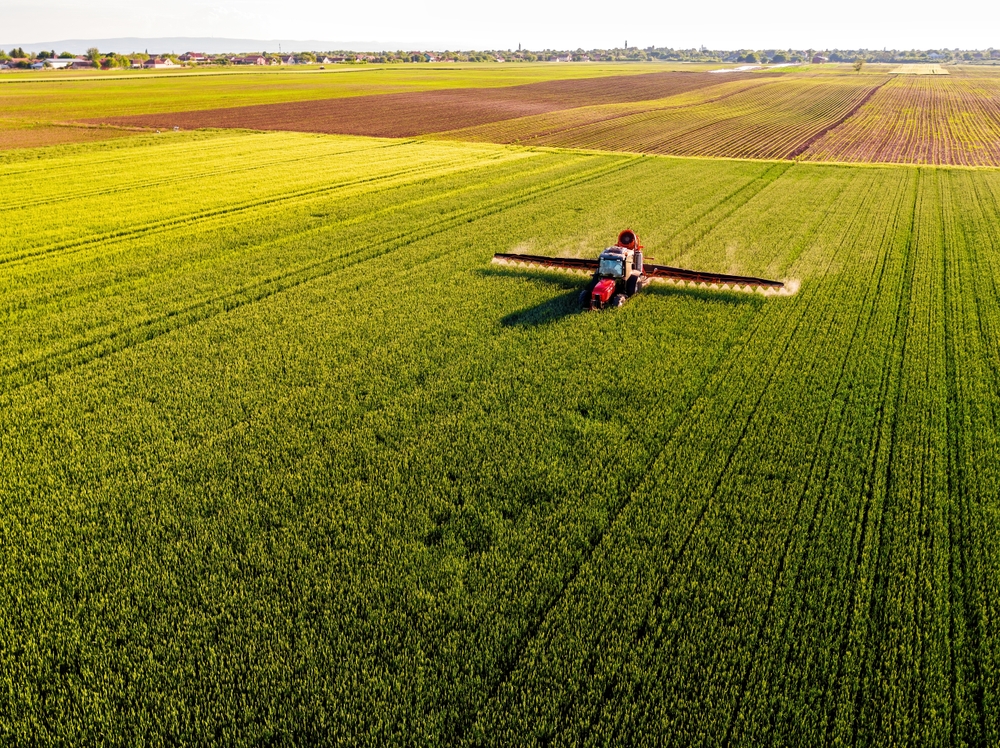
This story also matters because it is not an isolated one-off incident. It is part of a much bigger shift taking place as artificial intelligence grows and the infrastructure required to support it expands at a staggering pace. AI systems are often discussed as if they live in the cloud or in abstract digital space, but in reality they depend on huge physical facilities that require enormous amounts of land, electricity, cooling, and long-term room for expansion. Data centers are not tiny technical add-ons. They are industrial-scale developments, and the race to build them is quietly reshaping how land is valued in parts of the country that are far removed from the usual image of the tech world.
That is why rural areas and farmland have become so attractive to major companies. These sites can offer the large tracts of open land developers need, and in many cases they are close enough to energy infrastructure to make massive projects feasible. Cushman & Wakefield reported that the average data center land transaction has grown to 224 acres, a figure that helps explain why developers are increasingly looking well beyond urban and suburban office corridors. They are not just searching for a convenient lot. They are searching for space on a scale that can permanently alter the character of an area. When viewed through that lens, what happened in Mason County starts to look less like a strange local story and more like an early glimpse of a national pattern.
The reports also suggest the Huddleston family is not alone. Other landowners in the area have reportedly been approached by the same anonymous buyer, One of the local cattle farmer Dr. Tim Grosser turned down offers as high as $35,000 per acre. That detail is important because it shows the pressure is not hypothetical and not limited to one property. It suggests a much wider attempt to assemble enough land for a project of serious scale. The company involved has not been publicly identified, but local officials have reportedly described it as a major global technology firm, which only adds to the sense of unease. When enormous sums of money are suddenly moving through a rural county and residents are being asked to make irreversible decisions, secrecy tends to heighten distrust rather than calm it.
The family’s distrust of the promises being made
One of the most striking parts of this story is not just that the family rejected the money, but how openly skeptical they were of the pitch that came with it. Whenever a major industrial or technological development is proposed in a smaller community, the script tends to be familiar. Residents are told the project will bring jobs, investment, local growth, and a brighter economic future. In some cases those promises may be partly true, at least in the short term, especially during the construction phase. But for landowners who have watched outside interests move through rural America before, those promises can also sound polished, rehearsed, and disconnected from what local people may actually lose in the process.
Ida Huddleston’s comments make it clear she was not persuaded. She reportedly said, “They call us old stupid farmers, you know, but we’re not.” That quote lands so hard because it speaks to something much bigger than this single proposal. It captures the frustration many rural people feel when they sense that outsiders assume they can be dazzled, pressured, or outmaneuvered simply because the offer is large and the people making it come from powerful institutions. Her words reject that assumption completely. They suggest the family does not see itself as naïve or backward for refusing the deal. Quite the opposite, they seem to see themselves as people who understand exactly what is happening and exactly what they stand to lose.
Huddleston reportedly went even further when responding to claims that the project would help the area economically, saying, “I say they’re a liar, and the truth isn’t in them, that’s what I say. It’s a scam.” It is a blistering quote, and whether readers think it is too harsh or entirely justified, it reveals the depth of mistrust surrounding the proposal. That kind of reaction does not usually emerge from nowhere. It often grows out of a broader fear that communities are being sold a polished version of “progress” while the real long-term costs are either minimized or ignored. In that sense, the family’s refusal is not just about preserving one farm. It is also a rejection of the idea that every development packaged as economic opportunity automatically deserves public trust.
The emotional quote that explains everything
If the earlier quotes explain the family’s values, Bare’s later comments explain the emotional core of the decision in a much more personal way. She reportedly compared herself to Scarlett O’Hara in Gone With the Wind, saying, “Her spirit never would die. That’s the exact same thing for me right here.” Whatever people think of the reference itself, the meaning behind it is obvious. She was trying to describe a connection to land that goes beyond practicality or sentimentality and reaches into identity itself. This was not just a way of saying she likes where she lives. It was a way of saying the land forms part of how she understands her own strength and survival.
That emotional attachment became even clearer in what is arguably the most memorable quote in the entire story: “As long as I’m on this land—as long as it’s feeding me—as long as it’s taking care of me—there’s nothing that can destroy me if I’ve got this land.” It is the kind of line that immediately makes sense of everything else. Once someone believes that deeply in what a place gives them, no corporate offer is really competing on equal terms. At that point, the money is not being weighed against some neutral piece of property. It is being weighed against security, belonging, and the feeling of standing on ground that has held your family together through hardship.
This is also why the story keeps drawing people in even after the headline shock wears off. The money gets attention, but the emotion is what makes it stick. Readers can feel that this is not performative outrage or symbolic resistance for social media. It comes across as genuine attachment and conviction. In a time when many people feel disconnected from place, disconnected from history, and constantly pressured to make every decision according to financial logic, there is something unusually powerful about someone speaking this plainly about what land means to them. It makes the refusal feel less like a political statement and more like a deeply personal line in the dirt.
Why this story has exploded online
There is a reason this story has traveled so quickly across social media, and it is not just because the number in the headline is enormous. Stories go viral when they contain a conflict people can immediately understand and project their own beliefs onto, and this one has that in abundance. It has family land, huge money, a mysterious corporate buyer, artificial intelligence, and a simple but emotionally loaded question at the center. On one side is the promise of progress, investment, and financial security. On the other is a family insisting that some things should not be surrendered simply because a buyer can afford to pay for them. That is exactly the kind of moral tension that keeps people sharing, arguing, and imagining what they would do themselves.
It also arrives at a moment when public feeling around AI is complicated and increasingly uneasy. A lot of people are curious about the technology, impressed by its capabilities, or excited about what it might bring. But there is also growing anxiety about the speed of its expansion and the way its physical footprint is beginning to show up in real communities. Until recently, many people thought of AI as a software story, a business story, or maybe a labor story. What this Kentucky case highlights is that it is also becoming a land story, a power story, and a community story. Once that becomes visible, it changes the conversation. Suddenly, AI is not just in your phone or your office. It is potentially on your county road, your farmland, and your local grid.
That is why this story feels bigger than one family saying no. It gives people a vivid, concrete image of what technological expansion can actually look like on the ground. It is not just abstract innovation. It is a question of what gets built, where it gets built, and what gets displaced to make room for it. People are sharing the story because it captures that tension in a way that is easy to feel even if the policy details are complicated. The headline may be about $26 million, but the emotional engine underneath it is much larger: a growing fear that in the rush to build the future, society may be getting too comfortable treating irreplaceable things as expendable.
What this fight says about the future of rural America
As the demand for AI infrastructure continues to rise, stories like this are likely to become more common, not less. Data centers require huge amounts of electricity, substantial land, and the kind of long-term planning that pushes developers to look well beyond the urban tech hubs most people associate with innovation. That means more farming communities, small towns, and rural counties may soon find themselves facing versions of the same choice now unfolding in Kentucky. For some places, the promise of investment and tax revenue will be persuasive. For others, the cost may feel far too high, especially if the land in question has been used to grow food, support families, and anchor local identity for generations.
That is what makes the Huddleston family’s refusal feel so symbolically powerful. Whether people see them as stubborn, admirable, impractical, brave, or some combination of all four, they have become the face of a much larger conflict that is only beginning to take shape. Rural America is not sitting outside the tech revolution waiting to see what happens. It is increasingly being asked to host it, power it, and sacrifice land for it. That shift will force difficult conversations in communities all over the country, especially in places where farmland is not just an economic resource but a cultural and emotional one too. The debate is not simply whether development is good or bad. It is whether local people get to decide what kind of future makes sense for the land they have inherited.
In the end, what makes this story memorable is how clearly the family appears to understand what they are protecting. To outsiders, it may look like they turned down a fortune. To them, it seems they simply refused to exchange something they believe is still doing exactly what it is supposed to do. That is why the story lingers. It is not really about whether $26 million is a lot of money, because of course it is. It is about whether every meaningful thing in life should eventually become negotiable if the offer is large enough. For this Kentucky family, the answer appears to be no. And in a world increasingly shaped by speed, scale, and corporate appetite, that answer is exactly what has made people stop scrolling and pay attention.
agriculture, AI data center, AI giant, AI Infrastructure, American farmers, artificial intelligence, data center, data center boom, Delsia Bare, family farm, family legacy, farm life, farming news, farmland, farmland preservation, generational land, human interest story, Ida Huddleston, Kentucky family, Kentucky news, land buyout, local news, Mason County, Maysville Kentucky, rural America, rural land, tech companies, tech expansion, viral news, viral story