
Your cart is currently empty!
Bill NYE Reveals Why He Cut Off RFK Jr During Vaccine Debate

Bill Nye has spent decades turning science into something people could actually understand. For many people who grew up in the 1990s and early 2000s, he was not just a television host. He was the face of classroom curiosity, the man who made volcanoes, planets, pressure, and physics feel exciting instead of intimidating. So when Bill Nye speaks passionately about science, vaccines, or public health, people tend to listen.
Contents
show
That is exactly why his latest comments about Health and Human Services Secretary Robert F. Kennedy Jr. have landed with such force. In a recent profile and in separate public remarks, Nye revealed that he eventually blocked Kennedy from texting him after receiving what he described as “miles and miles” of messages pushing vaccine skepticism and long-debunked claims. It was a bizarrely modern image: one of America’s best-known science communicators scrolling through walls of anti-vaccine texts from the man now overseeing one of the most important public health agencies in the country.
On the surface, it is the kind of story the internet immediately latches onto. It has a famous name, a surprising personal detail, and a conflict that feels almost too symbolic to be real. But underneath the headline is something more serious. Nye’s decision to cut off contact was not just about annoying texts. It was about what happens when misinformation, distrust, and political power collide in spaces where scientific evidence is supposed to matter most.
The Text Chain That Says a Lot More Than It Seems
The most eye-catching part of the story came from Nye’s description of his old message thread with Kennedy. Speaking to Men’s Health, Nye said Kennedy had repeatedly sent him long text messages and links arguing against childhood vaccination and reviving claims about autism and vaccine ingredients that have been extensively studied and repeatedly debunked.
Nye said he initially tried to engage in good faith. He recalled replying politely and telling Kennedy that he would read his book, while also pointing out what he saw as the central flaw in the argument: a confusion between correlation and causation. That distinction sits at the heart of a huge amount of scientific misunderstanding. Just because two things happen around the same time does not mean one caused the other. It is a simple idea, but it is also one that has fueled years of bad public health discourse.
According to Nye, that response did not end the conversation. It only brought more messages.
At some point, what might once have looked like debate turned into noise. Nye said he eventually told Kennedy not to text him anymore. When that did not work, he blocked him.
That small personal detail has resonated because it captures something many experts, doctors, and researchers have been trying to explain for years. Public conversations about science are not just disagreements over opinion. They often become endless loops where evidence is treated as optional, and repetition is mistaken for proof. Nye’s story sounds funny at first because of how absurd it is. But the absurdity is exactly what makes it revealing.
Why This is Bigger Than Celebrity Drama
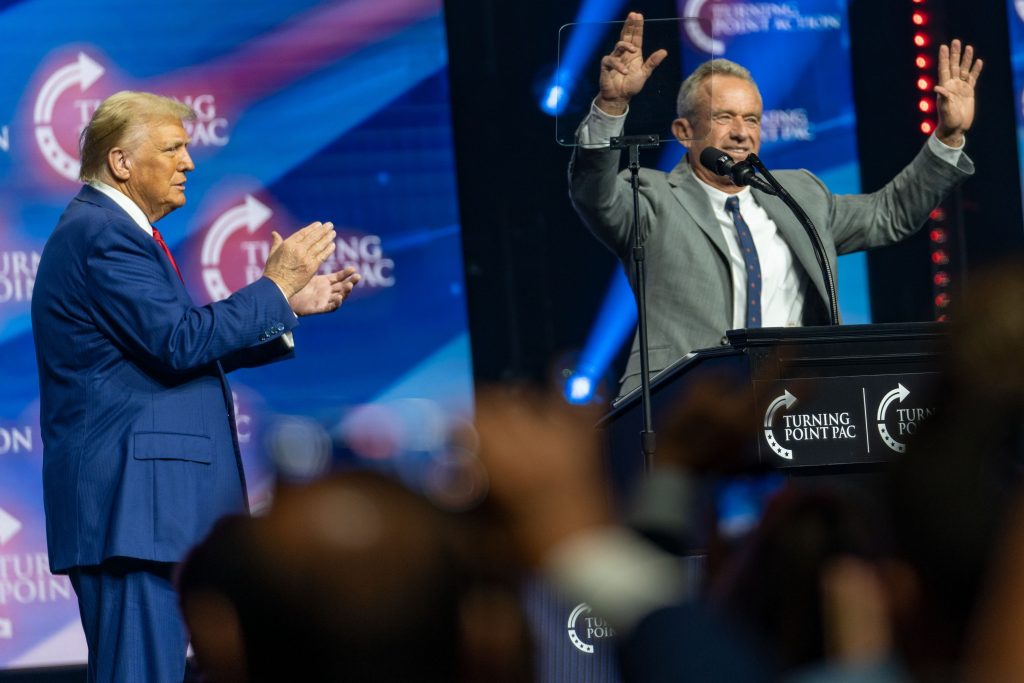
If this were simply a clash between two famous people, it would be little more than internet fodder. But Robert F. Kennedy Jr. is not just a controversial public figure with unconventional views. He is the Secretary of Health and Human Services, the person charged with helping oversee some of the most consequential public health systems in the United States.
That matters because the Department of Health and Human Services touches nearly every corner of American health life. It influences vaccine recommendations, disease response, research funding, child health policy, food and drug oversight, and emergency preparedness. It is one of those agencies that many people do not think about every day, yet its decisions affect millions of people in visible and invisible ways.
Kennedy’s appointment to that role was controversial from the start. For years, he has been one of the most recognizable public figures associated with vaccine skepticism in the United States. He has framed many of his positions as skepticism, transparency, or questioning powerful institutions. To supporters, that can sound like independence. To critics, especially in scientific and medical communities, it has looked like a steady effort to undermine confidence in lifesaving public health tools.
That is why Nye’s comments hit so hard. He was not describing a random fringe voice in his inbox. He was describing the views of someone now occupying one of the most powerful public health offices in the country.
In that context, blocking the texts feels less like a personal falling out and more like a blunt statement of alarm.
Bill NYE’s Frustration is Rooted in Something Deeper

Part of what makes Nye’s comments stand out is that they do not feel rehearsed. They feel personal.
He did not just criticize Kennedy in abstract policy language. He spoke the way many people do when they are exhausted by having to explain the same basic scientific truths over and over again. In one of the most striking parts of his recent remarks, Nye brought up a childhood memory that clearly still shapes how he thinks about vaccines now.
He said he went to elementary school with a boy who had polio.
That one detail does a lot of work. It collapses the distance between modern vaccine debates and the very recent past. For younger generations, diseases like polio, measles, and rubella can feel almost theoretical, like relics from another era. But they are not ancient history. They were part of ordinary family fear within living memory. The reason they feel distant now is not that they vanished on their own. It is because vaccines worked.
Nye’s frustration seems to come from that disconnect. There is something especially maddening, from a scientific perspective, about living in a time when the success of public health has made people forget what public health was protecting them from in the first place.
His comments have also reflected a broader exasperation with what he sees as anti-science thinking creeping into areas where facts should not be treated as partisan. In recent years, Nye has increasingly used his public platform not only to explain science but also to defend the institutions and methods that make science possible. That has included speaking about climate change, conspiracy theories, health misinformation, and research funding.
So when he says someone in charge of national health policy has poor judgment, he is not speaking as a celebrity trying to score a headline. He is speaking as someone who sees scientific literacy as a civic necessity.
Vaccines Are at the Center of the Clash for a Reason
The issue that appears to have pushed Nye over the edge was vaccines, and that is not surprising. Vaccine debates have become one of the most emotionally charged and politically weaponized scientific topics of the past two decades.
For public health experts, vaccines are one of the clearest examples of science producing measurable human benefit. They are not perfect, and no serious scientist claims they are. But the evidence behind routine immunization is vast, global, and overwhelmingly consistent. Vaccines have prevented death, disability, and outbreaks on a scale that is hard to overstate.
The autism claim that Nye said Kennedy kept circling back to has been examined repeatedly and discredited repeatedly. Yet it remains one of the most stubborn pieces of misinformation in modern health culture. Once an idea becomes emotionally sticky, especially when it is tied to children and parental fear, it can outlive the evidence against it by years.
That is part of what makes this story so revealing. It shows how misinformation often survives not because it is scientifically strong, but because it is endlessly recycled, emotionally loaded, and easy to personalize.
Nye has clearly run out of patience for that cycle.
His remarks also arrived against the backdrop of renewed vaccine anxiety in the United States, where public trust has been tested by pandemic-era polarization, institutional mistakes, political opportunism, and a steady flood of online disinformation. In that environment, every high-profile figure matters more than they might have in a healthier information ecosystem.
And when the person raising doubt is also helping shape national health policy, the stakes rise quickly.
The Measles and Polio Comments Are Not Just Rhetorical
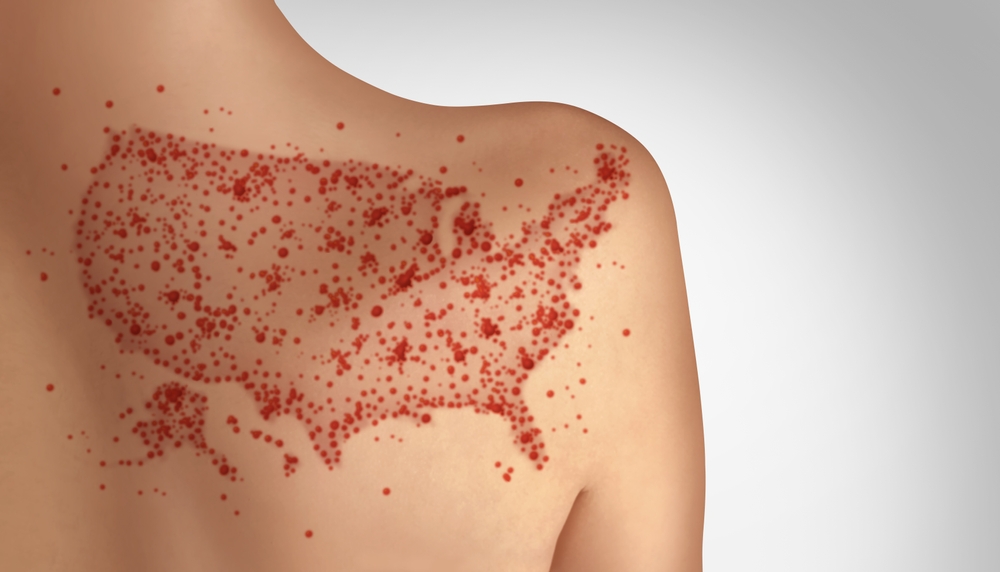
One reason Nye’s comments have struck such a nerve is that he is not talking about vaccine skepticism as an abstract intellectual issue. He is talking about real-world consequences.
In his recent remarks, he pointed to a measles outbreak in Texas and connected it directly to communities with low vaccination rates. That matters because measles is not some harmless childhood inconvenience from an older generation’s memory. It is one of the most contagious diseases known to medicine. When vaccination rates dip, measles can come back fast.
That is the uncomfortable reality sitting beneath so many modern public health debates. A lot of people have grown used to thinking of vaccines as optional because they are living inside the success story that those vaccines created. Herd immunity can make disease prevention feel invisible, right up until that protective wall starts to weaken.
The same goes for polio, which Nye invoked in especially blunt terms. “You do not want polio,” he said, in essence reducing a complicated policy debate down to a truth so obvious it should not need repeating.
And yet, somehow, it does.
That is what gives this story its strange emotional charge. It is not really about one text chain. It is about the surreal experience of watching settled scientific reality become socially negotiable again.
Nye also criticized enthusiasm for raw milk and other forms of anti-establishment health romanticism that have gained traction in some corners of internet culture and politics. The broader pattern is clear: ideas that frame themselves as “natural,” “independent,” or “against the system” can become appealing even when they conflict with basic microbiology, epidemiology, or decades of public health evidence.
For people like Nye, that trend is not edgy or refreshing. It is dangerous, and increasingly exhausting.
Why Bill NYE Still Matters in This Moment
It would be easy to dismiss Nye as a nostalgic figure from another media era, someone many adults remember fondly but no longer think of as central to public debate. But that would miss why his words continue to land.
Bill Nye occupies a very specific place in American culture. He is not just famous. He is trusted in an increasingly rare way.
That trust does not mean everyone agrees with him. It means people understand what he represents. He has spent years building a public identity around evidence, curiosity, and plainspoken explanation. Even when he is funny or theatrical, the point is usually the same: reality does not care what is politically convenient.
That gives him a kind of moral clarity that many institutions currently lack.
Over the years, Nye has testified before Congress, spoken on climate policy, challenged conspiracy thinking, and advocated for scientific literacy in both classrooms and public life. More recently, he has also used his platform to bring attention to ataxia, a neurological disorder that has affected his family and many others. In other words, he has not just played a science educator on TV. He has continued trying to translate science into something socially useful.
That is why his frustration with Kennedy carries weight beyond entertainment value. It is not simply that “Bill Nye said a thing.” It is that one of the country’s most recognizable advocates for evidence-based thinking appears to believe the current health secretary is fundamentally unserious about scientific responsibility.
And he is saying so publicly, without much interest in softening the point.
What This Says About the State of Science in America
At its core, this story is not really about texts, or even just about vaccines. It is about the shrinking space between misinformation and power.
There was a time when fringe health claims could mostly live on the margins. Today, they can travel from niche corners of the internet into mainstream politics, government leadership, and national policy conversations with alarming speed. Once that happens, the burden of response often falls on scientists, doctors, educators, and communicators who are already trying to hold together public trust in a fractured information landscape.
That helps explain why Nye has sounded less amused than alarmed.
His criticism of Kennedy has been tied to a wider concern that science itself is being dragged into ideological warfare. He has spoken about attacks on research, on evidence-based institutions, and on the idea that expertise should matter. He is far from alone in that concern. Across medicine, climate science, education, and public health, many experts have spent the last several years watching technical facts get recast as political identity markers.
That shift has consequences. It changes how people parent, vote, treat illness, assess risk, and decide whom to trust.
And unlike many political fights, this one does not stay symbolic for long. When science loses authority, people can get hurt.
That is the sobering truth sitting underneath this otherwise very clickable story. It is easy to laugh at the image of Bill Nye muting an endless stream of anti-vaccine messages. It is harder to sit with what it means that those messages were coming from someone entrusted with national health leadership.
The Bigger Takeaway From One Very Modern Fallout
There is a reason this story has spread so quickly. It feels like a perfect snapshot of the era: a beloved science educator, a controversial cabinet official, and a conflict that unfolds through endless smartphone messages instead of formal debate.
But what has made it stick is not just the absurdity. It is the clarity.
Bill Nye’s message, stripped of all the headlines, is actually very simple. Science is not a vibe. Public health is not a branding exercise. And there comes a point where “just asking questions” stops looking like curiosity and starts looking like recklessness.
That is why his decision to block Kennedy has resonated with so many people. It reads as a line in the sand from someone who has spent most of his career trying to make science accessible, patient, and generous. If even Bill Nye has reached the point of saying, essentially, enough, then many people see that as telling.
There is also something oddly sad about it. In a healthier culture, someone in Kennedy’s position would be seeking out trusted scientific voices in order to learn, test assumptions, and strengthen public understanding. Instead, according to Nye’s account, the exchange became another example of misinformation arriving not as uncertainty, but as insistence.
That may be the most unsettling part of all.
Because in the end, this is not really a story about who blocked whom. It is a story about whether evidence still has enough cultural authority to interrupt bad judgment before bad judgment becomes policy.
For Bill Nye, the answer seems to be that it should. And if his comments are any indication, he is done pretending otherwise.