
Your cart is currently empty!
Why People Suddenly Stopped Wearing Hats in the 1960s

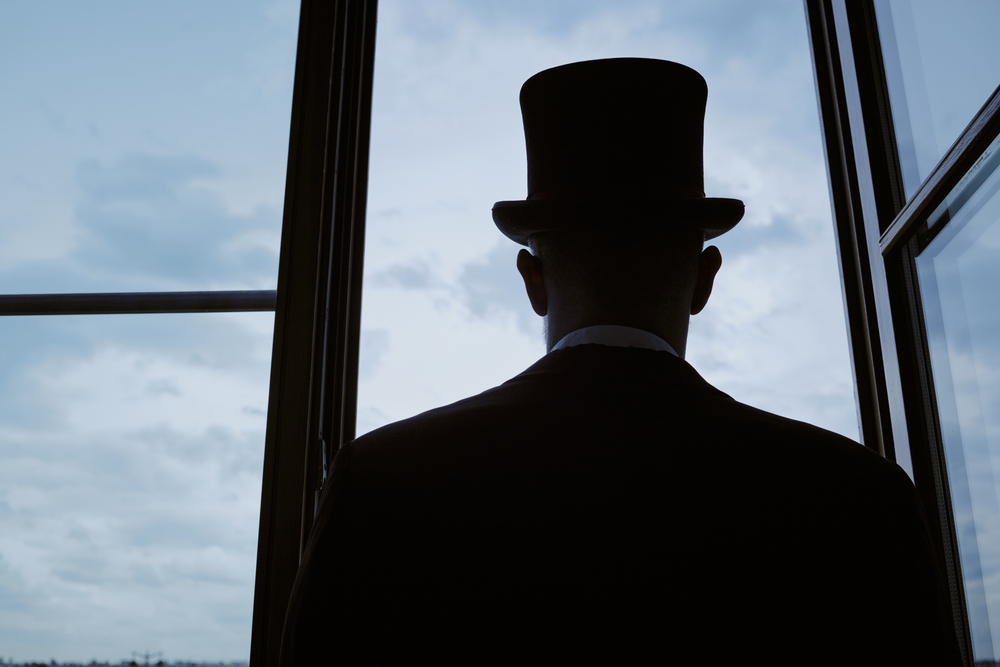
There was a time when leaving the house without a hat could make you look incomplete, almost as if you had forgotten a key part of getting dressed. Look at old photographs from city centres, football matches, train stations, church gatherings, or weekend shopping streets from the early 1900s, and the same thing keeps appearing in frame after frame: nearly every man, and many women too, had something on their head. Hats were not a niche fashion choice or a quirky extra. They were built into daily life. They showed class, respectability, routine, and in many cases plain common sense. Then, somewhere between postwar modernity and the cultural shake-up of the 1960s, that habit seemed to collapse. One generation had grown up thinking hats were simply what adults wore outside. The next began to see them as old-fashioned, fussy, or unnecessary.
Contents
show
What makes the shift so fascinating is that it was not caused by one single trend or one celebrity suddenly deciding hats were out. It was a much bigger cultural unravelling. Cars changed how people moved through the world. Hairstyles became more important than headwear. Formality started to feel stiff instead of respectable. Class symbols lost some of their power. Even war and school uniforms may have left people eager to stop putting anything on their heads that felt compulsory. The result was one of those rare social changes that seems tiny until you realise it reveals something much bigger about how everyday life transformed in the 20th century. The story of why people stopped wearing hats is really the story of why modern life stopped wanting to look so dressed up all the time.

Hats Used to Mean Far More Than Fashion
For most of modern history, hats did a lot more than keep the weather off your head. They told people where you belonged in society, or at least where you wanted to appear to belong. A flat cap suggested one kind of life, a bowler another, and a trilby or fedora something else again. Clothes, in general, used to work harder as social signals because people lived in a world where appearance was often read instantly and seriously. If you were going to work, attending church, travelling into town, or even just standing in public, there was an expectation that you would present yourself properly. A bare head could feel too casual, too unfinished, or too informal.
That is part of what makes old crowd footage so striking now. In the Guardian prompt that inspired much of this conversation, one reader pointed to the 1923 FA Cup Final and noticed that “virtually every man’s head was covered.” That image feels almost surreal today because we are so used to public spaces filled with uncovered heads, earbuds, hoodies, and baseball caps worn only if someone feels like it. Back then, though, a hat was not a style statement in the way we think of accessories now. It was closer to a default setting. Many boys were raised to wear caps outdoors from a young age, and for some men, that habit stayed with them right into adulthood.
There was also a practical side that is easy to forget from a heated, car-based, mostly indoor world. Public transport was colder. Streets were windier. Homes and workplaces were less consistently warm. If you had to walk, wait outside, or sit in drafty spaces, a hat was not decorative; it was useful. One Guardian reader put it plainly: “We stopped wearing hats because we didn’t need them. You need a hat if you have to walk, or ride, or sit in a freezing carriage or omnibus.” That sounds simple, but it gets close to the heart of it. Once everyday life changed, the hat stopped being essential.

Cars Quietly Made Hats Feel Like a Nuisance
Of all the theories people offered, one of the strongest and most believable is also the least glamorous: cars made hats annoying. A reader in The Guardian thread summed it up with two blunt words: “This is an easy one: cars.” It is hard to argue with that. Before widespread car ownership, people spent much more time exposed to the weather while walking to work, waiting for transport, or moving through public spaces. In that kind of life, a hat was practical. But once people could move from house to car to office with far less time spent out in the open, the old logic began to fall apart.
Cars also created a very specific kind of inconvenience. Traditional hats were not especially comfortable in low-roofed vehicles, and they became one more thing to take on and off all day. As one reader memorably described it, you ended up in the “ludicrous situation” of putting your hat on to walk to the car, taking it off to drive, putting it back on to walk into work, and then taking it off again indoors. That tiny bit of faff matters more than people think. A lot of everyday habits disappear not because they are passionately rejected, but because they become mildly irritating.
There was also a social layer to this. If car ownership increasingly signalled comfort, aspiration, and upward mobility, then the people most associated with modern success were often the ones who no longer needed hats in the old way. Another Guardian reply captured this beautifully, arguing that even those who could not yet afford a car might not want to look like someone who had to stand in the cold waiting for the bus. Once hatlessness became associated with modernity and convenience, it spread far beyond the people who first gave it up. That is how cultural shifts really work. First, the practical need disappears, then the status attached to the old thing goes with it.
Hair Became More Important Than Hats Ever Were
If cars weakened the habit, fashion and grooming probably delivered the knockout blow. By the 1950s and 1960s, hair was becoming far more central to personal style. For women, salon-set looks, teased volume, carefully arranged curls, and polished weekly styling became a major part of self-presentation. For younger girls, ponytails and poodle-skirt-era looks felt playful and modern. For men, pomade, slicked-back styles, and eventually looser and longer haircuts made the top of the head feel less like a place to cover and more like a place to show off.
That meant hats started interfering with the very thing people wanted to be seen. “Beauty parlor visits were weekly rituals, and teased-up hair didn’t leave much room for a hat.” That is not just a throwaway observation. It reflects a bigger shift in beauty culture. Hair was no longer just something you maintained. It was becoming a visible expression of taste, effort, youth, and identity. Putting a structured hat over it could flatten all of that in minutes.
The phrase “hat hair” sounds almost trivial, but it was a real social deterrent. “A scarf was manageable, but a hat meant dreaded ‘hat hair.’” Another Guardian contributor even pointed out that the Hat Council launched an ad campaign in 1952 with the slogan “If you want to get ahead, get a hat,” which now feels unintentionally funny because it suggests the industry already knew it was losing ground. Once the culture started valuing hairstyles more than hats, the battle was probably over. People were no longer dressing from the outside in. They were styling from the head outward.

The 1960s Made Formality Feel Old Overnight
There is a reason the disappearance of hats is remembered as happening almost all at once, even if in reality it was more gradual. The 1960s brought a wider cultural rejection of stiffness, ceremony, and inherited rules. Clothing became less formal across the board. The ideal public image was shifting away from polished respectability and toward youth, individuality, and ease. Hats suffered because they belonged so strongly to the old visual order. They looked like routine, duty, and social expectation in a decade increasingly obsessed with self-expression and reinvention.
One of the most repeated explanations in conversations about this topic involves President John F. Kennedy. In the Guardian responses, one reader recalled their mother saying that when JFK began appearing on television without a hat, it felt shocking at the time, and that “virtually overnight” men in Manchester stopped wearing them. Whether that exact cause-and-effect is historically airtight almost does not matter. What matters is that people experienced the shift through images. Television was now powerful enough to redefine what modern looked like, and Kennedy’s youthful, camera-friendly appearance helped reinforce a new kind of masculinity that felt less formal and less visibly dressed.
That same decade also made many old class and dress signals feel faintly ridiculous. What had once looked respectable could now look stuffy or performative. Hats were especially vulnerable because they had long been tied to hierarchy and public manners. Once society started loosening those codes, headwear stopped feeling natural and started feeling theatrical. That is often how fashion dies. It does not become impossible to wear. It becomes awkward to wear without seeming like you are making a point.

War, Uniforms, and Social Rebellion May Have Pushed People Further Away
Another surprisingly persuasive explanation is emotional rather than aesthetic. For some men, hats may have become associated with institutions they were glad to leave behind. In the Guardian replies, one reader said their father, who flew Lancaster bombers during the Second World War, wore his trilby every day afterward but believed many servicemen “discarded their military issue headwear when they were demobbed and swore they would never wear a hat again.” Another wrote of a father who had served in the RAF and “never wore a hat after demob.” Even if that was not universal, it points to something real: clothing can carry memory, and not all memories are ones people want to keep reenacting.
School uniforms may have mattered too. Several readers mentioned compulsory caps as part of childhood, with one recalling that at prep school, caps “had to be worn out of doors at all times,” while another remembered how “revolutionary” it felt when their grammar school in the 1960s decided caps were no longer required. That matters because compulsory clothing often creates backlash. The moment people are free to stop wearing something, they often do so with surprising speed. What older generations had treated as normal, younger generations could easily come to see as pointless.
That wider mood of rebellion is crucial to understanding why hats did not simply fade but almost became symbolic of the old order. By the 1960s, rejecting visible rules was part of the culture. You can see it in music, youth style, politics, and the loosening of social expectations. In that environment, going bareheaded was not just practical. It could also quietly signal freedom. Not revolutionary freedom in some grand dramatic sense, but the ordinary everyday freedom of deciding you no longer wanted to wear what previous generations considered mandatory.

The irony is that hats may have stayed useful even after they stopped being cool…
What makes this whole story especially interesting now is that hats did not become useless. They just stopped being socially rewarded. In fact, modern life created new reasons to wear them, particularly when it comes to sun exposure. It makes that point clearly by linking the hatless generation to the rise of tanning culture, changing beauty standards, and a general lack of urgency around sun safety. “Bathing suits got skimpier, tanning became popular, and the risks of too much sun were brushed aside,” it says, capturing the carefree logic of the era.
Decades later, the consequences are harder to ignore. Skin cancer is now the most common cancer in the United States, and cites estimates that one in five Americans will develop it in their lifetime. Whether or not the decline of hats directly caused that trend would be too simplistic a claim, but it does underline an obvious point: covering your head did have practical value, and in many situations it still does. The social meaning changed much faster than the physical usefulness ever did.
That may be why hats never truly disappeared. They simply became situational. People still wear them for gardening, hiking, sports, cold weather, work, travel, scalp protection, hair loss, medical recovery, and sun safety. The difference is that a century ago, hats were part of getting dressed for society, while now they are usually part of solving a problem. That shift says a lot about how modern culture works. We tend to keep functioning only when it is convenient, and we often abandon useful things the moment they stop looking current.
What the Death of the Everyday Hat Really Says About Us
At first glance, this feels like one of those charmingly odd historical questions that belong in the same category as “why did everyone suddenly stop using formal calling cards?” or “when did people stop dressing up to board planes?” But the hat story sticks because it captures something deeper. It shows how quickly a universal social habit can disappear once the world around it changes. Transport changed. Fashion changed. Class signals changed. Beauty standards changed. Public formality changed. And a habit that had once seemed almost permanent suddenly looked optional, then awkward, then mostly gone.
That is why old photographs can feel so eerie. They freeze a version of normal that no longer exists. We look at those packed stadiums and city pavements and think: how did that vanish so completely? The answer, frustratingly and fascinatingly, is that it did not vanish for one reason. It vanished because modern life slowly stripped away every layer that had once made it make sense. Warmth, status, routine, respectability, necessity, conformity, all of it weakened at once. Once enough of those supports disappeared, the habit could not survive on tradition alone.
And maybe that is the most interesting takeaway of all. The story of the missing hat is not really about hats. It is about how culture decides what counts as normal, useful, embarrassing, stylish, or outdated. It is about the quiet power of everyday objects to reveal much bigger social changes. And it is about how the things we stop doing often tell us just as much about history as the things we start doing. Hats may no longer be compulsory, but their disappearance still says a lot about the moment the modern world decided it wanted to feel freer, faster, and far less dressed.
1960s fashion, clothing trends history, cultural shifts 20th century, cultural transformation, everyday habits history, fashion evolution, fashion history, hat decline explanation, hat history, historical fashion analysis, history of clothing, lifestyle changes 1960s, men’s style history, modern vs vintage style, social change fashion, society and fashion, style trends history, vintage fashion trends, why hats disappeared, why people stopped wearing hats