
Your cart is currently empty!
Japanese Atomic Bomb Survivors Warn World as Iran War Escalates

There are some voices that carry more weight than governments ever can. In Japan, the surviving witnesses of Hiroshima and Nagasaki belong to that category. They are people who have spent decades warning the world about what happens when military power outruns human conscience. So when a group of Japanese atomic bomb survivors recently sent letters to the embassies of the United States and Israel condemning the war on Iran and calling for an immediate ceasefire, it was not just another protest statement. It was a moral intervention from people who know, in the most personal way possible, what modern warfare can leave behind.
Contents
show
What followed only sharpened the significance of their message. According to reporting from Anadolu and Japanese media, the Israeli Embassy in Tokyo refused to accept the letter, returning it without taking it in. For many observers, that detail turned an already painful story into something even more unsettling. It was not only that survivors of nuclear devastation were pleading for restraint. It was that their appeal, rooted in history and human loss, was effectively rejected at the door.
The moment lands with particular force because it arrives amid a wider geopolitical crisis. The war involving the United States, Israel and Iran has widened into one of the most dangerous international flashpoints in recent memory, with rising death tolls, retaliatory strikes across the region, and growing concern over the collapse of international norms. In that context, the Japanese survivors’ appeal is about more than one letter. It is about whether the world still has the capacity to hear warnings before catastrophe becomes irreversible.
A Peace Message From People Who Have Seen the Worst
The statement sent by four atomic bomb survivor groups in Japan was direct and urgent. It condemned the attacks on Iran by the United States and Israel and called for an immediate ceasefire. One of the groups involved, the Nagasaki Atomic Bomb Survivors Council, said the document was returned after the Israeli Embassy in Tokyo refused to accept it. Shigemitsu Tanaka, the 85-year-old head of the council, responded with quiet disbelief, saying the document had been sent back without even being read.
That matters because Japan’s hibakusha, the survivors of the atomic bombings, have spent decades building one of the most morally resonant peace movements in the world. Their activism has never only been about Japan’s wartime trauma. It has been about warning every future generation that war, once normalized, has a way of outrunning the intentions of those who begin it.
Their intervention now carries a particularly painful irony. The United States is the only country ever to have used atomic bombs in war. Israel has long framed its military posture through the language of existential security. Iran, meanwhile, sits at the center of long-running fears over escalation, regional instability and nuclear brinkmanship. For survivors of Hiroshima and Nagasaki to look at this conflict and feel compelled to act suggests that, in their eyes, the warning signs are not abstract. They are alarmingly familiar.
This is what gives the story its emotional force. These are not distant commentators. They are elderly witnesses to a historical threshold humanity promised never to cross again. When they say the world is heading somewhere dangerous, that is not rhetoric. It is testimony.
Why This Story Cuts Deeper Than a Diplomatic Snub
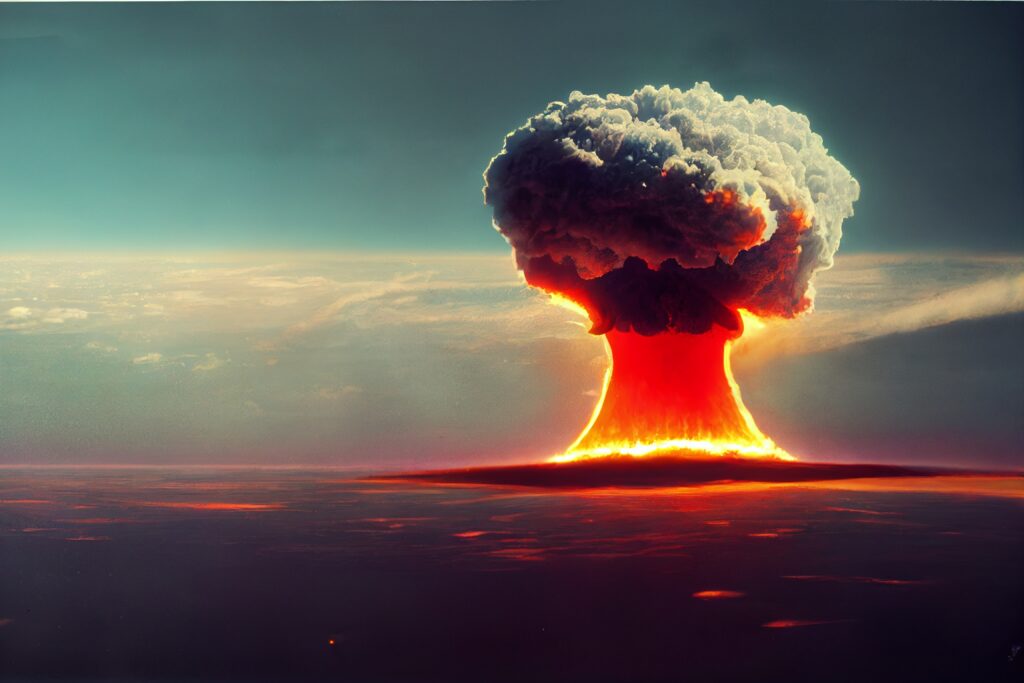
At first glance, the refusal by an embassy to accept a statement may sound procedural. In reality, it symbolizes something larger about the current political climate. We are living through an era in which states increasingly respond to criticism, even humanitarian criticism, as if it were a threat rather than a warning.
The returned letter speaks to a broader hardening of official attitudes. Governments engaged in conflict often narrow the space for dissent, especially dissent that comes wrapped in moral language instead of strategic language. Calls for restraint can be dismissed as naive. Appeals to international law can be brushed aside as selective. Civilian suffering becomes secondary to the logic of military timelines, deterrence and escalation management.
But the rejection also exposes a deeper discomfort. The hibakusha are difficult to argue with because they embody the human aftermath of militarized decision-making. Their authority does not come from office, ideology or party alignment. It comes from survival. That makes their intervention uniquely powerful and, perhaps for some officials, uniquely inconvenient.
It also says something troubling about the shrinking influence of moral memory in international politics. The post-World War II global order was built, at least in theory, around the idea that some lessons had been learned. Civilian protection, legal restraint, war crimes accountability and nuclear caution were meant to become foundational principles. Yet increasingly, those ideas are treated less like rules and more like optional language for press conferences.
That is why this moment feels bigger than one refused document. It reflects the possibility that even the clearest historical warnings can now be waved away if they interrupt the political momentum of war.
The War on Iran Has Become a Test of Political Language
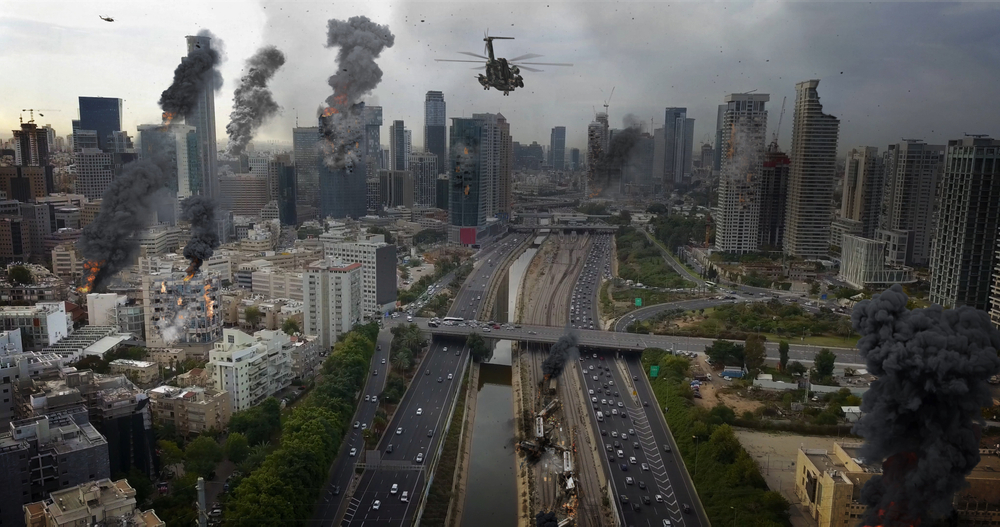
The timing of the survivors’ statement is crucial. It came as the war on Iran continued to escalate, with mounting casualties, retaliatory attacks and widening instability across the region. U.S. Secretary of State Marco Rubio has said Washington is on track to meet its objectives in Iran within weeks, framing the campaign in terms of military efficiency and strategic progress. Reports have described U.S. goals as including the degradation of Iran’s air force, navy, missile capabilities and weapons production infrastructure.
That kind of language is politically familiar. Modern war is often sold to the public through the vocabulary of control: objectives, capabilities, timelines, assets, deterrence. It is a language designed to sound measured and manageable. But it also has a flattening effect. It can make a war sound almost administrative, even while families are being displaced, children are being killed, and entire regions are being pushed toward long-term trauma.
This is where the Japanese survivors’ intervention becomes politically significant. Their statement interrupts the clean, technocratic framing of war with something more difficult to contain: memory. They force a confrontation between military justification and human consequence.
And that matters especially in a Trump-era political environment, where force is often packaged not only as necessity but as strength itself. Under Donald Trump, displays of military pressure are rarely presented as tragic last resorts. More often, they are sold as proof of resolve. That rhetorical style can be politically effective, but it also creates a dangerous incentive structure. Once war becomes a stage for political toughness, de-escalation starts to look like weakness.
The result is a politics in which the moral cost of war is not denied so much as downgraded. Civilian casualties become unfortunate but secondary. International concern becomes background noise. Historical warnings become sentimental distractions. The danger of that mindset is not only what it justifies in the present. It is what it trains the public to accept in the future.
Japan’s Position Reveals a Deeper Contradiction
This story also matters because of where it is happening. Japan occupies a uniquely complicated place in the global conversation about war, law and memory. It is a close ally of the United States and part of the broader Western security architecture. At the same time, it is the only country to have endured atomic bombings in war, which gives it a distinct moral relationship to questions of escalation and civilian destruction.
That tension has become especially visible in Japan’s recent support for the International Criminal Court. Japanese Foreign Minister Toshimitsu Motegi recently reiterated Tokyo’s “firm support” for the ICC and its independence, even amid criticism and sanctions from the United States over the court’s actions related to Israel. That is a significant signal. It suggests that, at least rhetorically, Japan is still trying to position itself on the side of legal order and international accountability.
But that creates an uncomfortable contradiction. If Japan supports the rule of law internationally, what happens when that principle collides with the military actions of its closest ally? If Hiroshima and Nagasaki are not only historical tragedies but living warnings, what obligations follow from that memory when current wars begin to mirror familiar patterns of dehumanization and impunity?
This is where the survivors’ activism becomes more than symbolic. It exposes the gap between commemorating peace and practicing it. Every year, world leaders invoke Hiroshima and Nagasaki as solemn reminders of the need for peace. Yet when those reminders are translated into actual criticism of present-day warfare, they suddenly become politically awkward.
In that sense, the hibakusha are doing something many states are unwilling to do. They are insisting that historical memory should have consequences.
Why the Human Cost Keeps Getting Politically Minimized
One of the most striking features of contemporary conflict is how quickly the scale of suffering can become abstract. Numbers rise. Headlines stack. Maps fill with arrows and strike zones. And gradually, the human meaning of the violence gets pushed to the margins.
That pattern is already visible in the Iran war. Reports have described more than a thousand people killed, retaliatory missile and drone attacks across multiple countries, damage to civilian infrastructure, disruptions to aviation and global markets, and growing fears around the Strait of Hormuz. In Japan, protesters have already taken to the streets, including demonstrators in Tokyo rallying under anti-war slogans and music-led protest culture.
But even now, much of the mainstream political framing still treats these outcomes as side effects rather than central facts. That is one of the oldest habits of war politics. Civilian suffering is acknowledged, but rarely allowed to determine policy. It is mourned rhetorically while being overridden strategically.
The survivors’ letters challenge that hierarchy. Their message is simple in a way that governments often find irritating: if civilians are dying, if war is spreading, if the risk of wider catastrophe is growing, then stopping the violence should not be a peripheral concern. It should be the concern.
That sounds obvious, yet it remains one of the hardest principles to enforce in modern politics. Leaders are rewarded for appearing decisive, not for appearing humane. Media systems often privilege spectacle over sustained moral clarity. And publics, overwhelmed by constant crisis, can become desensitized to suffering that would once have shocked them.
This is why testimony still matters. It cuts through the normalization. The survivors of Hiroshima and Nagasaki are not speaking in abstractions. They are speaking from the far side of what happens when civilian life is reduced to collateral logic.
The Bigger Warning is About What the World is Becoming Used To

The most disturbing part of this story may not be the letter itself or even the embassy’s refusal to accept it. It may be how unsurprising it all feels.
That is the real warning embedded in this moment. We are living in a political era where escalation increasingly arrives pre-normalized. International law is invoked selectively. Humanitarian language is tolerated only when it does not interfere with military goals. Even institutions built to restrain impunity, like the ICC, are attacked when they become inconvenient to powerful states.
In that environment, the voices of atomic bomb survivors should feel impossible to ignore. Instead, they risk becoming just another morally serious appeal swallowed by a system that has learned how to absorb outrage without changing direction.
That is why this story deserves attention beyond its immediate headlines. It captures a larger struggle over what kind of world is being built in plain sight. Is war once again becoming the default instrument of political credibility? Are civilian deaths being folded into strategic planning with barely any public threshold for alarm? And has the language of peace been pushed so far to the margins that even those who survived humanity’s most infamous acts of mass destruction can be dismissed without consequence?
Those are not theoretical concerns. They are the stakes.
When the People Who Remember the Unthinkable Are Ignored
There is something deeply sobering about the image at the center of this story: elderly survivors of Hiroshima and Nagasaki sending a plea for peace across diplomatic channels, only to have at least one of those appeals returned unread.
It is a small act in bureaucratic terms, but a large one in moral terms. It suggests that even the people history should have taught us to listen to most carefully are no longer guaranteed a hearing.
And yet, that may be exactly why their message still matters. Not because it will instantly alter policy, and not because states suddenly become compassionate under pressure, but because it preserves a line of moral clarity in a time of extraordinary political distortion.
The Japanese atomic bomb survivors are not offering a complicated doctrine. They are saying that war, once unleashed, does not stay contained inside official narratives. It spreads through families, cities, generations and memory. It leaves behind ruins that outlive every justification offered for it.
That is the lesson they have spent their lives trying to pass on. The tragedy is not only that the world keeps relearning it. It is that the people most qualified to warn us are still having to repeat themselves at all.
If this moment tells us anything, it is that historical memory is only meaningful if it can still interrupt present power. Otherwise, remembrance becomes ceremony, and “never again” becomes little more than a slogan recited between wars.