
Your cart is currently empty!
NASA’s Artemis II Crew Will Spend 10 Days Inside a Tiny Capsule Flying Around the Moon
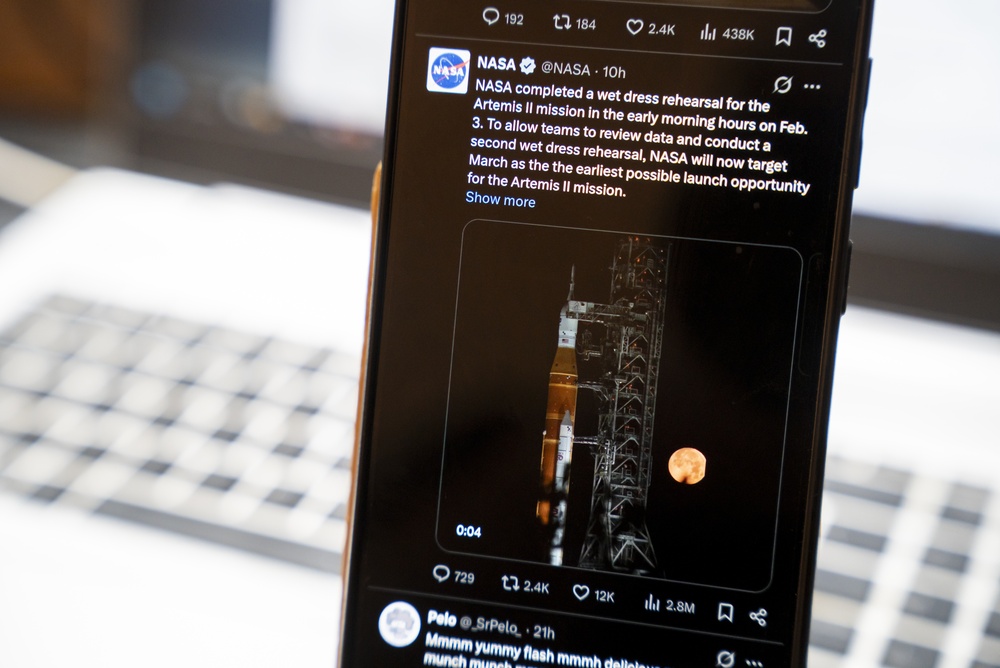
Most people know Artemis II as the mission that will send astronauts around the moon for the first time in more than 50 years, but the detail that may capture readers even more is how those astronauts will actually live while doing it. For 10 days, four crew members will be packed inside NASA’s Orion capsule, a spacecraft with just 330 habitable cubic feet of room, described by NASA as offering “nearly 60% more space than the Apollo command module’s 210 cubic feet.” That may sound like an upgrade, but when you picture four adults eating, sleeping, exercising, working, changing clothes, using the toilet and preparing for emergencies in a cabin roughly the size of two minivans, the reality starts to feel far less like science fiction and far more like an extreme test of human endurance. It is a mission about the moon, yes, but it is also a mission about what happens when people are asked to stay physically and mentally sharp in a space so tight that every routine task becomes a logistical exercise.
Contents
show
That is what makes Artemis II so compelling. It is not just another major NASA launch, and it is not simply a symbolic return to lunar exploration. It is a live rehearsal for the future of human spaceflight, where astronauts will have to prove they can function well beyond Earth orbit while carrying out a packed schedule of spacecraft tests, medical monitoring, science objectives, survival drills and lunar observations. NASA’s own planning shows that nearly every hour of the 10-day mission has been mapped in detail, from the first moments after launch to the final splashdown in the Pacific Ocean. The result is a journey that sounds thrilling from the outside, but from the inside may feel more like the most intense road trip in history, one that covers 685,000 miles at over 20,000 miles per hour with no chance to pull over, stretch your legs or get a little privacy.
NASA’s Artemis 2 crew will live in a 330-cubic-foot capsule, Orion, as they fly around the moon. https://t.co/SCzhZkrczf
— Mashable (@mashable) April 2, 2026
Orion is heading to the moon, but life inside will feel surprisingly small
The image of astronauts heading into deep space often comes with a glamorous kind of mythmaking. People imagine giant windows, endless floating and the kind of spacious futuristic cabins usually reserved for films. Orion strips away that fantasy almost immediately. This is a compact spacecraft built for function first, and every square inch has to justify its existence. The cabin is large enough to support a crew through deep space, but not so large that anyone onboard is going to forget for a second that they are sharing a very confined environment with three other people for more than a week.
That reality shapes nearly everything about how Artemis II will be experienced. The astronauts will not simply float around admiring the view. They will need to organize themselves around carefully planned routines that make the spacecraft livable. NASA has equipped Orion with the essentials needed to maintain health and function, including food prep systems, hygiene kits, sleeping setups and a toilet with private doors. There is even exercise equipment onboard, because maintaining the human body in microgravity is not optional. If the Artemis program is serious about returning humans to the moon in a sustained way, then these basic systems are just as important as engines, navigation and communications.
NASA has also emphasized the importance of preserving ordinary human habits in an extraordinary environment. According to the mission planning, the astronauts will be able to hydrate and reheat their meals, and food scientists have helped create “a set menu based on their personal preferences and nutritional needs.” That detail may sound minor, but on a 10-day mission in deep space, morale and physical stability matter enormously. Even the simple act of eating becomes part of how astronauts regulate energy, stress and familiarity. In a mission built around precision, comfort is not a luxury. It is part of performance.
The sleeping arrangements make the same point in an even clearer way. Rather than beds or bunks, the crew will attach sleeping bags to the walls and rest there for roughly eight hours each day. It is a setup that sounds simple until you remember that those same walls are part of a spacecraft racing around the moon. Artemis II may be one of NASA’s most ambitious crewed missions in decades, but in practical terms it will also involve four people trying to live as normally as possible in conditions that are anything but normal.
The four Artemis II astronauts will sling around the far side of the moon before heading back home. One concern stems from Artemis I, a crewless test flight, when the spacecraft’s heat shield was damaged during re-entry. https://t.co/j4NPkpsKqk pic.twitter.com/eCcVqX1Trc
— 60 Minutes (@60Minutes) February 2, 2026
The mission begins with an explosive launch, but the pressure does not ease once they are in space
A lot of public attention naturally focuses on launch day, and for good reason. The first minutes of Artemis II will be among the most dramatic of the entire mission as Orion rides the Space Launch System into space. NASA’s astronauts Reid Wiseman, Victor Glover, Christina Koch and Canadian Space Agency astronaut Jeremy Hansen will spend those opening moments enduring the kind of acceleration and force that years of training are designed to prepare them for. It is the sort of sequence people watch with their breath held, but for the crew it will only mark the beginning of a much longer and more demanding process.
Once Orion reaches space, the mission quickly transitions from spectacle into technical choreography. The spacecraft will still be attached to the Interim Cryogenic Propulsion Stage, and within the first hours after launch the crew will oversee a pair of burns to place Orion into a high elliptical orbit. Soon after that comes one of the most important early demonstrations of the mission: proximity operations, often called prox ops. During this phase, the astronauts will detach from the spent stage and fly Orion around it to demonstrate that the spacecraft can safely maneuver near another object in space. That ability will be crucial for future Artemis missions that involve landers and more complex orbital operations.
Only after those tests are complete does the mission begin to resemble something closer to daily life. The astronauts will stow their launch couches, change out of their suits and transition into a more livable rhythm onboard the spacecraft. But even then, there is very little true downtime. NASA has scheduled at least 8.5 hours each day for sleep, yet even the first rest period is split in half because another orbit-raising burn must take place in between. It is a reminder that Artemis II is not designed to be comfortable. It is designed to test whether people can function under constant operational demands while traveling farther from Earth than any crew has gone in generations.
That pressure is part of what makes the mission so revealing. It is not enough for Orion to launch successfully. NASA needs to know whether the spacecraft can support a crew through the rhythm of actual deep-space operations, where the job does not end after the rocket clears the atmosphere. In that sense, launch day is not the climax of the mission. It is simply the moment the real work begins.
Christina Koch, who will become the first woman to go to the moon with the Artemis II mission, on what space smells like, why it is difficult to return to Earth and how astronauts play human bowling. https://t.co/VrzywO69nG
— New Scientist (@newscientist) April 2, 2026
Everyday life in Orion will be built around routines that keep the crew functioning
One of the most fascinating things about Artemis II is that even though it is a historic moon mission, so much of it depends on astronauts doing very human, very ordinary things on schedule. They have to eat, drink, clean themselves, move their bodies and maintain enough routine to keep both mind and body stable. In low Earth orbit, astronauts already rely heavily on structure to stay healthy, but Artemis II pushes that need into a deeper and more isolated environment where there is less room for error and far fewer comforts.
Exercise is a major part of that daily rhythm. NASA has included a flywheel exercise device onboard Orion, and each astronaut is expected to use it during the mission. The plan is for the crew to exercise for around 30 minutes each day to help counter the effects of microgravity. This is not about staying fit for appearance or habit. In space, muscle and cardiovascular conditioning directly affect how well astronauts can perform tasks, tolerate reentry and recover once they are back under gravity. That is why something as simple as a short workout becomes a key mission activity rather than an optional extra.
Hygiene and sanitation are handled with the same level of seriousness. Orion includes a toilet and private doors, as well as room for hygiene supplies so astronauts can keep up with basic personal care. Since showering is not possible, the crew will rely on “liquid soap, water, and rinseless shampoo to remain clean.” It is one of those details that tends to stand out because it instantly makes the mission feel more real. Space travel may sound glamorous from Earth, but inside Orion it still involves figuring out how to wash your hair and maintain a sense of dignity while floating in a metal capsule far from home.
Communication also plays a huge role in making life onboard manageable. Orion is equipped with microphones, headsets, tablets and laptops so the astronauts can stay in contact with mission control, medical advisors and even family. NASA will also be testing its Deep Space Network communication systems during the mission, along with an emergency backup setup. As Romeo Garza, the deputy assistant manager for the Orion Communication and Tracking System, explained, “The idea is that if the primary communication system fails, this emergency communication system will allow us to continue talking with the crew and navigate successfully without the primary system.” That sentence captures the balance of Artemis II perfectly. It is a mission filled with wonder, but everything beautiful about it depends on systems that have to work under pressure.
The moon flyby may be breathtaking, but the crew will be far too busy to simply sit and stare
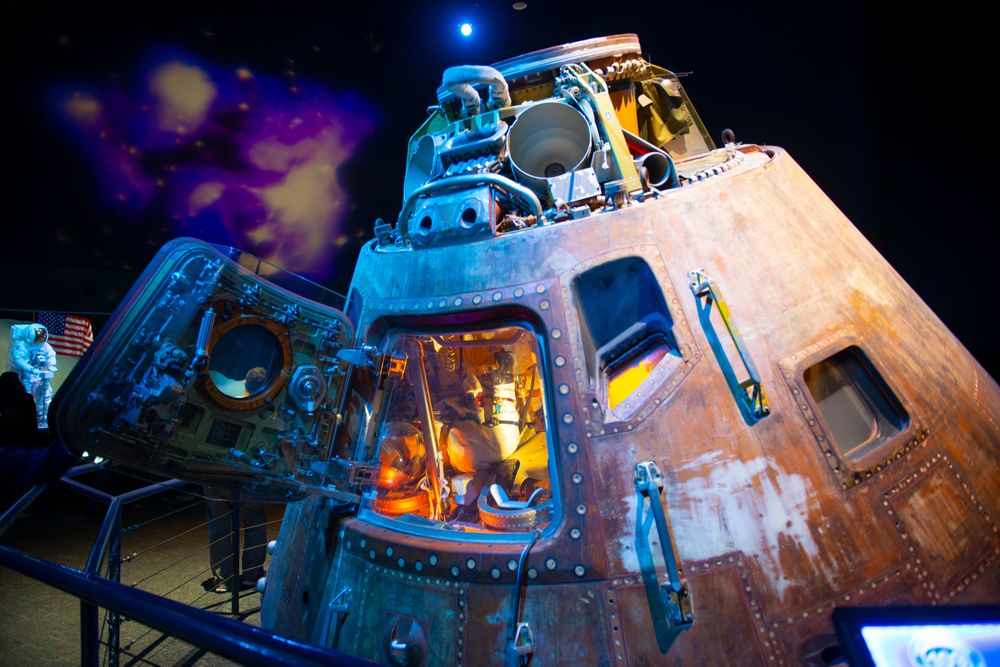
The emotional centerpiece of Artemis II will obviously be the lunar flyby, the moment Orion reaches the moon and the crew sees its surface from a vantage point no human has experienced since the Apollo era. But even that milestone is not designed as a passive sightseeing event. NASA has packed the lunar portion of the mission with observations, imaging goals, rehearsed procedures and spacecraft checks. By the time the astronauts actually reach the moon, they will already have spent days preparing for how to use those few precious hours as efficiently as possible.
The mission commits to the moon on flight day 2, when the crew performs the translunar injection burn, a roughly 30-minute engine firing that sends Orion out of Earth orbit and onto a free-return trajectory. That path is especially important because it loops around the far side of the moon and naturally brings the spacecraft back toward Earth, reducing the need for a major return burn later. It is one of the cleverest safety features built into Artemis II, and it means the astronauts’ path to the moon is also, in many ways, their path home.
As Orion closes in on lunar space, the crew will use flight days 3, 4 and 5 to rehearse the tasks they need to complete during closest approach. They will review imaging plans, practice their procedures in zero gravity and refine how they intend to document what they see. When flight day 6 finally arrives, Orion’s closest pass is expected to bring the spacecraft to roughly 4,000 to 6,000 miles above the moon’s surface. NASA says the moon will appear through Orion’s window to be about “the size of a basketball held at an arm’s length,” a strangely familiar image for something so profoundly rare.
Even in that moment, the crew will not simply be watching in silence. They are expected to photograph the moon and Earth, record observations, track geological formations and gather data that scientists on Earth will later study. Depending on the exact timing of the launch, the mission could also take them farther from Earth than any human spaceflight in history. That alone would make Artemis II unforgettable. But what makes it more significant is that every stunning view comes with a checklist, every emotional moment with a task, and every historic image with a scientific purpose.

Artemis II is also a test of what happens if things start going wrong
One of the clearest signs that Artemis II is not just a symbolic moon trip is how much of the mission is devoted to failure scenarios. NASA is using this mission to understand how Orion and its crew would respond not only under ideal conditions, but under stress, uncertainty and potential emergency situations. That means the astronauts will spend part of their historic deep-space voyage rehearsing the kind of scenarios most people never think about when they imagine lunar travel.
Some of those drills are deeply practical. The crew is scheduled to perform CPR demonstrations, spacesuit checks and rapid donning exercises to make sure they can get into and pressurize their suits quickly if the cabin were ever compromised. Those suits are primarily intended for launch and reentry, but they are built with feeding, drinking and waste management systems and can help protect the crew for days in the event of depressurization. Artemis II is designed around the idea that astronauts need more than a ride to the moon. They need layers of protection that can keep them alive if something goes wrong at the worst possible moment.
Radiation is another major concern, and NASA has built that into the mission plan too. On flight day 8, the astronauts will practice how to shelter from a radiation event such as a solar flare. The strategy involves using Orion’s own layout and supplies to create as much shielding as possible, including positioning themselves near the spacecraft’s heatshield and using onboard water stores as additional protection. It is a striking reminder that beyond low Earth orbit, space becomes much less forgiving. The risks are not abstract. They are operational realities that crews must be prepared to face in real time.
Even Orion’s maneuvering systems are being tested with future missions in mind. During the return leg, the crew will conduct demonstrations involving different thruster control modes to show how the spacecraft handles attitude adjustments and fuel-efficient steering. These may sound like niche technical exercises, but they are exactly the sort of details that determine whether future lunar and Mars-bound missions can be trusted with human lives. Artemis II is exciting because it goes to the moon. It is important because it proves whether the systems behind that journey are ready for what comes next.

The most powerful part of the mission may be how human it all feels
For all the engineering brilliance involved, Artemis II is still a story about four people living together in a very strange environment. That human element may end up resonating just as strongly as the spacecraft itself. This is a crew that will be sharing a tiny volume of space, balancing intense workloads, limited privacy and the emotional weight of knowing they are leaving Earth behind in a way no astronauts have done in decades. There is something deeply compelling about that combination of routine and enormity.
NASA has left room in the schedule for those human moments too. The astronauts will have short windows of off-duty time, opportunities to reflect, and communication links that allow them to remain connected to people back home. They will also have tablets and laptops loaded before launch, giving them access to procedures, reference materials and some entertainment. That may sound mundane, but it is precisely that normality that helps astronauts stay grounded in an environment that is anything but ordinary.
One of the most quietly moving moments of the mission is expected to come on flight day 7, when Orion’s crew is scheduled to hold a short audio call with astronauts aboard the International Space Station. In practical terms, it is a communications event. Symbolically, it is something much bigger. For the first time, astronauts traveling beyond low Earth orbit will be able to look back at Earth knowing that they are not the only humans in space. That changes the emotional texture of the mission. It turns Artemis II from an isolated feat into part of a broader human presence beyond the planet.
By the time the crew returns on flight day 10, they will still have one of the most dangerous parts of the mission ahead of them. Orion will reenter Earth’s atmosphere under temperatures of around 3,000 degrees Fahrenheit before descending beneath three parachutes and splashing down in the Pacific Ocean. A U.S. Navy recovery team will retrieve the capsule and bring the astronauts home. It will likely look smooth and controlled on camera, but that final sequence carries the same message as the rest of Artemis II. This mission is not remarkable only because it is going to the moon. It is remarkable because it is showing, in painstaking detail, what it really takes for humans to survive, function and come home from deep space.