
Your cart is currently empty!
White House Responds After Jesse Ventura Questions Legitimacy of Trump Assassination Attempt
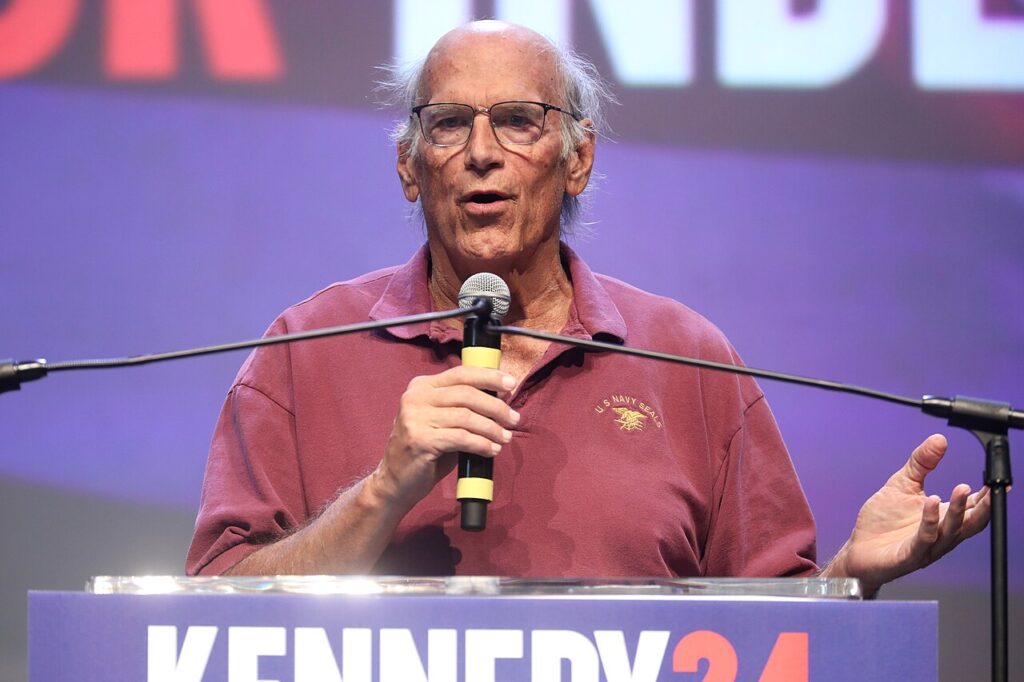
Jesse Ventura has made a career out of speaking his mind. From squared circles to state capitols, the 74-year-old former professional wrestler and Minnesota governor has never shied away from provocation. But a recent appearance on a popular interview program pushed even his brand of candor into territory so charged that it drew an official response from the White House.
Contents
show
What Ventura said during a March 24 episode of Piers Morgan Uncensored touched on one of the most sensitive moments in recent American political history. And he did so using the language of his first profession, professional wrestling, turning a single question into a political firestorm that neither the public nor the White House could ignore.
On Air with Piers Morgan
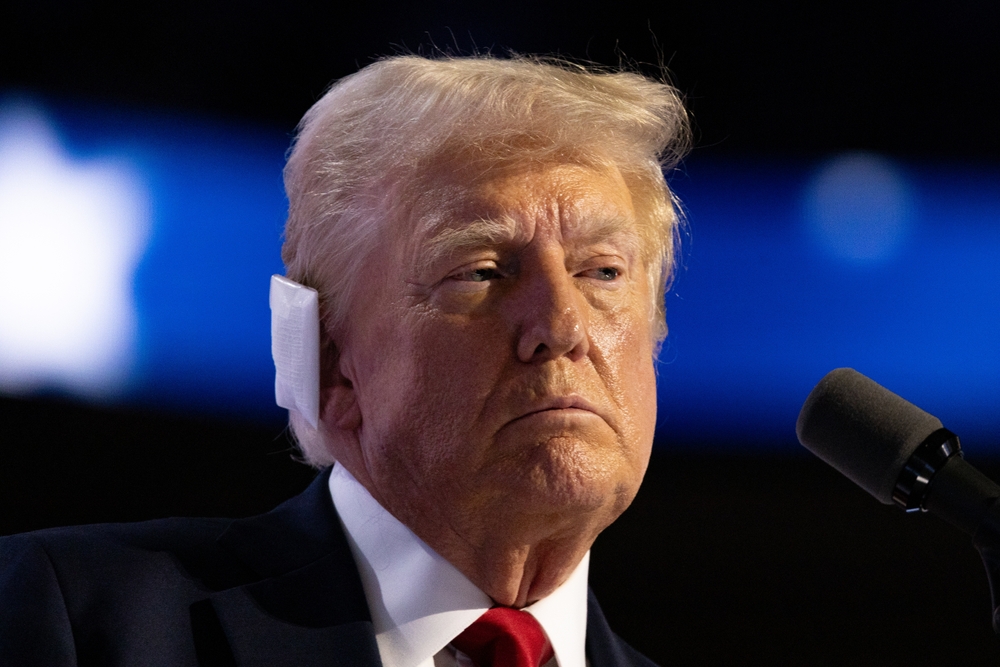
During the interview, the conversation turned to the July 13, 2024, assassination attempt on then-candidate Donald Trump at a campaign rally in Butler, Pennsylvania. A gunman opened fire at the event, wounding Trump in his right ear. Firefighter Corey Comperatore, who attended the rally with his family, lost his life while shielding them from the gunfire.
Morgan brought up Trump’s reaction in the moments after the shooting, noting how Trump rose to his feet and urged the crowd to fight. Ventura’s response took an unexpected turn. “You ever hear of a blade job?” Ventura asked.
In professional wrestling, a blade job refers to the practice of a performer cutting themselves with a concealed razor blade to produce blood during a match, a technique known in the business as “getting color.” By invoking the term, Ventura implied Trump may have staged or exaggerated his injury.
Morgan appeared stunned. He asked if Ventura was suggesting the entire incident was fake. Ventura neither confirmed nor denied the accusation. Instead, he fired back with a question of his own, asking where Trump’s scar was. He produced no evidence to support his skepticism, relying on rhetorical suggestion rather than fact.
Morgan Challenges Ventura
Morgan did not let the claim go unchallenged. He reminded Ventura that Comperatore died during the Butler rally, a fact that would seem to contradict any notion of staging. He also called Trump’s response heroic, pointing to the image of Trump raising his fist while Secret Service agents surrounded him.
Ventura dismissed that characterization. He suggested Trump had gotten what he wanted from the media and from commentators like Morgan. “Come on, Piers, you’re gonna tell me this guy is a hero?” Ventura asked, making clear he saw the incident through a different lens. When Morgan affirmed that he did, Ventura shot back, saying Trump had accomplished his goal in generating that reaction.
It was the kind of exchange that might have ended as a cable news talking point and little more. But Ventura’s choice of words carried weight that extended far beyond the studio. A former governor and public figure had questioned the legitimacy of an assassination attempt on a sitting president, and he had done so on an international platform. In a media environment where conspiracy theories spread fast and stick around even faster, his comments demanded a response.
White House Fires Back
Ventura’s remarks did not go unnoticed at 1600 Pennsylvania Avenue. Within days, White House spokesperson Davis Ingle issued a formal statement to Us Weekly and other media outlets, condemning the insinuation in forceful terms.
“On that tragic day in Butler, Pennsylvania, we tragically lost an American hero, Corey Comperatore, who selflessly laid down his life to protect those around him,” Ingle said. “President Trump will never forget Corey and his beautiful family. On that dark day, God spared President Trump’s life by a miraculous millimeter.”
Ingle went further, declaring that Trump remains stronger than ever and dismissing anyone who would question the events of that day as foolish. His language left no room for ambiguity, treating Ventura’s speculation with the gravity of a formal denial.
Ingle’s statement, however, made no mention of several other claims Ventura raised during the interview, including allegations about Vince McMahon and Trump’s WWE Hall of Fame induction. It also left unaddressed Ventura’s suggestion that he and Trump meet in a wrestling ring.
By choosing to respond at all, the White House made a calculated decision. Ignoring Ventura’s remarks risked allowing an unfounded conspiracy theory to gain traction. Responding to them, however, gave a retired wrestler’s television appearance the weight of official government business.
A Hall of Fame Grudge
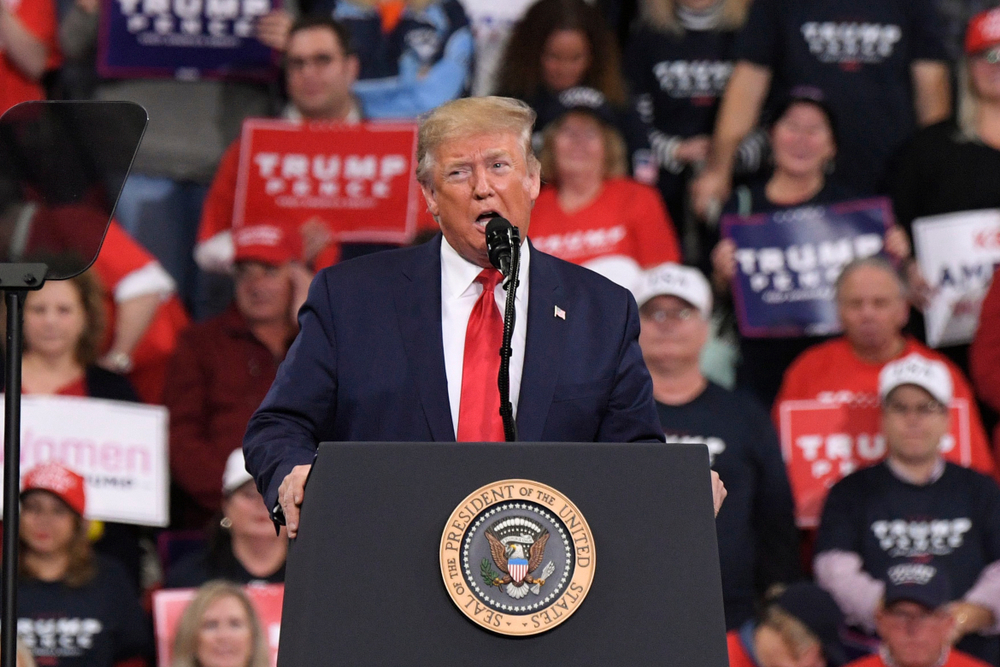
Ventura’s grievances with Trump extended well beyond the assassination attempt. During the same interview, he turned his fire on Trump’s 2013 induction into the WWE Hall of Fame, calling it a “tragedy.” He argued that Trump had no business being honored by the wrestling industry because he never competed in the ring.
Ventura contrasted Trump’s ceremonial spot with his own career, one built on years of physical punishment and grueling schedules. He recalled wrestling 63 consecutive nights at one stretch and framed that kind of grind as the true price of admission to any wrestling hall of fame. In his view, Trump’s induction was an insult to everyone who bled for the business.
He also raised an unsubstantiated claim about the reason behind Trump’s induction. Ventura alleged that Trump entered the Hall of Fame because he helped suppress an investigation into former WWE chairman Vince McMahon over sexual misconduct allegations. “He’s only in the Hall of Fame because he stopped an investigation against Vince McMahon, sexual stuff,” Ventura told Morgan.
Trump did not assume office for his first term until January 2017, four years after the 2013 induction, a timeline that raises questions about Ventura’s version of events. He produced no proof linking the induction to any cover-up or intervention on McMahon’s behalf.
Ventura’s reference to McMahon’s legal troubles does connect to a real case. Former WWE employee Janel Grant filed a lawsuit against McMahon, accusing him of sexual assault and sex trafficking. Grant’s allegations led to McMahon’s departure from the company. But Ventura drew a line between the lawsuit and Trump’s Hall of Fame status that no public evidence currently supports.
Squaring Off, Veteran vs. Draft Dodger
Ventura did not stop at verbal jabs. He floated the idea of a physical encounter with Trump, wrapping political animosity in wrestling bravado. “Maybe it’s time for a showdown between the Vietnam veteran and the draft dodger,” Ventura told Morgan.
When Morgan asked whether Ventura meant an actual fight, Ventura pointed to Trump’s Hall of Fame status and suggested they both step into the ring. He framed it as part joke and part dare, leaving enough ambiguity to generate headlines without committing to anything concrete.
Ventura, a Vietnam-era Navy veteran who served as a UDT/SEAL team member, has long drawn a contrast between his military service and Trump’s draft deferments during the Vietnam War. By raising the subject in wrestling terms, he merged two worlds he has inhabited throughout his public life, using the language of kayfabe to land a political shot.
Of course, the likelihood of such a match is near zero. But the challenge served its purpose as a sound bite, reinforcing Ventura’s image as a fighter willing to back up his words, whether in the ring, the governor’s mansion, or on cable television.
Ventura Teases a Political Return

Beyond the wrestling talk and conspiracy theorizing, Ventura dropped another piece of bait for viewers. When Morgan asked if he would consider running for office again, Ventura gave a cryptic answer. He said he does not intend to run but is “working on something” that could bring him to Washington to confront Trump face-to-face.
He declined to share specifics, telling Morgan that “plans may be in the works” and that viewers would have to wait and see. He added that Minnesota had repelled political pressure from Trump’s administration and that it was time to “go on the offense.”
Whether Ventura’s teasing amounts to genuine political ambition or more showmanship remains unclear. His career has always blurred the line between entertainment and governance, and his comments on Piers Morgan Uncensored fit into that pattern with familiar precision.
Wrestling Rhetoric in Political Discourse
Ventura’s interview offers an interesting case study in how the language of professional wrestling continues to seep into American political conversation. Terms like “blade job,” “kayfabe,” and “worked shoot” have moved from locker rooms to cable news panels, and public figures with roots in the wrestling industry often use them to frame political arguments.
In wrestling, a worked shoot refers to a moment where a performer blurs the line between scripted entertainment and genuine emotion. Ventura’s interview carried much of that same energy. He raised explosive allegations without committing to them, asked questions he knew would generate outrage, and left just enough room for plausible deniability.
What remains is a collision of worlds that has become familiar in American public life. A former wrestler questions a president who once body-slammed a WWE chairman at WrestleMania. A White House spokesperson invokes divine intervention in response to a blade job accusation. And a 74-year-old man teases one more run, political or otherwise, without saying what he means.
Ventura may not have supplied proof for any of his claims. But he accomplished something few retired wrestlers can boast about. He got the White House to respond.