
Your cart is currently empty!
NASA Astronauts Share Moon View Never Seen By Human Eyes

For more than half a century, the Moon has occupied a strange place in the public imagination. It is both familiar and unreachable, something people see almost every night yet still associate with mystery, silence, and the edges of human possibility. That is part of why the latest images from NASA’s Artemis II mission have landed with such force online. They are not just technically impressive photographs from deep space. They represent a rare kind of first.
Contents
show
As Orion swept around the Moon on its 10-day test mission, the Artemis II crew captured and described views of the lunar far side that no human beings had ever fully seen with their own eyes. The image that drew the most attention shows the Orientale Basin, a colossal impact feature on the Moon’s edge, in a way that previous astronauts simply never had the chance to witness. NASA said it marked the first time the entire basin had been seen with human eyes, a statement that immediately gave the mission a sense of historic texture.
That alone would have been enough to spark fascination. But the story became even more compelling because these images arrived in real time, during a mission already packed with symbolism. Artemis II is the first crewed mission to travel to the Moon’s vicinity since Apollo 17 in 1972. It is also the first time a new generation has watched astronauts leave Earth orbit and head into deep space with modern cameras, live updates, and social media waiting on the other side.
And that is what makes this moment feel bigger than just another space headline. It is not only about where the spacecraft is going. It is about what humans still feel when they look out into the dark and realize there are still things we have never truly seen for ourselves.
A Moon Mission That Is Not Just Repeating Apollo
One of the easiest assumptions to make about Artemis II is that it is simply a modern replay of Apollo. Humans went to the Moon decades ago, so what is actually new here?
Quite a lot, as it turns out.
Apollo astronauts certainly transformed our understanding of the Moon. They orbited it, landed on it, collected rocks, and brought back images that became part of world history. But Artemis II is flying a different profile. Instead of entering the same kind of close lunar orbit used during Apollo, Orion is following a looping free-return trajectory around the Moon and back toward Earth.
That difference matters more than it might sound.

Because of the way Apollo missions flew, astronauts did not get the same broad and fully illuminated visual access to some far-side features that Artemis II now has. Much of what they saw of the far side appeared in partial lighting or from angles that did not provide the complete view now being discussed. The result is that Artemis II’s crew is seeing certain landscapes in a way that is genuinely new for human observation.
That includes the Orientale Basin, one of the most striking impact structures on the lunar surface and a feature so significant that it appears in geology textbooks. For years, it has been known scientifically through robotic imagery and mapping. But knowing a place exists and actually seeing it through a spacecraft window are not quite the same thing.
That distinction may sound sentimental to some people, but it matters. Space exploration has always had two parallel tracks. One is scientific data, which is essential and often gathered best by robotic systems. The other is human presence, which changes how discoveries are felt, remembered, and shared. Artemis II sits right at that intersection.
The Image That Made People Stop Scrolling
NASA has been releasing a steady stream of high-definition images from the mission, and many of them are visually stunning. There are photographs of Earth suspended in darkness, glowing blue and white against the blackness of space. There are dramatic views showing the line between day and night on our planet, as well as images where city lights twinkle faintly below the atmosphere.
But the photograph that seems to have carried the most emotional weight is the lunar one.
In the now widely shared image, the Orientale Basin appears on the edge of the Moon’s disk, a huge scar left behind by an ancient impact. It is rugged, pale, and quietly dramatic, the kind of feature that feels almost too large to understand. NASA described it as the first time the entire basin had been seen with human eyes, and that phrasing did a lot of work.
It reminded people that even in an age of satellites, probes, AI imaging, and endless streams of digital content, there are still moments when a person can honestly say: nobody has ever looked at this quite like this before.
That is a rare sentence in 2026.
Part of what made the image resonate is that it arrived with context. This was not a random telescope photo posted into the void. It was captured by four astronauts physically traveling farther from Earth than any humans have gone in decades. The image is tied to a crew, a spacecraft, a mission clock, and a live journey unfolding in front of the public.
That turns a picture into a story.
It also helps explain why these images are being received so differently from the thousands of technically superior lunar photos already collected by robotic missions. Human beings do not only react to resolution or data quality. They react to narrative. They react to risk, effort, and perspective. A photograph taken by a person on the way around the Moon lands differently than one sent back by an orbiter, even if both are valuable.
Why Humans Have Never Really Seen the Moon’s Far Side From Earth
The phrase “never seen with human eyes” has naturally prompted a lot of curiosity, because it sounds almost impossible at first. Haven’t people been studying the Moon forever? And doesn’t the Moon rotate?
It does, but it rotates in a very particular way.
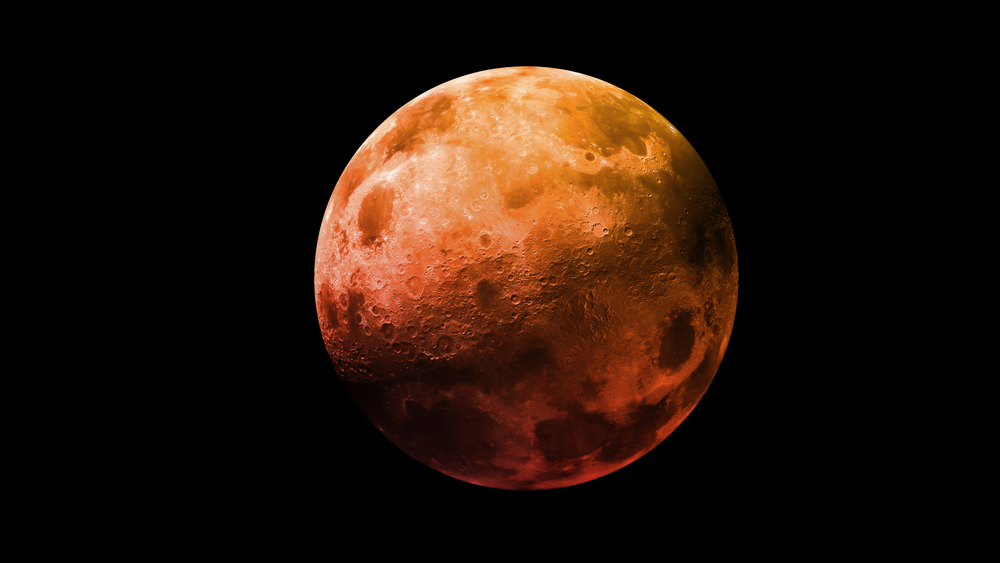
The Moon is tidally locked with Earth, which means it rotates on its axis at the same rate that it orbits our planet. The result is that the same lunar hemisphere always faces Earth. That is why people standing outside at night always see the same familiar side of the Moon, with its large dark plains and recognizable patterns.
The far side is not permanently dark, despite the phrase “dark side of the Moon” becoming deeply embedded in culture. It still receives sunlight. It is simply the side we cannot see from Earth.
That unseen half remained a true mystery until the Soviet Luna 3 spacecraft sent back the first grainy images in 1959. Since then, robotic explorers and orbiters have dramatically improved our understanding of the region. Missions from multiple countries have mapped it, photographed it, and even landed there. China’s Chang’e missions and India’s recent lunar efforts have both contributed to that broader picture.
So no, the far side is not unknown in a scientific sense.
But it is still largely unknown in a human sense.
That distinction is what Artemis II has brought back into focus. For decades, space exploration has become increasingly robotic, efficient, and remote. That has produced extraordinary science, but it has also created a subtle emotional distance. Artemis II narrows that distance again. It allows people on Earth to imagine not just what machines have seen, but what it must feel like for a person to float at a window and watch the Moon’s hidden terrain slide into view.
Science, Symbolism, and the Debate Over What These Photos Really Mean
Not everyone agrees on how scientifically significant these images are, and that debate is actually part of what makes the story interesting.
NASA has emphasized that human observation still has value. The agency has pointed out that astronauts can notice subtle variations in color, texture, and surface relationships in ways that may complement existing imagery. Scientists are reportedly interested in speaking with the crew about what they observed during the flyby, especially because the human eye and brain process visual information differently than cameras do.
That argument is not unreasonable. Human observation has always played an important role in exploration.
At the same time, some experts have offered a more restrained view. Astrophysicist Chris Lintott, for example, argued that the real power of these images may be more artistic and cultural than scientific. Robotic missions have already mapped much of this terrain in impressive detail. From a purely data-driven standpoint, Artemis II is unlikely to overturn lunar science just because astronauts looked out the window.
And honestly, that is fine.
There is a tendency in modern science communication to justify everything in narrow utilitarian terms, as if an image or moment only matters if it immediately changes a research paper or reveals a never-before-known geological process. But that is not how exploration has ever worked in the real world.
Some missions matter because they discover. Others matter because they inspire. The best ones do both.
Artemis II may not be rewriting the lunar map, but it is absolutely rewriting the public relationship to deep-space travel. These images are doing something that raw datasets cannot easily do on their own. They are helping people feel the mission.
That matters more than critics sometimes admit.
History offers a useful reminder here. When Apollo 8 astronaut Bill Anders took the famous Earthrise photo in 1968, it did not become iconic because it was the most scientifically useful image ever captured. It became iconic because it changed how people emotionally understood Earth. It made the planet look small, fragile, and shared.
NASA is clearly hoping Artemis II produces at least a hint of that same emotional resonance.
A Very Modern Space Mission, Complete With Dirty Windows and a Toilet Problem

One reason the Artemis II story has felt so accessible is that, alongside the grand rhetoric and beautiful images, the mission has also delivered something refreshingly human: small problems.
That includes a bathroom issue aboard Orion.
Reports emerged that the spacecraft’s toilet system was not operating at full capacity, apparently due to a possible ice blockage affecting how urine was flushed overboard. The astronauts were instructed to rely more heavily on backup urine collection bags while engineers monitored the issue. NASA stressed that the situation was manageable and that the crew was doing fine.
If anything, the story only made the mission feel more real.
There is something grounding about the fact that while humanity is celebrating first-ever views of the Moon’s far side, astronauts are also still dealing with the same awkward logistical realities that come with putting human bodies in a tiny spacecraft and sending them hundreds of thousands of miles from home.
Then there were the windows.
NASA said the crew became so enthusiastic about pressing up close to look out at Earth and the Moon that the Orion windows actually got dirty enough for astronauts to ask Mission Control how to clean them. That tiny detail may end up being one of the most memorable parts of the mission.
Why? Because it is impossible not to picture it.
Four astronauts, deep in space, crowding around a window like tourists on the best flight of all time.
It is exactly the kind of detail that strips away abstraction. It reminds people that this is not just a mission patch, a technical briefing, or a set of polished NASA graphics. It is four actual people staring out into the universe, trying to take it all in before the moment passes.
And perhaps that is the most relatable thing space travel has produced in years.
Why These Images Matter Beyond Space Fans

It would be easy to assume that only dedicated space enthusiasts care about something like the Orientale Basin. But the reaction online suggests otherwise.
These images have spread widely because they tap into something broader than astronomy. They arrive at a moment when a lot of people feel overwhelmed by the speed, noise, and repetition of modern life. Most days, the internet serves up the same emotional cycle in different packaging: outrage, distraction, anxiety, exhaustion.
Then suddenly, in the middle of all that, a spacecraft sends back an image from the far side of the Moon.
And for a moment, the scale changes.
That does not solve anything, obviously. It does not lower rent, fix politics, or make anyone’s inbox less unbearable. But it does something subtler. It interrupts the usual rhythm of attention and replaces it with perspective.
That has always been one of space exploration’s quietest gifts.
It reminds people that the world is bigger than the algorithm. Bigger than the daily panic cycle. Bigger than whatever pointless argument is currently consuming everyone’s energy for six hours before being replaced by the next one.
And because Artemis II is a crewed mission, that perspective feels more intimate than robotic imagery alone often can. These are not abstract machine eyes sending home distant scans. These are human beings standing in for all of us, looking at a place most people will never go.
That is why the photographs feel less like technical artifacts and more like postcards from the edge of possibility.
Artemis II Is Really About What Comes Next

For all the excitement around the photos, Artemis II is ultimately not just about this one flyby.
It is a test mission, and a crucial one.
NASA is using it to prove systems, operations, communications, and crew performance ahead of more ambitious Artemis missions to come. The long-term goal is not simply to circle the Moon for dramatic imagery. It is to build toward a sustained human return to the lunar surface, including future landings near the Moon’s south pole.
That is part of why the mission carries so much symbolic and political weight. Artemis is not happening in a vacuum. It exists within a new era of global space competition, with the United States, China, private companies, and other international partners all pushing toward a future where the Moon is no longer just a destination for flags-and-footprints nostalgia.
It is becoming a strategic frontier again.
That can sound cold or geopolitical, and some of it absolutely is. Space agencies do not operate outside politics. Funding, prestige, international competition, and national priorities all shape what gets built and launched.
But there is also something undeniably hopeful in the idea that after decades of drift, humanity is seriously building its way back out there.
Artemis II is proof that this is no longer just a concept slide in a NASA presentation. It is happening now, with real crews, real hardware, and real milestones.
And if this mission succeeds, its most lasting contribution may not be a single image or quote. It may be the fact that it makes the next steps feel believable.
The Real Reason People Can’t Look Away
There is a temptation to overcomplicate why moments like this resonate so deeply.
But maybe the explanation is simpler than all the analysis.
Humans still care about firsts.
Even now. Even after centuries of maps, satellites, screens, and simulation. Even after becoming so accustomed to constant content that very little feels truly new anymore.
When NASA says the Artemis II crew has seen part of the Moon in a way no human eyes ever have before, people instinctively understand why that matters. Not because it turns the Moon into a mystery again, but because it proves that wonder still survives familiarity.
We know more about the universe than any civilization in history. And yet there are still moments when the right angle, the right mission, and the right human presence can make the cosmos feel startlingly fresh again.
That is what this story is really about.
Not just a basin. Not just a photograph. Not just a headline built for social media.
It is about the fact that even in 2026, there are still views waiting for us.
And for a few quiet seconds, somewhere beyond the Earth, four astronauts got to be the first to see one.