
Your cart is currently empty!
Lawmakers Call For 25th Amendment Against Donald Trump As Iran Threat Sparks Outrage
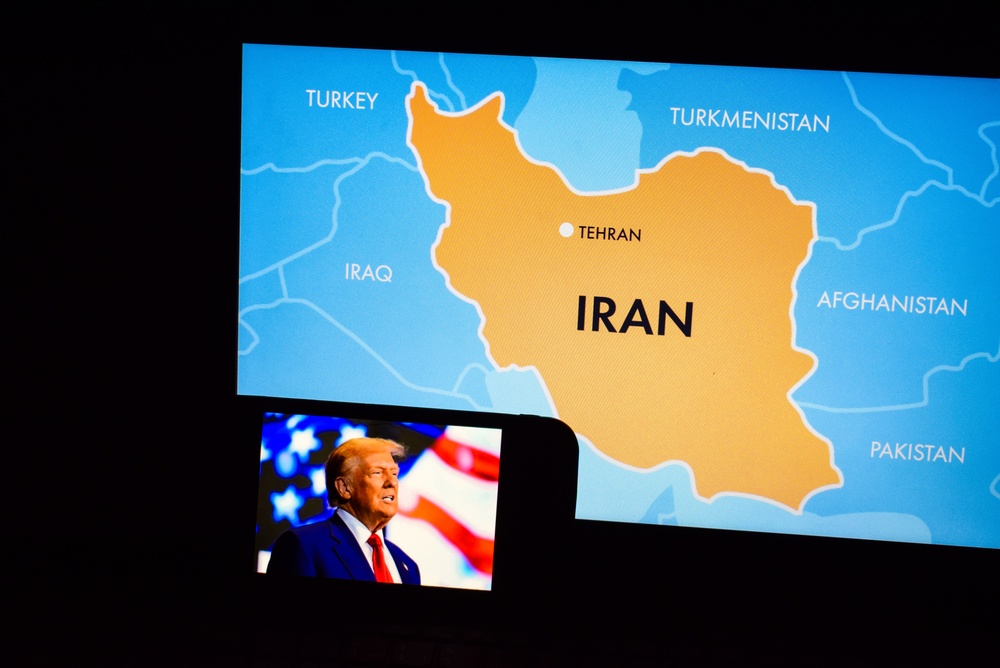
Donald Trump’s latest threat toward Iran has not only intensified concern over the war itself, it has also pushed one of the most serious constitutional questions in American politics back into public view. After the President posted an Easter Sunday message threatening to strike Iranian power plants and bridges unless the Strait of Hormuz was reopened, the backlash moved far beyond the usual partisan outrage cycle. Critics did not simply call the statement reckless or inflammatory. Instead, some lawmakers, former officials, and commentators began openly asking whether the President’s conduct had crossed into territory that should trigger the 25th Amendment, the constitutional mechanism designed to deal with a President who may be unable to carry out the duties of office.
Contents
show
That is a dramatic threshold to even discuss, which is why this moment has landed so heavily. For many Americans, the 25th Amendment is something they have heard referenced during moments of political crisis without ever fully understanding how it actually works. But the renewed calls surrounding Trump are not emerging in a vacuum. They come amid rising alarm over the widening conflict with Iran, the humanitarian consequences of military escalation, and the fear that decisions with global consequences are being shaped by rhetoric that many critics believe is increasingly unstable. Whether the amendment is realistically on the table or not, the fact that it is being discussed again tells its own story about how serious this political moment has become.
𝐃𝐨𝐧𝐚𝐥𝐝 𝐉. 𝐓𝐫𝐮𝐦𝐩 𝐓𝐫𝐮𝐭𝐡 𝐒𝐨𝐜𝐢𝐚𝐥 𝐏𝐨𝐬𝐭 𝟎𝟖:𝟎𝟔 𝐀𝐌 𝐄𝐒𝐓 𝟎𝟒.𝟎𝟕.𝟐𝟔 pic.twitter.com/ntXcaNXpg4
— Commentary Donald J. Trump Posts From Truth Social (@TrumpDailyPosts) April 7, 2026
Why the 25th Amendment is back in the spotlight
The immediate reason for the backlash was Trump’s own language. In the Easter Sunday post that set off the latest firestorm, he wrote: “Tuesday will be Power Plant Day, and Bridge Day, all wrapped up in one, in Iran,” before adding, “There will be nothing like it!!! Open the Fuckin’ Strait, you crazy bastards, or you’ll be living in Hell – JUST WATCH!” The wording was explosive on its own, but what made it more alarming to critics was the nature of the targets he appeared to be threatening. Power plants and bridges are not abstract military concepts. They are pieces of civilian infrastructure that ordinary people rely on to live, travel, work, and survive.
That is why the political reaction escalated so quickly. Sen. Chris Murphy was among the most outspoken voices, writing, “If I were in Trump’s Cabinet, I would spend Easter calling constitutional lawyers about the 25th Amendment. This is completely, utterly unhinged. He’s already killed thousands. He’s going to kill thousands more.” In a separate response, Murphy added, “Even blowing up a fraction [of Iran’s bridges and power plants] will kill thousands of innocent people who work in those power plants and travel on the nation’s roads. That’s also a war crime.” He then pressed the point further, asking, “And for what? To force Iran to open the Strait of Hormuz WHICH WAS OPEN BEFORE TRUMP STARTED BOMBING IRAN??? This is pure insanity. It won’t work. It will just permanently stain America. GOP leaders should call Congress back into session this week to end this war.”
Other lawmakers echoed that alarm almost immediately. Rep. Yassamin Ansari wrote, “The 25th Amendment exists for a reason. The President of the United States is a deranged lunatic, and a national security threat to our country and the rest of the world.” Rep. Melanie Stansbury posted, “The emperor has no clothes. Time for the #25thAmendment. Congress and the Cabinet must act.” The message coming from Trump’s critics was clear. This was not being framed as just another outrageous Trump moment. They were arguing that his conduct raised a deeper question about whether he could be trusted with the powers of the presidency at a moment of international crisis.
🚨 TRUMP: "This is a critical period… We’re giving them until tomorrow, 8:00 pm Eastern Time — and after that, they’re going to have no bridges. They’re going to have no power plants. Stone ages." pic.twitter.com/FZQXeDrHY0
— Breaking911 (@Breaking911) April 6, 2026
What the 25th Amendment actually is
The 25th Amendment to the U.S. Constitution exists to address one of the most important practical questions in government: what happens if a President dies, resigns, becomes incapacitated, or is unable to carry out the office. It was ratified in 1967 after years of concern about how vague the Constitution originally was on presidential succession and incapacity, especially after the assassination of John F. Kennedy in 1963 exposed how uncertain the country could become during a national emergency.
The amendment is divided into four sections. The first says that if a President dies or resigns, the Vice President becomes President. The second allows a President to nominate a new Vice President if that office becomes vacant, subject to congressional approval. The third gives a President the power to voluntarily hand over authority temporarily, usually for medical reasons. That has happened several times in modern history during surgeries or procedures. The fourth section is the one now being discussed in relation to Trump, and it is by far the most dramatic and controversial.
Section 4 allows the Vice President and a majority of the Cabinet to declare that the President is “unable to discharge the powers and duties of his office.” If they do that, the Vice President immediately becomes Acting President. This part of the amendment was created for moments when a President cannot or will not acknowledge incapacity. It is not designed as a punishment for unpopular decisions or offensive rhetoric. It exists for situations where the people closest to presidential power believe the President is no longer able to function in the role safely and competently.
Why Section 4 is such a big deal
The reason Section 4 gets so much attention whenever it is mentioned is because it is one of the most extraordinary emergency tools in the American constitutional system. It is not impeachment, and it is not a routine political process. It is a direct mechanism for sidelining a sitting President on the grounds that he is unable to perform the office. That makes it legally serious, politically explosive, and institutionally destabilizing all at once.
One of the biggest reasons it remains so controversial is that the Constitution never clearly defines what “unable” means. In obvious cases, such as a coma or severe medical crisis, the issue is easier to understand. But when people begin applying that word to behavior, judgment, mental stability, or decision-making, the situation becomes much murkier. That is why Section 4 has always existed in a gray area. It is available in theory, but in practice, using it would require officials to make a deeply consequential judgment call about a President’s capacity.
That ambiguity is exactly what is driving today’s debate. Trump’s critics are not merely saying they dislike his foreign policy or his tone. They are arguing that his threats, his messaging, and the scale of what he appears willing to do are signs of something more dangerous. Whether that is enough to meet a constitutional threshold is another matter entirely, but the reason the conversation is so intense is because it sits at the intersection of law, politics, war, and presidential power.
Has the 25th Amendment ever been used before?
Yes, but not in the way people usually imagine when they hear it invoked in a political crisis. The 25th Amendment has been used before, but almost always in orderly, practical, and temporary situations rather than as a tool to remove a President against his will. In other words, the amendment itself is not unusual. What would be unusual is using Section 4 to challenge a sitting President’s fitness while he is actively resisting that move.
Several parts of the amendment have already been used in American history. Section 2 was used when Gerald Ford was appointed Vice President after Spiro Agnew resigned, and again after Ford became President following Richard Nixon’s resignation. Section 3 has also been used multiple times when Presidents temporarily transferred power for medical procedures. Ronald Reagan did it during surgery. George W. Bush did it during colonoscopies. Joe Biden also temporarily transferred power to Kamala Harris during a medical procedure.
What has never happened is the involuntary use of Section 4. No Vice President and Cabinet majority have ever formally declared a sitting President unable to discharge the office. That means if it were ever attempted, it would be a constitutional first. It would not just be a major political event. It would become one of the most consequential institutional confrontations in modern U.S. history.
How Section 4 would actually work if anyone tried to use it
A lot of people talk about the 25th Amendment as if Congress could simply vote to activate it, but that is not how the process works. The first step does not happen in the House or Senate. It begins inside the executive branch. That is one of the biggest reasons the amendment is so difficult to use in real life, especially against a President who still has loyalists around him.
For Section 4 to be invoked, Vice President J.D. Vance and a majority of Trump’s Cabinet would need to sign a written declaration stating that the President is unable to discharge the powers and duties of the office. That declaration would be sent to the Speaker of the House and the President pro tempore of the Senate. At that moment, the Vice President would immediately become Acting President. Trump could then challenge that declaration and insist he is fit to serve. If he did, Vance and the Cabinet would have four days to contest him again.
If that dispute continued, Congress would then have to settle it. And this is where the bar becomes incredibly high. Both the House and the Senate would need a two-thirds vote to keep Trump from reclaiming his powers. That means even if the Vice President and Cabinet somehow broke with him, lawmakers would still need overwhelming bipartisan support to sustain the move. That is why most analysts view the amendment as legally possible but politically very unlikely. The threshold is enormous, and the institutional fallout would be historic.
Why so many people believe it is unlikely even now
The biggest obstacle to Section 4 has always been the same one: the people who would need to trigger it are usually people whose careers, influence, and political futures are tied directly to the President. Cabinet members are not outside referees. They are appointees selected by the President himself. That means invoking the amendment would require not just concern, but a level of internal revolt that almost never happens in modern administrations.
Even if some officials were privately disturbed by Trump’s conduct, acting on that concern would come with enormous consequences. It would almost certainly be framed by Trump and his allies as an attempted coup from inside the administration. It would create immediate constitutional chaos, intensify public distrust, and plunge Washington into one of the most volatile crises in recent memory. That is before even getting to the challenge of securing the congressional supermajorities needed to make it stick.
This is why some observers argue that while the 25th Amendment gets the most dramatic headlines, it is often not the most realistic path for confronting a President seen as dangerous or unstable. In practice, mechanisms such as congressional oversight, war powers resolutions, public pressure, and eventually elections are far more likely to shape the outcome. The amendment remains the emergency option people point to when they believe the normal guardrails are failing, but history shows how hard it is to turn that conversation into action.
Why this debate matters beyond Trump himself
What makes this moment important is not just what it says about Donald Trump, but what it reveals about the American presidency itself. The office has accumulated enormous power over war, diplomacy, and emergency action, often with limited real-time restraint. In a crisis, a President can make statements or threats that shake markets, escalate military tensions, and put millions of lives at risk before the political system has fully reacted.
That is why debates like this tend to hit a nerve. They force Americans to confront an uncomfortable reality: the Constitution provides tools for emergencies, but many of those tools depend on human judgment, institutional courage, and people inside power structures being willing to act. A written amendment cannot save a democracy on its own if the people responsible for using it refuse to do so.
The renewed focus on the 25th Amendment also shows how much the public is wrestling with the boundaries of acceptable presidential behavior. Every time the amendment resurfaces in the national conversation, it is a sign that many people feel the standard political mechanisms are no longer enough to contain what they are watching. Whether one agrees with that assessment or not, the fact that the question keeps returning is itself a warning sign about how fragile public trust in institutions has become.