
Your cart is currently empty!
Melania Trump’s Public Image Revisited: What Recent Polling Reveals
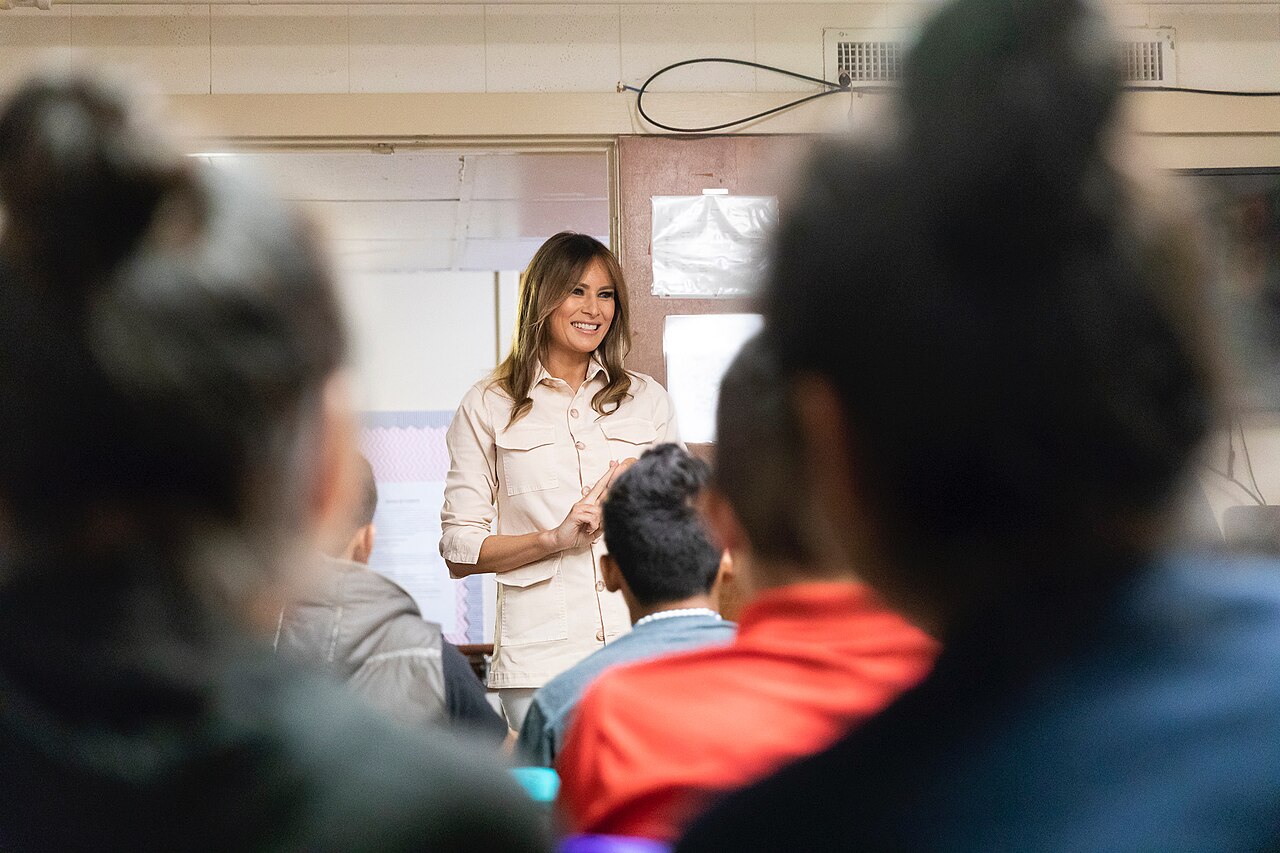
The role of a first lady has always occupied a unique space in American public life, part ceremonial, part political, and deeply personal. For Melania Trump, that role has been shaped not only by her own preferences for privacy but also by the broader, often polarizing political environment surrounding her husband’s presidency.
Contents
show
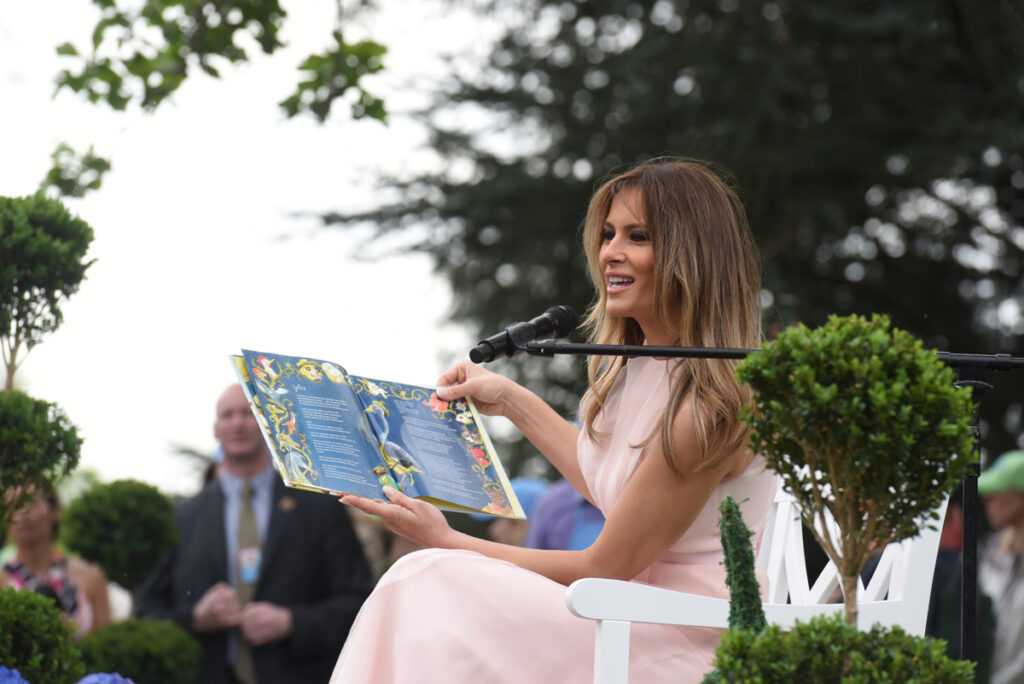

Recent polling data offers a revealing snapshot of how Americans perceive her today. While the country remains sharply divided on President Donald Trump, attitudes toward Melania appear to follow a different, though still complex, trajectory that reflects both skepticism and subtle shifts over time.
A Life Before the White House
Long before entering one of the most scrutinized roles in public life, Melania Trump’s story began far from Washington, D.C. Born Melanija Knavs in Sevnica, a small town in what was then Yugoslavia, she grew up in modest, state-funded housing.
Her early ambitions were rooted in fashion. At just 16, she was discovered by a photographer, launching a modeling career that took her across Europe. This period marked a transformation not only in her professional life but also in her identity, as she adopted the name, Melania Knauss.
By 1996, she had relocated to New York City, a move that would ultimately define her future. It was there, at a Manhattan party, that she met Donald Trump. Their relationship, marked by a 24-year age difference, culminated in marriage in 2005 and the birth of their son, Barron, the following year.
Reluctance and Reality: Entering the Role of First Lady
Melania Trump’s transition into the role was marked less by public visibility and more by a measured, deliberate approach to its institutional demands. She delayed her move to the White House for several months in 2017 so Barron Trump could finish the school year in New York, a decision that immediately set her tenure apart and signaled a more guarded understanding of the office. Rather than stepping quickly into a highly public East Wing presence, she entered the role gradually, with an emphasis on control, privacy, and family routine.
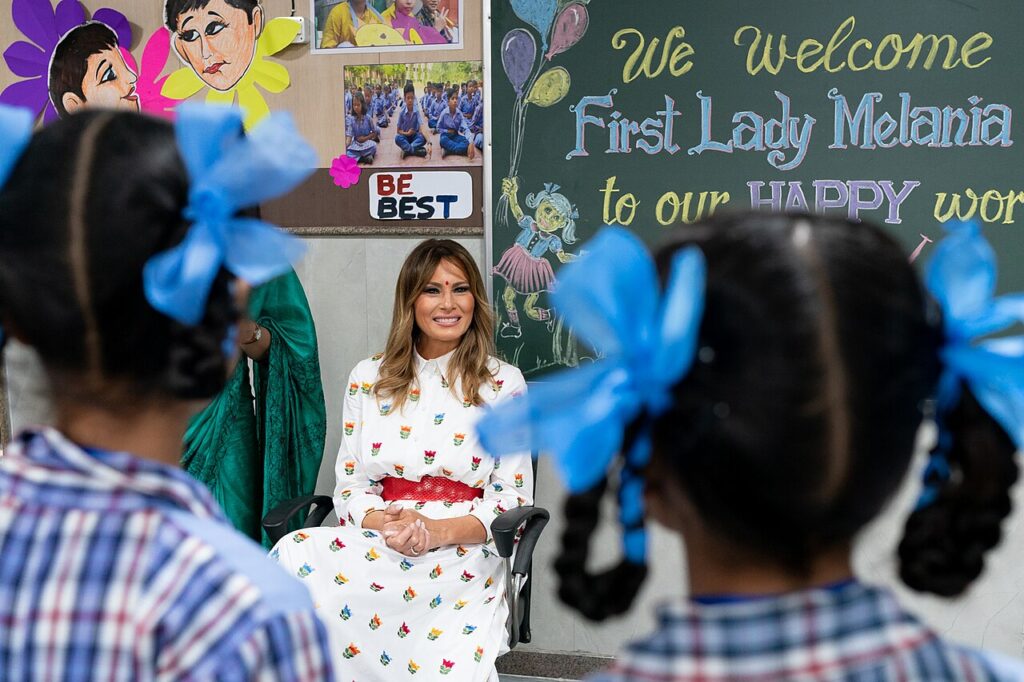
Within the White House, her public agenda remained unusually narrow and carefully managed. Her most clearly defined initiative was Be Best, which focused on children’s well-being, online behavior, and opioid awareness. That limited portfolio reinforced the sense that she was not trying to build an expansive policy driven identity as first lady, but instead establish a contained and selective public role. Her earlier remark, “I could say that I’m the most bullied person in the world,” became closely tied to that effort, giving the initiative a personal frame while also drawing scrutiny about how effectively it connected with the broader political climate around her.
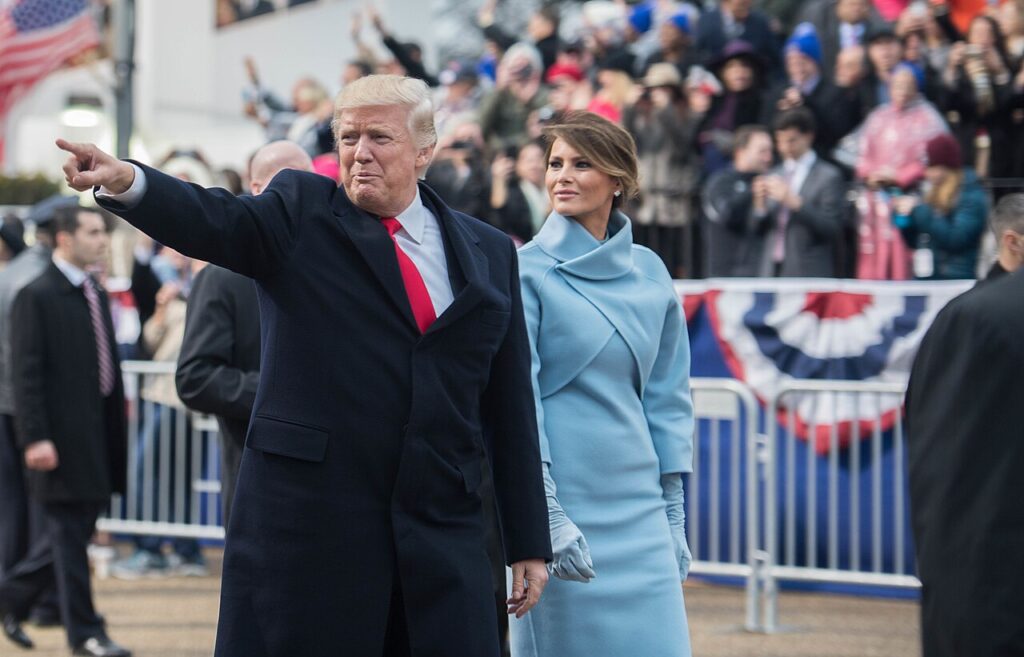

Her overall tenure in the position was defined by restraint. Compared with many recent first ladies, she gave fewer interviews, maintained a more controlled schedule, and appeared less interested in constant public engagement as a measure of relevance. That reserved posture did not remove her from public judgment, but it did shape the terms on which she was evaluated. In practice, she presented a version of the role that was narrower, quieter, and more tightly bounded than many of her predecessors.
A Documentary and the Challenge of Public Image
In early 2025, Melania Trump became the subject of a high-profile documentary, Melania: 20 Days of History, directed by Brett Ratner. With a reported budget of $75 million, the film followed her daily life over a 20-day period as Donald Trump prepared to return to office.
Despite its scale and ambition, critical reception was notably restrained. Writing for The Guardian, critic Xan Brooks described the film as “dispiriting, deadly and unrevealing,” while Vanity Fair’s Joy Press concluded that “all the money in the world can’t make good propaganda.”
Audience responses were similarly divided. The documentary received low ratings on platforms such as IMDb and Letterboxd, suggesting limited resonance with viewers seeking deeper insight. At the same time, a high Popcornmeter score on Rotten Tomatoes indicates that some audiences found value in its portrayal, particularly in its depiction of Melania’s lifestyle and daily routines.
This contrast highlights a recurring theme in public perceptions of Melania Trump: a figure who elicits both curiosity and criticism, often simultaneously.

Public Opinion in Context: Polling and Perception
Polling data from early 2026 provides further clarity on how Melania Trump is viewed by the American public, though the topline figures alone do not fully capture how those opinions are formed. Surveys such as those conducted by YouGov rely on weighted sampling and standardized rating scales to gauge sentiment, meaning that perceptions are shaped not only by individual impressions but also by how respondents interpret the role of a first lady itself. As outlined in YouGov’s own methodology explanations, these ratings often reflect broader attitudes toward visibility, communication style, and perceived authenticity rather than specific policy outcomes.
In this context, Melania Trump’s positioning within public opinion appears to be influenced by a narrower set of evaluative criteria compared to more publicly active first ladies. Respondents are less likely to associate her with legislative advocacy or sustained public campaigns, and more likely to assess her based on symbolic presence, demeanor, and limited public messaging. This creates a distinct evaluative framework in which modest shifts in familiarity or exposure can register as meaningful changes in polling outcomes. The slight improvement reflected in recent data therefore, suggests not a dramatic reappraisal, but a gradual recalibration of how audiences interpret a deliberately restrained public figure.
The Broader Political Backdrop
Any assessment of Melania Trump’s public standing must also be situated within the wider political climate in which it is formed. Public opinion toward presidential spouses is often shaped indirectly through attitudes toward the administration itself, particularly during periods of heightened political division. In this case, perceptions of Melania Trump exist alongside strong and often polarized views of President Donald Trump, creating an environment in which even a comparatively reserved public role does not exist in isolation.
.jpg)
According to a January 2026 AP NORC poll, 40 percent of U.S. adults approved of the president’s performance, while 59 percent expressed disapproval. These figures reflect a deeply divided electorate, and that division inevitably informs how associated public figures are viewed. While Melania Trump’s role is distinct in function and visibility, her public image is nonetheless interpreted within this broader context, where political sentiment can influence perception even in the absence of direct political engagement.
Beyond the Numbers: Interpreting a Complex Public Image
What makes Melania Trump difficult to place in the public imagination is not simply whether she is liked or disliked, but the fact that she has remained comparatively opaque in a role that is usually defined through sustained public storytelling. Many first ladies become legible to the public through speeches, causes, interviews, and repeated appearances that gradually create a coherent civic persona. Melania Trump has often resisted that kind of narrative accumulation. As a result, public understanding of her has tended to form in fragments, shaped by isolated images, brief remarks, and moments of symbolism rather than by a fully developed public record.
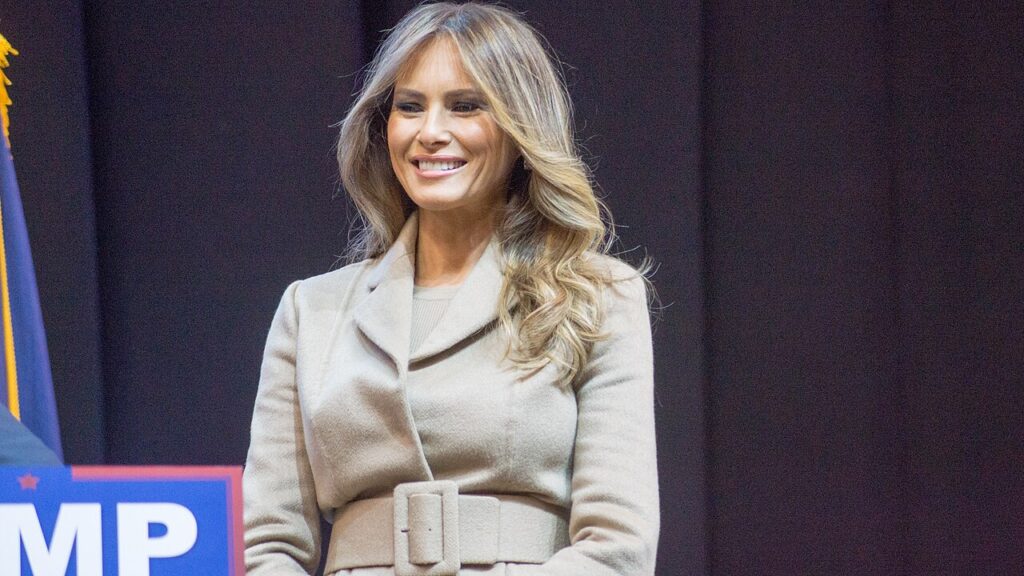

That ambiguity has had a dual effect on her image. For some observers, reserve can read as discipline, composure, or a refusal to perform familiarity for its own sake. For others, the same quality can register as distance, unreadability, or disengagement. The complexity lies in the fact that both interpretations can coexist because her public presence has so rarely offered enough material to decisively settle the question. In that sense, her image has been defined less by a fixed narrative than by an unusual openness to projection, with supporters and critics often drawing very different conclusions from the same limited set of appearances.
This helps explain why discussion of Melania Trump so often moves beyond conventional approval and into questions of meaning. She has occupied one of the most visible positions in American life while maintaining a level of personal remove that remains atypical for the role. That tension has made her less easily classifiable than many of her predecessors and has contributed to a public image that feels unresolved rather than fully established. It is this unresolved quality, more than any single poll number, that continues to shape how she is seen.
A Reflective Perspective
Melania Trump’s journey offers a compelling case study in the complexities of modern public life. Her experience underscores how visibility does not always equate to connection, and how personal inclination can shape, even limit, the impact of a highly visible role.
For readers, her story invites a broader reflection: how do we evaluate public figures whose roles are both symbolic and deeply personal? And to what extent should public perception be shaped by performance, personality, or circumstance?
As the conversation around leadership and representation continues to evolve, Melania Trump’s tenure, past and present, remains a nuanced chapter in the ongoing story of the American first lady.
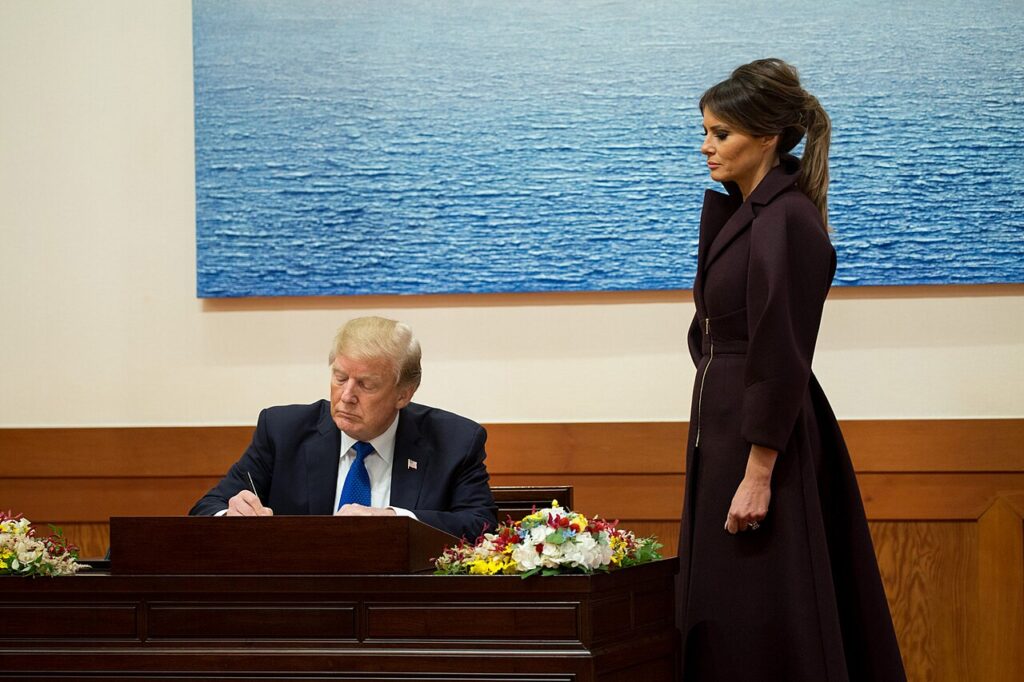
Featured Image from Official White House Photo, Public domain, via Wikimedia Commons
