
Your cart is currently empty!
NASA Released a New Photo to Prove Earth Is Round — Did Flat-Earthers Buy It?
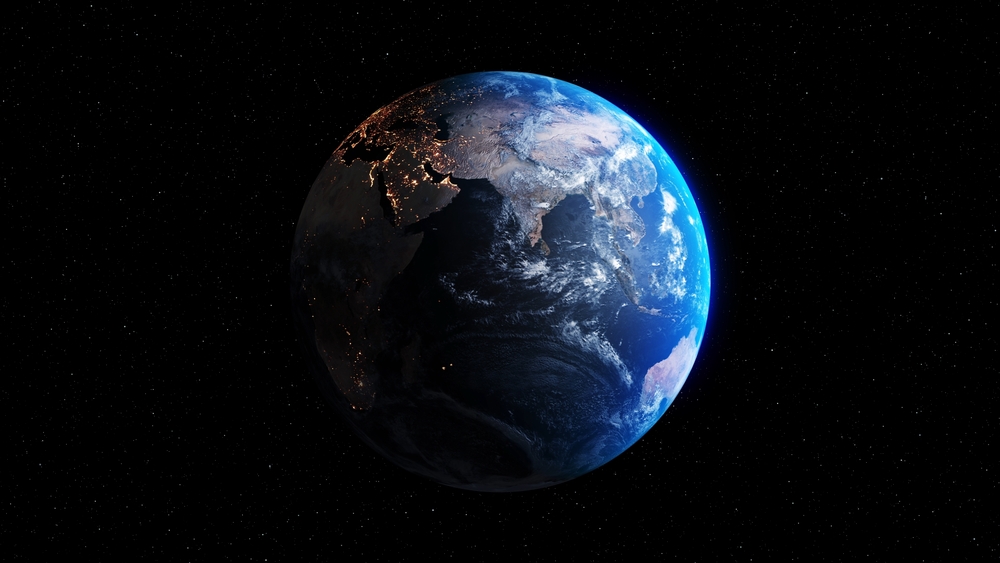
The sight of Earth as a glowing blue ball has long brought people together, but a new photo taken from a million miles away is now sparking a different kind of conversation. This latest view, sent back from a quiet spot deep in space, shows the planet in a single, raw frame. While the photo is incredibly clear, its release has touched off a heated debate over what counts as proof in a world where many have grown tired of being told what to believe.
Contents
show
A New Perspective from a Million Miles Away
NASA recently released a high-resolution image of Earth that has captured the attention of both the scientific community and online skeptics. This photograph was taken by the Deep Space Climate Observatory (DSCOVR) satellite, which sits at a unique parking spot in space called Lagrange Point 1. Located about a million miles from our atmosphere, the satellite has a constant, front-row seat to the sunlit side of the planet.
What makes this specific image different from many others is that it is a “single-shot” capture. Many people are surprised to learn that many satellite images are actually composites, or “stitches,” of several data sets layered together to create a full picture. However, the camera on DSCOVR, known as EPIC, is far enough away to see the entire Earth in one frame. This allows the camera to record the planet’s true curvature, the deep blues of the oceans, and the shifting patterns of clouds without the need for digital assembly.
NASA scientists, including Dr. Jeffrey Newmark, have noted that these images provide a vital look at our home as a single, connected system. By capturing the Earth’s rotation and daily changes from such a great distance, the space agency offers a view that is difficult to ignore. For those who study the planet, this isn’t just a pretty picture; it is a live look at a world that is clearly a sphere. The goal of sharing such clear, unfiltered evidence is to provide a grounded reality that anyone with an internet connection can see for themselves.
A Crisis of Trust, Not Optics
Despite the clarity of the latest photograph, the reaction from the flat Earth community suggests that visual evidence alone is rarely enough to shift deeply held beliefs. Within hours of the image’s release, social media forums were filled with claims that the photo was simply a high-tech CGI creation. This highlights a significant challenge in modern communication: when trust in institutions is low, even the most direct evidence can be dismissed as a fabrication.
Psychologists who study belief systems explain that this resistance is often rooted in a desire for community and a sense of having “secret knowledge.” For many skeptics, questioning the shape of the Earth is less about the science itself and more about a broader distrust of authority. When a new photo is released by a government agency like NASA, it is often viewed through a lens of suspicion rather than curiosity. Experts note that once a person adopts a worldview that includes a large-scale cover-up, every new piece of evidence is simply reframed as part of the deception.
Dr. Karen Douglas, a professor of social psychology at the University of Kent, has researched why these theories persist. She points out that people often turn to these beliefs to feel more secure or to find clarity in a complex world. Because the belief is tied to a person’s identity and their social circle, letting go of it would mean losing more than just a theory; it would mean losing a sense of belonging.
The End of “Stitched” Photos
The original Blue Marble photo taken by the Apollo 17 crew in 1972 remains one of the most famous images in human history. For decades, it was the gold standard for showing Earth as a fragile, floating marble. However, because it was taken with a handheld camera on film, skeptics often argued it was a product of its time. They suggested a single moment caught on film could not be easily verified or repeated by the public.
Today, technology has moved far beyond film. The DSCOVR satellite does not just take one photo and stop; it sends back a constant stream of data. Because it is positioned at a point where the gravity of the Earth and the Sun balance out, it can stay in a fixed position relative to our planet. This allows it to take a full-disk photo every few hours. This frequency makes it much harder to claim that the images are being painstakingly edited or faked in a laboratory.
The transition from grainy film to high-definition digital data is a leap in transparency. While the 1972 photo was a rare gift brought back by astronauts, the EPIC camera provides what is essentially a live feed of our world. This level of consistency is designed to build trust. When anyone can log onto a NASA website and see the clouds moving across the Pacific Ocean in near real-time, the argument for a global cover-up becomes much more difficult to maintain. By making the data accessible and constant, scientists hope to show that the spherical Earth is not a static idea from the past, but a living reality happening right now.
Challenging the “Fisheye” Defense
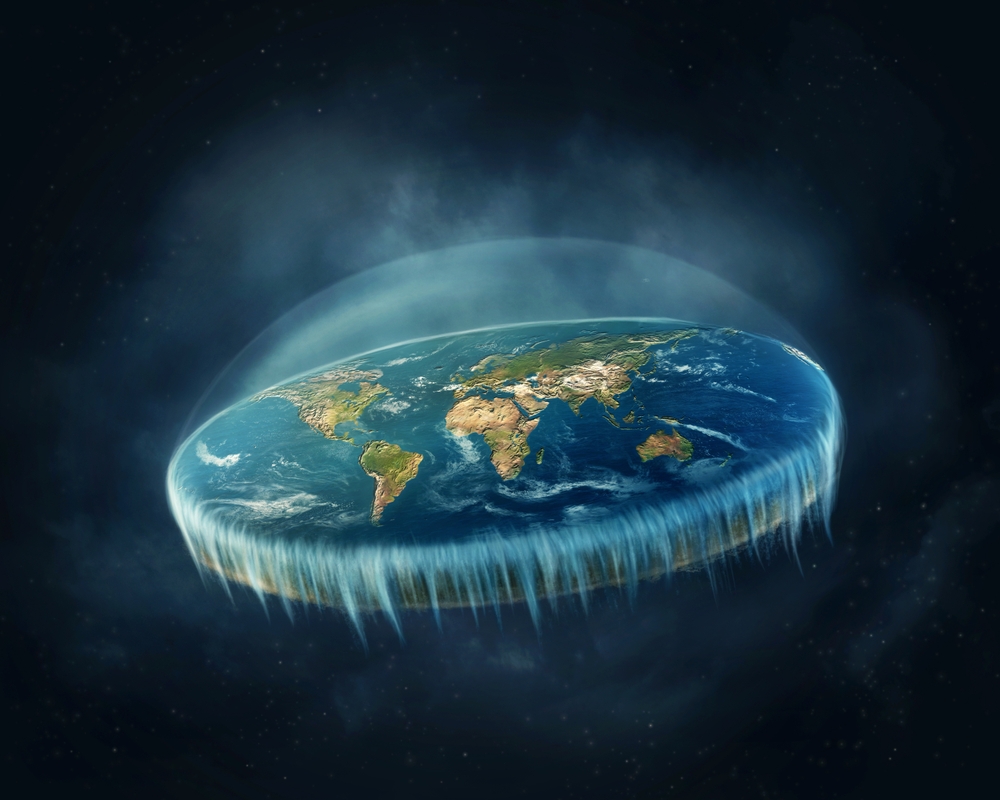
One of the most common arguments against Earth photography is the use of wide-angle or “fisheye” lenses. Skeptics often claim that these lenses artificially curve the horizon, creating the illusion of a sphere where none exists. This argument is frequently used when discussing photos taken from the International Space Station or high-altitude balloons, which are relatively close to the Earth’s surface. However, the optics of the DSCOVR satellite provide a different set of facts that are much harder to dispute.
Because the DSCOVR satellite is a million miles away, the EPIC camera uses a very narrow field of view telescope. At such a massive distance, the Earth appears small enough in the frame that a wide-angle lens is not necessary. Instead, the camera captures the planet with almost perfectly parallel light rays. This means the curvature seen in the photo is the actual geometric shape of the planet, not a distortion caused by a curved lens. This technical distinction is crucial because it removes one of the primary “tools” skeptics use to dismiss NASA’s findings.
Data from the DSCOVR mission is also cross-referenced with other international satellites, such as those from Japan and Europe. When multiple independent agencies from different countries record the same weather patterns and cloud formations at the exact same time, the theory of a coordinated global hoax becomes statistically improbable. For scientists, this isn’t just about winning an argument; it is about the integrity of the data used to track climate change and solar storms. By providing a view that relies on simple, long-distance physics rather than complex digital manipulation, NASA offers a perspective that is as scientifically robust as it is visually clear.
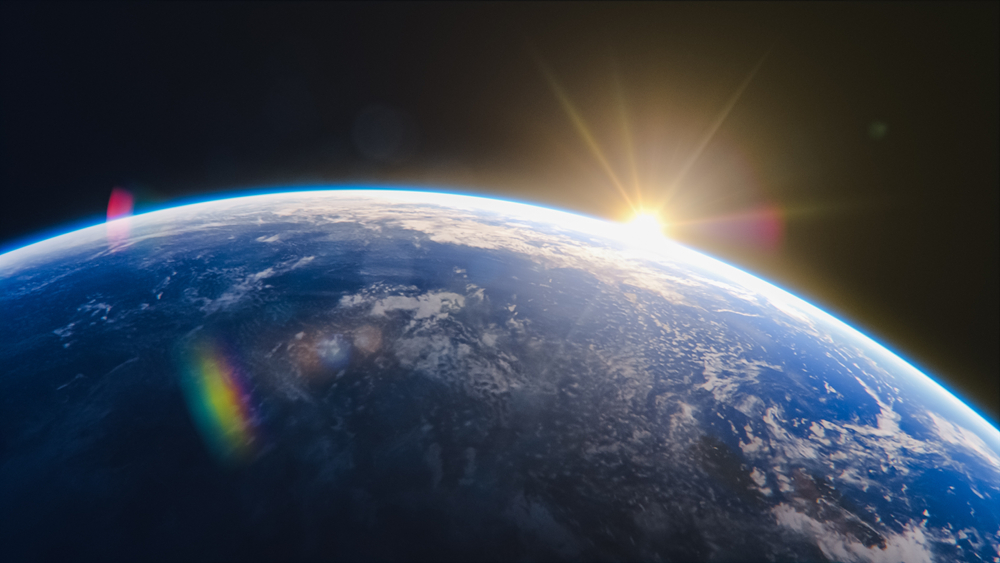
The latest DSCOVR image is less about winning an internet argument and more about offering a shared window into the world humanity inhabits. In a time when it feels harder than ever to agree on what is real, having access to raw, direct data serves as a quiet but powerful tool. NASA provides these high-resolution views not to force a point, but to allow any observer to witness the planet’s behavior in real time.
The real value of this conversation goes beyond the shape of the Earth. It is a lesson in how truth is processed in a digital world. While a single photo might not change the mind of a committed skeptic, it provides a stable point of reference for the general public. By moving away from speculation and toward direct observation, society can start to build a common understanding of the planet.
Taking a moment to look at the Earth from such a vast distance is an invitation to step back from daily noise and reflect on the human place in the universe. It shifts the focus away from proving a point and toward protecting the life this planet supports. By looking at these images with curiosity rather than suspicion, people can grow more empathetic toward the world and their neighbors. It remains a simple call to look up and appreciate the incredible, interconnected beauty of the only home humanity has.