
Your cart is currently empty!
Iran’s Supreme Leader Reportedly Unconscious As Questions Grow Over Who’s Really In Charge
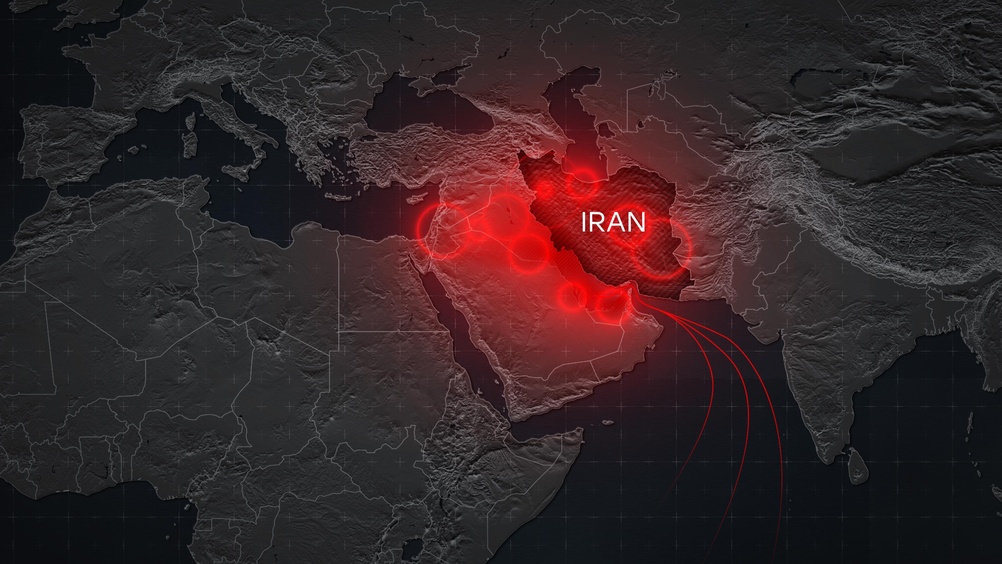
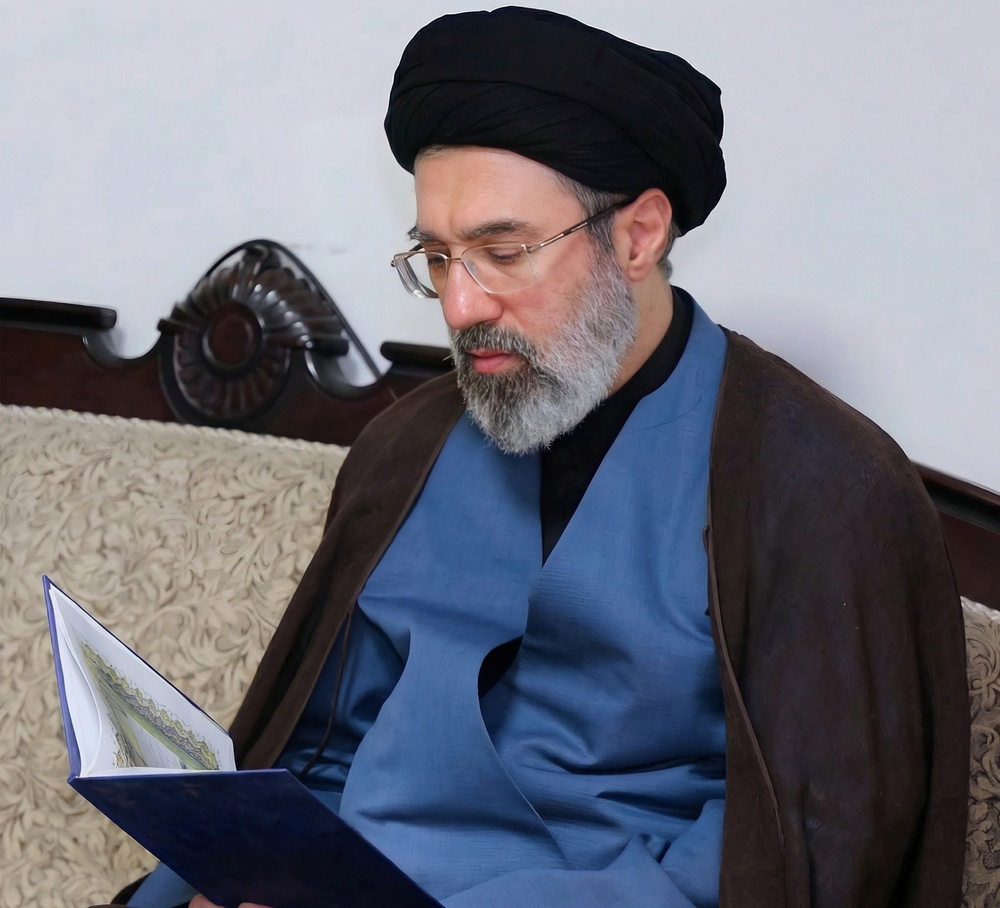
For a government that has spent decades projecting discipline, religious authority, and total control, silence can sometimes say more than any official statement ever could. That is the situation now unfolding in Iran, where growing concern surrounds Mojtaba Khamenei after claims emerged that he is unconscious and, according to an intelligence memo cited in international reporting, “unable to be involved in any decision-making.” At a time when the country is already under extraordinary pressure following war, leadership upheaval, and regional instability, his disappearance from public view has triggered a wave of speculation that is now impossible to contain. What might once have been dismissed as rumor is being taken far more seriously because of the sheer number of unanswered questions that continue to pile up around his condition, his location, and whether he is in any state to exercise power.
Contents
show
The issue here is bigger than one man’s health. In Iran, the supreme leader is not simply a symbolic head of state. The role sits at the very top of the country’s political, military, and religious structure, which means even the suggestion of incapacitation has serious implications both inside the country and far beyond it. Mojtaba Khamenei has not been seen publicly since the strikes that reportedly killed his father, Ali Khamenei, and much of his family, and that absence has only intensified suspicion. Iranian state media has carried written statements attributed to him, including one declaration that read, “I assure everyone that we will not refrain from avenging the blood of your martyrs,” but there has been no convincing public appearance to quiet the speculation. In a region already stretched to breaking point, uncertainty at the top of Iran’s power structure is not just a domestic issue. It is a geopolitical event.
His disappearance has become the story
What has made this story so explosive is not only the severity of the claims, but the fact that Mojtaba Khamenei has effectively vanished from public life during one of the most consequential periods in modern Iranian politics. A man who is supposed to be leading the country through war and crisis has not appeared in any clear, independently verifiable public setting, and that alone has become politically significant. In systems built on tightly managed images of continuity and authority, unexplained absence is rarely treated as a neutral detail. It invites doubt, fuels rumor, and creates the sense that something much larger may be happening behind closed doors.
The most widely discussed claim is that he is receiving treatment in Qom in a “severe” condition. One intelligence-based assessment reportedly stated, “Mojtaba Khamenei is being treated in Qom in a severe condition, unable to be involved in any decision-making by the regime.” That wording is striking because it does not merely suggest he is injured or recovering in private. It implies that the man who is supposed to sit at the center of Iran’s command structure may not be functioning as a leader at all. If that is true, then the issue is no longer just about his health. It becomes a question of state control.
Even before these latest claims, conflicting accounts had already been circulating for weeks. Some reports suggested he had suffered a fractured foot or relatively minor injuries. Others went much further and claimed he had fallen into a coma. The problem for Tehran is that these competing narratives have not been resolved by any strong public evidence. Instead, the silence has allowed every theory to gather momentum, particularly online, where political uncertainty spreads at a speed official institutions can rarely match.
And that is why his absence has become so dangerous for the regime itself. Iran’s leadership structure depends heavily on the perception that authority remains intact no matter what happens on the battlefield. Once that image starts to crack, every speech, every state media segment, and every unexplained gap begins to look less like normal wartime secrecy and more like a cover for internal disorder. That is exactly where this story now sits.
Qom is not just a location, it is a message
The reported detail that Mojtaba Khamenei is being treated in Qom has added another powerful layer to the story because Qom is not just another city on the map. It is one of the most important centers of Shia religious authority in Iran and has long been associated with clerical legitimacy, theological influence, and the ideological foundations of the Islamic Republic itself. If the country’s reported supreme leader is being kept there in secret while the state struggles to convincingly show he is active, then the location carries political meaning of its own.
Qom offers something Tehran cannot always guarantee during wartime and political uncertainty: insulation. It is a place where access can be tightly controlled, where clerical networks remain deeply influential, and where major developments can be managed with a level of secrecy and symbolism at the same time. If Mojtaba is there, then it is entirely possible that officials are not simply dealing with a medical emergency. They may also be trying to contain a legitimacy crisis in the most ideologically sensitive environment available to them.
That is why another reported detail has attracted so much attention, namely the claim that the body of Ali Khamenei is being prepared for burial in Qom and that groundwork may be underway for “more than one grave.” It is the kind of detail that instantly captures public imagination because it suggests planning for outcomes the state has not openly acknowledged. Even if some of these claims remain unverified, they have landed with force because they fit into a wider picture of opacity, fear, and behind-the-scenes maneuvering.
In politics, place matters. Leaders are photographed in carefully chosen settings for a reason. Their presence is staged to project control, continuity, and confidence. When the most important figure in a system disappears into a city like Qom, without transparent explanation and during a regional crisis, the location itself begins to speak. And right now, what it appears to be saying is that Iran may be dealing with something far more serious than it is willing to admit publicly.
The AI video may have deepened suspicion
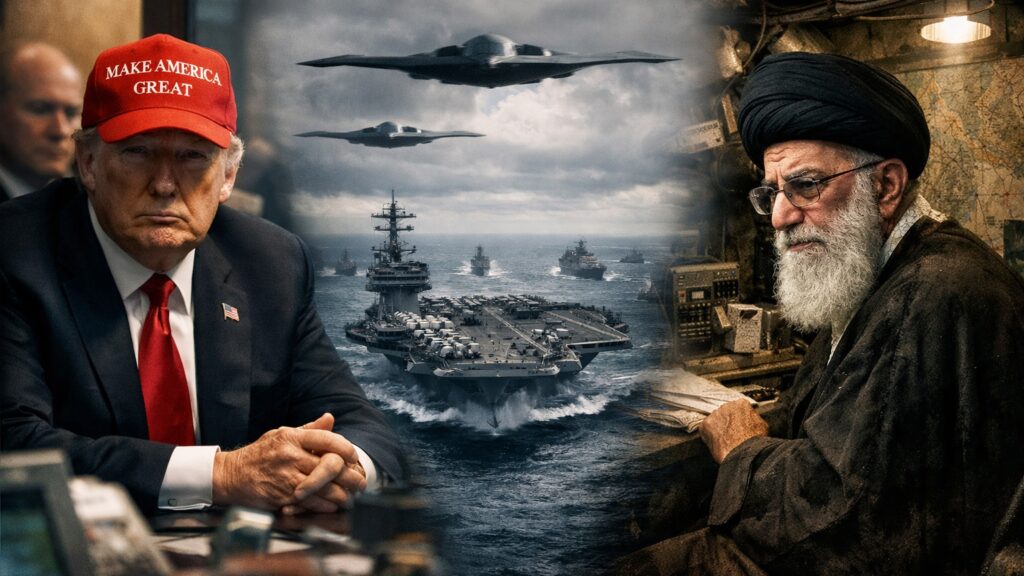
One of the strangest and most revealing details in this story is Tehran’s reported release of an AI-produced video showing Mojtaba Khamenei entering a war room and reviewing a map tied to Israel’s Dimona nuclear site. In another era, a grainy but real clip might have been enough to reassure the public that a leader was alive and engaged. But in a media environment shaped by synthetic visuals, manipulated footage, and instant scrutiny, the use of AI has had the opposite effect. Instead of putting questions to rest, it has made them louder.
That is because propaganda only works when it still feels believable. Once a government begins relying on material that appears constructed rather than authentic, it sends an unintended message of weakness. People do not just look at the image or video itself. They start asking why a real appearance was not possible. Why there was no speech. Why there was no live footage. Why there was no clear evidence that the person in question was actually capable of speaking or functioning publicly. In that sense, the AI clip has become less of a reassurance and more of a political tell.
Iranian officials have reportedly insisted that the new supreme leader remains “in charge” of the country, but that claim is increasingly difficult to accept at face value when it has not been backed by anything stronger than written statements and stylized visuals. In a war setting, governments often control information for strategic reasons, but there is a difference between managing communications and accidentally revealing that you may no longer be able to produce the proof people are asking for.
This matters because credibility is not some soft or secondary political concern. It is central to how states survive moments of crisis. If allies, enemies, markets, and ordinary citizens all begin to suspect that a government is masking a leadership vacuum, then even routine official statements start to lose force. That is where Tehran now seems to find itself. The attempt to look in control may be becoming one of the clearest signs that control is exactly what is slipping.
If he cannot govern, someone else is making the decisions
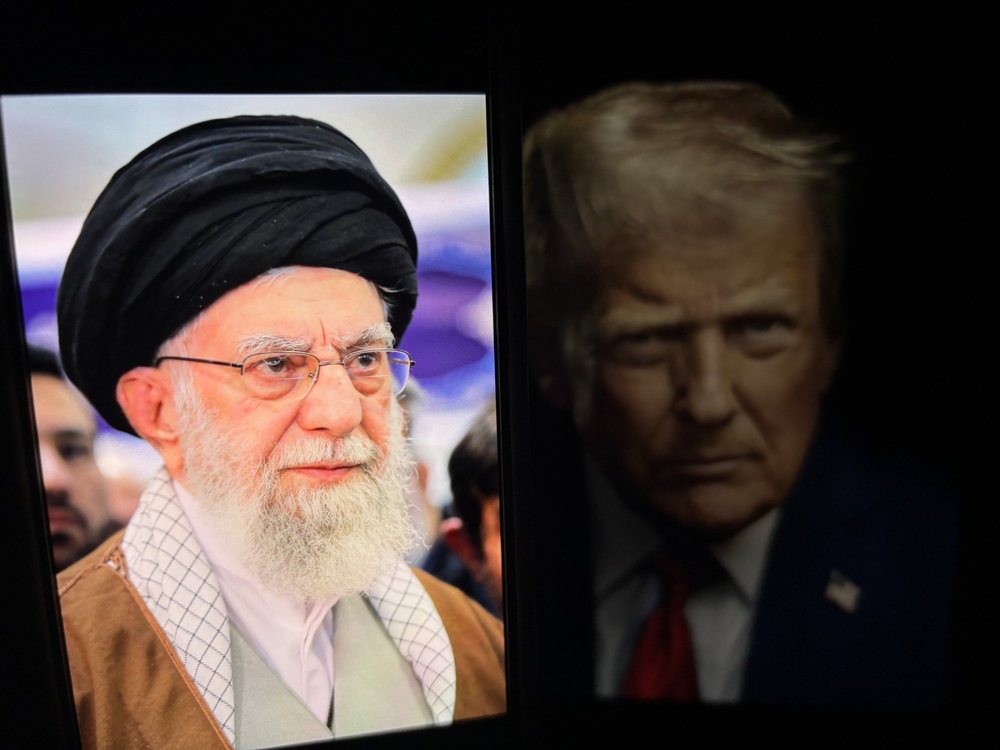
This is the part of the story that matters most politically. If Mojtaba Khamenei is truly “unable to be involved in any decision-making,” then decisions are still being made, just not transparently and not by the person the state claims is in charge. That raises a much more serious question than whether he is alive, conscious, or recovering. It raises the question of who is actually governing Iran at this moment, and under what authority.
In a system like Iran’s, power does not simply disappear when a top figure is incapacitated. It fragments, relocates, and becomes harder to track. Formal institutions may continue to function outwardly, but behind the scenes, influence tends to shift toward those with the strongest security access, religious legitimacy, or control over communications. That means the true centers of power may now lie with senior Revolutionary Guard figures, clerical authorities in Qom, national security bodies, or members of an inner circle managing information and access in Mojtaba’s name.
That kind of arrangement is dangerous not because it guarantees collapse, but because it increases unpredictability. Different factions may not agree on how to handle the war, how aggressively to respond to foreign pressure, or how much truth to reveal to the public. In moments like this, countries do not always become weaker in a simple or obvious way. They often become harder to read, harder to negotiate with, and more prone to internal competition. That can be just as destabilizing as open chaos.
And that is what makes the current uncertainty so consequential beyond Iran’s borders. Foreign governments are not just watching for signs of recovery or decline. They are trying to understand whether the person formally presented as Iran’s leader is actually directing events, or whether the country is now operating through a shadow structure of wartime decision-makers. If the answer is the latter, then every calculation about diplomacy, retaliation, and escalation becomes more complicated and potentially more dangerous.
What this could mean for Trump, Washington, and the region
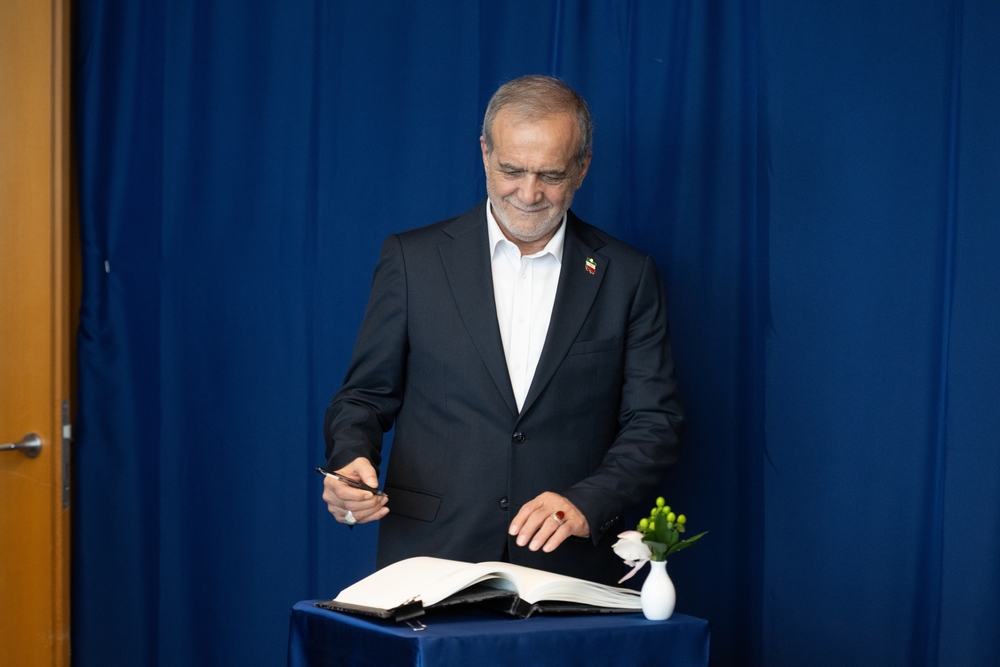
For Donald Trump and the broader American foreign policy establishment, the implications of this story are enormous. If Iran’s top leadership is compromised, some in Washington may see that as strategic leverage. A wounded, secretive, or internally fractured regime can appear vulnerable from the outside, and that perception can shape everything from military signaling to diplomatic posture. There will almost certainly be voices arguing that a weakened leadership structure in Tehran creates an opening to push harder, demand more, and test the limits of what Iran can actually sustain.
But that is only one possible reading, and not necessarily the safest one. A regime with unclear leadership can be more dangerous precisely because it is less coherent. If authority is fragmented, then de-escalation becomes harder to guarantee. Orders may move through multiple layers. Rival factions may compete to prove toughness. Proxy groups may act more independently. The risk is not only that Iran is weak, but that it may be too politically disoriented to control every arm of its own response. That is where instability can quickly turn into miscalculation.
This is especially important in a region where military pressure, energy markets, shipping routes, and alliance commitments all react quickly to uncertainty. Even unconfirmed reports can move strategy. Intelligence leaks shape assumptions. Rumors affect deterrence. Public silence becomes part of the battlefield. Once a leadership crisis enters the conversation, it can alter how enemies behave just as much as how allies do. That is why stories like this should never be dismissed as gossip simply because parts of them remain contested.
For Trump in particular, this kind of development fits neatly into a broader political and strategic narrative that emphasizes strength, deterrence, and the claim that adversaries only understand force. But moments like this can also tempt overconfidence. History is full of examples where governments misread internal weakness in rival states and treated opacity as surrender, only to trigger more dangerous reactions than expected. If Iran’s leadership is truly unstable, that may not make the next move easier to predict. It may make it much harder.
The silence tells its own story
The most revealing thing about this entire situation may not be whether every circulating claim about Mojtaba Khamenei ultimately proves true in full. It may be that Iran, at one of the most tense and consequential moments in its recent history, has not been able to convincingly show the world who is actually in charge. That alone is politically significant. States that are confident in their continuity tend to display it. States that cannot do so tend to invite speculation, pressure, and instability.
There is also a broader lesson here about how modern authoritarian systems function under stress. They often appear strongest when information is most tightly controlled, but that same control can become a weakness when the public begins to suspect that the image no longer matches reality. Once trust in official narratives starts to erode, every missing appearance and every carefully staged communication starts to carry more weight than intended. The silence stops looking strategic and starts looking involuntary.
That is why this story has resonated so widely. It is not simply about injury, illness, or succession. It is about power and whether power in Iran right now is visible, stable, and coherent. So far, the answer does not appear reassuring. Too many details remain hidden. Too many claims remain unresolved. And too much of the public-facing narrative feels designed to buy time rather than settle doubts.
If Mojtaba Khamenei eventually reappears and proves capable of ruling, then this episode will still have exposed just how fragile state credibility can become in wartime. If he does not, then the uncertainty surrounding him may turn out to be one of the defining warning signs of a much larger shift inside Iran. Either way, the silence around him is no longer just an absence. It is the story.
Ali Khamenei, breaking news, Donald Trump, geopolitics, international politics, Iran, Iran latest news, Iran leadership crisis, Iran politics, Iran succession, Iran Supreme Leader, Iran war, Israel Iran conflict, Middle East, Middle East conflict, Mojtaba Khamenei, Mojtaba Khamenei health, Political News, Qom, regime crisis, Supreme Leader Iran, Tehran, US Iran tensions, US Israel strikes, World News