
Your cart is currently empty!
The Secret CIA Tool That Found A Downed Airman In Iran

For a few days, the story sounded like the kind of thing governments only hint at long after the fact. A U.S. airman was down behind enemy lines in southern Iran. Iranian forces were searching for him. The terrain was vast, exposed, and unforgiving. And then, somehow, the United States found him.
Contents
show
By the time President Donald Trump and CIA Director John Ratcliffe appeared before reporters, the rescue had already begun to take on a mythic quality. Trump called it like finding “a needle in a haystack.” Ratcliffe said the missing American had been located while “still invisible to the enemy, but not to the CIA.” According to reporting from the New York Post, the answer may have been a secretive system called Ghost Murmur, a never-before-used intelligence tool that reportedly helped identify the electromagnetic signature of a human heartbeat from extraordinary distance.
If the reporting is accurate, this was not just a dramatic rescue. It was a glimpse into a new era of warfare, one where the line between search-and-rescue, surveillance, and battlefield dominance becomes thinner than ever. It was also a deeply political moment, because the operation landed at the intersection of Trump’s war messaging, intelligence credibility, military innovation, and the public’s uneasy relationship with classified power.
A Rescue Mission That Quickly Became a Political Symbol
The underlying human story is straightforward enough to grip anyone’s attention. An American weapons systems officer, identified publicly only as “Dude 44 Bravo,” reportedly survived after his F-15 was brought down over southern Iran. He is said to have spent roughly two days hiding in a mountain crevice while Iranian forces searched the area and, according to multiple reports, pursued him aggressively.
That alone would have made the mission extraordinary. But the operation became politically charged almost immediately because it unfolded during a wider U.S.-Iran conflict that the Trump administration has framed as proof of American resolve, military superiority, and strategic daring.
Reuters reported that the rescue itself was carried out during a high-stakes operation involving U.S. special forces and significant military risk.
Other reporting, including from Newsweek and the New York Post, painted a picture of a chaotic and dangerous extraction involving multiple aircraft, intelligence coordination, and a narrow window before Iranian forces could close in.
For Trump, the rescue offered more than a battlefield success. It offered a narrative. In modern politics, especially under Trump, singular military episodes often become symbolic tests of leadership. A successful extraction becomes proof of competence. A failed one becomes proof of weakness. That helps explain why the White House briefing focused not only on the bravery of the downed airman, but also on the sophistication and decisiveness of the American response.
That framing matters. Rescue missions are always emotional, but they also carry enormous propaganda value. When a nation can recover its people from hostile territory, it projects power to allies, adversaries, and domestic audiences all at once.
What Ghost Murmur is Alleged to Do
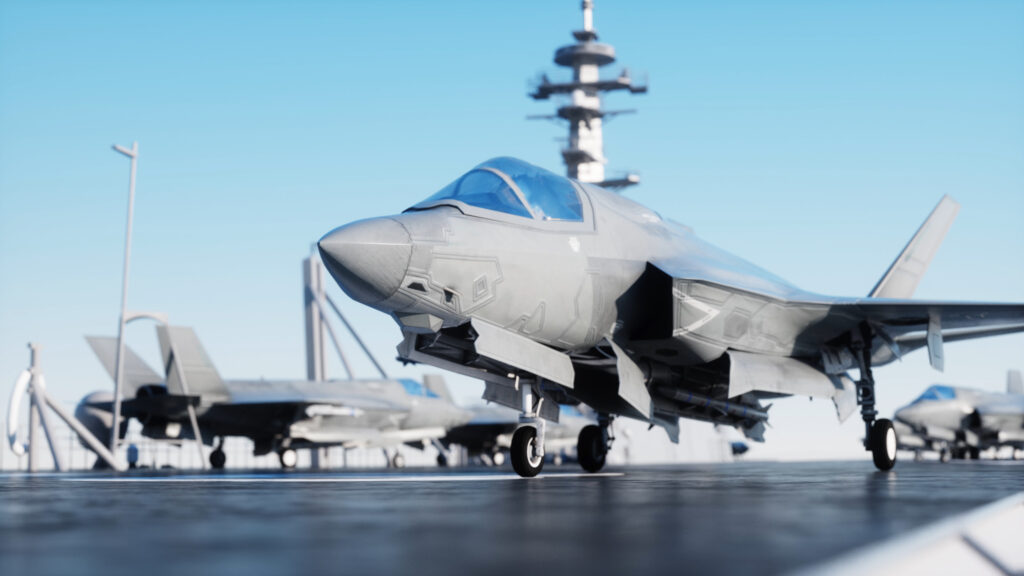
The most startling claim in the reporting is also the one that turns this from a war story into something far bigger.
According to the New York Post, Ghost Murmur uses long-range quantum magnetometry and artificial intelligence to detect the electromagnetic fingerprint of a human heartbeat. In simpler terms, it is described as a system capable of identifying signs of human life at distance by isolating incredibly faint biological signals from environmental noise.
One source quoted by the Post described it this way: it was like hearing a voice in a stadium, except the stadium was a thousand square miles of desert. Another described the terrain in southern Iran as nearly ideal for the tool’s first known operational use because there was low electromagnetic interference, very little human clutter, and strong nighttime thermal contrast.
That last part is crucial. Even in the reports that make Ghost Murmur sound almost supernatural, there are caveats. It is not described as omniscient. It reportedly works best in sparse, low-noise environments. It may require significant processing time. And it appears to have worked not in isolation, but in combination with more conventional search-and-rescue tools, including a survivor locator beacon.
Still, even with those limitations, the implications are staggering.
Normally, detecting heartbeat-related signals is the kind of thing associated with hospital equipment and very close-range sensing. The claim that advances in quantum magnetometry, especially with diamond-based sensors, may now allow such detection at dramatically greater distances suggests a level of sensing capability that feels less like traditional reconnaissance and more like a new category of battlefield perception.
That is why this story has traveled so quickly. Even people who do not follow military affairs instinctively understand what it would mean if governments can locate living humans not just by heat, radio transmission, or movement, but by biological signatures.
Why This Matters Far Beyond One Rescue

There is a temptation to view this story only through the lens of heroism, ingenuity, and relief. Those are all real parts of it. But politically and strategically, Ghost Murmur matters because of what it suggests is coming next.
Military history is full of technologies that begin as narrow solutions to specific battlefield problems and later transform the wider world. GPS was once a military advantage. Satellite imaging was once a state-level privilege. Drones were once niche and exotic. Over time, tools that begin in secrecy often migrate outward, directly or indirectly, into policing, border enforcement, disaster response, and eventually commercial life.
That does not mean Ghost Murmur is destined for civilian use tomorrow. It does mean that any technology capable of identifying a hidden person from a distance raises immediate questions about where the boundaries will be drawn.
In wartime, the case for such a system is emotionally persuasive. If a wounded American is trapped behind enemy lines and a hidden sensing tool can save him, many people will see that as exactly the kind of capability a government should want. And in a narrow sense, they are right.
But history shows that the hardest questions about surveillance do not arise when a tool is saving a life in the desert. They arise later, when institutions decide the same capability could be useful in denser, murkier, more politically contested settings.
Could similar sensing tools one day be used in urban warfare? Border zones? Counterterrorism raids? Hostage situations? Domestic security environments? If a system can eventually detect biological presence without line-of-sight, then debates over privacy, oversight, and abuse are not science fiction. They are inevitable.
That is part of why this story is politically potent. It arrives at a moment when many voters already believe governments and intelligence agencies possess capabilities far beyond what they publicly admit.
Trump’s Role in the Reveal is Part of the Story
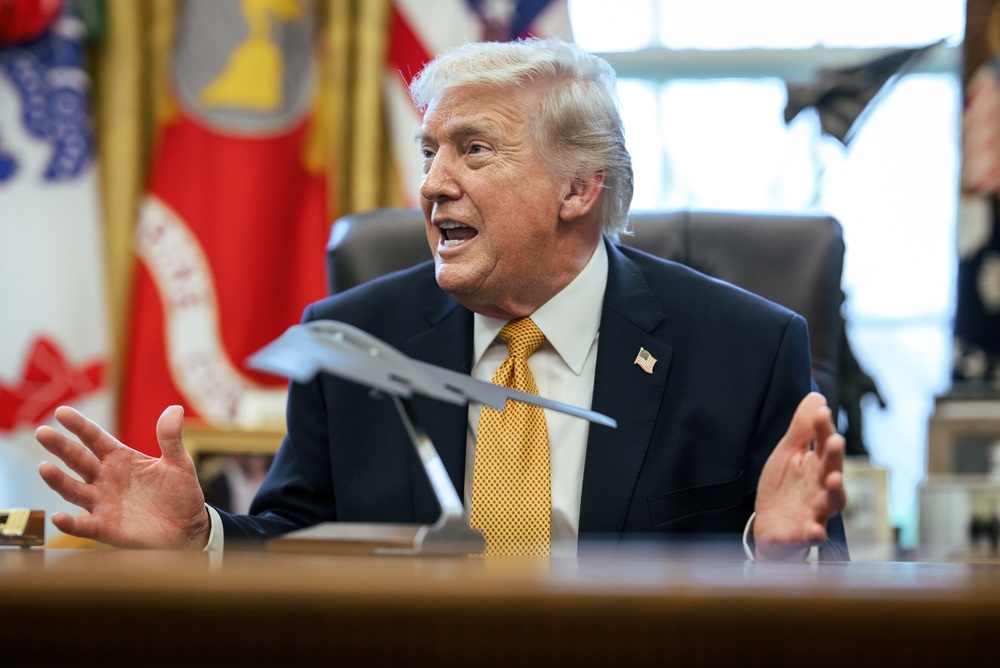
One reason this story has landed so forcefully is because Trump did not present it like a dry intelligence briefing. He presented it like a revelation.
At the White House, he said the CIA found the missing airman from “40 miles away,” though it remains unclear whether that figure referred to an initial detection, a broader tracking radius, or simply his own shorthand for a classified capability. Ratcliffe was more restrained, but his phrasing strongly reinforced the idea that the agency had used something highly unusual to confirm the airman’s survival.
This is a familiar Trump pattern. He has long shown a willingness to speak publicly about military and intelligence capabilities in ways that blur the line between strategic messaging and operational disclosure. That can energize supporters, unsettle rivals, and frustrate officials all at once.
Politically, it also serves a purpose.
Trump’s appeal has often been rooted in the image of decisive command. In moments of military drama, he tends to frame events in ways that emphasize instinct, strength, and elite execution. In that context, Ghost Murmur becomes more than a secret tool. It becomes a symbol of a presidency that wants to project technological dominance and strategic fearlessness.
But that style has risks. When presidents speak too freely about sensitive methods, they can unintentionally expose capabilities, invite countermeasures, or pressure intelligence agencies into a kind of public theater they are not built for.
That may be why so much of the official language around the rescue has remained suggestive rather than explicit. Enough was said to impress. Not enough was said to fully explain.
That ambiguity is politically useful, but it also leaves the public in a familiar place: impressed, unsettled, and unsure what to believe in full.
The CIA, Credibility, and the Return of the Secret State
There is another layer to this story that makes it especially interesting in political terms. It comes at a time when the CIA and wider intelligence community are once again central to how Americans think about power.
For years, the intelligence world has occupied a strange place in U.S. politics. It is simultaneously admired, distrusted, romanticized, and feared. Depending on the moment and the audience, intelligence agencies are portrayed either as the invisible shield protecting the country or as secretive institutions that operate too far from democratic scrutiny.
Ghost Murmur sits squarely in that tension.
On one hand, this story flatters the agency. Ratcliffe’s public comments and the surrounding reporting cast the CIA as highly capable, technologically agile, and mission-focused. According to the CIA’s own public-facing statements in recent months, Ratcliffe has emphasized speed, innovation, and deeper collaboration with private-sector technology partners. If Ghost Murmur is real in the form described, it would fit neatly into that vision of a more technically aggressive intelligence apparatus.
On the other hand, the very secrecy that makes the story compelling also makes it difficult to evaluate. Much of what has been reported comes from anonymous sourcing and partial official hints rather than a formal public accounting. That does not mean it is false. It does mean the public is being asked to absorb a major claim about surveillance capability without the kind of transparency that would allow for meaningful debate.
That is not unusual in intelligence matters. But it is politically significant. Americans are often told to trust that powerful tools are being used wisely, narrowly, and necessarily. History suggests that trust should never be automatic.
The Private-Sector Piece May Be Just as Important

One of the most revealing details in the reporting is the alleged role of Lockheed Martin’s Skunk Works division.
If Ghost Murmur was indeed developed through that kind of public-private defense pipeline, it tells us something important about where national security innovation now lives. Increasingly, the most consequential leaps in surveillance, sensing, AI, and autonomous systems are not emerging solely from government labs. They are being built through partnerships between intelligence agencies, defense contractors, and advanced commercial research environments.
That matters because it changes how power is organized.
When the state’s most sensitive capabilities depend on private engineering ecosystems, the traditional lines between military secrecy, corporate innovation, and democratic accountability become more complicated. Who knows what is being built? Who authorizes its deployment? Who audits its limitations? And how much should the public ever be told before or after it is used?
These are not abstract questions anymore. AI is already reshaping how governments sort information, identify patterns, and make decisions under pressure. Add biological sensing and quantum-adjacent detection claims into that mix, and the result is not just a cooler spy story. It is a preview of a more automated national security architecture.
That may help explain why so many people have reacted to Ghost Murmur with a blend of fascination and discomfort. It sounds ingenious, but it also sounds like the beginning of a world where hidden systems can know more about human presence than most people are ready to process.
The Larger Lesson is More Complicated
There is no need to flatten this story into either pure celebration or pure alarm. The truth is more complicated, and that is what makes it worth taking seriously.
At its most immediate level, this appears to be a remarkable rescue. A downed American survived behind enemy lines. U.S. forces and intelligence operators brought him home. If Ghost Murmur played the role reported, then it may have helped save a life in a situation where minutes and miles mattered.
That should not be dismissed.
But neither should the broader significance. Every era has a moment when a once-unimaginable capability briefly surfaces into public view. Sometimes it is radar. Sometimes it is satellite surveillance. Sometimes it is cyberwarfare. This story may prove to be one of those moments for next-generation sensing.
And when that happens, the first public reaction is often awe. The second should be scrutiny.
Because once a state proves it can do something extraordinary, the real political question is never just whether it can. It is how often it will, under what rules, and who gets to know when the boundaries move.
For now, Ghost Murmur remains more rumor than fully documented doctrine. But if even half of what has been reported is true, then the rescue in Iran may be remembered not only as a daring military success under Trump, but as the moment the public got a fleeting look at how future wars may be fought and how future humans may be found.
And that may be the most unsettling part of all.
Not that the United States could hear a heartbeat in the desert.
But that this may be only the beginning.