
Your cart is currently empty!
Photo From Inside Nasa’s Mission Control Draws Millions of Views After People Notice One Incredible Detail
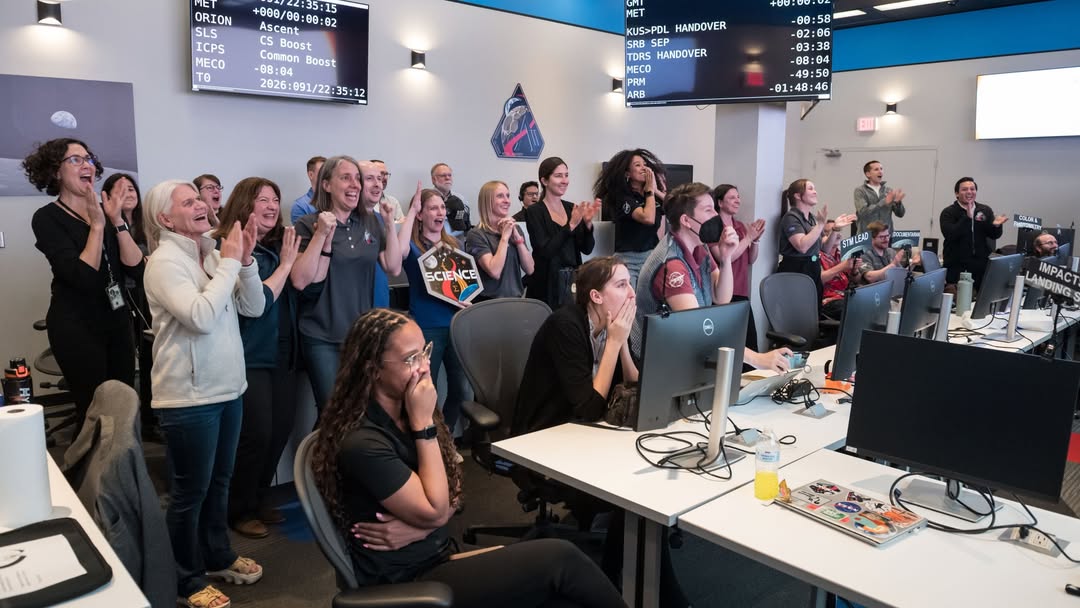
Space exploration has always captured human imagination, but sometimes the most groundbreaking moments happen long before a rocket leaves the atmosphere. When a recent photo from inside NASA’s mission control began circulating online, viewers quickly noticed something extraordinary. It was not an image of a powerful new spacecraft or an astronaut walking on a lunar surface. Instead, a closer look at the brilliant team managing the historic Artemis II mission on the ground revealed a striking detail that is challenging old stereotypes and changing how the world views the future of space travel.
Contents
show
Women Leading the Way to the Moon
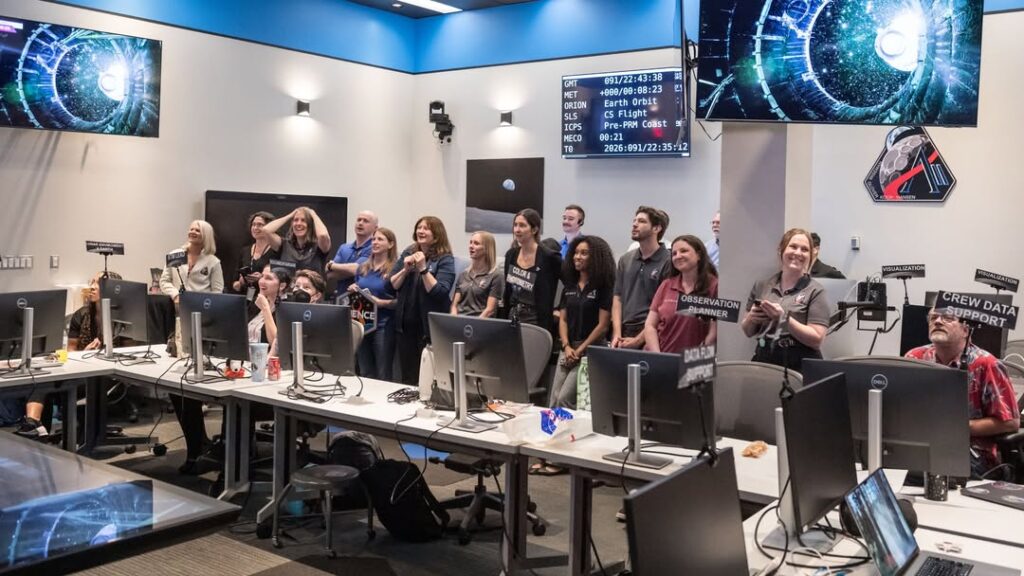
The Artemis II mission is making history by sending astronauts back toward the Moon for the first time in over fifty years. But while the crew travels through space, a picture taken back on Earth is capturing the world’s attention. A photo from inside NASA’s mission control room during the launch has gone viral, and the reason has nothing to do with rockets or space capsules.
People looking closely at the image noticed an inspiring detail: the room is filled with female scientists, engineers, and flight directors. In a field like space exploration, which has traditionally been led by men, seeing so many women managing such a massive operation struck a chord with millions of viewers online. Social media quickly lit up with comments from users calling the picture deeply inspiring and a huge step forward for equality.
This viral moment matters because the numbers show there is still work to do. Around the world, women hold just 28 percent of jobs in science, technology, engineering, and mathematics. Seeing a room full of brilliant women guiding a spacecraft around the Moon gives young girls a real picture of what they can achieve. It proves that the faces of space exploration are changing, offering a clear message that women belong at the very center of our biggest scientific leaps.
The Real Work of Mission Control

While the viral photograph caught the public eye, the actual work happening inside NASA’s Science Evaluation Room is the true story. The women in that picture are not just watching the mission unfold. They are actively guiding the spacecraft and keeping the astronauts safe. This room in Houston acts as the main hub where science and spaceflight operations meet during the Artemis II journey.
The experts sitting at these desks handle a massive amount of responsibility. Their daily tasks include tracking the Orion spacecraft, checking complex life support systems, and planning the exact flight path. When the astronauts orbiting the Moon notice interesting details on the lunar surface, like the color of dust or the shape of a crater, the team back on Earth gets to work. They analyze this live information, answer questions from the crew, and update the mission plan on the spot.
Every choice made in this room requires deep knowledge and quick thinking. The engineers must constantly monitor the health of the spacecraft to make sure every part works perfectly in the harsh conditions of deep space. It is a high-pressure setting that demands excellent teamwork.
Understanding the intense workload of these professionals gives the viral photo even more meaning. The push to bring more women into aerospace is not just about making the room look different. It is about bringing together the brightest minds to solve the hardest problems in space exploration.
From Apollo to Artemis: A Changing Era

Looking back at the history of spaceflight makes the viral Science Evaluation Room photo even more remarkable. During the Apollo missions of the 1960s and 1970s, the rooms managing space travel looked very different. The engineers, flight controllers, and astronauts were almost exclusively men, typically from military test pilot backgrounds. While their achievements were legendary, the makeup of those teams reflected the social limitations of that era.
The Artemis program represents a deliberate shift in how space exploration operates. The goal is no longer just to reach new distances, but to do so with a team that actually reflects the diverse society it represents. This change is felt from the ground operations all the way to the spacecraft. As NASA astronaut Christina Koch noted when discussing how Artemis compares to the Apollo days, there is no way the current program could be the same kind of mission or ever hope to be.
Today, women hold critical leadership roles across the entire agency. For instance, Charlie Blackwell-Thompson serves as NASA’s first female launch director. This is a sharp contrast to the single woman present in the firing room during the Apollo 11 launch. The viral photo from the Science Evaluation Room is simply a snapshot of this broader cultural shift. It proves that creating an inclusive environment is not just a secondary goal. Instead, bringing together diverse backgrounds and perspectives is now viewed as an essential ingredient for a successful future in space travel.
Inspiring the Artemis Generation

The impact of the viral Science Evaluation Room photo reaches far beyond the immediate mission. It serves as a powerful tool for inspiring what experts are now calling the Artemis Generation. This term refers to the young people growing up right now who will eventually become the next wave of engineers, scientists, and space explorers. For these younger audiences, seeing a control room filled with women is not just a pleasant news story. It is a visual roadmap for their own futures.
Psychologists and career counselors often emphasize that visibility is a crucial step in professional development. When children see people who look like them succeeding in highly technical fields, they are far more likely to believe those career paths are realistic options for themselves. The women guiding the Orion spacecraft are unintentionally serving as global mentors simply by doing their jobs.
Vanessa Wyche, the director of NASA’s Johnson Space Center, has openly discussed the importance of this kind of visibility and preparation. When offering advice to young people interested in science, she kept her message practical and actionable. Wyche encouraged students to stay curious and get involved in science clubs or camps. She noted that learning as much as possible is the key so they can eventually come and be a part of the Artemis generation, adding that the space agency needs their talent.
Building the Future of STEM
That viral photo of NASA’s control room is amazing, but a picture alone cannot build a spacecraft. If the goal is to see more women leading these incredible missions, the real work starts at home and in local neighborhoods.
It begins with simple things. When a young girl points up at the night sky, encouraging that curiosity makes a massive difference. Whether it means providing a beginner science kit, supporting a local robotics club, or just watching a space documentary, these small moments build lasting confidence. Society needs to show children that scientists are not just characters in movies; they are real people doing jobs that anyone can learn to do.
Workplaces have to step up, too. It is not enough to simply hire diverse teams. Companies must ensure everyone gets a fair shot at leading projects, speaking up in meetings, and making the big decisions. When the doors are truly open to everyone, the results speak for themselves.
Seeing a room full of brilliant women guiding a ship to the Moon shows exactly what happens when society stops setting limits on talent. Let this viral moment be more than just a passing trend on social media. By cheering on the young students of today, the world makes sure tomorrow’s control rooms are filled with the best minds ready to explore the stars.
Featured Image Source: NASA’s Johnson Space Center @nasajohnson on Instagram