
Your cart is currently empty!
Scientists Discover Neanderthal Child With Down Syndrome Who Was Cared For By Its Group
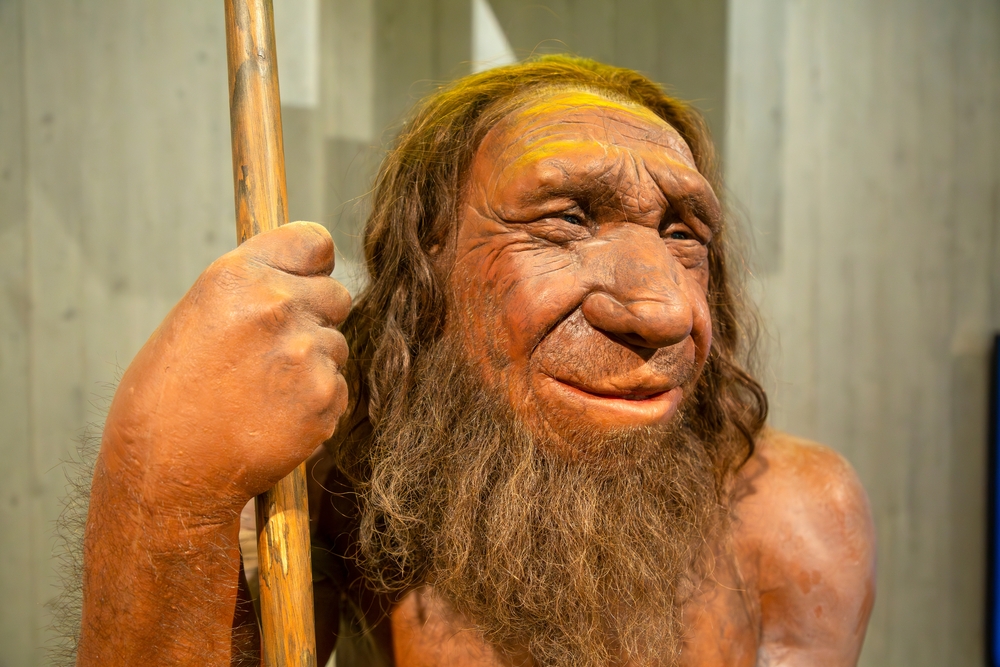
The story of human evolution is often told through survival, strength, and adaptation, with a strong emphasis on physical endurance and the ability to overcome nature’s harshest conditions. For decades, Neanderthals have been portrayed as rugged, primitive beings focused solely on brute survival in unforgiving Ice Age landscapes. This image, while dramatic, has often overlooked the emotional and social complexity that may have existed within their communities.
Contents
show
New scientific evidence suggests that Neanderthals were not only capable survivors but also attentive caregivers who may have nurtured and protected their most vulnerable members. Fossil remains of a young child with Down syndrome indicate that these ancient humans did not simply abandon individuals who faced physical or cognitive challenges. Instead, they may have gone out of their way to ensure the child’s survival, even when doing so required effort and sacrifice from the group.
This finding does more than rewrite a chapter of history. It forces us to reconsider long-held assumptions about empathy, cooperation, and what it truly means to be human. By looking closely at the lives of Neanderthals, we may discover that compassion is not a modern invention, but a deeply rooted trait that has been part of our shared evolutionary journey for tens of thousands of years.
A Discovery That Changes Everything
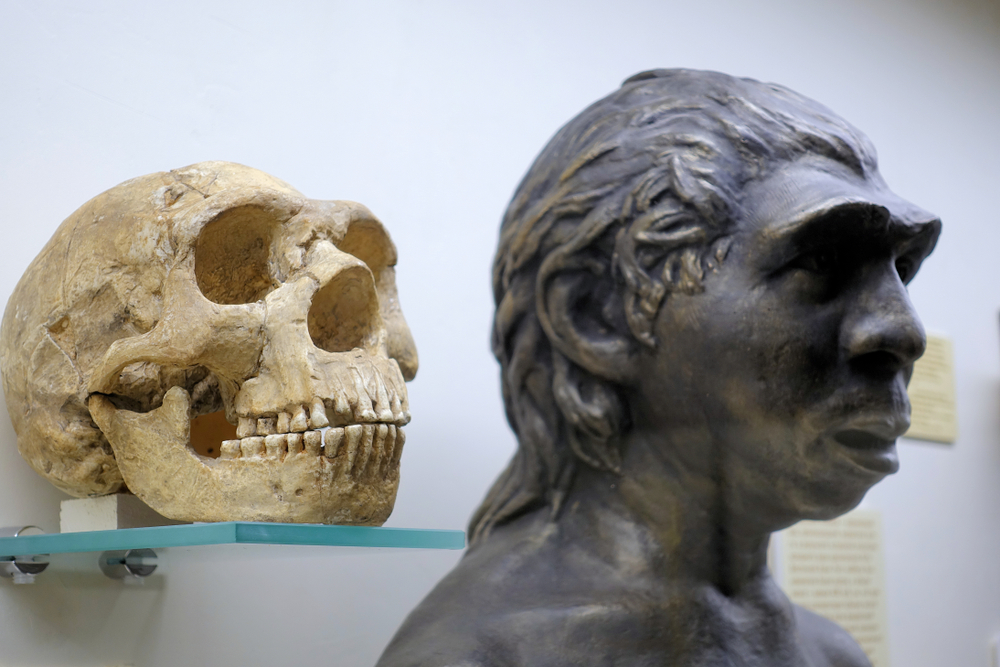
The discovery centers on fossilized remains of a Neanderthal child found at a cave site in Spain, a location that has yielded important insights into prehistoric life. Researchers examining the bones noticed unusual structural features, particularly within the inner ear region, that did not align with typical Neanderthal anatomy. Through careful and methodical analysis, these differences were identified as being consistent with a genetic condition similar to Down syndrome, a conclusion reached using modern medical knowledge applied to ancient remains.
According to reports from multiple outlets, including The Guardian and CNN, the child would have faced a range of significant physical and cognitive challenges. These likely included difficulties with balance, hearing impairments, and developmental delays that would have affected mobility and communication.
What makes this case particularly extraordinary is the estimated age of the child at death. The fossil evidence suggests that the child lived to at least six years old, which is notable given the circumstances. For a Neanderthal child with such conditions, surviving infancy alone would have required continuous care, protection, and likely assistance with basic needs such as feeding and movement.
This suggests something deeply significant about Neanderthal society. The child was not abandoned or left behind when survival became challenging. Instead, they were cared for over an extended period, indicating a level of social cooperation and emotional investment that scientists are only beginning to fully understand. It points toward a community that valued its members beyond their immediate utility.
Life in a Harsh Ice Age World
To fully appreciate the importance of this discovery, it is essential to understand the environment in which Neanderthals lived. Ice Age Europe was an unforgiving landscape marked by freezing temperatures, shifting climates, and limited access to food resources. Survival required not only physical strength but also coordination, planning, and adaptability in the face of constant environmental pressure.
Food was often scarce and difficult to obtain, requiring coordinated hunting efforts and strategic use of tools. Large animals such as mammoths or deer were primary targets, and successful hunts demanded teamwork, communication, and endurance. Even minor injuries could become life-threatening due to infection or limited medical knowledge, making every individual’s health and ability critically important.
Caring for a child with disabilities in such conditions would have required a significant allocation of time, energy, and resources. Members of the group may have needed to carry the child, provide additional protection, or adjust their movements and routines to accommodate their needs. This was not a minor commitment but a continuous responsibility that likely impacted the group’s daily survival strategies.
Yet the evidence suggests that Neanderthals made that choice willingly. They invested in the survival of a child who may not have been able to contribute in conventional ways, challenging the long-held belief that early humans only valued individuals based on their immediate usefulness.

Scientific Evidence Behind the Claim
The conclusions drawn from this discovery are grounded in detailed and rigorous scientific analysis, combining modern technology with careful interpretation of ancient remains. Researchers focused on the child’s temporal bone, a critical part of the skull that houses structures of the inner ear. This region plays a key role in balance and hearing, and abnormalities here can provide important clues about underlying conditions.
Using advanced imaging techniques, the research team compared the fossilized bone with known cases of Down syndrome in modern humans, as well as with other Neanderthal specimens. The similarities observed were striking and consistent, strengthening the case that the child did indeed have a condition comparable to Down syndrome. These findings were highlighted in reports from ScienceAlert and the University of Valencia, adding credibility to the research.
Importantly, scientists also took care to rule out alternative explanations for the observed features, such as trauma or other genetic conditions. This cautious approach ensured that the conclusions were not based on speculation but on measurable and repeatable evidence. The level of detail involved in the analysis reflects the seriousness with which researchers approached the claim.
The broader implication of the study is that Neanderthals possessed the social structures necessary to provide long-term care. This aligns with other archaeological evidence suggesting that they buried their dead, crafted tools with skill, and possibly engaged in symbolic or ritualistic behavior. Together, these findings paint a picture of a species far more complex than previously assumed.
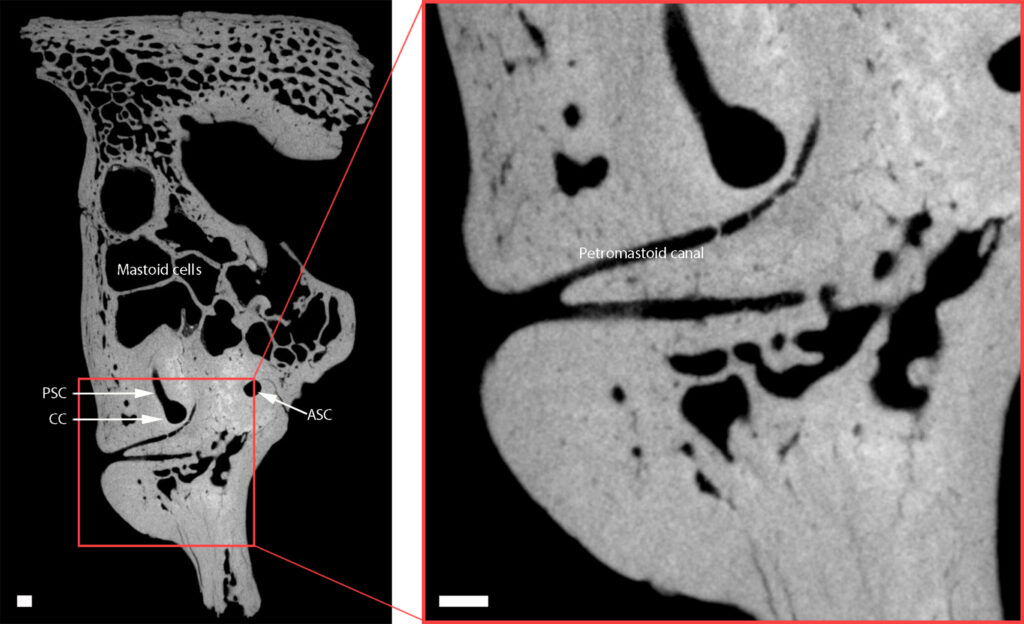
CC, common crus; PSC, posterior semicircular canal; ASC, anterior semicircular canal. Scale bar, 1 mm.
Credit: Conde-Valverde et al. (2024)
Rethinking Neanderthal Intelligence and Emotion
For much of modern history, Neanderthals were depicted as lacking the cognitive and emotional sophistication of modern humans. They were often portrayed as a failed branch of evolution, one that could not compete with the adaptability and intelligence of Homo sapiens. This perception has influenced both scientific thinking and popular culture for generations.
However, discoveries like this are steadily dismantling that outdated view. Evidence of caregiving implies more than just practical cooperation. It suggests the presence of emotional bonds, empathy, and a willingness to support individuals who require additional help. These are traits often associated with advanced social and cognitive development.
While Neanderthals may not have been identical to modern humans in terms of language or culture, the gap between the two species may have been far smaller than once believed. The ability to care for vulnerable individuals is widely regarded as a hallmark of complex societies, indicating foresight, patience, and emotional awareness.
By this measure, Neanderthals were far more sophisticated than the stereotype suggests. They were not merely surviving from one day to the next. They were forming communities built on cooperation, shared responsibility, and a recognition of the value of each member, regardless of their physical capabilities.
What This Means for Human Evolution
The implications of this discovery extend far beyond Neanderthals themselves, prompting a broader reconsideration of how compassion and caregiving evolved within the human lineage. If Neanderthals exhibited these behaviors, it suggests that such traits may have developed much earlier than previously thought, potentially existing in a common ancestor shared with modern humans.
This raises the possibility that empathy is not a uniquely modern human trait but a deeply embedded aspect of our evolutionary history. Genetic evidence already shows that Neanderthals and modern humans interbred, leaving traces of Neanderthal DNA in many populations today. This biological connection may also reflect shared behavioral traits.
The findings challenge the traditional interpretation of survival of the fittest as being solely about individual strength or dominance. Instead, they highlight the importance of cooperation, social bonds, and mutual support as key factors in long-term survival. Groups that cared for their members may have been more resilient and adaptable overall.
In this context, compassion emerges not as a weakness but as an evolutionary advantage. It is a trait that may have helped both Neanderthals and modern humans navigate the challenges of their environments, reinforcing the idea that kindness and cooperation are fundamental to our success as a species.
Humanity Runs Deeper Than We Thought
The discovery of a Neanderthal child with Down syndrome who survived for several years is more than just a scientific milestone. It is a deeply human story about connection, resilience, and the enduring power of care in even the most challenging circumstances. It offers a rare glimpse into the emotional lives of a species that has long been misunderstood.
This finding challenges outdated narratives and encourages a more nuanced and compassionate understanding of our evolutionary past. Neanderthals were not simply rugged survivors battling against nature. They were individuals capable of forming bonds, showing empathy, and making sacrifices for the well-being of others within their group.
As researchers continue to uncover the stories hidden within ancient fossils, one thing becomes increasingly clear. The qualities that define humanity today, such as kindness, cooperation, and emotional connection, may have roots that extend far deeper into our past than we ever imagined.
Perhaps the most powerful takeaway of all is this. Long before modern society, long before written language or structured communities, there were individuals who chose to care for one another. In doing so, they left behind not only physical evidence of their existence but also a lasting legacy of empathy that continues to resonate across thousands of years.
Source
- Conde-Valverde M, Quirós-Sánchez A, Diez-Valero J, Mata-Castro N, García-Fernández A, Quam R, Carretero JM, García-González R, Rodríguez L, Sánchez-Andrés Á, Arsuaga JL, Martínez I, Villaverde V. The child who lived: Down syndrome among Neanderthals? Sci Adv. 2024 Jun 28;10(26):eadn9310. doi: 10.1126/sciadv.adn9310. Epub 2024 Jun 26. PMID: 38924400; PMCID: PMC11204207.