
Your cart is currently empty!
Sparse Meal Photos Aboard US Navy Warships Fuel Debate Over Troop Welfare in the Iran War
Somewhere between Tokyo and the Strait of Hormuz, a Marine pulled out her phone and took a picture of lunch. When her father, 6,000 miles away, opened that image on his screen back home, he stopped drinking coffee, emptied half his pantry into a cardboard box, and drove to the post office. He walked back out with the package still in his hands.
Contents
show
That quiet moment, repeated across thousands of American households this month, has set off a bruising fight between military families and the Pentagon over what sailors and Marines are eating aboard two warships deployed to the Iran war. What those photos show, and why no one can agree on what they mean, has turned into one of the messier stories to come out of Operation Epic Fury so far.
Photos That Moved Fast
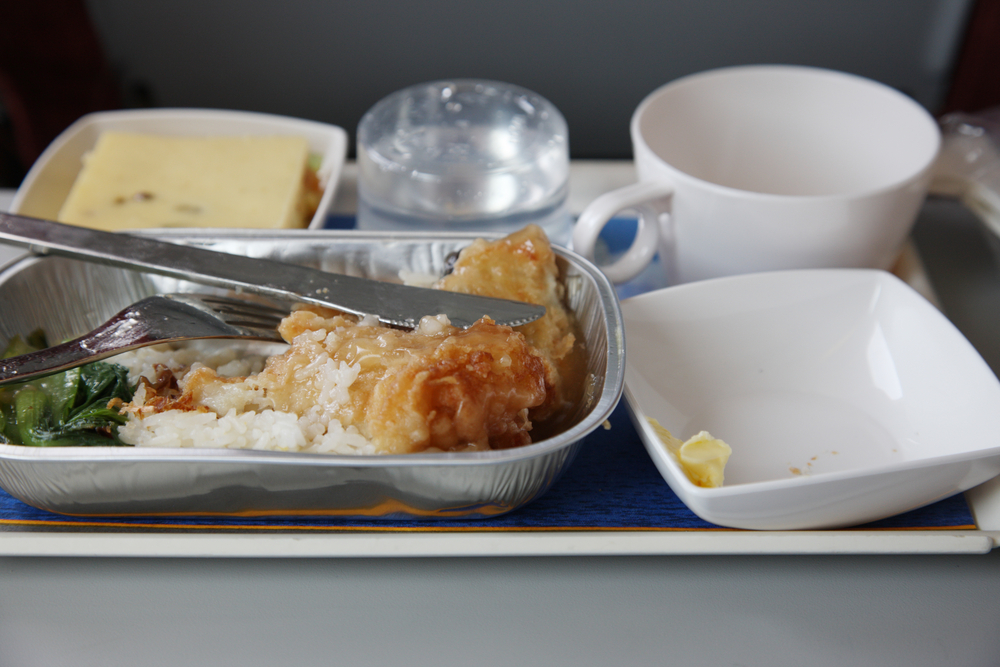
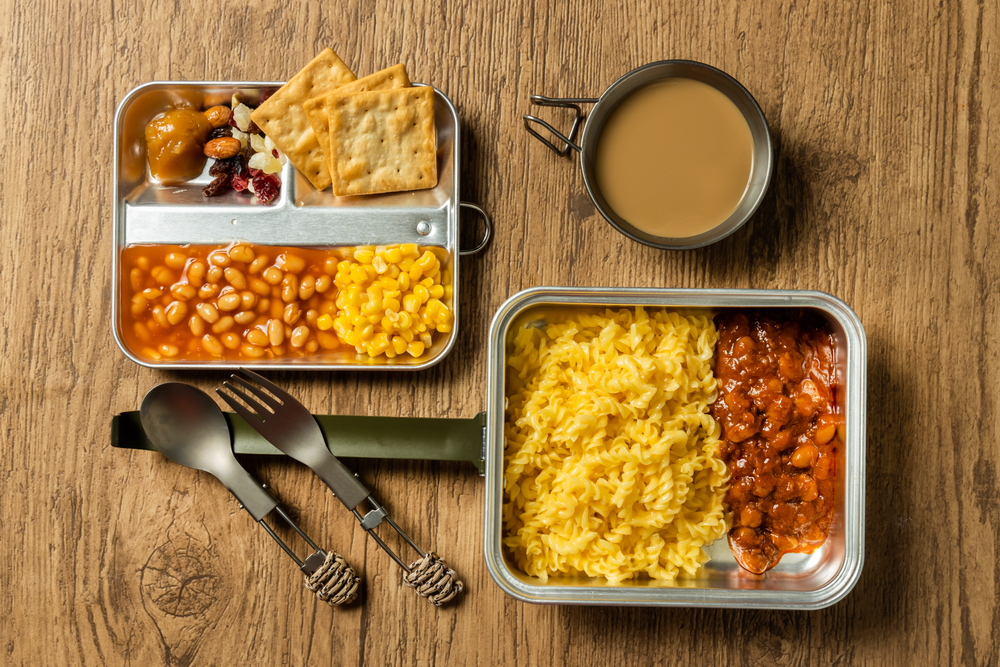
Images published by USA Today show lunch and dinner trays aboard the USS Tripoli and USS Abraham Lincoln. One tray carries a folded tortilla and a small scoop of shredded meat on an otherwise empty plate. Another carries a dry patty, a gray slab of processed meat, and a handful of boiled carrots.
Pictures spread online within hours. A single post on X drew more than 145,000 views, and comment threads filled with angry messages from veterans and military families. An official Democratic social media account called the meals disgraceful.
Inside Operation Epic Fury
US and Israeli forces launched joint strikes on Iran on February 28 under an operation code-named Epic Fury. An estimated 50,000 American service members have deployed across the region since then. A US-based rights group, HRANA, puts the death toll at 3,636.
President Donald Trump ordered a fresh buildup of forces as Washington and Tehran near the end of a two-week ceasefire. USS Tripoli and its two accompanying warships, carrying 3,500 sailors and Marines, left their home port in Japan more than a month ago. Their mission now is to enforce a US blockade of ships leaving Iranian ports, per US Central Command.
A Father Sends Tampons and Jolly Ranchers
Dan, a 63-year-old former Marine whose daughter is stationed on the USS Tripoli, has pieced together her situation through sporadic text messages that arrive whenever the ship hits a pocket of internet service. Fresh produce ran out weeks ago. Crew members had begun rationing. Even the ship’s coffee machine broke down, which prompted Dan to quit coffee in solidarity.
After his daughter mentioned hygiene products were running low, he packed a box with shampoo, conditioner, deodorant, toothpaste, and tampons. He stuffed the corners with Jolly Ranchers and snacks. A second box went out with Emergen-C vitamin packets and clean socks after she reported a sore throat coming on. Neither box has reached her.
“You shouldn’t be running out of food,” Dan told USA Today, speaking as both a father and a former Marine who once wore the same uniform his daughter does now.
Other Families Speak Up
A Texas mother whose son is a Navy sailor aboard the Tripoli told USA Today her family has spent around $2,000 on care packages. None has arrived. In messages she shared with the outlet, her son described crew members splitting their meals evenly when one person got more than another. On March 11, he warned supplies were going to drop further and morale with them.
Pastor Karen Erskine-Valentine of a church in Shepherdstown, West Virginia, heard from a community member whose son is aboard the USS Abraham Lincoln. Her response moved fast. Within two days, her congregation packed 18 boxes. Four more went out on April 15. Shipping alone came to at least $540.
She told USA Today, “The food is tasteless and there’s not nearly enough.” Six of her boxes reached Tokyo on April 14, per Postal Service tracking. Not one has made it further.
Care Packages Stuck Between Worlds
Karen Turgeon runs an annual Thanksgiving care package drive in Monson, Massachusetts. After four service members from her community deployed to the Middle East, she rushed to pull together an extra round. None of those boxes has reached their destinations either. Her group now drops flowers and encouragement cards at service member homes while waiting for mail to reopen.
Dawn Penrod, treasurer of an American Legion Auxiliary chapter in Edgewater, Maryland, spent about an hour at the post office two weeks back trying to send a package to her nephew, an Army Reserve member stationed in Bahrain. Inside were Kind bars, homemade fudge, Girl Scout cookies, puzzle books, decks of cards, and pens. Her chapter had given her $100 plus postage. A client of hers added $50.
A postal worker told Penrod she could not even fill out the customs form for a military ZIP code abroad. She left with the package in hand. It has sat in her living room since.
Why Mail Delivery Stopped Cold
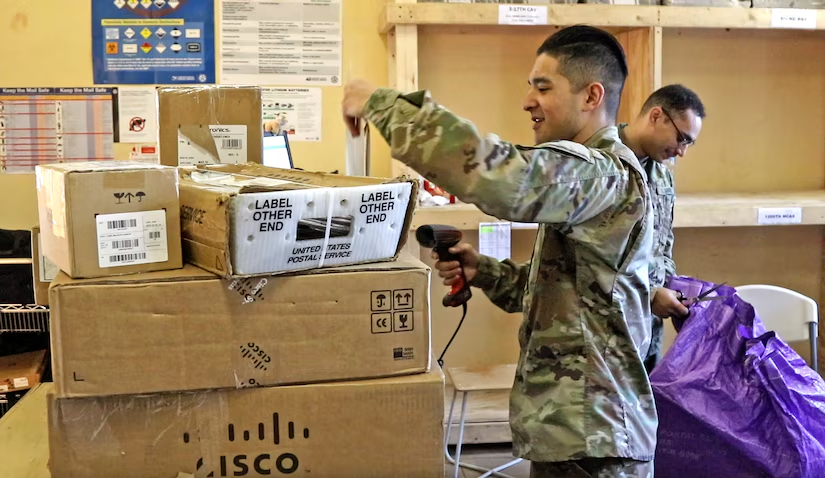
US Postal Service delivery to 27 military ZIP codes across the Middle East went on indefinite suspension at the beginning of April. Maj. Travis Shaw, an Army spokesperson, cited airspace closures and combat-related logistical disruption. Mail in transit at that moment sits in secure Postal Service or military facilities for future delivery once service resumes.
No end date has been set. Shaw told USA Today that resumption depends on civil aviation authorities reopening airspace and on the area commander’s read of regional transportation stability. USPS spokesperson David Coleman said nothing has been returned to the sender.
Pentagon Pushes Back Hard
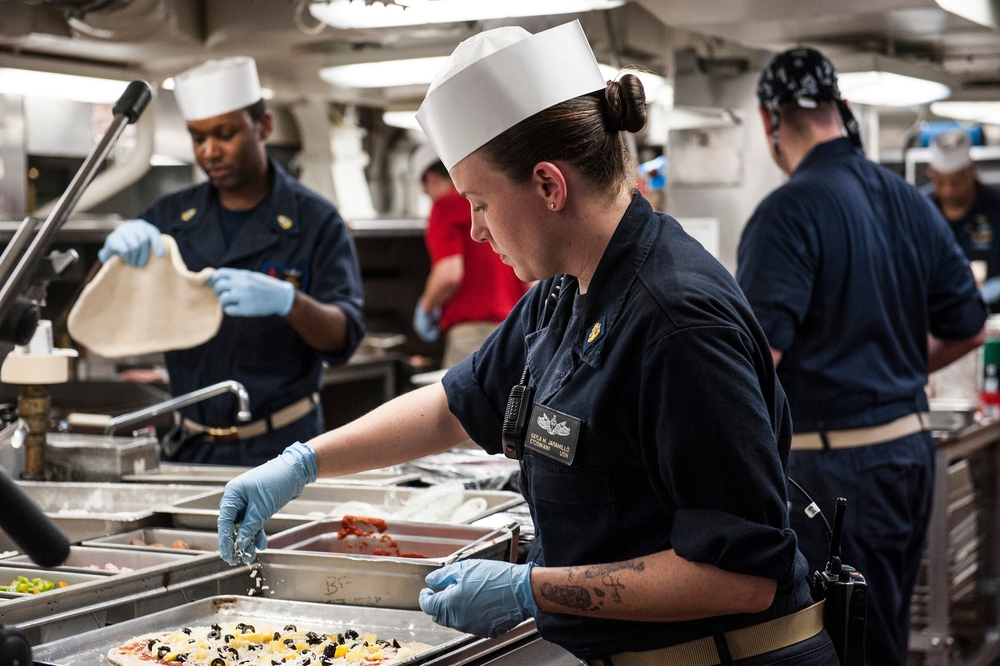
On Saturday morning, the US Navy released its own photos. Full food trays. Sailors at dining tables. Boxes of food supplies piled to the ceiling of a ship’s interior. Chief of Naval Operations Adm. Daryl Caudle called the shortage reports false and said every crew member receives full portions of balanced meals.
US Central Command Adm. Brad Cooper echoed the denial and said food for troops remains a priority across the region.
Secretary of War Pete Hegseth took a sharper line on X. He dismissed the coverage as fake news from what he called the Pharisee Press, a reference some Christians apply to those seen as obsessed with rules over substance. He then posted the supply numbers.
“30+ days of Class I supplies (food) on board,” Hegseth wrote, referring to both the Lincoln and Tripoli. NavCent, he added, tracks those numbers every day for every ship.
A Carrier Breaks a Cold War Record
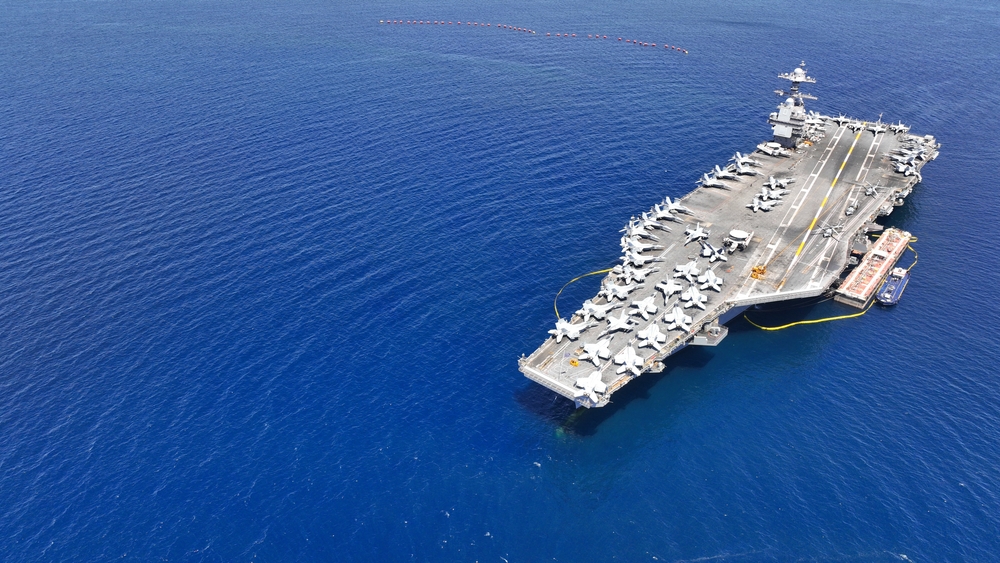
On April 15, the USS Gerald Ford passed 295 days at sea, the longest carrier deployment since the Cold War. A retreat to Naval Support Activity Souda Bay on the island of Crete in late March followed a laundry fire and plumbing problems onboard. A third carrier, the USS George H.W. Bush, is en route to join the Ford and the Lincoln in the theater.
Long carrier deployments test everything from produce stocks to crew morale. Veteran service members watch their dining facilities for clues. Surf and turf trays, which reports say appeared a few weeks back, often warn of an extended mission ahead.
Wartime Mail Trouble Isn’t New

Lynn Heidelbaugh, a curator at the Smithsonian National Postal Museum, told USA Today that wartime mail delays have happened during every American conflict. She had not come across an outright suspension of a military ZIP code like the one now in place, but quiet disruption has a long paper trail.
USPS historian Steve Kochersperger pointed to the mail backlog after the D-Day invasion of 1944 as one well-documented example. Non-expedited packages to the Middle East usually take up to 24 days, per the Postal Service. During the 2003 Iraq war, mail took 11 to 14 days on average.
Military Postal Service operations move about 80 million pounds of mail each year across 76 countries and 1,670 sites worldwide, per the Postal Service’s Office of the Inspector General.
Political Fallout Spreads Across Party Lines
Images have found traction well past military family circles. French Ambassador to Armenia Olivier Decottignies answered the USA Today photos with one of his own, showing meals prepared by the French navy. Democrats amplified the coverage on Facebook with sharp criticism of President Trump’s handling of the deployment.
War critics cut across the political map. Prominent MAGA voices, including Tucker Carlson and Marjorie Taylor Greene, have spoken against the conflict, and so have Democratic leaders and Pope Leo XIV.
Families Wait While Diplomats Maneuver
Two questions carry public attention now. One is the welfare of troops and whether mail can reach them any time soon. Another is the direction of diplomacy around the fragile ceasefire and any movements involving Iran.
For families like Dan’s, every short message from a daughter at sea carries new weight. For commanders, every photo leaked at home carries a new headache. In between, thousands of care packages wait in living rooms and postal warehouses, filled with fudge, socks, and hard candy that may or may not find their way to the people they were meant for.