
Your cart is currently empty!
If Cows Are 6% of Emissions, What Should We Do Next? Bill Gates Weighs In

It sounds almost unbelievable that something as ordinary as a cow quietly grazing in a field could play a meaningful role in global climate change, yet this is exactly the reality scientists have been pointing toward for years as data continues to build around agricultural emissions and their impact on the atmosphere. When Bill Gates publicly stated that cows account for a noticeable share of global emissions, it pushed what had been a relatively niche scientific discussion into a much broader public spotlight, forcing people to confront the environmental cost of something deeply embedded in everyday life. His words were simple, direct, and impossible to ignore, not because they were dramatic, but because they framed a complex global issue in a way that made it feel immediate and personal, highlighting how even the most routine systems can have far-reaching consequences.
Contents
show
The conversation has now moved well beyond theory and into real-world action, backed by investment, research, and a growing sense of urgency around climate solutions that can actually scale. Gates has chosen to support a climate technology company that is working on a solution which focuses on changing what happens inside the animal itself rather than asking the world to completely rethink its diet overnight. That idea might sound unusual at first, but it reflects a broader shift toward practical and incremental change, where the goal is not to dismantle entire systems instantly, but to improve them in ways that are realistic, measurable, and capable of being adopted globally without causing disruption to food supply or livelihoods.
The Hidden Impact of Livestock on the Climate
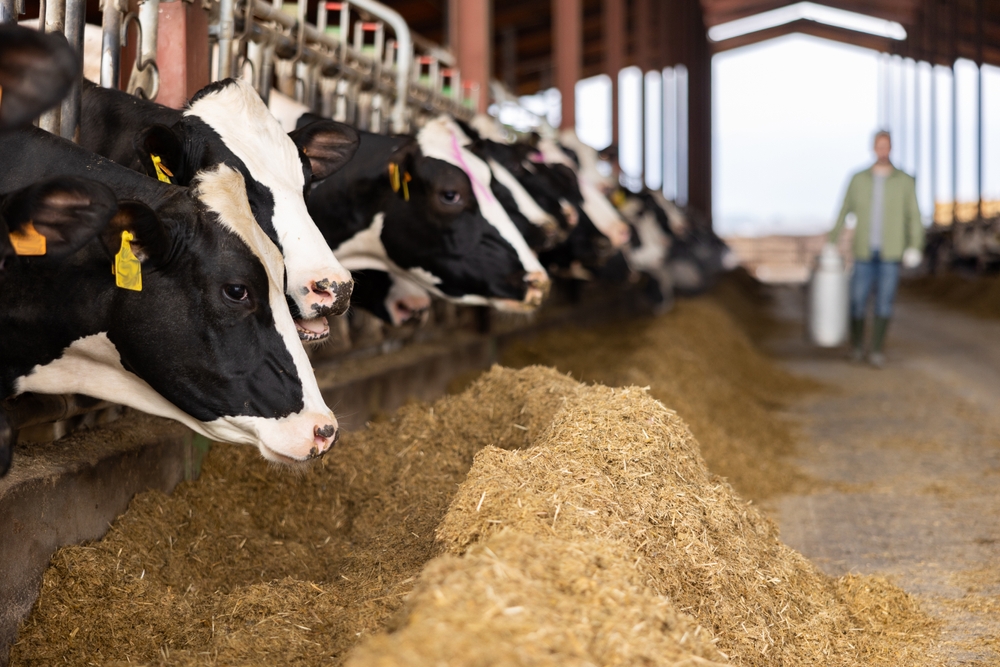
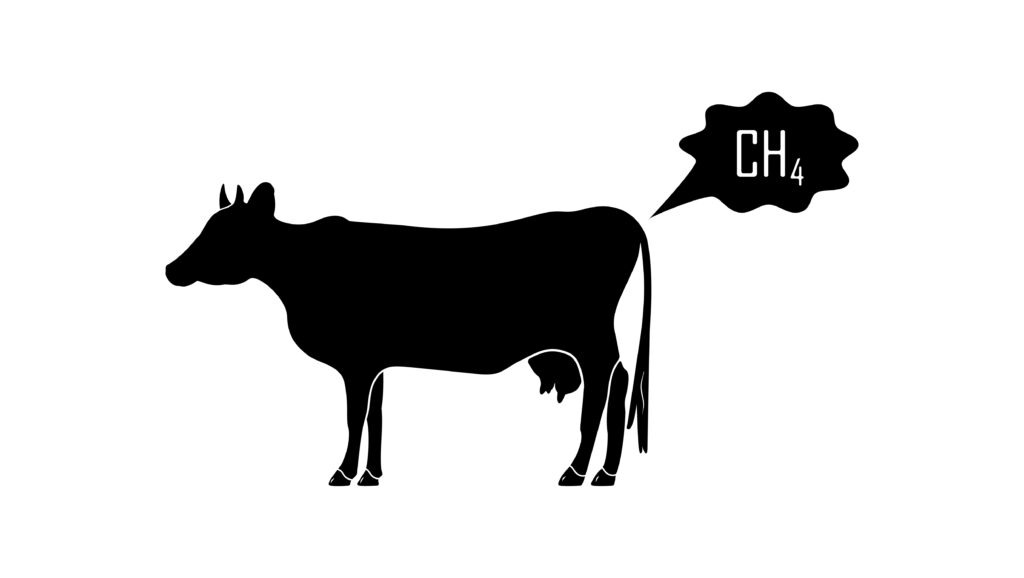
For many people, climate change is still strongly associated with visible sources like cars on congested roads, factories releasing smoke into the sky, or airplanes crossing continents, yet livestock rarely becomes the focus despite its significant contribution to greenhouse gas emissions on a global scale. Methane, which is produced during digestion in animals such as cows, plays a central role in this issue, forming as a byproduct when microbes in the animal’s stomach break down tough plant fibers like grass through a process known as fermentation. This gas is then released primarily through burping, a detail that may seem trivial at first glance but becomes far more serious when multiplied across billions of animals worldwide.
What makes methane particularly concerning is not just its presence in the atmosphere, but the intensity of its warming effect compared to carbon dioxide, especially over shorter periods of time where its impact is far more concentrated. Scientific findings have shown that methane can have many times the warming power of carbon dioxide within a 20 year timeframe, which means that even smaller quantities can contribute significantly to rising global temperatures. This has shifted attention toward methane as a critical target in efforts to slow climate change more rapidly, especially as atmospheric levels continue to rise and reach new records, reinforcing the urgency of addressing emissions from agriculture alongside other major sources.
The scale of the issue becomes clearer when looking at how much livestock contributes overall, with a large share of global methane emissions coming directly from agriculture and cattle representing the biggest portion of that total. As populations grow and demand for meat and dairy continues, these emissions are likely to increase unless effective solutions are implemented, making it essential to find ways to reduce the environmental impact without compromising food security or economic stability for communities that depend on farming.

The Science Behind Reducing Methane in Cows
Researchers have spent years exploring ways to reduce methane emissions from livestock, and one of the most promising discoveries has come from an unexpected source in the ocean, where certain types of red seaweed have shown the ability to significantly alter the digestive process in cows. Studies have demonstrated that when small amounts of this seaweed are added to a cow’s diet, the chemical reactions that normally produce methane are disrupted, leading to substantial reductions in emissions over time. In controlled experiments, some results have shown methane output dropping by more than 80% when the additive is consistently used, offering a glimpse of what could be possible if applied on a larger scale.
Building on these findings, a company has developed a method to recreate the active compound found in this seaweed using laboratory techniques, allowing for production that does not rely on large-scale harvesting or farming of the seaweed itself. This approach aims to solve practical challenges related to supply, cost, and consistency, making it more feasible for widespread adoption across different regions and farming systems. By producing the compound synthetically, the company is attempting to bridge the gap between scientific discovery and real-world implementation, which is often where promising ideas struggle to gain traction.
The product is designed to integrate seamlessly into existing farming practices, either by being mixed into animal feed or delivered in a format that is easy for farmers to use without significant changes to their operations. Early lab trials have suggested that methane reductions could reach as high as 95%, a figure that, if replicated in real-world conditions, would represent a major shift in how agricultural emissions are managed and could significantly lower the environmental footprint of livestock production without requiring a complete overhaul of the industry.
Why the World Cannot Simply Abandon Beef
While it might seem like the simplest solution is to reduce or eliminate beef consumption altogether, the reality is far more complex when considering the global dependence on livestock for both nutrition and economic stability. For billions of people, especially in developing regions, animal products are a primary source of essential nutrients, and alternatives may not be readily available or affordable. Removing livestock from the food system without viable replacements would risk creating gaps in nutrition that could have serious consequences for public health in many parts of the world.
Beyond nutrition, livestock farming is deeply tied to livelihoods, with millions of farmers, workers, and communities relying on it as a source of income and economic activity. Any rapid or large-scale shift away from cattle farming would have ripple effects across industries, from agriculture to transportation and food processing, making it a challenge that cannot be addressed through simple or immediate changes. This is one of the reasons why solutions that focus on improving the sustainability of existing systems are gaining traction, as they offer a path forward that balances environmental goals with social and economic realities.
There is also the question of affordability, as livestock remains one of the most accessible and cost-effective sources of protein globally, particularly in regions where plant-based or alternative proteins are not yet widely available. Ensuring that food remains affordable while reducing environmental impact adds another layer of complexity, highlighting the need for solutions that can operate within current systems while gradually supporting broader transitions over time.
Investment, Innovation, and Global Momentum
The increasing recognition of agriculture’s role in climate change has led to a surge in investment aimed at developing technologies that can reduce emissions in practical and scalable ways. Climate-focused funds and private investors are placing greater emphasis on solutions that can deliver measurable impact, and this shift is helping to accelerate the development of new approaches that might have previously struggled to secure funding. This growing momentum reflects a broader understanding that addressing climate change requires innovation across all sectors, including those that have traditionally received less attention.
The company backed by Gates recently secured funding to expand its methane-reducing technology, with its leadership expressing optimism about the level of interest from investors around the world. As stated, “We have been very pleased with the reception we have received from climate impact funds around the world,” which reflects a wider appetite for solutions that can address emissions from livestock in a meaningful way. They also noted, “There is a genuine desire to fund solutions to enteric methane emissions from livestock and fortunately for Rumin8, they can see the benefits of our technology,” emphasizing confidence in both the science and its potential real-world application.
At the same time, governments are beginning to explore policy measures aimed at reducing agricultural emissions, including proposals that would place a cost on the greenhouse gases produced by farm animals as a way to encourage more sustainable practices. These developments suggest that the issue is being approached from multiple angles, combining innovation, investment, and regulation in an effort to drive meaningful change across the food system.
The Ongoing Debate Around Food and Climate Solutions
Despite the promise of new technologies, there is still ongoing debate about whether these solutions address the full scope of the problem or primarily focus on one aspect of a much larger system. Some experts argue that while reducing methane emissions is important, it does not fully address other environmental impacts associated with livestock farming, such as land use, deforestation, and water consumption. From this perspective, technological fixes may help reduce emissions but could risk diverting attention from broader structural changes that are also needed.
Others take a more balanced view, suggesting that innovation and systemic change can work together rather than being seen as competing approaches. Reducing emissions from existing livestock while also encouraging shifts toward alternative proteins and more sustainable consumption patterns may offer a more realistic path forward, especially given the scale and complexity of global food systems. This perspective recognizes that change is unlikely to happen through a single solution and instead requires a combination of strategies that can be implemented over time.
There are also practical considerations around how quickly new technologies can be adopted, as even the most effective solutions require time to scale, infrastructure to support distribution, and willingness from farmers to integrate them into their operations. These challenges highlight that while progress is being made, it will likely be gradual, requiring continued collaboration between scientists, policymakers, businesses, and consumers.

Conclusion: Rethinking Everyday Systems
What makes this story particularly striking is how it shifts attention toward parts of the climate conversation that are often overlooked, reminding us that environmental impact is not limited to obvious sources like energy or transportation but is also deeply connected to everyday systems such as food production. It challenges the assumption that solutions must always be large or visible, showing instead that meaningful change can come from addressing smaller, less obvious factors that collectively have a significant impact.
Bill Gates’ statement brings this idea into sharp focus by presenting a choice that is both simple and complex at the same time, suggesting that we can either change how animals are raised or rethink how food is produced altogether. In reality, the future is likely to involve a combination of both approaches, with innovation, policy, and consumer behavior all playing a role in shaping the direction of change. The path forward may not be straightforward, but it is increasingly clear that action will need to come from multiple fronts.
As unexpected as it may seem, tackling something as specific as methane from cow digestion could contribute meaningfully to reducing global emissions, serving as a reminder that solutions to complex problems often emerge from places we do not initially expect. It encourages a broader way of thinking about climate action, one that looks beyond the obvious and considers how even the most familiar aspects of daily life can be part of the solution when approached with creativity, science, and a willingness to adapt.”
Sources:
- CSIRO. (n.d.). FutureFeed. https://www.csiro.au/en/research/animals/livestock/futurefeed
- Wibowo, M. C., Yang, Z., Borry, M., Hübner, A., Huang, K. D., Tierney, B. T., Zimmerman, S., Barajas-Olmos, F., Contreras-Cubas, C., García-Ortiz, H., Martínez-Hernández, A., Luber, J. M., Kirstahler, P., Blohm, T., Smiley, F. E., Arnold, R., Ballal, S. A., Pamp, S. J., Russ, J., . . . Kostic, A. D. (2021). Reconstruction of ancient microbial genomes from the human gut. Nature, 594(7862), 234–239. https://doi.org/10.1038/s41586-021-03532-0
- Climate Change 2021: The Physical Science Basis. (n.d.). IPCC. https://www.ipcc.ch/report/ar6/wg1/