
Your cart is currently empty!
Man Honors Late Mother With Tattoo of Her First Words About Him

It began with something small. Just a few handwritten words in an old diary. The kind of words that might be overlooked by anyone else. But for one man, they carried the weight of a lifetime.
Contents
show
Ten years after losing his mother, Jake Bley found himself holding a piece of her past in his hands. Inside a box she had left behind were fragments of her life, carefully preserved in ink across dozens of notebooks. When he finally opened them, he was not just reading memories. He was meeting his mother again in a completely different way.
What he discovered on one particular page would go on to touch millions of people around the world and reshape his own relationship with grief.
A Bond That Felt Like Friendship
When people grow up, they often see their parents in a single role. A provider, a guide, a constant presence. It is only later, with time and maturity, that many begin to understand that their parents had lives, emotions, and identities that existed long before they became parents.
For Jake, that realization came gradually.
His mother, Nicki Bley, was not just someone who raised him. He has described their relationship as something closer to a friendship than a traditional parent-child dynamic. She was someone he could speak to openly about anything, from everyday decisions to more personal challenges. According to interviews he gave to outlets, she created an environment where communication felt natural and honest.
That kind of connection shaped the way he experienced both love and loss.
Nicki was also deeply reflective. From the age of eight, she had kept handwritten diaries, documenting her thoughts, experiences, and emotions over the years. At the time, those diaries were simply a personal habit. They were not written with an audience in mind. They were a way of making sense of life.
Years later, they would become one of the most meaningful gifts she could leave behind.
The Illness That Changed Everything

In 2013, Nicki was diagnosed with acute myeloid leukemia, a fast-moving and aggressive form of cancer. According to multiple reports, including Good Morning America, her journey through diagnosis and treatment unfolded quickly.
There was a period of hope when she went into remission. But the cancer returned, and her condition worsened over time.
Jake has spoken about how difficult it was to watch someone who had always been strong begin to fade. Seeing a parent in that state can be deeply unsettling. It changes the sense of stability that many people rely on.
At the time, Jake was living in New York City. Despite the distance, he found ways to stay connected. He bought his mother an iPhone so they could FaceTime, and he would walk through the city while showing her the sights. He shared moments from his daily life, including scenes from Times Square, allowing her to experience places she had never visited.
These moments became more than simple conversations. They became memories that held meaning long after she was gone.
In June 2014, Nicki passed away at the age of 46. Jake was in his early twenties.
A Box That Stayed Closed for Years
Before her death, Nicki prepared something special for each of her five children. She left behind personal items, carefully chosen as parting gifts.
For Jake, that gift was her collection of diaries.
They contained years of her life, written in her own words. Childhood thoughts, teenage reflections, adult experiences, and even entries from her final days.
But grief has its own pace.
Jake did not open the box right away. In fact, he avoided it for years.
He later admitted that the emotional weight of losing his mother made it too difficult to revisit those memories. Instead, he focused on staying busy. He returned home to support his siblings and immersed himself in responsibilities. It gave him direction, but it also delayed the process of truly confronting his emotions.
Looking back, he has acknowledged that avoiding those feelings may not have been the healthiest way to cope.
Still, it is a path many people take.
Grief does not disappear when ignored. It waits quietly until a person is ready to face it.
The Moment He Finally Opened It

Nearly ten years passed before Jake felt ready to look through what his mother had left behind.
There was no single dramatic turning point. Instead, it was a gradual shift. A sense that he could finally sit with the memories rather than run from them.
As the tenth anniversary of his mother’s passing approached, he opened the box.
Inside were around twenty diaries.
He began to go through them slowly. Each page revealed something new. Not just memories, but parts of his mother’s personality that he had never fully seen before.
Then he found one that stood out.
A small red Collins diary from 1989, the year he was born.
The Words That Stopped Him

He flipped through the pages until he reached the date of his birth.
On the page were details that many parents record. The time he was born. His measurements. Basic information marking the moment.
And then there was a short sentence written underneath.
Only a little fellow.
Jake had been born prematurely, weighing around 5.7 pounds. The phrase made sense in that context. It was likely written casually, a quick observation in the moment.
But for him, it felt different.
He later shared that the realization hit him immediately. These were the first words his mother had written about him. Her very first thoughts when she saw him.
It was a simple sentence, but it carried a depth that is difficult to describe.
It connected him directly to a moment he could not remember, but one that had defined the beginning of his life.
Choosing How to Remember

As the anniversary of his mother’s death approached, Jake began thinking about how he wanted to honor her.
He did not want something grand or performative. He wanted something personal. Something that reflected both the loss and the connection that remained.
The idea came naturally.
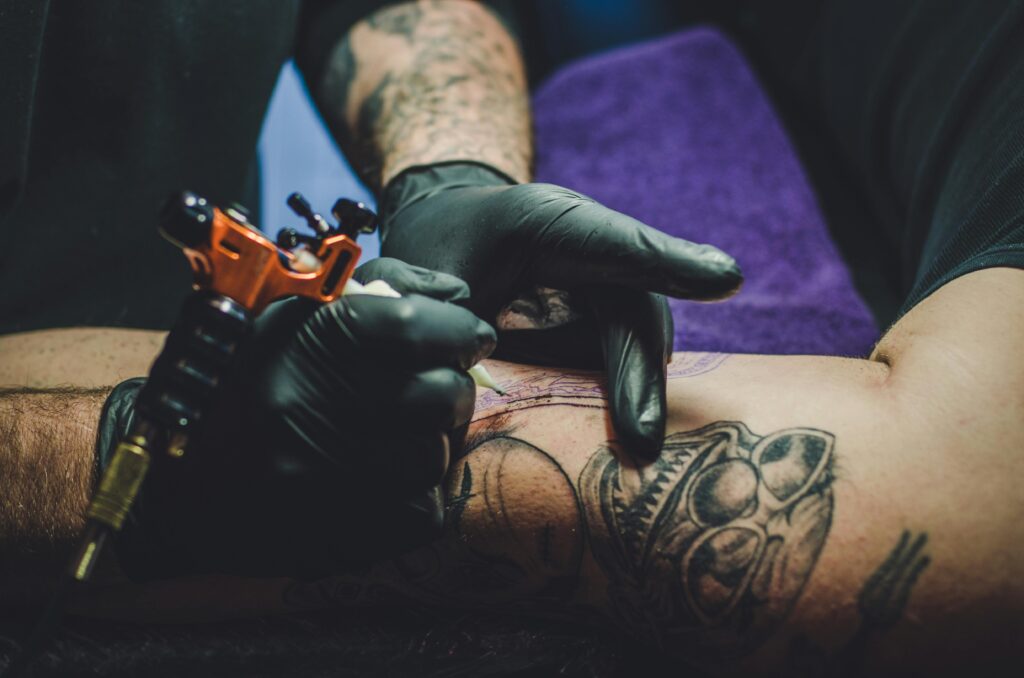
He decided to turn that handwritten phrase into a tattoo.
Not just the words, but the exact handwriting from the diary.
On the day of the anniversary, he took time off work and walked into a tattoo studio without an appointment. He brought the diary with him and explained the story to the artist.
The artist carefully traced the handwriting and prepared a stencil.
For Jake, it was his first tattoo.
He was nervous at first, which is understandable given the emotional significance behind it. But as the process began, those nerves eased.
When it was finished, the result felt right in a way that is hard to put into words.
An Emotional Release Years in the Making

After leaving the studio, Jake sat in his car and cried.
Not only out of sadness, but out of relief.
He described it as the first time in a long time that he had allowed himself to fully feel his emotions. For years, he had carried his grief quietly, keeping it contained beneath the surface.
The tattoo became more than a tribute. It became a turning point.
It marked a moment where he stopped avoiding his feelings and began to process them in a more open way.
This kind of emotional release is something many people experience when they finally confront grief after a long period of avoidance. It can feel overwhelming, but also freeing.
For Jake, it was both.
Sharing the Experience With Others

Jake decided to document the process and share it on social media.
He posted a video on TikTok showing the tattoo and explaining the story behind it. He also shared images of the diary entry.
He did not expect the response that followed.
The video quickly went viral, reaching millions of people. His posts across platforms gathered significant attention, with one post alone reaching millions of views.
What stood out most was not just the numbers, but the reactions.
People from all over the world began sharing their own experiences with loss. They spoke about parents they had lost, keepsakes they had held onto, and the ways they had tried to preserve memories.
Many expressed how deeply they connected with the simplicity of the story.
Jake has said that reading these messages became an important part of his healing journey.
It helped him understand that while grief can feel isolating, it is something many people share.
Rediscovering a Mother Through Her Words

As he continued going through the diaries, Jake began to see his mother in a new light.
He was no longer just remembering her as the person who raised him. He was discovering her as an individual with her own thoughts, struggles, and experiences.
The diaries revealed parts of her life that he had never known. They showed how she processed the world, how she felt about different moments, and how she grew over time.
This process became a way of reconnecting with her.
It allowed him to continue building a relationship with her, even after her death.
That idea may seem unusual at first, but it is something many people experience when they revisit personal belongings left behind by loved ones.
Memories are not static. They evolve as people reflect on them.
The Unexpected Power of Small Things
One of the most striking aspects of this story is how something so small became so meaningful.
A short sentence in a diary.
Four simple words.
It is a reminder that the smallest details can carry the greatest emotional weight.
The things people write, save, or say in passing can take on new significance over time. What feels ordinary in one moment can become deeply important in another.
Nicki’s diaries were never intended to be public. They were private reflections. Yet they became a source of comfort and connection not only for her son, but for countless others who heard the story.

Lessons About Grief and Healing
Jake has been open about the fact that he did not fully process his grief in the years immediately following his mother’s death.
He stayed busy. He focused on responsibilities. He kept moving forward.
This is a common response to loss.
But over time, unprocessed emotions tend to resurface.
Through his experience, he has emphasized the importance of allowing yourself to feel.
Not in a forced or overwhelming way, but gradually and honestly.
He has encouraged others to take time for themselves when dealing with loss, to find personal ways of remembering loved ones, and to understand that healing is not a linear process.
For him, the tattoo was one step in that journey.
For others, it may be something different.
A Legacy That Continues
There is something quietly powerful about the idea that love can remain present in simple forms.
A line in a diary.
A memory revisited years later.
A tattoo that turns something temporary into something lasting.
Jake Bley’s story is not just about loss. It is about connection, memory, and the ways people find meaning after grief.
It shows that healing does not always happen immediately. Sometimes it takes years. Sometimes it begins with opening something that has been closed for a long time.
And sometimes, it starts with four simple words that remind someone they were loved from the very beginning.
Only a little fellow.
A small sentence that became something permanent, carrying with it a lifetime of meaning.