
Your cart is currently empty!
A Father Moved His Daughter’s Mirror After She Died. What He Found Behind It Left Him Speechless.

Grief arrives with a particular weight when it touches a child. For the Orchard family of Leicester, England, the weeks following May 28, 2014, carried that weight in full. Dean Orchard, 33, faced a task that no parent should ever have to face: clearing out his teenage daughter’s bedroom, sorting through the belongings she left behind. It was the kind of work that demanded a steadiness he could barely hold onto. And then, while moving a single piece of furniture, he found something that stopped him cold.
Contents
show
What Dean discovered that day did not bring his daughter back. Nothing could. But it changed what her loss meant to the family forever, and it offered them something rare in the aftermath of grief: her voice, preserved in her own hand, on a surface none of them had thought to look behind.
A Girl Who Thought Deeply and Felt Everything
Athena Orchard was 13 years old when she died, but she carried a depth of thought and feeling that her father struggled to put into words. He described her as a deeply spiritual person, someone who spoke about ideas and inner experiences that left him in quiet awe. Writing was central to who she was, her mother Caroline later confirmed. It was not a hobby but a language, the way Athena processed the world around her and the one she carried inside.
Born into a large, close-knit family, Athena grew up as one of ten children, with parents who loved her and siblings who would feel her absence for the rest of their lives. By the time she was twelve, she had already been diagnosed with osteosarcoma, one of the most common and aggressive forms of bone cancer. Her diagnosis had started as a tumor in her head before spreading to her spine and left shoulder. She underwent intense chemotherapy in the months that followed, enduring treatment that would test anyone, let alone a child still growing into herself.
The Illness That Would Not Slow Her Down

Osteosarcoma is a cancer that tends to affect children and teenagers, and it rarely announces itself quietly. For Athena, the progression of her illness was as much an emotional reality as a physical one. Yet those who knew her said she stayed positive throughout, holding onto a view of life that her family found both humbling and, in hindsight, far beyond her years.
Caroline spoke about how writing had always been part of who Athena was, running through her the way that some people carry music or art, as a means of making sense of things that resisted easy explanation. While Athena was alive, the family understood this about her. What they did not know was just how much she had put down in writing during those long months of treatment and waiting, or where she had chosen to put it. Athena passed away on May 28, 2014. She was 13 years old.
Moving the Mirror
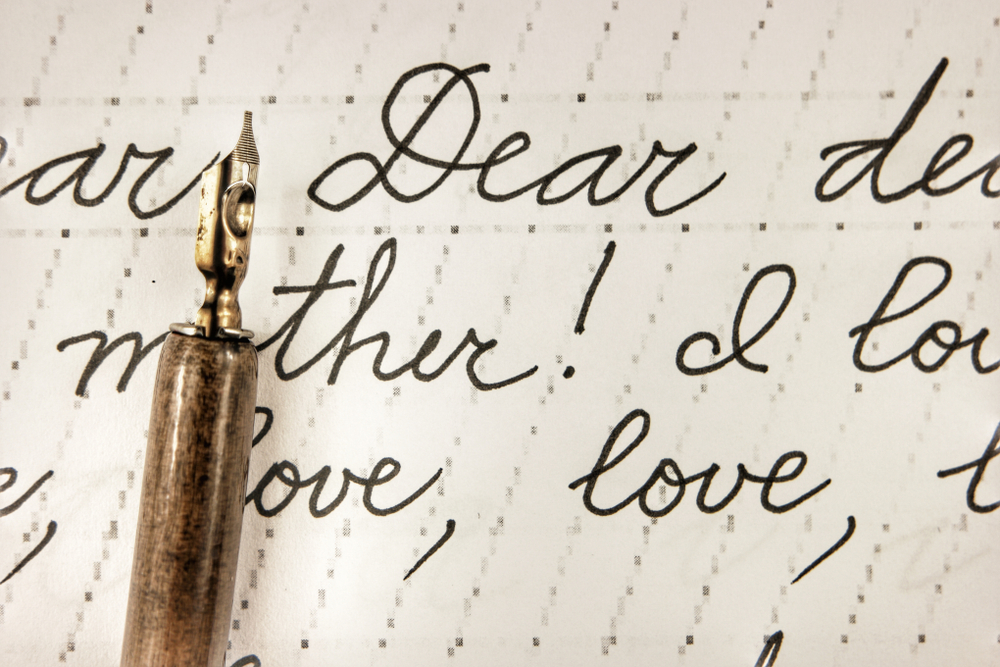
In the days after her death, Dean began the slow process of sorting through her room. Grief makes ordinary objects feel different, heavier with meaning, and every item in that bedroom carried something of her in it. He moved through the task as best he could, handling each thing with the care of someone who understood that nothing in that space was ordinary anymore.
At some point, he moved a full-length mirror that had always leaned against his daughter’s wall. It had stood there so long, facing outward, reflecting the room at whoever walked in, that no one had thought to look behind it. When Dean lifted it away from the wall, he saw what had been hidden there, pressed face down against the plaster for what must have been months.
“When I moved the mirror after she died, I couldn’t believe it, I saw all this writing, it must have been about 3000 words. It’s so touching. When I first saw it, it just blew me away. I started reading it but before long I had to stop because it was too much, it was heartbreaking.”
Written in black pen, from top to bottom across the entire back of the mirror, was a letter that Athena had left for no one and everyone, a message she never told a single person about. Along with the letter, Dean also found a box of songs she had written herself, tucked away among her belongings. In a bedroom full of things she had left behind, these were the ones that felt most like her.
What She Left Behind in Words
Reading Athena’s letter means encountering a mind that had been paying close attention. At 13, facing a disease that had already taken so much from her, she wrote about happiness, love, endurance, and the right to be seen on her own terms. Her words carried none of the bitterness that such circumstances might reasonably have produced. Instead, they read as the reflections of someone who had thought hard about what mattered and arrived at something close to peace.
She wrote about happiness as a direction rather than a destination, about the gap between knowing a person’s name and knowing their story. She described love with a tenderness that sat oddly and beautifully alongside her age: rare and fragile, easy to shatter like glass, worth waiting for even when the waiting was long. “I’m waiting to fall in love with someone I can open my heart to,” she wrote, a line that carries an entirely different meaning when read knowing she never had the chance.
She also wrote about pain and judgment with a quiet defiance that suggested she had already thought through both. “It hurts but it’s okay, I’m used to it,” she put down on that mirror, and in the same breath, she pushed back against the idea that other people had the right to define her. People would hate, rate, and break, she wrote, but how strongly one stood against that was what made a person who they were.
Perhaps the line that drew the widest attention was also among the simplest. “Every day is special, so make the most of it. You could get a life-ending illness tomorrow, so make the most of every day. Life is only bad if you make it bad.” Coming from a teenager who had already received exactly that kind of diagnosis, those words carried a weight that no motivational poster could come close to matching.
Her Father’s Portrait of Her

When Dean spoke about his daughter in the days after finding the letter, he reached for words that went beyond grief. “She never mentioned it, but it’s the kind of thing she’d do,” he said. “She was a very spiritual person, she’d go on about stuff that I could never understand – she was so clever.”
That portrait of Athena, as someone whose inner life ran deeper than most adults could follow, is consistent with everything the letter shows. She was not just a child trying to cope with illness. She was a person with a fully formed sense of what life meant and what love should feel like, with considered opinions about judgment, about authenticity, and about the gap between how people present themselves and how they are truly seen. Her family had always known she was this way. What the mirror gave them was proof, in her own hand, that she had been thinking about all of it with enough intention to commit it to writing, in a place they would only find after she was gone.
The Mirror That Stays

For Caroline, the question of what to do with the mirror had a clear answer from the moment the family understood what it held. “We’re keeping the mirror forever, it is a part of her we can keep in the house, it will always be in her room,” she said. “Just reading her words felt like she was still here with us, she had such an incredible spirit.”
That decision, to leave the mirror exactly where it has always been, says something about what the Orchard family chose to do with their loss. Rather than fold it away into storage or treat it as a relic too painful to face, they placed it back in Athena’s room as a living part of the space she once occupied. Her words remain on the wall, in the room she slept in, surrounded by the life she lived in it.
Grief does not resolve itself neatly, and her family would be the first to say that a letter, however moving, does not fill the space a person leaves behind. But Athena’s message gave them something that few people in mourning are ever handed: the clear, considered voice of the person they lost, speaking to them from a surface they passed every single day without ever knowing what it held. She knew her name would outlast her. She just made sure her story would too.
Athena Orchard, bone cancer teenager, cancer awareness, Caroline Orchard, child cancer story, Dean Orchard, family grief, grieving family, heartwarming story, hidden message, Human Interest, inspirational last words, inspirational letter, Leicester England, letter behind mirror, life lessons, messages of hope, Osteosarcoma, secret mirror message, teenage cancer victim