
Your cart is currently empty!
Iran Built a Permit System for the Strait of Hormuz. Now It’s Charging Ships Up to $2 Million to Cross.
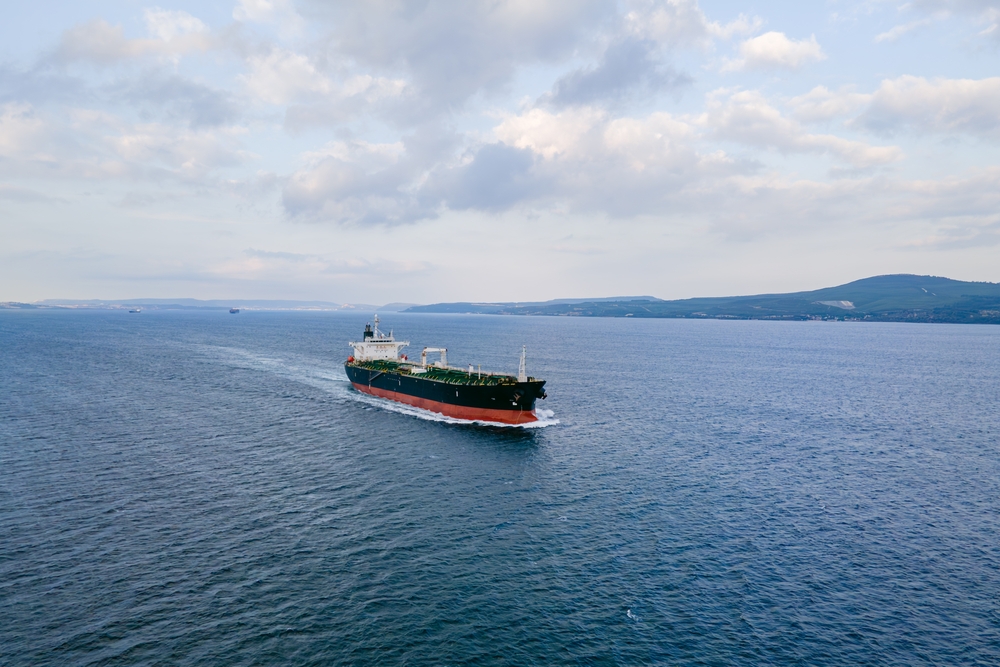
Before the war, roughly 120 ships crossed the Strait of Hormuz every single day. Tankers carrying crude oil, vessels loaded with liquefied natural gas, container ships moving fertiliser and petroleum products between the Gulf and the rest of the world, all of them transiting freely through a narrow channel that carries one-fifth of the global energy supply. In the week ending May 3, 2026, that number fell to 40 crossings in total. Not per day. For the entire week.
Contents
show
What changed is not simply that a war began. Wars disrupt shipping all the time, and waterways eventually reopen when hostilities ease. What Iran has now done is something with longer-lasting implications: it has built an authority, issued a form, and begun charging a fee. A chokepoint that was once governed by international maritime law now has a permit system run by Tehran, and the shipping industry, the US government, and the global economy are all trying to figure out what that means for what comes next.
A New Authority With a Very Specific Form
Since US and Israeli air strikes on Iran began on February 28, Tehran has threatened to strike any vessel crossing the Strait of Hormuz without permission from the Islamic Revolutionary Guard Corps Navy. Several ships have been attacked. Most ship owners and operators have responded by keeping their vessels out of the waterway entirely, producing a near-total halt in tanker and freight traffic that has sent energy prices to levels not seen in years.
Iran has now moved to formalize what was previously enforced through threat and intimidation. A newly created body called the Persian Gulf Strait Authority, or PGSA, has issued a document titled the Vessel Information Declaration, a form of more than 40 questions that any vessel seeking to transit the strait must complete and email to the authority before crossing.
Vessels must declare their name, identification number, any previous names under which they have operated, country of origin and destination, the nationalities of registered owners and operators, the nationalities of crew members on board, and full details of the cargo being carried. Once submitted, the PGSA communicates further instructions by email. An email shared with CNN from the authority carries a warning that complete and accurate information is essential, and that any incorrect or incomplete information provided will be the applicant’s sole responsibility, with consequences borne accordingly.
Richard Meade of Lloyd’s List Intelligence described the development in terms that cut through the procedural language. What Iran has set up looks similar to the questions it was already asking informally of ship owners, but this formalizes the structure and, in his assessment, represents a deliberate play to normalize Iranian authority over transits through the world’s most consequential oil shipping chokepoint.
What Compliance Actually Costs
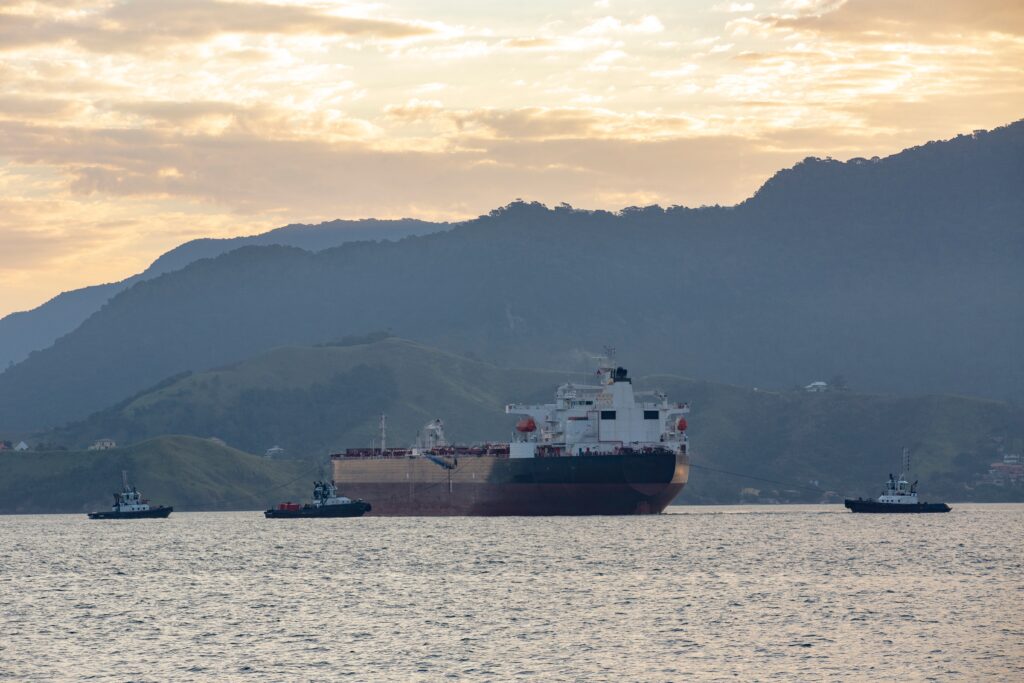
Filling out a form is one thing. What Iran is asking for beyond paperwork is considerably more significant. Reports from maritime analysts and industry sources indicate that Iran is charging up to two million dollars per vessel for passage. Ships that receive permission are not simply waved through in open water. They are directed along a specific voyage plan that routes them close to the Iranian coast, between the islands of Qeshm and Larak, keeping them within easy reach of IRGC naval forces for the duration of their transit.
For shipping companies, the decision of whether to engage with the PGSA at all carries legal exposure on top of the financial one. American companies face a direct prohibition. The US Treasury Department’s Office of Foreign Assets Control clarified its position by adding guidance to its public website. “Payments to the government of Iran or the Islamic Revolutionary Guard Corps (IRGC), directly or indirectly, for safe passage through the Strait of Hormuz would not be authorized for US persons, including US financial institutions, or for US-owned or -controlled foreign entities.”
European and Asian companies face a different calculation. Some governments have already navigated it. India and Pakistan have both negotiated with Iran to secure passage for their flagged vessels, a development that has gone relatively unremarked in Western coverage but carries significant implications. When countries begin working within a new framework rather than rejecting it, that framework starts to acquire a kind of de facto legitimacy that is difficult to reverse through diplomatic statements alone.
The Vision Behind the Mechanism
Iran has not framed the PGSA as a wartime measure or a temporary arrangement. Supreme Leader Mojtaba Khamenei posted a message on Telegram last week laying out a vision for the Persian Gulf that describes what the PGSA represents in its fullest ideological form. Khamenei called for a new regional and global order built around a strong Iran, one in which there would be no place for foreign powers and their interference. He named the closure of the strait as one of the instruments for achieving that order.
Tehran has also described the Strait as a potential revenue stream for rebuilding the country after the destruction caused by US and Israeli strikes. That framing matters because it suggests Iran is thinking about the PGSA not as a bargaining chip to be traded away in negotiations, but as a permanent institution with ongoing economic value. A transit toll of up to two million dollars per vessel, applied to a waterway that once saw 120 crossings per day, represents an extraordinary source of income if even a fraction of pre-war traffic resumes on Iranian terms.
The IRGC has also extended its stated area of maritime control, announcing a new zone that stretches west and east of the strait and into the Gulf of Oman, a geographic expansion that signals Tehran is not limiting its ambitions to the strait itself.
Twenty Thousand Seafarers With Nowhere to Go
Lost in the geopolitical arithmetic is a human story that the shipping industry has been trying to push to the surface. As many as 20,000 seafarers are currently trapped on nearly 1,000 vessels sitting in the Persian Gulf, waiting for a resolution that has not come. Dimitris Maniatis, chief executive of maritime risk consultancy Marisks, has been among the most direct voices on what that situation means for the people living through it. “Mariners are not soldiers. They are civilians who are piloting vessels, who are managing global trade. They should not be caught in a situation like this.”
Mental health concerns, dwindling supplies, and the psychological weight of indefinite uncertainty have compounded what began as a disruption into a prolonged crisis for tens of thousands of people whose names do not appear in diplomatic cables or trade data. Major carriers, including Hapag-Lloyd, have maintained that transits remain impossible under current conditions, a position that shows no sign of shifting while the fundamental question of who controls the waterway remains unresolved.
Where Washington Stands, and Where It May Be Heading
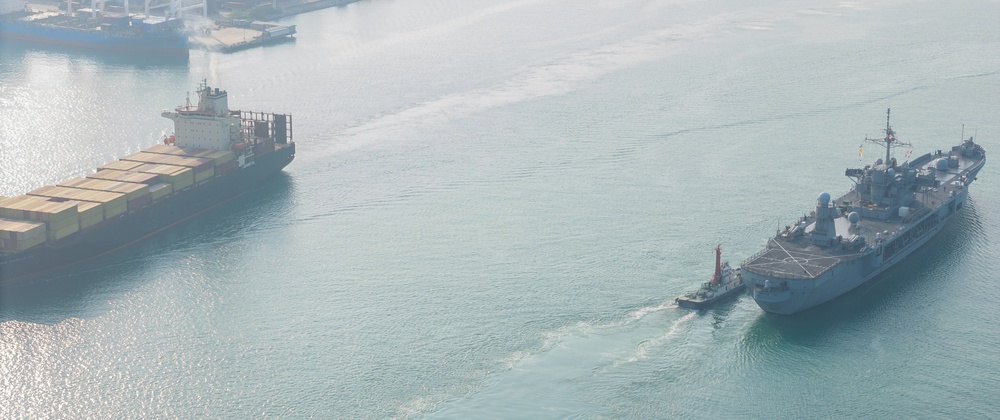
US officials have said repeatedly that they will not accept Iranian control of the Strait of Hormuz. That position has been stated by the State Department, the Pentagon, and the White House across multiple briefings and press conferences. American naval forces continue to enforce a blockade of Iranian ports. Project Freedom, the brief US effort to escort commercial vessels through the strait, was launched and then paused within 48 hours at the request of Pakistani mediators, its fate now tied to whether a broader peace framework can be negotiated.
Yet what American officials say and what American policy may eventually accommodate are not necessarily the same thing. Analysts at Kpler, a marine intelligence firm, have been watching the data and drawing conclusions that diverge from official Washington’s stated position. Matt Wright at Kpler put the longer-term scenario in concrete terms. “Under a long-term Iranian control scenario, transits could rise to 40-50% of export capacity, but normalization is not achievable.”
That estimate, if it proves accurate, describes a permanent reduction in global oil and gas flows through the most important maritime chokepoint on earth, not a temporary disruption but a structural change to how energy moves around the world. Wright and his colleagues at Kpler see growing evidence that Iran intends to retain strategic control for as long as possible, and that Washington may ultimately tolerate some version of that outcome rather than escalate into the kind of sustained kinetic operation that fully reopening the strait would require.
A Chokepoint With New Management
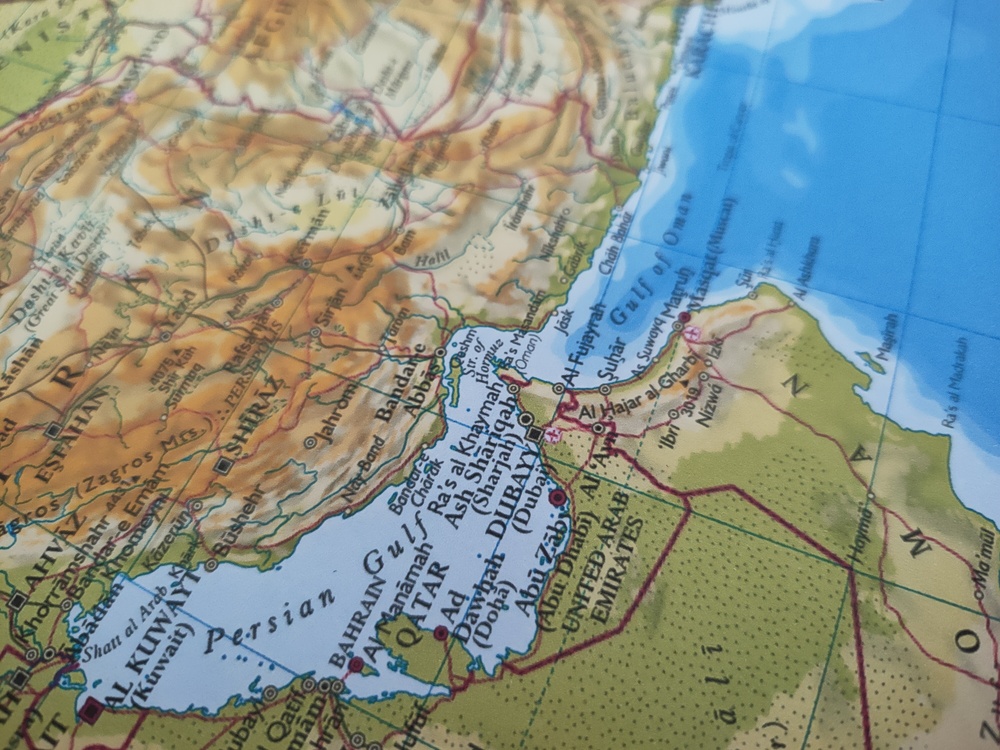
At $4.50 per gallon at American pumps and Brent crude trading near its highest level since 2022, the economic consequences of what Iran has built are already visible to ordinary consumers in ways that diplomatic language tends to obscure. One-fifth of the world’s oil and liquefied natural gas is moved through the Strait of Hormuz freely, governed by centuries of international maritime convention. It now moves through a permit system administered by a newly created Iranian authority that requires detailed declarations, charges fees that may reach two million dollars per vessel, and routes compliant ships along corridors that keep them under IRGC oversight.
How the United States, the European Union, and the major Asian economies respond to that arrangement in the weeks and months ahead will determine whether the Persian Gulf Strait Authority becomes a permanent feature of global energy infrastructure or a wartime anomaly that eventually fades. What it will not do is disappear simply because American officials have said they find it unacceptable. Iran built the PGSA while negotiations were ongoing, while Project Freedom was briefly operational, and while the world’s attention was focused on whether a one-page peace memo would hold. That timing was not accidental.
global oil supply crisis, Gulf of Oman maritime control, Hapag-Lloyd Strait of Hormuz, Iran blockade shipping, Iran oil chokepoint, Iran revenue strait, Iran shipping permit, Iran US war, Iran war shipping, IRGC navy strait, Khamenei Persian Gulf order, Kpler maritime analysis, Lloyd’s List shipping, oil prices 2026, Persian Gulf Strait Authority, PGSA Iran, Project Freedom pause, seafarers trapped Persian Gulf, Strait of Hormuz 2026, US Treasury Iran sanctions