
Your cart is currently empty!
A New Student Had No Words for How Scared She Was. Her School Counselor Found a Way to Hear Her Anyway.
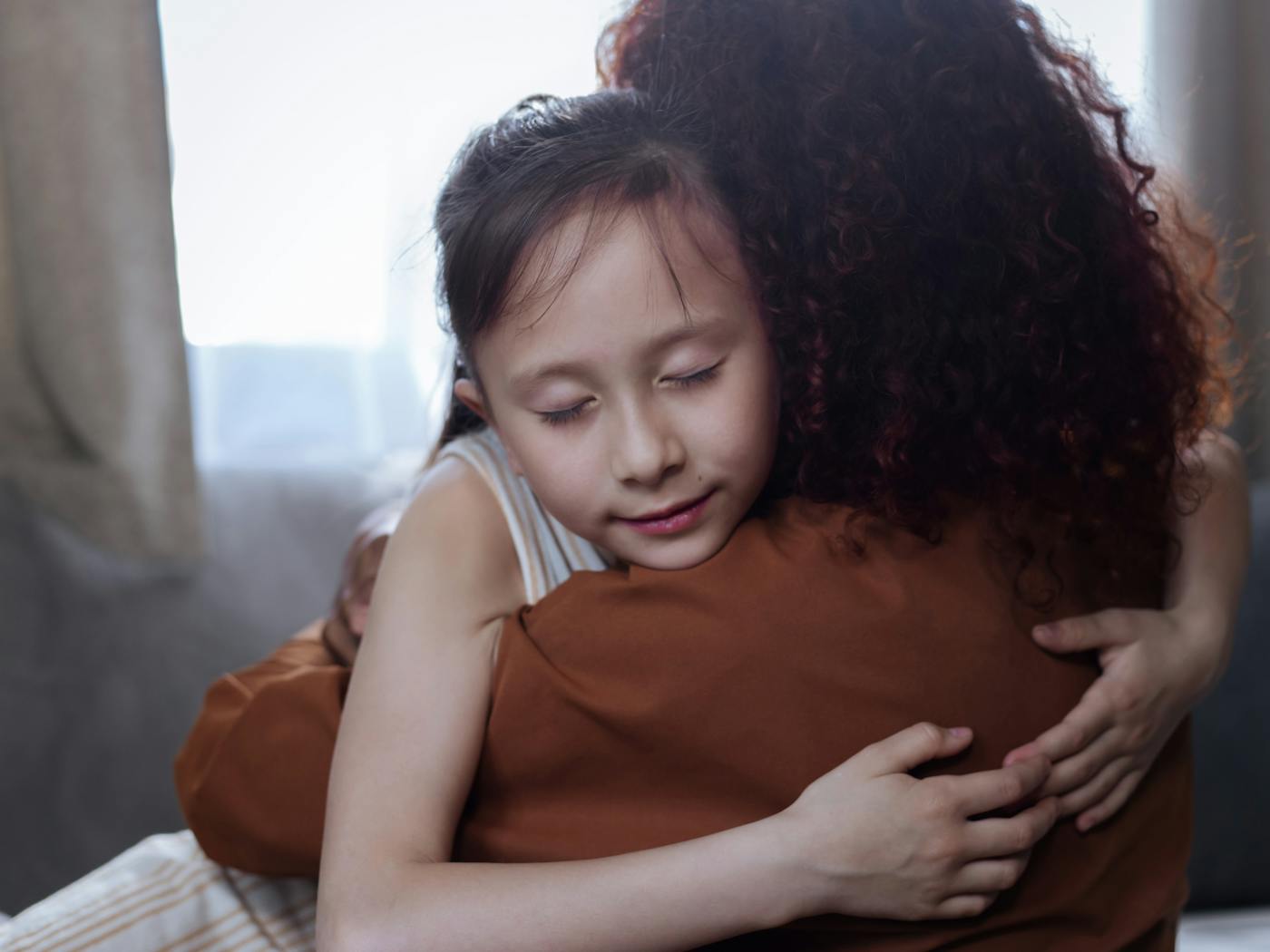
A child who has just arrived in a country where she cannot read the signs, cannot understand what her teachers are saying, and cannot find a single familiar thing to hold onto. School, back home, was something optional at her age. Here, it is mandatory, and the hallways are loud, and the faces are new, and her mother is somewhere she cannot reach during the hours that feel the longest. On a school day in Maryland, that child walked into a counselor’s office and sat down, and what happened in that room over the next few minutes would eventually be watched by millions of people who saw something in it that they needed to see.
Contents
show
What those people found was not a dramatic rescue or an institutional intervention. It was something quieter and, in many ways, more powerful than either of those things. It was one adult who knew exactly what a frightened child needed, and a second child who stepped in to help give it to her.
The Counselor Behind the Moment
Korynn Patterson works as an elementary school counselor and social worker in Maryland, and she has built a following on TikTok under the handle @theclassyclinician by sharing the real, unfiltered work of sitting with children through difficult moments. Her content does not perform wellness or package empathy into advice-column bullet points. It shows what it actually looks like when someone makes a child feel safe, in real time, with whatever is available, including, in at least one memorable case, a bag of fruit snacks.
Patterson has described her role in terms that cut straight to what she believes her job is actually for. She sees her office as a safe space, and she returns to that language not as a professional formality but as a genuine commitment. Children come to her when the rest of the school day has become too much, and her approach is to meet them exactly where they are rather than redirect them toward where an adult might prefer them to be.
What Happened in the Office
A newly arrived student, recently relocated to the United States from a Spanish-speaking country, walked into Patterson’s office one day, sad and visibly frightened. She spoke no English. Patterson spoke no Spanish. Between them, communication in any conventional sense was not immediately possible, and yet what Patterson did next made language feel almost beside the point.
She enlisted another young female student who could bridge the gap, a bilingual child who happened to be nearby and willing, and whom Patterson later described in a TikTok caption as her translator, paid in fruit snacks for her services. With that child as the link between them, Patterson wrapped the new student in a hug and began talking her through the fear.
She asked her translator to pass along a specific message: that she understood the new student must be very scared, and that she wanted her to know she was brave, genuinely and specifically brave, not in a generic, reassuring-adult way but in a way the child could hold onto. When the girl tearfully said she missed her mother and did not want to go to class, Patterson did not push back or redirect her toward the school day’s schedule. She made a concrete offer. She told the child she would sit in class with her for a little while.
She gave her a fidget toy to help with the anxiety that had nowhere else to go. She offered time together at lunch and at recess, turning the rest of the day into a series of small anchors rather than one long stretch of uncertainty. And she kept the conversation light enough for a frightened child to breathe, finding common ground in a conversation about Paw Patrol that briefly made the office feel less like a place where hard things were happening and more like a place where children were just children.

In a video overlay accompanying the footage, Patterson filled in the context that the interaction itself could not fully convey. At the new student’s age, school had been optional in her home country. What she was walking into every morning was not just a new building or a new language but an entirely new structure for what her daily life was supposed to look like. Culture shock, Patterson noted, was not a strong enough phrase for what the child was carrying.
“At her age, school was optional in her country. She is experiencing HUGE culture shock… I’m always happy to be a safe space for my students. Being that her whole world is changing, she needs to feel some sense of safety. I affirm them just as they affirm me.”
That last line carries more weight than it might initially seem. Patterson is not describing a one-directional relationship in which a trained adult dispenses comfort to a child who receives it. She is describing something mutual, a dynamic in which being trusted by a frightened child gives the counselor something real in return. Empathy, in her framing, is not a professional skill deployed from a distance. It is a genuine exchange, and both people come away from it changed.
Two Follow-Up Videos and a Friendship

Patterson’s initial video generated enough response that she posted two follow-ups for viewers who wanted to know what happened next. What those updates showed was both simpler and more satisfying than any dramatic resolution could have been.
Back in Patterson’s office, the two girls sat together eating lunch and talking. Asked how things were going, they told her they were now best friends. A child who had arrived in Maryland unable to communicate with anyone around her had found, within days, a person her own age who had chosen to sit with her through the hardest part. The young translator had not simply passed words between them. She had stayed.
On the academic side, the school moved the new student down a grade level to give her the space to catch up with English at a pace that was genuinely manageable rather than overwhelming. She was learning through her schoolwork, taking in the new language piece by piece, and beginning to build the foundation she would need. Patterson, for her part, was picking up Spanish through her conversations with her students, a small but telling detail about how she approaches the relationships in her care. Learning runs both ways in her office, just as affirmation does.
The new student gave Patterson a nickname in Spanish. It was the color blue, azul, a detail that Patterson shared with her followers with the kind of warmth that suggests she intends to keep it.
What Viewers Saw in It
When Patterson’s original video spread across TikTok, the response came from people who were not expecting to cry at their phones on a Tuesday and found themselves doing it anyway. Among the hundreds of comments, certain voices stood out for what they revealed about who the video was reaching.
Adult immigrants wrote about recognizing themselves in the child, about the specific and embodied memory of being small and new and unable to explain how frightened they were. Future school counselors wrote about what it meant to see the work they were training for reflected to them in a way that made them certain they had chosen correctly. Parents wrote about what it felt like to imagine their own children in that chair, in that office, reaching for a stranger’s hand.
One comment that circulated widely in response to the footage of the young translator captured something that multiple viewers had noticed but struggled to put into words. “She is not only translating words, she translates empathy. That girl did an amazing job.”
That observation is worth dwelling on. A bilingual child was not simply performing a technical function by converting Spanish into English and back again. She was carrying emotional content across a language barrier in a way that required her to understand what Patterson was trying to give the new student and then find a way to give it too. She read the room. She stayed gentle. She was, at an age when children are still learning how to manage their own feelings, serving as a conduit for someone else’s.
When Upworthy reached Patterson directly to ask how she was responding to everything, she reflected on the scale of what had happened with the kind of grounded warmth that runs through everything she shares publicly.
“I am overwhelmed in the best way by all the love and the support that we have gotten from all of you. I am so grateful to be in a position to touch so many lives of all ages, races, and walks of life.”
She also created an Amazon Wishlist for followers who wanted to do something tangible with the feeling the video had stirred in them, translating an outpouring of online emotion into supplies that could actually reach her students.
What the Story Leaves Behind

At its heart, what Patterson’s video captured is something that does not require professional training to recognize, even if it requires real skill and genuine warmth to deliver. A child was scared, and an adult sat down with her and said, in every way available, that she did not have to be scared alone.
What made millions of people stop scrolling was not the drama of the situation but the ordinariness of the response. No special program, no institutional framework, no carefully designed intervention. A hug, a fidget toy, a promise to sit in class for a little while, a conversation about a cartoon dog. And, crucially, another child who leaned in rather than away, who chose to help translate not just the words but the feeling underneath them.
Two girls eating lunch together in a counselor’s office a few days later, telling her they are best friends, is not a footnote to the story. It is the story. Empathy, modeled clearly enough and early enough, has a way of spreading on its own.
child empathy viral video, children kindness viral, culture shock children, elementary school counselor, empathy education, empathy in schools, immigrant child school, immigrant student support, Korynn Patterson, new student comfort, school counselor empathy, school counselor social work, school counselor TikTok, school safe space, student friendship story, theclassyclinician, TikTok viral teacher