
Your cart is currently empty!
America Could Start Losing Population By 2030, New Government Forecast Warns
America’s population has been growing for generations, powering everything from economic expansion to housing demand and the country’s massive workforce. But new projections from the Congressional Budget Office suggest the country may be approaching a historic turning point much faster than expected. Researchers now believe annual deaths in the United States could outnumber births by 2030, creating a future where population growth depends almost entirely on immigration.
Contents
show
The updated forecast arrives as birth rates continue falling across the country while immigration levels face major political and policy shifts. Analysts also lowered earlier growth expectations by millions of people after changes in immigration enforcement and declining fertility rates reshaped the long-term outlook. If those trends continue, the United States could begin entering the kind of demographic slowdown that has already transformed countries like Japan and South Korea.

New Forecast Predicts A Dramatic Slowdown
The Congressional Budget Office released new projections showing the U.S. population is expected to grow much more slowly than officials predicted just one year ago. According to the updated outlook, the population is projected to rise from 349 million people in 2026 to 357 million by 2035. That is roughly 7 million fewer people than earlier forecasts expected.
Researchers say the sharp revision is tied to a combination of falling birth rates and reduced immigration. The report states that annual births are projected to fall below annual deaths starting in 2030. It also warns that without immigration, the U.S. population would begin shrinking at that point.
“The U.S. population isn’t growing the way it used to.”
That line from the latest demographic outlook captures the broader concern surrounding the new projections. Population growth in the United States has historically been tied to both natural population increases and immigration, but analysts now believe both drivers are weakening at the same time.
The agency also noted that immigration policy changes played a major role in the revised numbers. The report explains that the administration’s immigration crackdown, lower numbers of international students, and tighter border enforcement all contributed to the slower projected growth over the next decade.

Immigration Has Become The Main Driver Of Growth
For decades, immigration has helped offset America’s declining fertility rate and aging population. The latest projections suggest that role is becoming even more important as fewer Americans have children and more people enter retirement age.
The report estimates that the U.S. fertility rate will remain well below the replacement level needed to maintain stable population growth. Researchers project the total fertility rate will decline to around 1.53 births per woman by 2036. The replacement level is roughly 2.1 births per woman.
Analysts also noted that foreign-born women tend to have more children on average than women born in the United States. That means immigration affects both overall population numbers and future birth rates. The projections state that immigration will become an increasingly important source of population growth as births continue to decline.
The report also revealed how quickly policy changes altered earlier expectations. Officials now project net immigration of 410,000 people in 2025 instead of the 2 million previously expected. The scale of that drop reshaped the country’s demographic forecast in just a single year.
“The U.S. also admitted fewer foreign students in 2025, although the number of authorized green card holders is expected to increase over the next decade.”
That shift matters because immigration has become one of the few remaining factors preventing long-term population decline in the United States.

Americans Are Having Fewer Children Than Before
The immigration slowdown is only one part of the story because the country’s declining birth rate may have even bigger long-term consequences. Fertility trends in the United States have been falling for years across multiple generations, and researchers now believe the shift is becoming deeply tied to economic pressure, changing lifestyles, delayed parenthood, and uncertainty about the future. Many younger Americans are waiting longer to get married, postponing having children until later in life, or deciding against parenthood altogether because of rising housing costs, childcare expenses, student debt, and concerns about long-term financial stability.
Before the 2007 recession, the total fertility rate in the United States averaged just above two births per woman. By 2024, that number had dropped to 1.60, and the Congressional Budget Office now expects fertility levels to remain near historic lows for decades. Researchers also noted that fertility rates for women under 30 are projected to continue declining while birth rates among older women are expected to rise slightly as more Americans delay starting families until later stages of adulthood.
Researchers pointed to several factors contributing to the decline in births across the country:
- Rising housing and childcare costs
- Americans getting married later in life
- Economic uncertainty changing family planning decisions
- Delayed parenthood among younger adults
- More people deciding not to have children at all
The projections also show the United States becoming significantly older over time. Officials expect the number of Americans age 65 or older to grow much faster than younger age groups through 2036, while the population age 24 or younger is projected to steadily shrink over the next three decades. That demographic imbalance could eventually reshape everything from schools and healthcare systems to workforce participation and the future size of the American economy.

The Economic Impact Could Be Massive
Population shifts affect far more than census totals because they influence nearly every part of daily life, from labor markets and healthcare systems to school enrollment and economic growth. A smaller working-age population can create labor shortages across major industries while increasing pressure on younger workers to support retirement programs like Social Security and Medicare.
The Congressional Budget Office noted that demographic projections play a major role in shaping federal economic forecasts because age distribution directly affects employment levels, tax revenue, and government spending. The report projects there are currently about 2.7 working-age adults for every American over 65, but that ratio is expected to fall to 2.2 workers per retiree by 2056. That shift could place enormous pressure on systems that were originally built around a much larger workforce supporting a smaller retired population.
Several countries are already dealing with the consequences of long-term population decline and aging populations. Japan, South Korea, and parts of Europe have faced labor shortages, shrinking rural communities, declining school enrollment, and slower economic growth tied directly to demographic changes. Some experts believe the United States may now be moving toward similar challenges unless birth rates recover or immigration levels increase enough to offset the decline.
Others argue that slower population growth could also produce some benefits, including reduced strain on infrastructure, lower environmental pressure, and less overcrowding in rapidly expanding cities. Researchers caution that long-range demographic forecasts remain uncertain because even small changes in immigration policy, fertility trends, or life expectancy can dramatically alter the projections over time.
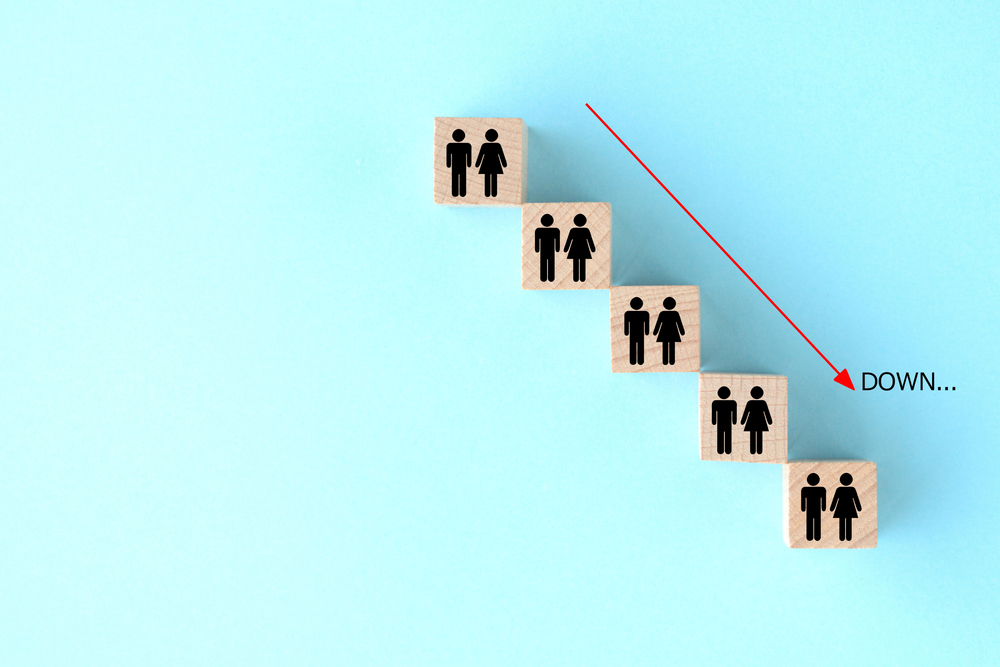
America May Be Heading Into A Very Different Future
For most of modern history, Americans have lived in a country where growth felt automatic. Bigger cities, expanding suburbs, rising school enrollment, and growing workforces were all treated as normal parts of life.
These new projections suggest that the era may be slowing down. If births continue falling and immigration remains lower than previous estimates, the United States could soon rely almost entirely on immigration to prevent long-term population decline.
“Absent immigration, the population would begin to shrink at that point.”
That possibility once sounded distant for a country that spent decades expanding faster than most developed nations. The latest projections suggest it may now arrive much sooner than many expected.
aging population, America population crisis, America shrinking, birth rates, Congressional Budget Office, declining birth rates, demographic crisis, economic slowdown, fertility rates, immigration, immigration crackdown, immigration policy, labor shortages, Medicare, population decline, population forecast, population growth, population research, retirement crisis, Social Security, trending news, US demographics, US economy, US news, US population, viral news